
Permission to Dance: BTS Builds Joy With an Accessibility Problem
Bottom line: RaeRae verdict
Permission to Dance is engineered optimism: bright melody, open choreography and a world gradually joining the celebration. Its best idea is that joy does not require institutional approval. Its hardest question is whether a globally marketed image of inclusion can do more than symbolize access. The song is sincere; sincerity is the beginning of accountability, not the end.
What changed every time I replayed it
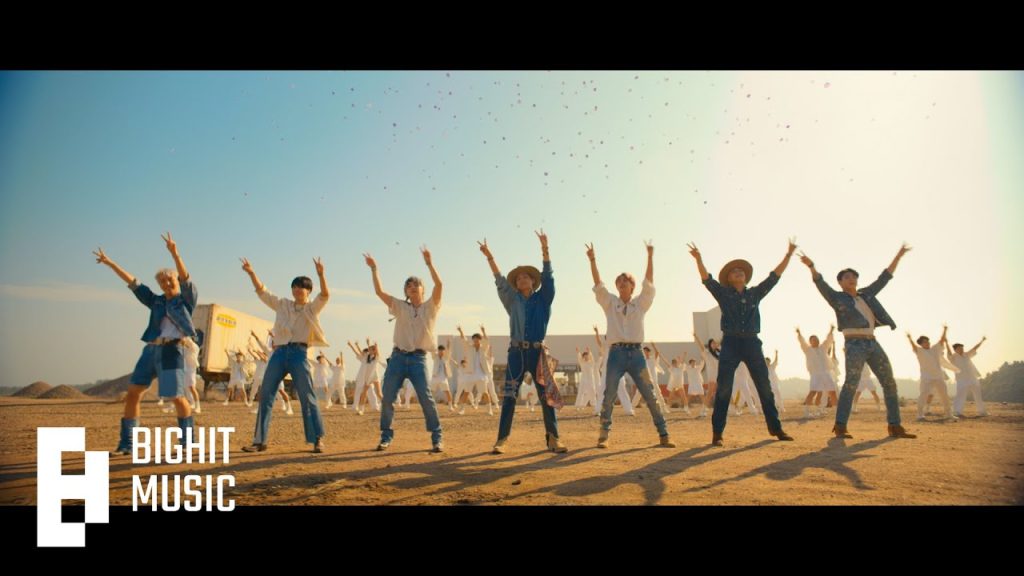
Replay one watches the International Sign gestures integrated into choreography. Replay two looks beyond BTS to the workers and families filling the frame. Replay three listens for how the melody carries momentum without a hard drop. Replay four asks who can enter the imagined celebration physically, economically and technologically. Joy becomes more interesting when access is examined.
A chorus built for open bodies
The movement vocabulary emphasizes broad gestures, steps and recognizable shapes. That makes the chorus readable and socially repeatable. Accessibility, however, is not identical to simplicity. Different bodies encounter different barriers. The choreography offers a welcoming visual language, while the production around it still needs captions, descriptions and thoughtful presentation to fulfill that promise.
Sign language as choreography
Using sign vocabulary in a global pop chorus can create recognition and invite curiosity. It can also be flattened into aesthetic novelty if Deaf communities are treated as inspiration rather than audience. The responsible response is neither automatic praise nor cynical dismissal. It is to credit the language, verify meaning and ask whether access continues beyond the promotional moment.
The pandemic horizon
The video’s masks and release imagery belong to a moment when audiences desperately wanted an ending. That context explains the uncomplicated uplift. It also makes the fantasy bittersweet: recovery did not arrive equally, and many people could not simply dance past loss. Pop can offer relief without claiming that relief is a public-health plan.
Seven performers choosing ease
BTS are capable of denser choreography and more volatile music. Here ease is the assignment. The members sell it by varying warmth, humor and directness instead of manufacturing technical difficulty. The performance asks whether a star can make invitation compelling after years of proving mastery. Their answer is mostly yes.
The English-language tradeoff
The fully English lyric expands immediate sing-along access for many listeners while narrowing some of BTS’s verbal specificity. The phrases are clean, universal and intentionally low-friction. That is commercially effective. It also means personality must arrive through tone, timing and the members’ faces because the lyric rarely surprises.
The counterargument
For listeners who hear corporate cheerfulness, shallow uplift or a song sanded smooth for radio, the evidence is audible. The production avoids conflict. My defense is limited: the melodic craft and performance generosity are real, but they do not require pretending the record has the lyrical or sonic complexity of BTS’s strongest work.
What I would change
I would add a bridge led by Deaf performers and sign-language consultants, credited on screen, with the instrumental reduced so visual language becomes central rather than supplementary. The final group celebration would then feel like a consequence of collaboration rather than a montage proving the stars have inclusive intentions.
Joy without permission—and with infrastructure
The title argues nobody needs permission to dance. In practice, participation depends on ramps, captions, safe venues, affordable access, time and social permission that is unevenly distributed. Naming infrastructure does not ruin joy. It takes the song seriously enough to ask what would make its beautiful invitation materially true.
Replay verdict
Permission to Dance remains charming, melodic and genuinely welcoming, while replay makes its limits harder to ignore. BTS sell the invitation; the larger industry must build the door. The video is strongest when treated as a hopeful proposition about shared joy, not proof that inclusion has already been completed.
Production map
Piano, strings, handclap-like rhythm and a steady pop pulse keep the song buoyant without the aggressive drop architecture associated with many BTS singles. Sections flow into one another through melody rather than surprise. That smoothness supports communal singing and radio familiarity. It also limits tension, making the members’ vocal color and visual warmth responsible for most of the record’s remaining personality.
What inclusion requires after the video
A signed phrase in choreography is meaningful, but accessible fandom also needs accurate captions, audio description, readable websites, venue access and communication that does not arrive days late in only one language. Inclusion is a system. The video can inspire that system without being mistaken for it. Fans and companies honor the concept by asking what remains available after the promotional applause ends.
The workers in the frame
The video includes people associated with everyday labor, community and reopening. Their presence expands the song beyond celebrity isolation. It can also become symbolic extraction if workers appear only to authenticate star optimism. Credits, fair treatment and continued representation matter. A joyful montage is strongest when the people inside it are participants with dignity rather than evidence that the brand cares.
Vocal distribution and ease
The members pass melody in short, accessible phrases, allowing different timbres to color the same uncomplicated thesis. Nobody is asked to perform anguish or virtuosity for the song to feel legitimate. That ease can be artistically useful after years of high-stakes concepts. The limitation is that the arrangement sometimes smooths away precisely the contrasts that make seven voices more interesting than one polished pop composite.
Pandemic memory without compulsory gratitude
The release imagined movement beyond restriction, but many people carried illness, disability, grief and economic damage forward. Rewatching should not demand gratitude for survival or nostalgia for a neatly packaged reopening. The video works better as a wish made during uncertainty. Wishes can be sincere and still incomplete; they do not have to double as accurate policy forecasts.
A practical international-fan note
Exact official links, translated release notices and clearly labeled versions matter because international discovery otherwise becomes rumor-driven. This React preserves the specific official MV rather than merging it with performances or fan uploads. That filing discipline may sound unromantic, but it is how fans can follow a large catalog closely without depending on algorithms that reward whichever repost happens to travel fastest.
Final evidence check
The fairest verdict holds charm and limitation together. BTS perform openhearted ease with skill, the melody travels cleanly and sign vocabulary widens the visual invitation. Yet symbolic access is not infrastructure, and global English smooths away some verbal specificity. The song is neither empty corporate propaganda nor completed inclusion. It is a bright proposition whose meaning improves when fans and companies treat its promise as work still requiring captions, credits, ramps and sustained attention.
Why the relationship filing matters
The page’s own accessibility should reflect the argument: descriptive alt text, readable contrast, local image delivery, direct official-video labeling and profile links are not decorative metadata. They determine whether the invitation can actually be followed. A React about inclusion loses credibility if its card is broken, its image identity changes across surfaces or its source disappears behind an unlabeled embed.
Canonical profiles
BTS · RM · Jin · SUGA · j-hope · Jimin · V · Jung Kook
Official video
Receipts
The exact BIGHIT MUSIC official video is the primary source for the song, choreography and visual analysis. The BTS and member profiles provide career context; interpretation is labeled as interpretation rather than hidden inside fact claims.
Release file
Released: July 9, 2021
Runtime: 04:59
Label / channel trail: HYBE LABELS
Sound: Permission to Dance is engineered optimism: bright melody, open choreography and a world gradually joining the celebration. Its best idea is that joy does not require institutional approval. Its hardest question is whether a globally marketed image of inclusion can do more…
Sources:  Exact official playlist uploadDaily+106.5KTotal views732.6M.
Verdict
BTS Permission to Dance React examining the pop optimism, sign-language choreography, community imagery, accessibility and replay value.