
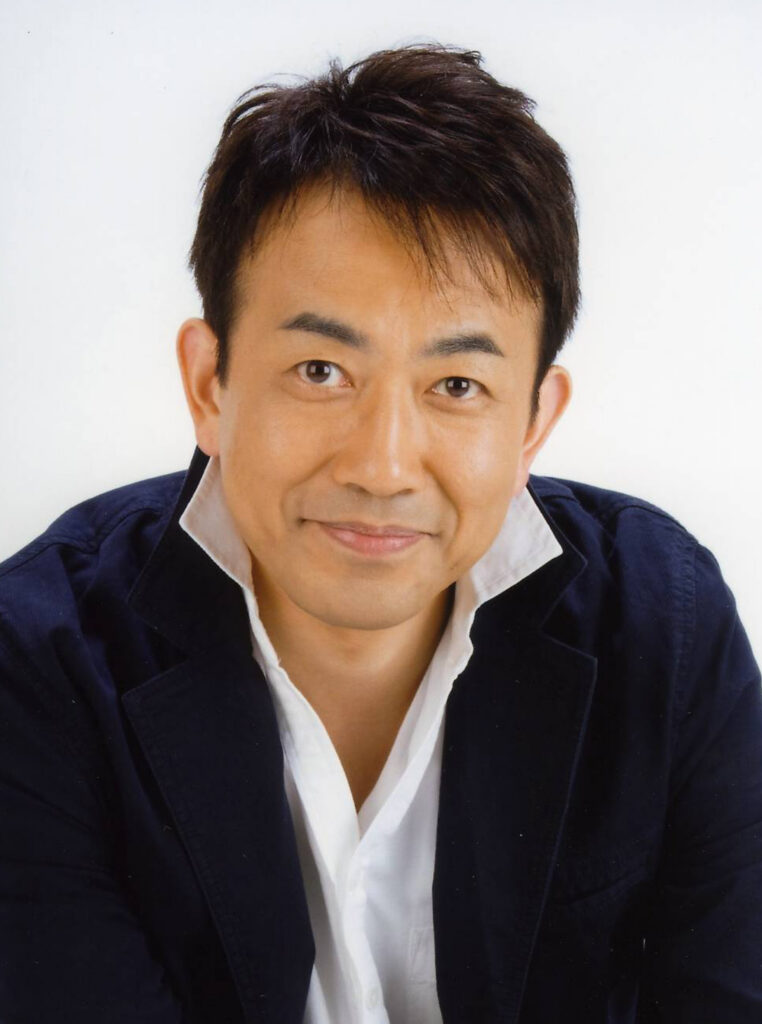
Toshihiko Seki
Iruka Umino is the adult who sees Naruto’s danger, damage and personhood at the same time. Toshihiko Seki makes that recognition strong enough to launch the moral argument of the entire series.
The verified record before Iruka gets all the credit
Toshihiko Seki is a Japanese voice actor represented by 81 Produce. His official agency profile lists June 11 as his birthday, Tochigi Prefecture as his place of origin and second-dan rank in kendō as a special skill. The same profile records a career that crosses anime, theatrical animation, games, tokusatsu, narration, drama CDs and stage work.
Representative roles listed by 81 Produce include Kitaro’s father in The Birth of Kitaro: Mystery of GeGeGe, Doi Hansuke in Nintama Rantarō, Muzan Kibutsuji in Demon Slayer, Genjo Sanzo in Saiyuki, and major work across long-running franchises. The official Naruto cast page identifies him as Iruka Umino in the Japanese cast.
His awards record is not a decorative trophy shelf. The second Seiyu Awards recognized the Kamen Rider Den-O cast with a Synergy Award. The fifteenth ceremony gave Seki the Kei Tomiyama Award, which honors an actor whose work spans multiple media. The nineteenth Seiyu Awards named him a Best Lead Actor. Those categories describe three different kinds of value: ensemble chemistry, cross-media longevity and lead performance.
The profile therefore begins with a correction. Toshihiko Seki is not the nice teacher from episode one who also did some other voices. Iruka is one strategically important role inside a career that can move from moral warmth to flamboyant rage, theatrical villainy, military charisma, sacred-text parody, children’s animation and live suit-hero performance.
Episode 1 works because recognition becomes an action
The first episode of Naruto does not need Iruka merely to explain the academy. It needs an adult whose choice can change the meaning of Naruto’s identity before Naruto has enough social power to change it himself. Mizuki tells Naruto that the village’s hatred is proof of what he is. Iruka answers by treating Naruto as a child with pain, bad behavior, effort and possibility.
Seki has to move through several emotional jobs quickly. Classroom frustration establishes that Iruka is not a saint floating above ordinary irritation. Alarm enters when Naruto disappears with the scroll. Personal grief matters because the Nine-Tails killed Iruka’s parents. Protective anger matters because Mizuki uses that history to justify dehumanizing a child. Open affirmation matters because Naruto hears somebody separate him from the fox.
The scene lands because kindness is not presented as ignorance. Iruka knows the danger. He has suffered from it. He chooses not to convert inherited fear into punishment for a boy who did not consent to carrying Kurama. Compassion therefore becomes moral agency rather than soft lighting.
RaeRae’s bottom line is blunt: Iruka names the child correctly. That act does not fix Konoha, erase Naruto’s loneliness or pay for years of social exclusion. It gives Naruto one receipt that the village contains an adult capable of seeing him. The series spends hundreds of episodes showing what one credible act of recognition can start.
Iruka’s authority is warm because it has boundaries
Seki does not voice Iruka like a gentle substitute parent from the first line. Iruka scolds, assigns consequences and expects Naruto to work. Authority is part of the relationship. Without it, recognition would feel like pity. Naruto does not need an adult to call him secretly perfect. He needs an adult who can see the prank, correct it and still refuse the village’s conclusion that the child himself is the problem.
The difference between classroom scolding and protective command is structural. In class, Iruka is managing behavior inside an institution. In the forest, he is defending Naruto’s right to exist against a colleague who weaponizes classified truth. The same teacher voice has to move from public role to personal risk without becoming a superhero trailer.
Iruka’s scar and ordinary chūnin status also matter. He is not the strongest fighter in the scene, and the story never pretends he is. His intervention has weight because courage is measured against capacity. He puts his body between Naruto and an attack knowing that being emotionally right will not make the weapon hurt less.
This is where the profile refuses inspirational vitamin language. Iruka’s care is not magic. Naruto still needs food, safety, training, peers, missions, mentors and political recognition. Maslow’s hierarchy does not disappear because one teacher gives a beautiful speech. Iruka contributes belonging and esteem at the moment Naruto’s identity is being attacked. Those needs make later growth possible without replacing every other need.
Iruka’s Naruto chronology after the first shuriken
Academy teacher
Iruka manages Naruto as a difficult student while recognizing the loneliness underneath the performance. The relationship becomes personal without losing educational boundaries.
Graduation and forehead protector
Giving Naruto the forehead protector turns recognition into institutional passage. Iruka does not invent a private consolation prize; he admits Naruto into the role he earned.
Chūnin Exams and village danger
Iruka remains connected to Naruto while the boy enters a world of lethal tests and public spectacle. Concern does not give him the power to cancel the system.
Search, departure and return
Naruto’s expanding circle does not make Iruka obsolete. The relationship becomes one anchor among many rather than a single adult dependency.
War and recognition
When Naruto moves toward the battlefield, Iruka’s role again joins care with institutional responsibility. He cannot simply order the young hero back into childhood.
Wedding and adulthood
Naruto asking Iruka to stand as his father at the wedding makes the chosen-family history explicit. The payoff works because the relationship was built through years, not one sentimental retcon.
Relationship atlas: Iruka is not everyone’s emotional support chūnin
Naruto Uzumaki
The relationship moves from teacher and problem student to chosen family. Seki keeps authority inside the warmth, which prevents Iruka from becoming a mascot for kindness.
Mizuki
Mizuki is a colleague who turns institutional secrets and community prejudice into a weapon. Their conflict shows that two adults can know the same facts and make opposite moral choices.
Hiruzen Sarutobi
Hiruzen represents the village leadership under which Naruto is protected as an asset yet neglected as a child. Iruka works inside that structure and supplies care the structure failed to organize consistently.
Kakashi Hatake and later mentors
Iruka’s importance does not require diminishing Kakashi, Jiraiya, Yamato, Killer Bee or others. Naruto’s development is a network. Different adults meet different needs, and none deserves sole ownership of the result.
Konohamaru and academy students
Iruka’s profession continues beyond Naruto. Education is infrastructure. The teacher’s value is not exhausted when one famous student becomes Hokage.
The complete Naruto performance shelf
Seki performs Iruka through the original Naruto television series, Naruto Shippūden, theatrical and special-event material, games and later franchise appearances. The role returns for academy memories, village crises, war decisions, wedding preparation and New Era continuity.
Weekly television carries the long emotional relationship. Anime-original episodes can expand Iruka’s classroom and village presence beyond the manga. Films and OVAs use him according to their mission or comedy needs. Games fragment the performance into recreated scenes, battle or support lines and interface contexts. Participation in licensed media is real career evidence, but it does not place every branch into one canon timeline.
The wedding material provides the clearest long payoff. Naruto does not ask Iruka to replace every missing parent, mentor and friend. He asks the first adult who recognized him to stand in a father’s place for a specific ritual. Confucian family duty is not treated as blood biology alone. Relationship, gratitude and enacted care create an obligation the ceremony can acknowledge.
The New Era also changes the meaning of Iruka’s teaching. Naruto becomes an institution himself as Hokage and father. That does not prove he reproduces every lesson perfectly. It proves Iruka’s act entered a longer chain of transmission where care, neglect, duty and recognition continue to be argued.
The career does not stop at Konoha, and the contrast is rude
Muzan Kibutsuji in Demon Slayer offers the easiest range demonstration because the moral temperature is almost comically opposite. Iruka uses authority to recognize a vulnerable child. Muzan uses authority to control, terrify and consume everyone below him. Seki does not need to erase elegance to make cruelty legible.
Duo Maxwell in Mobile Suit Gundam Wing carries youthful charisma, battlefield speed and the strange tonal mix of a boy performing ease inside war. Genjo Sanzo in Saiyuki is irritable, forceful and spiritually complicated without becoming Iruka with a gun and scripture. Doi Hansuke in Nintama Rantarō adds another teacher role, but children’s comedy and long-running educational entertainment create a different social rhythm.
Kitaro’s father in The Birth of Kitaro: Mystery of GeGeGe became the role tied to Seki’s nineteenth Seiyu Awards lead-actor recognition. The performance belongs to a horror and family-history context far removed from Naruto’s academy. It reminds fans that a veteran career can still produce newly celebrated lead work instead of existing only as a museum of famous 1990s and 2000s roles.
The range also includes games, drama CDs, narration and theatrical work. A list cannot substitute for criticism, but it establishes the labor problem: Seki must repeatedly enter new production systems without turning every role into a recognizable signature voice.
Momotaros proves that voice acting can occupy an entire body
Momotaros in Kamen Rider Den-O is central to Seki’s cross-media identity. The role belongs to tokusatsu, where voice performance interacts with suit acting, live-action framing, action choreography, comedy and franchise events. The voice does not own the body alone. It collaborates with a physical performer and production grammar built around transformation.
The character’s explosive personality makes range easy to hear, but the important craft issue is synchronization of intention. A suit can turn, gesture, fight or collapse without showing an ordinary face. The voice must make those movements socially specific. Loudness is not enough. Rage, embarrassment, loyalty, comedy and bravado need different purposes.
The second Seiyu Awards Synergy Award recognized the Den-O cast as an ensemble. That category fits the medium. Momotaros works because voice, suit, live actors, editing, effects and group chemistry meet. Treating Seki as a solo genius would misunderstand the production.
Awards, veteran status and the danger of turning a worker into a monument
The Kei Tomiyama Award honors broad activity across media, while the later lead-actor award recognizes a specific kind of performance achievement. Neither means every credit is excellent or every interpretation above criticism. Awards are receipts from an industry institution, not holy water.
Veteran status in Japan often carries expectations of respect tied to seniority. Confucian social patterns can support gratitude, apprenticeship and craft transmission. They can also encourage audiences to praise longevity without examining working conditions, production context or the contributions of collaborators. RaeRae is not doing the bow-and-back-away routine.
The useful response is specific. Name the official agency record. Distinguish an ensemble award from a lead award. Notice that Seki co-founded or led theatrical work through Dramatic Company with fellow actor Ryūsei Nakao, as documented in 81 Produce’s company structure. Recognize that stage practice, narration, tokusatsu and animation develop overlapping but nonidentical skills.
Teacher duty, reciprocity and why Iruka’s choice matters culturally
Iruka’s relationship with Naruto sits inside a Japanese story world where teachers carry moral and social responsibilities beyond delivering information. The academy is a military pipeline, so the duty is compromised from the beginning. Iruka prepares children for shinobi labor while also trying to preserve their humanity.
Confucian reciprocity helps explain the relationship without making obedience sacred. Naruto owes effort and respect because Iruka invests care and correction. Iruka owes guidance, fairness and protection because authority creates responsibility. When the institution fails Naruto, Iruka’s duty is not to defend the institution’s pride. It is to act like the teacher the role claims he is.
Buddhist compassion also matters if we keep the knife in it. Iruka recognizes suffering without pretending suffering makes behavior consequence-free. Naruto’s pranks still affect other people. Compassion changes the response from rejection to guidance. It refuses the village’s attachment to a fixed identity in which Naruto can only be the fox.
The story’s consequence is practical. Being seen changes what Naruto can imagine about himself. That does not create instant enlightenment. He continues to demand attention, make mistakes and chase recognition. Iruka gives him a relational foothold, not a finished personality.
Six fandom shortcuts that shrink Toshihiko Seki’s work
- “Iruka is important only in episode one.” The first episode establishes the relationship, while later war and wedding material prove its durability.
- “Kindness means a soft performance.” Iruka’s compassion has discipline, anger, fear and bodily risk inside it.
- “Muzan is just the opposite voice.” Contrast demonstrates range, but villainy still requires specific control rather than generic darkness.
- “Momotaros is loud, so the acting is easy.” Suit performance requires vocal intention to collaborate with a body and edit the actor does not fully control.
- “Awards prove the whole career.” They document recognition; they do not replace scene evidence.
- “Iruka raised Naruto alone.” He is foundational inside a larger network of peers, mentors and caregivers.
What this profile can prove, and what it refuses to fake
Biographical facts, kendō rank, awards and representative credits come from 81 Produce. The official Naruto site confirms Seki as Iruka Umino in the Japanese cast. Iruka chronology comes from the manga, anime and licensed franchise record with adaptation boundaries kept visible.
Scene-level claims about pitch, breath and timing require close listening to the Japanese scene. This profile analyzes the dramatic jobs placed on Seki and the visible structure of Iruka’s choices. It does not invent a recording-session diary from memory.
Primary sources: 81 Produce official profile · Naruto official Japanese cast record · 81 Produce company and Dramatic Company record.