
RaeRae Reacts · YOUNG POSSE · Stem Edition
we don’t go to bed tonight
Five girls roam Seoul after dark, fry their own voices on purpose, and release the song in pieces because apparently one version was not chaotic enough.
What the song actually means
“we don’t go to bed tonight” is not pretending to be deeper than it is. YOUNG POSSE are staying out, dancing until sunrise, ignoring the good-girl schedule, and choosing one loud night over being sensible. But the part that makes it theirs is the way the lyrics treat exhaustion like proof of motion. Their lives are messy. Their phones keep ringing. There is another party already waiting. They are tired, still hungry, and absolutely not going home.
All five members helped write the lyrics, so the song feels less like adults handing teenagers a “youth anthem” and more like five girls talking over each other on the way out the door. Sunhye, Yeonjung, Jiana, Doeun, and Jieun do not deliver one polished motivational message. They throw out pay, playlists, hype, bad decisions, Seoul at night, mothers who would prefer they come home, and the belief that being a little out of control is better than watching life happen from bed.
It is also a career statement. YOUNG POSSE built their early identity around old-school hip-hop references, including West Coast videos, oversized ’90s imagery, and rap-first arrangements. Digicore is a hard turn. The lyric “good girl, no thanks” applies to the group’s sound as much as the party.
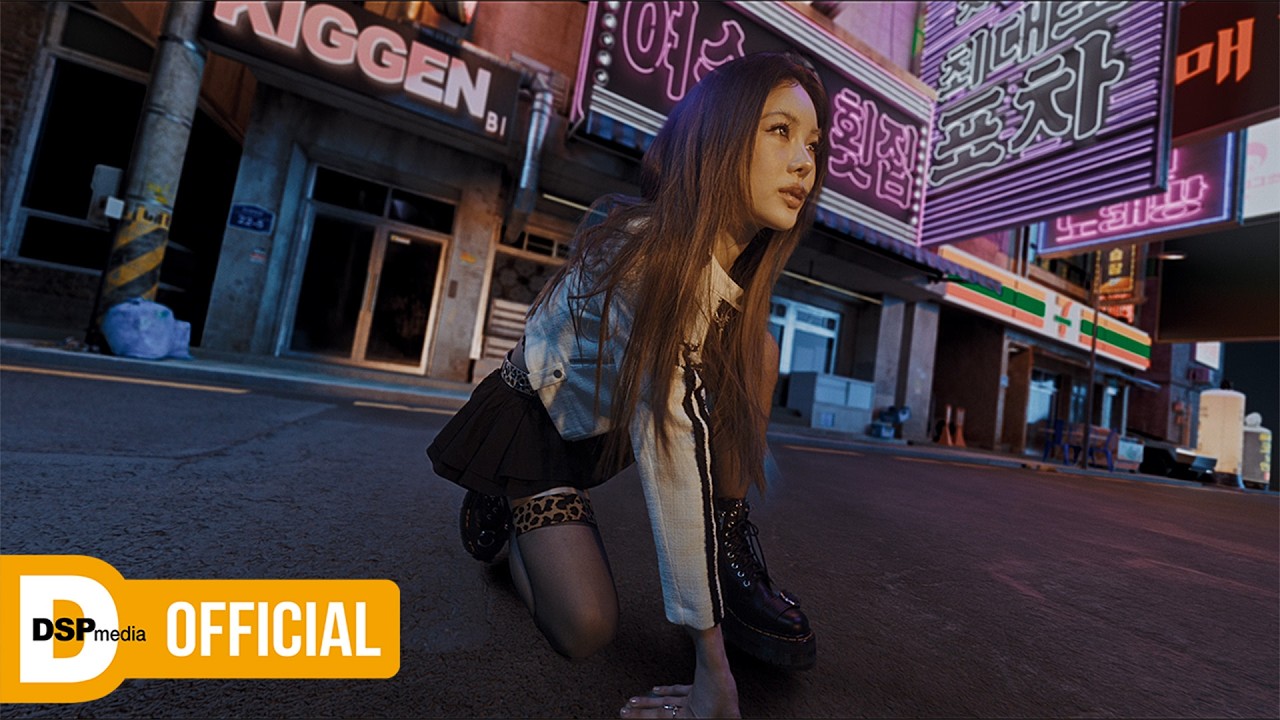
The official music video
The song: Auto-Tune is the paint, not the emergency
The most obvious thing about “we don’t go to bed tonight” is the vocal processing, which means half the conversation immediately becomes “can they even sing?” That is the wrong question. YOUNG POSSE have live footage, including a full-band performance of this song, and the production credit tells you exactly what is happening: KIGGEN and ADILE built a digicore track. Distorted vocals are part of the genre language. Complaining that the voices are processed is like watching a black-and-white film and reporting missing colors.
The useful question is whether the processing gives the song a personality or merely hides one. Here, it works more often than it does not. Sunhye’s rap delivery still bites through. Yeonjung keeps the pre-chorus readable. Jiana and Doeun move cleanly through the denser rhythmic sections. Jieun’s younger, brighter color survives the digital coating and stops the record from becoming one metallic voice.
The arrangement is deliberately unstable. Drums cut, restart, and shove the momentum sideways. The bass does not sit politely underneath; it lurches into the room. Synth details stack until the song feels like several browser tabs started playing at once, then the chorus simplifies around “dance, I wanna dance, I gotta dance.” That plain hook is the emergency exit. Without it, the production would be clever noise in expensive shoes.
The pre-chorus is my favorite structural choice. The members sing about Seoul never dying while the track briefly behaves like it understands pacing. The melody rises, the red-eye imagery appears, and the chorus gets a runway. YOUNG POSSE’s best songs know that chaos hits harder when somebody clears a small space around it.
The five-track single is basically a remix invitation
This release is where the idea gets genuinely interesting. The digital single contains the full song plus four separated versions: “drum don’t go to bed tonight,” “bass don’t go to bed tonight,” “synth don’t go to bed tonight,” and “yps acapella don’t go to bed tonight.” That is not a normal run of instrumental and sped-up filler. It breaks the record into usable parts.
Digicore grew from online scenes where songs are edited, flipped, layered, and passed around. Releasing the stems invites listeners to hear the construction and make their own versions. It also answers the production argument better than a press release could. Pull the drums out. Listen to how much work the bass is doing. Hear the vocal stack without the entire digital traffic jam. The song is not messy because nobody knew what to remove. The mess was designed in layers.
Fans noticed that separating those layers made the original easier to appreciate. That is the smartest kind of “content”: not another dance challenge with a celebrity standing nearby, but material that changes how listeners understand the record.
The music video: Seoul is the sixth member
Director Korlio follows the group through Seoul at night, but this is not a glamorous city-commercial version of wandering. The girls move through streets, stores, bedrooms, transportation, and party spaces as reality keeps slipping into fantasy. Lights smear. Objects gain the wrong scale. Ordinary night behavior starts behaving like a half-remembered dream.
The city gives the song a specific pulse. “Up all night, Seoul city never dies” is not wallpaper text once the camera shows the members borrowing the city’s energy. They are small inside it but never passive. The video keeps catching them in motion-running, riding, dancing, entering the next place-as if going home would end the story.
Korlio wisely avoids recreating the group’s earlier American hip-hop movie references. There is no need for another West Coast parody universe just because it worked in “XXL” and “ATE THAT.” This video belongs to their own city and their current age. The styling still carries YOUNG POSSE’s baggy, sporty DNA, but the environment feels immediate rather than borrowed.
The reality/fantasy blur also matches sleep deprivation. Stay awake long enough and every convenience-store light starts looking cinematic. You lose track of whether something happened, was filmed, or was imagined. The video never explains the difference because nobody at 3:47 a.m. is conducting a continuity audit.
Easter eggs, details, and the parts worth replaying
- Everybody wrote. The lyric credits include KIGGEN and all five members: Sunhye, Yeonjung, Jiana, Doeun, and Jieun. The “we” in the title is literal authorship, not just branding.
- The release is modular. Four companion tracks isolate drums, bass, synth, and acapella. They are stems disguised as a digital-single track list.
- The “Itaewon Hustler” preview came first. A March 2026 Free Throw episode teased the song in an alternate arrangement before the official release.
- The title is lowercase on purpose. It reads like a message typed too quickly in a group chat, not a formal comeback slogan.
- The oldest and youngest voices remain identifiable. Even under the processing, the arrangement keeps the five-member handoffs clear enough to feel like a posse cut.
- The night is local. After several videos built from American hip-hop iconography, this one lets Seoul provide the references and movement.
- The choreography credits go to m_use0ng and jxsmin_q. The movement keeps a loose party bounce while preserving enough sharp group punctuation for music-show cameras.
Why some fans hated it
Because it is abrasive. Because the vocal effects are constant. Because listeners who came for the chunky old-school rap production of “XXL” or “ATE THAT” did not ask for a hyperactive digicore pivot. Those are real criticisms, not evidence that somebody “doesn’t understand experimental music.” Understanding a choice does not obligate anyone to enjoy having it yelled through their headphones.
My complaint is not the Auto-Tune. It is that a few transitions feel more committed to proving the track can mutate than to making the mutation satisfying. YOUNG POSSE are good enough rappers and distinct enough personalities that I occasionally want the production to stop showing me its entire toy box.
But I would rather hear a young group make one divisive left turn than spend three years photocopying their first viral moment. This song still carries the crew energy, member-written humor, and rap instincts that made YOUNG POSSE recognizable. The surface changed. The group did not disappear inside it.
Credits and release file
Artist: YOUNG POSSE
Released: April 7, 2026
Genre: Digicore, hyperpop, hip-hop
Lyrics: KIGGEN, Sunhye, Yeonjung, Jiana, Doeun, Jieun
Composition: KIGGEN, ADILE
Arrangement: KIGGEN, ADILE
MV director: Korlio
Choreography: m_use0ng, jxsmin_q
Labels: DSP Media, BEATS Entertainment
The party is freedom, avoidance, and one unpaid morning bill
The song sells one night without consequences, but the exhaustion in the lyric keeps leaking through the fun. Staying out can be freedom from schedules, manners, parents, and the version of yourself who always makes the responsible choice. It can also be avoidance with better speakers. YOUNG POSSE is smart enough to let both readings dance in the same room.
At the micro level, five girls choose each other and the city over sleep. At the macro level, youth culture keeps turning burnout into proof that life is happening. Work harder, promote longer, answer faster, party later, and somehow wake up photogenic. The song does not solve that pressure. It laughs inside it, which feels more honest than pretending every sleepless night is empowerment.
RaeRae’s final take
“we don’t go to bed tonight” sounds like being twenty, overbooked, under-rested, and convinced the next location will fix your entire life. It is loud enough to annoy people, processed enough to start arguments, and smart enough to hand listeners the pieces so they can inspect or remix the damage.
I do not think it is YOUNG POSSE’s easiest song or their best first introduction. I do think it proves they understand the difference between having a concept and having curiosity. The group that started by raiding hip-hop history is now letting internet-native chaos chew on the formula. Some of it lands. Some of it splatters. Nobody went to bed.
Sources and further digging
Additional official link: YOUNG POSSE official website.