
STITCH! · SEASON 2 · EPISODE 22 · REACT
Stitch! Season 2 Episode 22: Find the Thing That Could End the World
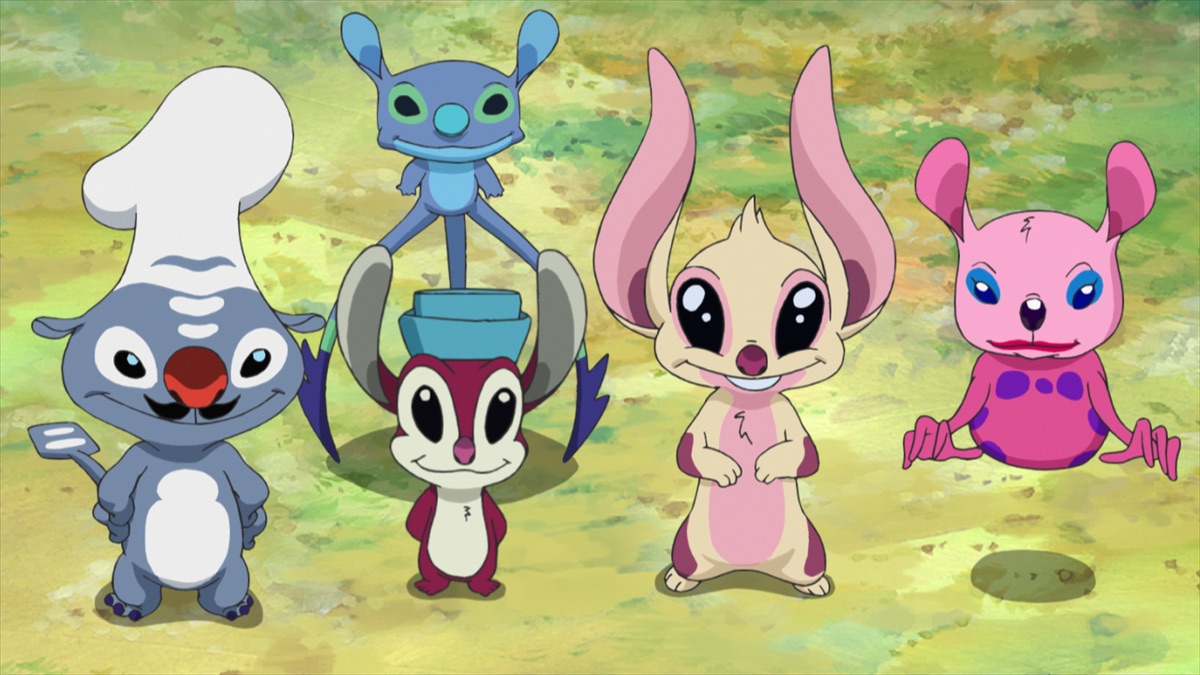
Hämsterviel threw out five experiments and somehow included the box he says could end the world.
The episode record before somebody opens the box
Episode: Broadcast Season 2, Episode 22
Japanese title: 探せ!世界の終わりを招く“アレ”
English card title: Find the Thing That Could End the World
First Japanese broadcast: April 27, 2010
Runtime: 22 minutes
Series branch: Stitch! Itazura Alien no Daibōken
Japanese voices central here: Kōichi Yamadera as Stitch and Motoko Kumai as Yuna Kamihara
Where to watch: Apple TV Japan carries the official episode listing. Availability changes by region.
Hämsterviel expels five experiments from his laboratory. They reach Izayoi Island and create chaos with abilities that look cute until civilians have to live around them. Hämsterviel then discovers that an unnamed item is missing and declares that the world could end if anybody else obtains it. The five discarded experiments apparently carried it away. Gantu and Reuben chase them to Earth without being told what the item is, leaving everybody to search for a catastrophic secret under maximum urgency and minimum information.
My first reaction: Hämsterviel threw out five people and lost his apocalypse box
The crisis starts with disposal. Hämsterviel labels the experiments weak or inconvenient, removes them from his space, and fails to check what leaves with them. Then he demands immediate recovery because one piece of his own dangerous inventory is missing. This is villain management by somebody who would lose nuclear codes inside a donation bag.
The comedy is earned, but the risk belongs to his negligence. The experiments did not understand the box because he kept its contents secret. Gantu and Reuben cannot recover it safely because he still refuses to provide clear identification. Every person endangered by the search is carrying the cost of his need for control.
Being called weak does not make an experiment harmless
Hämsterviel judges the five according to usefulness in domination. Their abilities may be inconvenient, small-scale, or poorly matched to his plans. On a populated island, those same abilities can disrupt food, communication, visibility, bodies, and public spaces.
Risk assessment should consider environment and consent rather than combat ranking. A cute experiment with a narrow function can cause serious harm when frightened, unsupervised, or treated like trash.
The five arrive as displaced beings before they become a nuisance
They have been expelled from the only base currently containing them. Whatever their prior conduct, displacement creates hunger, confusion, fear, and defensive behavior. The island sees chaos before hearing the reason they arrived.
Stitch should recognize the pattern. He was created for a function, rejected, and judged through destruction before someone offered relationship. Helping the five does not mean allowing unsafe behavior. It means containment with care and an inquiry into what they need.
The mysterious item needs a name, image, and handling instructions
Gantu and Reuben are ordered to retrieve something that could end the world without knowing what it looks like. That is not operational security. It is sabotage by omission. They cannot distinguish the object from ordinary luggage, warn civilians, or know whether touching it activates the threat.
Hämsterviel should provide a description, containment requirements, activation conditions, range, and emergency shutdown. If sharing that information risks misuse, he can separate duties and limit details. Sending agents blind creates greater exposure.
Nobody on Izayoi Island should open an unknown alien container
Curiosity is predictable, especially when the five experiments treat the box like stolen property or a toy. The island needs a simple rule: isolate the object, clear the area, and wait for Jumba to assess it remotely before moving it.
A dramatic warning that it might end the world can make somebody open it to confirm the claim. Crisis communication should describe actions rather than feed spectacle.
Cuteness is producing the same judgment error beauty produced last episode
Residents see small, appealing experiments and underestimate their abilities. Episode 20 used Zuruko’s beauty to show how presentation becomes character evidence. Episode 22 repeats the problem with creatures whose appearance invites touch and adoption.
Care and caution can coexist. People may offer food, shelter, and calm distance while waiting for ability information. Cuteness should never become permission to ignore consent or safety.
Stitch needs to separate rescue from capture
Gantu arrives to retrieve the experiments and the box. His approach may look like another attack, especially if he treats the five as property. Stitch may defend them automatically. The immediate goal is preventing activation and keeping civilians safe, not deciding permanent custody during a chase.
A temporary neutral shelter would allow Jumba to assess each experiment, verify the box, and hear why they fled or took it. Rescue protects them from abuse. It does not hide evidence or block a legitimate emergency response.
Reuben should demand information before accepting another impossible mission
Reuben often understands Hämsterviel’s incompetence while continuing to work around it. This mission places him and Gantu near a potentially world-ending object without basic instructions. Compliance stops being loyalty and becomes self-endangerment.
He can insist on a briefing, record Hämsterviel’s claims, and contact Jumba if needed. Refusing unsafe ambiguity would be growth for someone accustomed to treating every bad order like background noise.
The island needs incident command before five powers overlap
Each experiment’s ability may require a different response. Chasing all five through crowds lets effects combine unpredictably. Jumba should identify abilities while Obaa or local authorities coordinate evacuation, medical support, and restricted zones.
Stitch can handle physical interception. Yuna can communicate with the experiments. Gantu can provide transport. Assigning roles prevents everyone from running after whichever creature appears loudest.
The five may have taken the box as leverage rather than theft
Discarded beings sometimes take something valuable because it is the only bargaining power available. They may want safety, transport, revenge, or proof that Hämsterviel cannot ignore them. Understanding motive could make recovery faster.
Negotiation should offer concrete terms without rewarding threats to civilians. Safe surrender, independent placement, and protection from retaliation may matter more than punishment.
If they did not know the box was dangerous, language matters
Calling them would-be destroyers would be inaccurate if Hämsterviel hid the risk. They may have carried an ordinary-looking container during eviction. The person storing catastrophic material without labels owns the primary failure.
Once informed, the experiments become responsible for how they respond. Continuing to use the box after learning the danger changes the ethical situation.
Hämsterviel’s secret may be embarrassing rather than apocalyptic
His panic and vague language invite suspicion that the box contains something personally humiliating rather than world-ending. The episode can play that reveal for comedy, but responders cannot assume exaggeration while the risk remains unknown.
The correct protocol handles the claim seriously until evidence lowers the threat. Afterward, Hämsterviel should face consequences for false emergency language if he manipulated everyone to protect pride.
Jumba needs to verify the threat independently
Hämsterviel is an unreliable source with strong incentives to conceal, exaggerate, or redirect. Jumba should inspect sensor data, materials, and known technology before accepting the stated risk.
Independent verification protects against two opposite failures: dismissing a genuine catastrophe because Hämsterviel is dramatic, and mobilizing the island around a lie designed to recover private property.
The experiments need individual assessment instead of one group label
They arrived together, but they may have different motives, abilities, and levels of understanding. One may have taken the box while others followed. Collective punishment would erase those differences and reproduce Hämsterviel’s habit of sorting experiments by convenience.
Each deserves a name, medical check, account of events, and placement plan. Safety restrictions should match actual behavior and capacity.
Recovering the box cannot mean returning everyone to the laboratory
Hämsterviel expelled the five and may retaliate after recovery. Handing them back without conditions would treat emergency cooperation as consent to abuse. The box and the beings carrying it are separate custody questions.
Jumba or an independent authority should secure the item. The experiments should receive safe placement and due consideration of any harm they caused.
The island deserves a truthful debrief
Residents experienced multiple powers and a search for an unnamed threat. After containment, officials should explain what was safe to disclose, what precautions were taken, and whether any ongoing exposure remains.
Silence protects Hämsterviel’s reputation and leaves rumors to fill the gap. A debrief can preserve necessary security without pretending nothing happened.
The lab needs inventory controls designed for the villain running it
A catastrophic object should have access logs, tamper alerts, physical containment, and automatic notification when moved. Hämsterviel’s personal memory cannot be the security system.
The five experiments should never have been able to carry the item accidentally. Preventing recurrence requires changing storage, not congratulating Gantu for bringing it back.
The five need a translator before anybody interprets chaos as motive
Some experiments communicate through limited speech, gestures, or behavior shaped by their programmed function. Gantu may read refusal as defiance, while Stitch may read it as fear. Yuna and Jumba should create a calm setting where each experiment can indicate what happened, what the box means to them, and what they believe will happen if it is returned.
Communication support changes the investigation. One experiment may have packed the object deliberately, another may think it is food or shelter, and the remaining three may know nothing about it. Treating the group as one mind makes recovery less accurate and punishment less fair. It also gives Hämsterviel room to blame whichever being cannot explain itself clearly.
The group should use pictures, demonstrations, and simple choices if language is limited. No one should threaten activation to force an answer. The object is dangerous enough without turning questioning into another uncontrolled stimulus.
A world-ending claim requires escalation beyond the household
Stitch and Yuna regularly manage alien threats because the series trusts their competence. A credible extinction-level object exceeds the scope of two children, one household, and a rival’s retrieval team. Jumba should contact the appropriate galactic authority and provide a formal hazard report.
Escalation does not mean handing the island to soldiers who treat every experiment as hostile. It means bringing specialized containment, remote sensing, evacuation capacity, and legal oversight. Local knowledge remains essential because Yuna understands the terrain and Stitch understands the experiments. Expertise should add support rather than erase them.
If Hämsterviel lied about the scale, the report still matters. False catastrophic claims consume resources and can conceal another objective. An independent record makes it harder for him to revise the story after everyone has risked their lives.
Temporary custody needs written conditions even during cartoon chaos
Once the box is secure, Gantu may claim authority over everything associated with Hämsterviel’s laboratory. Jumba may claim creator responsibility. Stitch may claim family. None of those relationships alone determines what arrangement is safe for the five experiments.
A temporary plan should name where they stay, who supervises abilities, what contact Hämsterviel receives, and how incidents will be reviewed. The five need food, rest, medical assessment, and a chance to object to placement. Residents need clear safety boundaries. Written conditions prevent the loudest adult from converting emergency possession into permanent ownership.
The plan should also prohibit retaliation for carrying the box until investigators establish knowledge and intent. Hämsterviel cannot punish them for revealing his security failure. Accountability for any deliberate threat can occur through an independent process.
The box may contain information whose exposure ends a world socially
World-ending language often makes us imagine an explosion. The item could hold a biological agent, weapon, access code, identity archive, or secret capable of destabilizing governments and relationships without destroying the planet physically. Responders should avoid assumptions about the threat category.
That uncertainty affects containment. A sealed explosive, infectious sample, and data device require different handling. Jumba should inspect from a distance and avoid connecting unknown technology to local networks. Gantu should stop trying to grab the box until somebody explains whether movement, opening, power, or transmission activates it.
The content also affects disclosure after recovery. Residents deserve safety information, while publishing operational details could create another threat. An independent authority can separate public accountability from technical secrecy instead of allowing Hämsterviel to classify everything embarrassing.
What the episode gets right
The story ties abandonment to global risk. Hämsterviel creates the emergency by treating experiments as disposable and information as private power. The five are chaotic, but the adult with the laboratory built every condition around the chaos.
The mystery also forces enemies to overlap. Stitch, Gantu, Reuben, and Jumba need pieces of one another’s knowledge and capability. No single faction can respond safely alone.
What I wanted pushed further
I wanted explicit separation between recovering the box and deciding the five experiments’ future. Emergency custody should not return them automatically to the person who discarded them.
I also wanted Hämsterviel’s security failure documented. World-ending items need more than shouting after they vanish.
The receipt I am keeping
The receipt is Hämsterviel realizing his weak experiments left with the one object capable of making everyone take them seriously. He dismissed their value and then discovered they controlled his entire attention.
My second receipt is Gantu searching for something he cannot identify. Hämsterviel wants obedience more than competence, even while the world supposedly hangs in the balance.
Final verdict
“Find the Thing That Could End the World” works because its apocalypse begins as a management failure. Five discarded experiments, one unsecured box, and an owner addicted to secrecy create a crisis that strength alone cannot solve.
The responsible ending secures the object, protects the island, assesses each experiment individually, and refuses to return vulnerable beings to an unsafe lab by default. Hämsterviel can recover neither trust nor control through panic.
Keep watching
Return to Season 2 Episode 21 or open the complete Stitch! episode directory.