
STITCH! · SEASON 2 · EPISODE 19 · REACT
Stitch! Season 2 Episode 19: The Greatest Power in the Universe?!
Stitch completed forty-three good deeds. Hämsterviel stole the choice behind the last ones and waited for the universe to honor the paperwork.
The episode record before the Chitama Stone starts glowing
Episode: Broadcast Season 2, Episode 19
Japanese title: スティッチ、宇宙一の力を手に入れる?!
English card title: The Greatest Power in the Universe?!
First Japanese broadcast: March 9, 2010
Runtime: 23 minutes
Series branch: Stitch! Itazura Alien no Daibōken
Japanese voices central here: Kōichi Yamadera as Stitch and Motoko Kumai as Yuna Kamihara
Where to watch: Apple TV Japan carries the official episode listing. Availability changes by region.
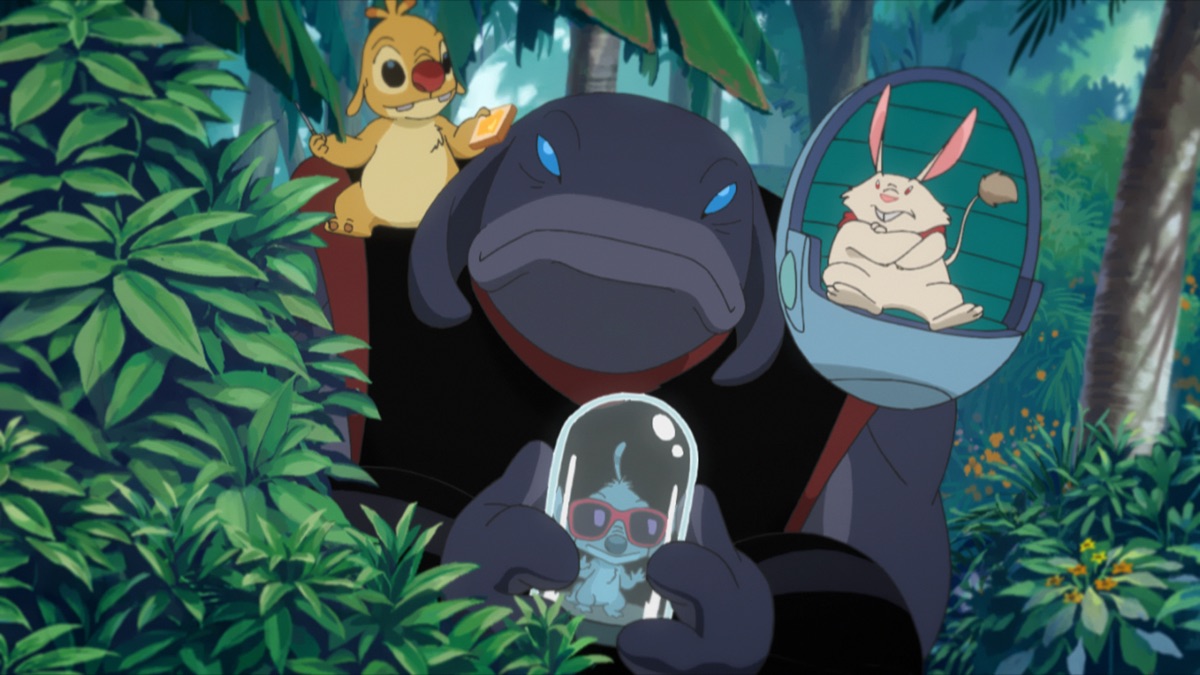
Stitch is close to completing the forty-three good deeds required for the Chitama Stone to grant his wish for the greatest power in the universe. Hämsterviel learns how near the goal is and uses Experiment 383, Swirly, to hypnotize Stitch. Under control, Stitch continues performing good deeds so Hämsterviel can seize the reward. When the forty-third deed is completed, the stone begins to shine and the entire moral accounting system faces the question it has avoided from the beginning: who actually earned the wish?
My first reaction: Hämsterviel found the exploit in a morality points program
The good-deed counter has always been suspicious because it turns ethics into accumulation. Hämsterviel treats it exactly like a badly designed reward system. If the stone counts outcomes without checking intent, consent, or authorship, he can control the participant and claim the prize. The loophole reveals the weakness already built into the rules.
Stitch’s long journey still matters. He has practiced helping people, formed attachments, and changed through repetition. But the final deed occurring under hypnosis forces the stone to distinguish growth from compliance. A supernatural judge of character should manage more nuance than a cafe loyalty card.
Hypnotized goodness is useful behavior without moral agency
People helped by Stitch may receive real benefits while he is controlled. A rescued person is still safe. A repaired object is still repaired. The outcome matters to the recipient, but it cannot prove Stitch chose goodness in that moment. Swirly removed the decision that gives the act moral meaning.
That distinction should protect Stitch rather than disqualify his entire history. He is a victim of coercion. The problem belongs to Hämsterviel, who converted Stitch’s body and accumulated work into an instrument for theft.
The forty-third deed cannot belong to the person issuing the command
Hämsterviel may argue that he directed the action and therefore produced the result. Direction through hypnosis is not leadership. He did not persuade Stitch, share a goal, or accept responsibility for risk. He overrode another mind to harvest a reward.
Credit should never flow upward from coerced labor to the controller. If the stone recognizes Hämsterviel’s claim, it endorses domination as a route to virtue.
Swirly is being used as a weapon too
Experiment 383 has a capacity Hämsterviel exploits. The story should avoid treating Swirly as a neutral gadget or sole culprit. An experiment designed around hypnosis needs boundaries, care, and protection from handlers who turn its ability against others.
Once rescued, Swirly should learn consent rules and refusal. Jumba needs a reliable reversal procedure. Stitch deserves to know what happened while his autonomy was absent and whether any commands remain active.
Stitch’s body performs kindness while his mind is somewhere else
The image is unsettling because friends may praise him without noticing the control. Familiar behavior can hide cognitive violation. Yuna should pay attention to changes in speech, expression, responsiveness, and memory rather than assuming every good deed proves he is fine.
If Stitch cannot recall actions or seems mechanically focused on the counter, the goal should pause. No reward is worth continuing while his mind may be compromised.
Yuna must choose Stitch over finishing the quest
She knows how much the forty-three deeds mean to him. Stopping the process near completion may feel like destroying his dream. Protecting him requires exactly that willingness. The counter can wait. His autonomy cannot.
A strong friendship refuses to use a controlled person even for a result they previously wanted. Yuna should remove him from the stone, seek Jumba’s help, and let the final decision happen after recovery.
The Chitama Stone has observed an entire season of moral growth
If the stone possesses enough awareness to grant cosmic power, it should know more than a number. It has evidence of Stitch helping reluctantly, selfishly, generously, accidentally, and eventually because people matter to him. That pattern says more than whether deed forty-three crossed a line on the counter.
The stone’s judgment should consider the person Stitch became. Otherwise every earlier relationship becomes paperwork submitted toward a weapon upgrade.
Wanting ultimate power has changed meaning since Stitch arrived
At the beginning, Stitch wants strength because strength feels like security, identity, and status. He was created to be powerful and measures himself through domination. By Episode 19, he has used existing strength to protect a community and learned that relationships can survive weakness.
The crucial question is whether he still wants the same wish in the same way. Completing the deeds should earn him the freedom to reconsider, not lock him into an old desire.
A wish made under hypnosis cannot be valid
Even if Stitch speaks the words, consent is absent. The stone should refuse any transfer until he is fully conscious, informed, and free from coercion. Cosmic magic needs the same basic standard we expect from an ordinary agreement.
Hämsterviel cannot stand nearby and redirect the wish through commands. The granting process should isolate the recipient, verify identity, and permit withdrawal.
Hämsterviel is trying to steal a history, not one burst of power
The reward represents dozens of choices, relationships, mistakes, and repairs. Hämsterviel wants the benefit without living any of that history. His plan treats moral development as transferable currency.
That theft is personal. Stitch built the total with Yuna and the island. Seizing it would convert their shared life into fuel for the person who repeatedly endangered them.
The island should not celebrate the milestone until Stitch can remember it
Friends may see the glowing stone and rush into a party. Celebration would intensify the violation if Stitch later learns everybody cheered while he was controlled. The first response should be medical and magical assessment.
Once safe, Stitch can decide whether the forty-third deed counts for him. The community can recognize the people helped while separating that outcome from the stolen choice.
Jumba owes Stitch protections against cognitive control
Jumba knows experiments capable of hypnosis, memory theft, emotional redirection, and behavioral control. After repeated incidents, improvised reversal is not enough. Stitch needs detection tools, emergency contacts, and a recovery protocol.
Jumba should also explain limitations honestly. Families cannot protect one another from powers they are not allowed to understand.
Recovery includes more than breaking the trance
Stitch may feel violated, ashamed, or uncertain which actions were his. Friends should tell him what occurred without joking about obedience. He needs reassurance that being controlled does not reveal a secret desire to serve Hämsterviel.
He should rest, review any gaps, and decide how to address people he encountered. Apologies may be unnecessary for helpful acts, but explanation restores his ownership of the story.
The good-deed counter has always risked teaching performance
Counting can motivate a child or chaotic alien to practice prosocial behavior. It can also encourage selecting easy deeds, demanding recognition, and treating recipients as points. The series has been most interesting when Stitch forgets the counter because somebody genuinely needs him.
Reaching forty-three should retire the system. Continuing to quantify goodness after it has served its teaching purpose would keep Stitch dependent on external validation.
Power itself is not the moral reward the season has built
Stitch already possesses extraordinary strength. What he lacked was connection, self-regulation, trust, and a reason to use ability carefully. The good deeds gave him those capacities through practice.
If the stone grants another physical upgrade, the emotional journey risks shrinking into a transaction. The greater reward is choosing what power should protect.
Hämsterviel’s plan should expose his own emptiness around power
He imagines ultimate strength will secure obedience and status. Yet he relies on stolen minds because nobody chooses to follow him. More force cannot repair that isolation.
Episode 18 briefly gave him admiration through accidental beauty. Episode 19 shows him rejecting the slow path of honest accountability for another shortcut. The contrast makes his choice sadder and more deliberate.
The stone should return the final choice to Stitch
After Swirly’s control ends, the stone can ask what he wants now. Stitch may choose power, modify the wish, give it up, or direct it toward protecting the island. Any answer becomes meaningful because he owns it.
Yuna should avoid steering the wish through guilt. She can remind him of consequences and trust the person the forty-three deeds helped form.
The people helped during the trance still need an honest explanation
A strange ethical wrinkle remains after Stitch wakes. Some residents received genuine assistance from actions he did not choose. They may want to thank him, while he may feel disconnected from the events or violated by praise attached to the period of control. Nobody should force him to accept gratitude as proof the hypnosis produced something good.
Yuna can explain that Hämsterviel controlled Stitch and that the helpful outcomes do not excuse the coercion. The residents can appreciate being helped while supporting his recovery. If anybody was placed at risk by mechanical obedience, those incidents need separate review. A hypnotized helper cannot adapt morally when a command produces unintended harm.
Stitch may choose to revisit the people later and perform a freely chosen act of care. That does not replace or cleanse what happened. It gives him a way to reconnect his values with relationships Hämsterviel entered through his body. The choice must remain his, including the choice to avoid reenacting the lost time.
Forty-three points cannot measure the people who made the deeds possible
The counter centers Stitch, but Yuna, Obaa, Jumba, Pleakley, and the island created the conditions in which he learned to help. They identified needs, corrected mistakes, accepted repair, and kept him connected when his original motive was still the wish. Moral growth appears individual on the counter while remaining communal in practice.
Hämsterviel’s theft ignores that network. He imagines the reward sits inside Stitch like a completed battery. In reality, the deeds contain trust extended by people Hämsterviel has threatened. He cannot separate the power from the community history and still claim to have earned anything.
The finale of the quest should thank that community without turning them into supporting objects in Stitch’s achievement. The wish has consequences for everyone living near him. They deserve information about what the stone can do and a voice in safety planning, even though the final moral choice belongs to Stitch.
Ultimate power needs a governance plan before anybody touches it
Suppose the stone truly grants strength beyond anything in the universe. That power affects the island, Earth, and every force capable of detecting it. Stitch needs to understand duration, limits, reversibility, transfer, and whether the gift alters judgment. Jumba should examine what can be measured without hijacking the sacred process.
There also needs to be a plan for coercion after the wish. Hämsterviel already used hypnosis before the upgrade. More power would make another successful control event catastrophic. Swirly detection, mental safeguards, trusted emergency authority, and a way to suppress the gift temporarily belong in the conversation.
None of this means Stitch is unworthy. Responsibility grows with capacity. The season has spent forty-three deeds teaching that strength exists inside relationships and consequences. Granting the reward without preparation would abandon the lesson at the moment it matters most.
What the episode gets right
Bringing the good-deed quest to its threshold under coercion is a strong way to test its philosophy. The plot refuses to let a number settle morality. It asks whether intent, consent, and growth matter when the visible requirement has been met.
Swirly also turns Stitch’s greatest strength, relentless action, into vulnerability. The same focus that carried him through forty-three deeds keeps him moving while controlled. Yuna must recognize the person missing behind the productivity.
What I wanted pushed further
I wanted the Chitama Stone’s rules stated clearly. A system granting cosmic power should verify the recipient and reject coerced wishes. Ambiguity is useful for mystery, but safety cannot depend on Hämsterviel forgetting another loophole.
I also wanted more recovery after hypnosis. Stitch’s autonomy has been violated, and one heroic decision cannot process that for him.
The receipt I am keeping
The receipt is the glowing stone responding to a deed performed by Stitch’s body under somebody else’s command. The magic has to decide whether it counts behavior or character. So does the audience.
My second receipt is Hämsterviel waiting to collect a reward built from relationships he tried to destroy. He understands the counter and misses the meaning of every point.
Final verdict
“The Greatest Power in the Universe?!” brings the series premise to the right crisis. Stitch reaches forty-three, but hypnosis strips the milestone of easy triumph. Hämsterviel can command behavior. He cannot inherit the moral life that produced the reward.
The episode succeeds when the stone returns choice to Stitch. His greatest power is no longer destruction or even the promised upgrade. It is the ability to decide who he wants to be after somebody else tried to use his goodness against him.
Keep watching
Return to Season 2 Episode 18 or open the complete Stitch! episode directory.