
STITCH! · SEASON 2 · EPISODE 9 · REACT
Stitch! Season 2 Episode 9: Stitch’s Christmas Present
Taka was excluded from Christmas. Wishy-Washy gave his anger an island-wide budget.
The episode record before one bad wish ruins Christmas
Episode: Broadcast Season 2, Episode 9
Japanese title: スティッチのクリスマスプレゼント
English card title: Stitch’s Christmas Present
First Japanese broadcast: December 15, 2009
Runtime: 22 minutes
Series branch: Stitch! Itazura Alien no Daibōken
Japanese voices central here: Kōichi Yamadera as Stitch and Motoko Kumai as Yuna Kamihara
Where to watch: Apple TV Japan carries the official episode listing. Availability changes by region.
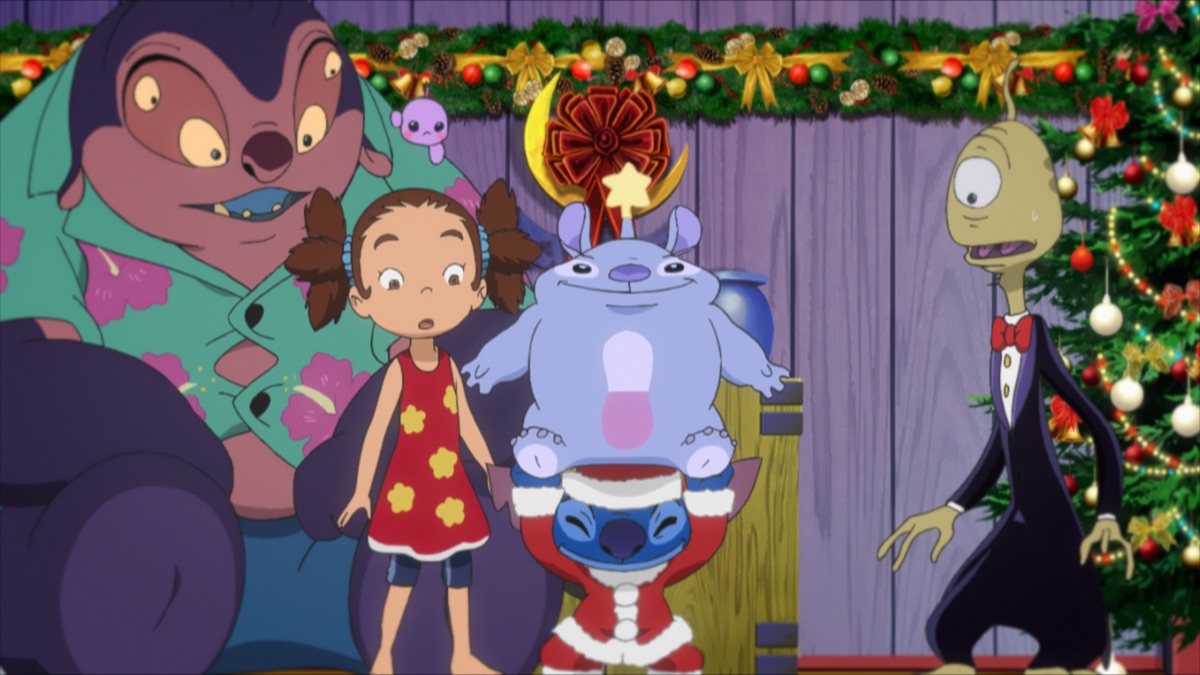
Izayoi Island is busy preparing for Christmas when Wishy-Washy arrives. The experiment can grant spoken wishes, which sounds adorable until Taka is excluded from a Christmas party and wishes that the celebration would turn into a monster party. Wishy-Washy grants it literally. The town’s decorations and holiday cheer collapse into panic, leaving Stitch to catch the monsters and somehow return Christmas to the people who were enjoying it before one lonely child finally said the ugly part aloud.
My first reaction: somebody invited the monster before Wishy-Washy did
The episode wants the magical wish to be the inciting disaster, but the social disaster happens first. Taka is left out. We can argue about whether he behaves badly, whether the other children have reasons to dislike him, and whether a party host has the right to choose guests. All of that can be true while exclusion still hurts. The episode’s monster panic is the loud version of a quieter choice the group already made.
Taka does not invent his anger in a vacuum. He watches an entire island perform togetherness while learning that the word everyone has an asterisk beside his name. Then an alien with no emotional judgment hands him the power to make the outside world match the inside of his chest. That is reckless magic, but the wish has a recognizable human origin.
Wishy-Washy is a consent problem wearing holiday sparkle
An experiment that grants wishes needs more safeguards than a cheerful entrance and a cute name. A spoken wish can be impulsive, sarcastic, frightened, coerced, or badly phrased. Children test language before they understand consequences. Wishy-Washy treats every sentence like a signed contract and skips the part where the speaker confirms meaning, scope, duration, and impact on other people.
Jumba knows what experiments can do. Pleakley knows how quickly a public celebration can become chaos. They should secure Wishy-Washy before letting the experiment wander through a crowded holiday. The responsible protocol would include a quiet environment, one informed adult, a cooling-off period, and a way to reverse an unsafe wish immediately. Instead, the island receives magical customer service with no returns desk.
Taka’s exclusion is not permission to terrorize everybody
Pain explains the wish. It cannot excuse the harm. The monsters frighten children, disrupt homes, endanger public spaces, and punish people who never made the guest list. Taka takes a private injury and expands it until strangers must carry it. That is retaliation rather than justice, even if the original exclusion was cruel.
The correction should hold both truths. The party group needs to answer for how it treated him, and Taka needs to answer for using power against the whole island. If the adults choose only one truth, they teach the wrong lesson. Calling him a villain erases the social wound. Calling him merely misunderstood erases everybody who had to run from monsters because he wanted company in his misery.
Christmas makes the exclusion sharper because the town keeps advertising belonging
Holiday stories repeat words like family, friendship, generosity, and home until they become decorations of their own. A child outside the party does not hear those words as comfort. He hears a promise everyone else is allowed to claim. Taka’s anger grows inside the gap between the town’s public message and its private behavior.
That gap matters more than whether Christmas is technically his favorite holiday. Rituals organize attention. Lights go up, schedules change, gifts appear, and adults tell children the season reveals who cares. When a child is visibly omitted, the omission can feel like a community verdict. The island needs to notice that before magical violence forces everybody to look.
A private party can still produce public consequences
Nobody must invite every person to every gathering. Forced friendship creates its own humiliation, especially when the invitation arrives only because adults demand it. But children and adults can set boundaries without staging exclusion as entertainment. They can avoid discussing the party in front of the uninvited child, plan a broader community event, and address conflicts directly instead of turning one person into the accepted target.
If Taka has hurt people before, the answer is not pretending the history does not exist. The group can name what happened, state what repair would require, and decide whether trust is possible. A boundary with reasons and a path forward differs from a social pile-on. The episode never needs to make every child best friends. It needs the adults to stop acting surprised that deliberate isolation produces rage.
Stitch understands the monster problem faster than the loneliness problem
Once the wish takes effect, Stitch knows what to do. He can chase, wrestle, improvise, and protect the island. Physical danger speaks his first language. Taka’s humiliation is harder because there is no opponent Stitch can punch without making the situation worse. The emotional rescue requires listening to somebody who caused harm and still deserves to be heard.
That is useful growth for Stitch. He cannot solve every broken relationship by capturing an experiment. Wishy-Washy may trigger the transformation, but returning the town to normal does not repair the guest list, the resentment, or the belief that Taka is welcome only when everybody fears what he might do. Stitch has to stay after the spectacle ends.
Yuna should be the person who asks what happened before the wish
Yuna often recognizes the hurt Stitch barrels past. She can ask Taka who excluded him, what was said, and what he wanted before anger took over. That conversation does not delay accountability. It gives the adults enough information to respond to the actual conflict instead of treating the wish as random bad behavior.
She also needs a boundary. Listening does not mean becoming the sole emotional caretaker for a boy who endangered the island. Yuna can show compassion while involving Obaa, teachers, and other adults. Children should not have to conduct restorative justice alone because the grown-ups were busy hanging decorations.
The adults have been missing from the guest-list politics
A party exclusion rarely appears from nowhere. Adults buy supplies, approve locations, arrange transportation, and hear children talk. Somebody knew Taka was out. If the exclusion followed a serious conflict, adults should already have been helping the children resolve it. If it was casual cruelty, adults should have interrupted it before the holiday made it a public identity.
Their job after the crisis is not ordering an invitation and calling the matter closed. They need separate conversations with Taka and the other children, factual review of prior harm, safety planning, and an agreement about future group events. A coerced seat at one Christmas table can become another way to tell him everyone wishes he were somewhere else.
Wishy-Washy turns a feeling into an environmental command
Taka says Christmas should become a monster party. Wishy-Washy does not ask what a monster means to him or who should be affected. The experiment converts metaphor into material danger. That mechanism captures something honest about dysregulated anger. A child may say the whole day is ruined because his own day feels ruined, then act in ways that spread the feeling.
Adults cannot punish the sentence while ignoring the state underneath it. They can stop the dangerous action, make the child help repair damage, and teach language for the original need. Taka might have said, ‘I feel humiliated that everyone is celebrating without me, and I want somebody to notice.’ That sentence would not guarantee an invitation, but it would give the community a chance to answer him without monsters.
The monsters are funny until you remember children are running from them
Holiday chaos invites comedy. Decorations become threats, familiar spaces look ridiculous, and Stitch gets a physical set piece. The episode can enjoy that energy without pretending danger has no emotional residue. Small children may not understand that the monsters came from a reversible alien ability. They experience a town they trusted becoming unsafe during a celebration adults promised would be joyful.
After Stitch catches the creatures, the island needs reassurance and explanation. Adults should check injuries, reunite families, restore damaged spaces, and tell children in simple terms what happened. A cheerful reset cannot be the only recovery plan. Magic may reverse objects faster than nervous systems.
Jumba owes the island an experiment safety plan
Wishy-Washy is another piece of Jumba’s history reaching civilians. He may not have activated the wish, but he understands the design and carries responsibility for containment. He should explain activation conditions, range, limits, reversal, and whether one wish can conflict with another. Keeping that knowledge private makes every rescue depend on his dramatic arrival.
The experiments are family, and family status does not erase risk management. Wishy-Washy deserves kindness, stable care, and a purpose that does not invite exploitation. The island deserves notice before an ability capable of rewriting public reality joins a crowded event. Both responsibilities can exist without treating the experiment like a weapon or pretending the power is harmless.
Pleakley loves Christmas performance more than Christmas logistics
Pleakley can explain traditions, costumes, food, and the emotional importance of a television special. He is less prepared for the work that makes a celebration safe and inclusive. That contrast is funny because it is painfully familiar. People love producing holiday atmosphere while leaving guest conflict, accessibility, cleanup, and emotional fallout to somebody else.
He could become useful by organizing a community gathering after the emergency, checking which families need support, and making sure the event offers more than one way to participate. Christmas spirit should look like labor. Otherwise it is lighting wrapped around the same social habits that made Taka feel disposable.
A repaired Christmas cannot depend on Taka performing gratitude
If the group eventually includes him, the episode should resist demanding immediate happiness. Taka may feel embarrassed, suspicious, or angry that belonging arrived only after catastrophe. The other children may feel frightened and resentful. A sincere repair makes room for those reactions instead of requiring a smiling group picture as proof the lesson worked.
Taka owes apologies and practical restitution. The group owes honesty about exclusion. Adults owe follow-through after the decorations come down. None of those obligations cancels the others. Reconciliation becomes credible when people can tell the truth without one child carrying every failure or escaping every consequence.
The gift is not an invitation. It is a route back into community
A Christmas present can become a shortcut in stories like this. Hand Taka a wrapped box, let the music rise, and pretend an object answers social rejection. He does not primarily need merchandise. He needs evidence that conflict can be addressed without banishment and that his worst moment will not become his permanent name.
The better gift is a process: somebody listens, somebody tells the truth, harm gets repaired, and future gatherings have clearer boundaries. A present can mark that process, but it cannot replace it. Stitch delivers Christmas when he helps restore the possibility of relationship, not when he saves the decorations.
Taka still needs to learn what anger can and cannot authorize
Being excluded does not give him ownership over everyone else’s celebration. He can protest, leave, seek an adult, plan another event, or refuse contact with people who hurt him. He cannot turn the town into collateral damage. The difference needs direct language because shame alone will teach him to hide the next wish rather than manage it.
Repair should fit his age and the damage. He can help clean public spaces, apologize to people frightened by the monsters, and work with adults on a safety plan around Wishy-Washy. Consequences should build capacity instead of confirming his belief that the community wanted him gone from the beginning.
Wishy-Washy needs boundaries that protect the experiment too
Everyone focuses on the person making the wish, but Wishy-Washy is vulnerable to manipulation. Adults and villains can use the experiment as a tool while blaming it for the outcome. Teaching Wishy-Washy to pause, verify, and refuse harmful commands protects the island and gives the experiment agency beyond obedience.
A safe home would not advertise unlimited wish fulfillment. It would provide supervision, clear language, and activities where the ability can help without controlling other people. Small, reversible wishes might support community projects. Wishes about bodies, minds, weather, public spaces, or unwilling people should be automatically refused. Cute power still needs ethics.
The holiday setting exposes who gets counted as family
Izayoi Island talks constantly about connection, but community is tested by the difficult child, not the easy guest. Taka does not need universal approval. He does need adults who refuse to let conflict harden into permanent social exile. The same principle applies to experiments whose destructive designs make them hard to place.
Stitch understands that fear can trap somebody inside an identity other people chose. He was built for destruction and still found a home. That history gives him a reason to take Taka seriously without romanticizing what Taka did. He can recognize the lonely child and stop the dangerous choice in the same breath.
What the episode gets right
The episode gives the Christmas special a problem sharper than missing presents. It puts exclusion at the center and lets one reckless wish expose how fragile the island’s togetherness becomes when a child is already outside it. Wishy-Washy makes the emotional premise visible without requiring Taka to deliver a polished speech about loneliness.
It also gives Stitch an excellent kind of conflict. He gets monsters to chase, but strength cannot finish the story. Saving Christmas requires understanding why somebody wanted it destroyed. That question keeps the episode from becoming a decorative holiday detour.
What I wanted pushed further
I wanted a clearer account of why Taka was excluded. Without it, the party group risks becoming casually cruel or Taka risks becoming a convenient victim depending on what the plot needs. Specific history would let the episode distinguish a safety boundary from social punishment and give the repair more weight.
I also wanted the adults to claim their share of responsibility. A whole town celebrates togetherness while children manage a severe exclusion conflict alone, then Stitch handles the consequences. Obaa, teachers, Jumba, and Pleakley should help create the aftercare. Christmas does not become kinder because the monsters disappear on schedule.
The receipt I am keeping
The receipt is Taka’s wish. He does not ask to join the party. He asks for the party to become monstrous. Rejection has already convinced him that participation is unavailable, so destruction feels like the remaining form of influence. That is the moment the adults should have prevented long before Wishy-Washy arrived.
My second receipt is the island’s shock. Everyone understands the monsters immediately and the exclusion only after the monsters force attention. Communities often respond faster to disruptive pain than quiet pain. Taka becomes visible when his loneliness inconveniences everybody else. The lesson should not be that children need bigger emergencies to be heard.
Final verdict
“Stitch’s Christmas Present” works because its holiday crisis begins with a social choice, not a broken ornament. Taka is wrong to endanger the island. The children who excluded him and the adults who ignored the conflict do not become innocent because his response was worse. A useful ending holds the entire chain instead of selecting one convenient villain.
Stitch earns the rescue when he protects people and returns for the harder conversation. Wishy-Washy needs ethical boundaries. Taka needs consequences, support, and a path back. The party group needs accountability without forced friendship. If the island can do all of that, Christmas becomes more than restored decorations. It becomes proof that belonging can survive an ugly truth.
Keep watching
Return to Season 2 Episode 8, continue to Season 2 Episode 10, or open the complete Stitch! episode directory.