
STITCH! · PRODUCTION SEASON 2 · EPISODE 3 · REACT
Stitch! Season 2 Episode 3: Halloween Is Stitch vs. Vampire
Junior found one matching cape and assigned Stitch a whole family job. Gantu saw the gap before any adult built a safety plan.
The episode record before the costume stops being pretend
Episode: Production Season 2, Episode 3
Japanese title: ハロウィーンはスティッチ vs.バンパイア
English card title: Halloween Is Stitch vs. Vampire
Original Japanese release: October 27, 2009
Production branch: Stitch! Itazura Alien no Daibōken
Japanese voices central here: Kōichi Yamadera as Stitch and Motoko Kumai as Yuna Kamihara
Where to watch: Apple TV Japan carries an official episode listing. Availability changes by region.
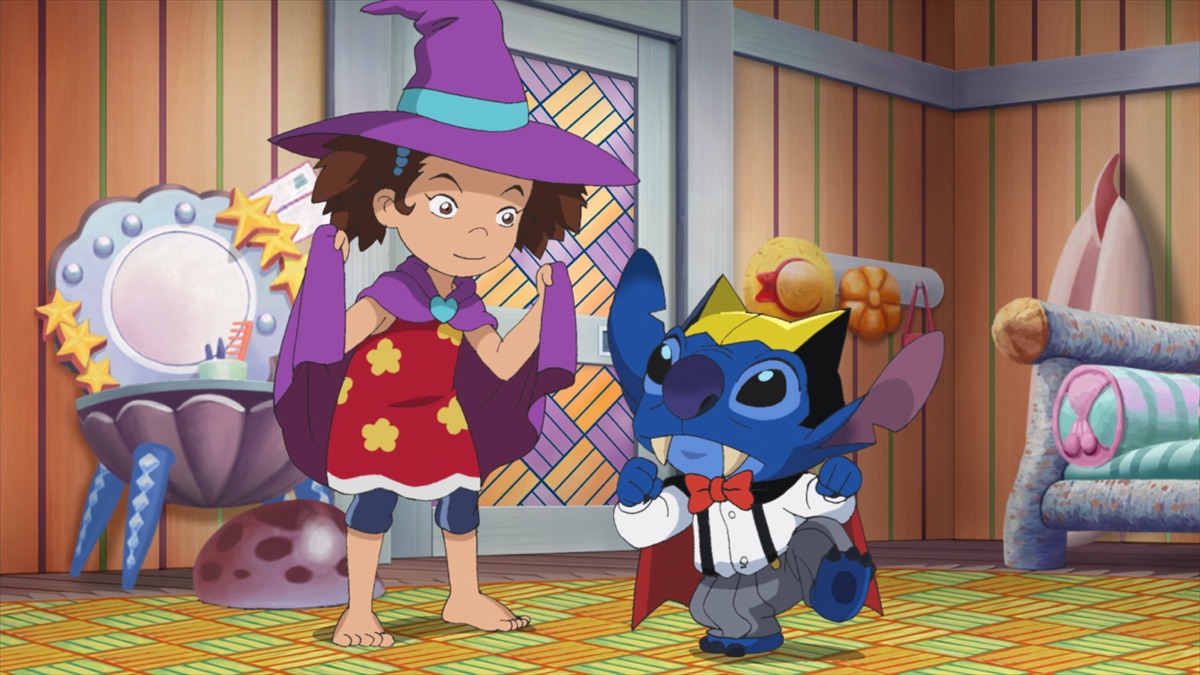
Yuna dresses as a witch and Stitch dresses as a vampire for Halloween. In town, they meet a boy wearing a matching vampire look. Junior is no costumed child. He is a real young vampire who attaches himself to Stitch and calls him big brother. Stitch finds the attention exhausting but cannot safely abandon him. Gantu, infiltrating Izayoi Island under Hämsterviel’s orders, captures Junior and turns a confusing family role into a rescue crisis.
My first reaction: matching capes are not a custody agreement
Junior sees Stitch’s vampire costume and decides he found an older brother. The mistake is funny because Stitch dressed for one night and accidentally stepped into a permanent title. It is also painfully recognizable. A lonely child can attach meaning to the first person who looks familiar, especially when that person seems strong enough to make the world feel safe.
Stitch never consented to become Junior’s guardian. That matters. It does not give him permission to abandon a vulnerable child in danger. The episode sits in the uncomfortable space between refusing an imposed identity and responding humanely to the person who imposed it.
Junior is a child before he is a supernatural reveal
The vampire reveal can turn Junior into a Halloween prop. His more important trait is dependence. He follows Stitch, uses a family title, misses danger cues, and needs somebody to help him locate safe adults. Whether he has fangs changes the risk assessment. It does not erase the developmental reality in front of everyone.
Adults should ask where Junior came from, who cares for him, whether anybody is searching, and what conditions he needs to remain healthy. A child appearing alone at night requires more than delight over a convincing costume. Yuna and Stitch can be kind while contacting Obaa, Jumba, or local authorities who understand unusual beings.
Supernatural children often receive adult expectations because their powers look dangerous. Junior may be physically capable of things Yuna cannot do and still lack judgment. Strength does not cancel the need for protection.
Stitch recognizes the burden because people assign him roles too
Stitch has been called experiment, weapon, pet, cousin, student, hero, and troublemaker. Other people routinely decide what his body means before asking who he wants to be. Junior’s “big brother” label puts Stitch on the opposite side of that experience. Now somebody needs him to inhabit a role he did not choose.
His irritation is understandable. Big brother can mean constant attention, emotional regulation, physical protection, and blame when the younger child takes a risk. Stitch did not prepare for any of it. He is also still learning how to manage his own impulses.
The kind response is a boundary with care: “I am not your brother, but I will help you find your family.” The episode gets messy because Junior hears safety in the title, while Stitch hears a cage. Both needs deserve language clearer than pushing him away or pretending the relationship already exists.
Yuna should not translate attachment into an order
Yuna naturally wants Stitch to look after Junior. She sees a small child adoring her friend and knows Stitch can protect him. Her instinct can become unfair if she treats Junior’s preference as an assignment Stitch must accept. Caregiving works poorly when the caregiver is pressured, confused, and already resentful.
Yuna can share responsibility. She can stay with Junior, ask questions, establish a safe location, and call adults. She can also help Stitch communicate without cruelty. Supporting the child does not require turning Stitch into the only available parent because their costumes match.
Halloween makes danger harder to identify
Costumes deliberately scramble appearance. A real vampire can move through town without attracting the attention his needs might normally trigger. Gantu can also hide more easily because everybody expects unusual silhouettes, masks, and strangers. The celebration creates freedom and vulnerability together.
A safe community does not ruin Halloween by preparing for lost children. Meeting points, visible trusted adults, buddy rules, and clear instructions help people enjoy the night. Yuna and Stitch wandering into an actual supernatural custody problem demonstrates why “everybody looks strange tonight” cannot become “nobody asks questions tonight.”
Calling Stitch big brother gives Junior hope and gives Gantu leverage
Junior’s attachment makes his behavior predictable. He will follow Stitch, defend him, and approach anything that appears connected to him. Gantu can use separation, a fake message, or the promise of reunion to move Junior where he wants. The family title becomes a map of the child’s vulnerability.
Predators often exploit the trust between a child and somebody else. The child does not have to trust Gantu personally if Gantu can borrow Stitch’s name or create urgency. Junior needs a password, a buddy, and the rule that no stranger changes the plan without verification.
Stitch also needs to understand that rejecting the title will not instantly dissolve the attachment. Once Junior has organized safety around him, Stitch has to transfer care deliberately. Walking away creates the exact opening Gantu needs.
Gantu is still choosing to kidnap a child
Hämsterviel gives orders, but Gantu executes them. Capturing Junior is not ordinary combat with Stitch. He targets a young being who cannot assess the danger and uses that child to advance a larger scheme. The power imbalance should matter when the episode accounts for responsibility.
Gantu’s repeated humiliation under Hämsterviel explains why he clings to orders. It does not excuse kidnapping. He could refuse, warn the island, or sabotage the mission. Every episode that gives him another chance to choose makes continued compliance more revealing.
The rescue should prioritize Junior over defeating Gantu
Stitch will want to hit the person who took Junior. Anger can provide energy, but the rescue goal is getting the child out safely. A fight that places Junior between powerful bodies turns protection into another danger. Yuna needs to keep Stitch focused on location, extraction, and a secure handoff.
Jumba can identify vampire physiology and any containment Gantu might use. Pleakley can coordinate communication. Obaa can keep the community from rushing toward the scene. Stitch can use speed and strength after the team knows where Junior is and how the child may react.
Victory is Junior leaving without being used as bait twice, first by Gantu and then by an uncontrolled rescue plan.
A supernatural child still deserves consent
Junior may bite, fly, transform, or possess other traits that frighten people. Safety measures can be necessary. They should be explained in language he understands whenever possible. Restraint cannot become the automatic answer because adults find his body unfamiliar.
He should be told who is helping, where he is going, and when he can expect to see a trusted person. If an urgent intervention cannot wait for agreement, the adults owe him an explanation afterward. Power does not make a child’s fear less real.
Stitch can reject parentification without rejecting Junior
The episode risks equating goodness with accepting every caregiving demand. Stitch does not prove maturity by becoming Junior’s permanent big brother overnight. He proves it by recognizing immediate vulnerability, helping through the crisis, and communicating what relationship he can honestly offer.
Perhaps he can be a friend, cousin, or occasional older-brother figure. The title should emerge from mutual trust rather than Junior’s panic and everybody else’s convenience. A sustainable bond respects Stitch’s capacity and Junior’s need for consistency.
Children often hear boundaries as abandonment when adults deliver them only at breaking point. Stitch needs help expressing limits early. Yuna and Obaa can model a no that still includes a safe next step.
Where are Junior’s people, and why is nobody asking loudly enough?
A real vampire child appearing alone suggests a missing family, a broken guardianship, or an escape from somewhere unsafe. The episode synopsis focuses on Junior disrupting Stitch, then on Gantu capturing him. His history remains the question beneath both events.
If caregivers are searching, the island should reunite them after verifying safety. If Junior fled harm, returning him automatically could repeat it. If he has no guardian, Pleakley, Jumba, Obaa, and local systems need a plan that extends past Halloween night. Found-family stories work best when they handle the unglamorous work of keeping somebody found.
The costume allows Stitch to test an identity without owning it forever
Stitch chose a vampire costume because Halloween permits play. Junior reads the same visual as biological kinship. The collision shows why appearance can invite recognition without proving sameness. Stitch may enjoy fangs, cape, and theatrical menace while having no desire to join a vampire family structure.
People deserve experimentation without permanent assignment. A costume can express humor, fascination, gender play, fear, or simple convenience. Nobody owes a complete identity explanation because another person found meaning in the outfit.
At the same time, Stitch learns that symbols carry histories beyond his intent. He is not guilty for Junior’s interpretation. He can respond with awareness once he sees the effect.
The adults need a post-rescue plan before the candy comes back out
After Junior is safe, the island needs to identify a verified caregiver, document Gantu’s method, and decide how to protect the child from another attempt. Stitch needs a chance to process fear and anger. Yuna needs to understand why assigning the brother role without discussion was risky.
Junior also needs reassurance that the rescue was not conditional on behaving perfectly. He may cling harder after abduction. Adults should expect that response, keep routines predictable, and avoid making Stitch the sole source of comfort. A support network protects both of them.
The community should preserve his account before adults reshape it into a cleaner adventure. Junior can describe what Gantu said, how he was moved, and what made him believe compliance was safe. Listening helps the investigation and returns some control to the child whose trust was used against him.
Family titles cannot substitute for an actual care network
Calling Stitch big brother gives Junior a word for safety, but one word cannot provide housing, food, health knowledge, supervision, and recovery after kidnapping. The island needs named adults with defined responsibilities. Otherwise, every practical need flows back toward the person Junior chose during one confusing night.
Found family becomes meaningful through repeated care, honest boundaries, and shared labor. It becomes exploitation when a community celebrates the sentiment while leaving one reluctant young caregiver to perform all of it. Stitch and Junior deserve the warmer version, with enough people around them that affection never has to operate as emergency infrastructure.
What the episode gets right
The Halloween setting makes Junior’s entrance work without wasting time on disbelief. His real identity hides inside a costume party, and his immediate attachment gives Stitch a problem no amount of strength can solve cleanly. He can fight Gantu. He cannot punch his way into wanting a family role.
The episode also exposes Stitch’s growth. He wants distance, yet Junior’s vulnerability keeps pulling him back. Protection becomes meaningful because irritation remains. Caring does not require pretending the burden feels easy.
What I wanted pushed further
I wanted the adults involved before the kidnapping. A lone young vampire should trigger questions, supervision, and a search for safe caregivers. Letting two children manage the situation preserves comedy at the cost of basic protection.
I also wanted Junior to speak about why “big brother” matters. Is he lonely, lost, frightened, or following a vampire custom? One answer would turn attachment from a running gag into character. Stitch could then respond to the actual need rather than the noise surrounding it.
The receipt I am keeping
The receipt is Stitch trying to push Junior away and still watching to make sure he does not fall. His words reject the imposed title while his attention reveals care already operating underneath it. Neither side fully defines the relationship.
Gantu mistakes reluctance for indifference. That error gives the rescue emotional force. Stitch may not want to be called big brother, but he will not let an enemy decide that Junior is disposable. A boundary and a bond can exist in the same body.
Final verdict
“Halloween Is Stitch vs. Vampire” uses a holiday disguise to ask who gets to name a family relationship. Junior chooses Stitch before Stitch can answer. Yuna leans toward obligation. Gantu sees leverage. Stitch has to separate the role he never accepted from the child who still needs him.
The episode lands when rescue does not erase the boundary. Stitch can protect Junior, challenge Gantu, and help find lasting care without promising a permanent identity under pressure. Junior deserves safety bigger than one reluctant hero. Stitch deserves the chance to choose how love names him.
Keep watching
Return to Season 2 Episode 2 or open the complete Stitch! episode directory.