
STITCH! · ORIGINAL SERIES · EPISODE 10 · REACT
Stitch! Episode 10: Waracchi Arrives
Stitch copied the prank, deleted the relationship, kept the applause in his imagination, and wondered why the town changed its mind.
The episode record before Stitch converts a local tradition into a points strategy
Episode: 10
Japanese title: ワラッチがやってきた!
English card title: Waracchi Arrives
Original Japanese broadcast: December 3, 2008
Production branch: Stitch!, first Japanese television season
Japanese voices central here: Kōichi Yamadera as Stitch and Motoko Kumai as Yuna Kamihara
Where to watch: Check the official Disney+ catalog in your country and verify the Japanese production title because its streaming order may differ.
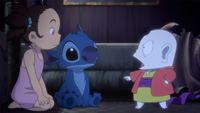
Yuna wakes in a ridiculous sleeping position with her hair rearranged. Stitch’s ears have been tied, and people throughout the town discover similar hairstyle pranks. Yuna and Stitch catch the culprit and learn he is Waracchi. A local saying associates a house visited by Waracchi with happiness, so residents welcome the mischief instead of treating it as an attack. Stitch observes the positive reaction and draws a simple conclusion: prank equals good deed. He begins imitating the behavior across Izayoi, removing the specific relationship, expectation, and restraint that made Waracchi’s play acceptable.
My first reaction: Stitch copied the action and deleted the social contract
The town laughs at Waracchi, so Stitch assumes laughter comes from the behavior itself. Tie hair, rearrange ears, surprise people, collect goodness. He misses the relational layer. Residents know the story attached to Waracchi. They interpret the mischief through shared expectation. The pranks are recognizable, limited, and linked to a belief about happiness entering the home. Context turns disruption into welcomed play.
Stitch performs similar acts without carrying that understanding. He wants counter progress. The recipients may not expect him, trust him, or consent to the same degree. Copying the visible behavior does not reproduce the meaning. This is the episode’s best lesson because cultural practices are often borrowed exactly this way. An outsider sees the fun surface, repeats it for personal benefit, and calls objections inconsistency.
Waracchi’s mischief is not automatically harmless because people smile
Community welcome matters, but smiling alone cannot prove zero harm. Someone may laugh because the tradition is familiar, because everyone else is laughing, or because objecting would feel socially awkward. A prank can be affectionate and still create cleanup, embarrassment, or unwanted touch. The episode should leave room for individual boundaries inside collective enjoyment.
The difference is not “Waracchi good, Stitch bad” by identity. The difference lies in expectations, restraint, relationship, and response. Does Waracchi stop when somebody objects? Does he avoid dangerous targets? Does he repair anything damaged? Do residents have ways to opt out? Those practices determine whether mischief remains play. Tradition does not cancel consent.
Yuna’s first response shows why surprise is not the same as permission
Yuna wakes with her body and appearance altered while she was asleep. The image is comic. The vulnerability remains real. Sleep removes the ability to agree, monitor, or stop the interaction. The episode asks viewers to accept the prank because no lasting damage appears and Waracchi’s identity changes the interpretation afterward.
Retrospective meaning can soften an experience without creating prior consent. Yuna may decide she finds it funny once she understands. That choice belongs to her. The story should not imply that a culturally positive explanation requires everybody to enjoy bodily interference. A person can respect a tradition and still protect their hair, room, sleep, or privacy.
The town recognizes a specific visitor, not a universal prank license
Waracchi is associated with a story: a home he inhabits becomes happy. Residents read the signs as evidence that the being has arrived. Their reaction belongs to that relationship. Stitch treats the welcome as a public rule anybody can activate. If one prankster brings luck, all pranking becomes virtue. The logic collapses identity, tradition, and intention into a reusable technique.
This resembles copying a ritual gesture without knowing who performs it, when, and why. The outward motion may look identical while the social act changes. Stitch is not forbidden from playful participation forever. He needs invitation, knowledge, and attention to the people involved. Belonging can lead to shared practice. Extraction begins when he takes the practice as a tool for his own score.
The good deed counter is terrible at cultural context
A device can count approved outcomes or recognize programmed patterns. It cannot easily understand why the same behavior is welcomed from one person and rejected from another. If the counter sees “recipient laughs” and awards a point, Stitch learns to chase reactions. If it sees “prank” and rejects everything, it erases the community meaning. Morality refuses clean automation again.
Yuna and Obaa carry the context the machine lacks. They can explain Waracchi’s place in island stories, identify boundaries, and distinguish affection from intrusion. The counter should remain secondary to that human and local knowledge. A number cannot become the authority that grades culture from outside.
Stitch is learning through pattern matching, which is useful and dangerous
He watches behavior, observes response, and forms a rule. That is a reasonable learning method for someone still understanding social life. The failure comes from overgeneralization. One example becomes a universal law. He does not test for hidden variables: who acted, who received, what history exists, how severe the prank was, and whether the person wanted it.
Adults teach children this way accidentally. “Helping is good,” “sharing is good,” and “telling the truth is good” sound simple until context changes the action. Sharing somebody else’s private information is not generous. Helping without permission can obstruct. Truth delivered as humiliation can be cruel. Stitch needs principles flexible enough to include people, not slogans easy enough to score.
A prank is successful only if the target can laugh too
The person performing the prank already knows the setup. The target carries the surprise and risk. Ethical play distributes enjoyment rather than concentrating it with the prankster and audience. If the recipient feels frightened, humiliated, injured, or trapped, “I was joking” describes the performer’s intent and says nothing about the result.
Waracchi appears to operate within a style the town recognizes as playful. Stitch escalates because he is pursuing points and excitement. His goal can encourage bigger reactions, which often means greater disruption. The counter turns other people into test subjects. A decent stopping rule is simple: when the target is not laughing, the prank is over and repair begins.
Even laughter needs interpretation. People laugh from surprise, nervousness, embarrassment, or the pressure of an audience. The prankster cannot use one automatic reaction as permanent proof of consent. Check afterward. Notice whether the person relaxes or withdraws. Accept an answer that ruins the joke. Shared fun survives honest feedback. A prank that requires the target to protect the performer’s feelings was never evenly shared.
Mischief creates labor even when nobody gets hurt
Hair must be fixed. Objects must be returned. People lose time figuring out what happened. A shop may have to reorganize. A child may arrive late. The episode’s visual comedy can hide that somebody performs cleanup after every funny reveal. Waracchi’s tradition may include tolerance for that labor. Stitch’s imitation creates extra work without the same shared agreement.
This matters because pranksters often count only dramatic harm. No broken bone means harmless. The people around them count time, anxiety, cleaning, replacement costs, and the effort of pretending to enjoy the joke. A good deed cannot be built from unacknowledged labor imposed on the recipient.
Waracchi should remain a character, not a cultural permission slip
The anime-created figure needs wants beyond representing “island people welcome pranks.” Does Waracchi seek a home? Does he enjoy laughter, test generosity, or express affection through mischief? What boundaries does he follow? How does he react when someone is upset? Those details turn him into a person and clarify the tradition the episode is inventing around him.
The series also needs honesty about source. Waracchi is presented inside the branch’s fictional yōkai world. Viewers should not assume every detail reflects a documented Okinawan belief. Commercial animation blends invention and regional cues. Research beyond the episode remains necessary. Enjoying the character and distinguishing fiction from folklore can happen together.
Yuna has to explain why everybody liked one prank and hated another
That teaching job is harder than it looks. Stitch sees hypocrisy. Residents praised Waracchi and scold him. Yuna must explain that fairness does not always mean identical treatment. Relationship, role, and consent alter the act. Her explanation needs to avoid “because tradition says so,” which would leave him unable to apply the lesson elsewhere.
A stronger rule is relational: know the people, understand the practice, ask where possible, observe response, keep the stakes low, and stop immediately when the fun is not shared. Stitch can learn that without becoming humorless. The goal is better play, not permanent obedience.
The episode should not punish Stitch for being an outsider forever
Context matters, but culture cannot become a locked room where newcomers are told they will always do it wrong. Stitch lives on Izayoi now. He can learn, participate, and build relationships. Exclusion would contradict the hospitality that opened the season. The lesson is not “only Waracchi may joke.” It is “belonging requires more than copying.”
Yuna, Obaa, and Waracchi can teach him the practice through shared experience. Stitch can ask before joining, begin small, and accept correction. Cultural participation grows through accountability. His mistake becomes appropriation only if he insists that desire and imitation give him ownership without listening to the people already carrying the meaning.
Teaching also creates labor. Yuna should not become a permanent translator every time Stitch copies something he sees. Obaa and Waracchi can share explanation, while Stitch carries responsibility for listening and remembering. A newcomer may need guidance. Belonging becomes unfair when the community member has to supervise every consequence and the newcomer still receives praise for enthusiasm. Participation includes doing the homework after the welcome.
Opting out should not be treated as rejecting the community
A resident may love Waracchi stories and still hate having hair tied during sleep. Another may enjoy small household tricks and reject public embarrassment. Traditions remain alive because people negotiate them, not because every individual performs identical enthusiasm. An opt-out does not insult the yōkai, the island, or the neighbors. It establishes the conditions under which play stays safe.
Stitch needs that lesson because he reads social approval in bulk. If “the town likes pranks,” individual refusal looks like an exception he can ignore. Real consent works in the opposite direction. The person in front of him decides what happens to their body, belongings, and space. Community meaning can invite the interaction. It cannot answer on everybody’s behalf.
The counter rewards performance while relationships require repair
Stitch begins pranking because he expects goodness credit. Once people become upset, the score should not remain the focus. He owes repair. Untie, restore, apologize, clean, compensate, and learn. An apology aimed only at recovering a point is another performance. The recipient’s experience must matter after the metric has failed.
This episode offers the counter a chance to subtract certainty rather than points. Stitch learns that behavior cannot be categorized by appearance alone. If the device continues pretending otherwise, it becomes less useful with every lesson. Growth may require trusting Yuna’s explanation over the glowing number on his wrist.
What the episode gets right
Episode 10 creates a compact story about context. Waracchi performs mischief within a recognized island relationship. Stitch sees approval, extracts the action, and repeats it for personal reward. The same surface behavior produces a different response because meaning never lived in the surface alone. That is a sophisticated lesson hiding inside silly hair.
The episode also lets Stitch fail through learning rather than pure selfishness. He is trying to understand goodness. His method is incomplete, and the counter encourages shortcuts. That makes correction possible. He can keep curiosity while adding context, consent, and responsibility.
What I need the resolution to protect
Let Yuna name her own boundary about the sleeping prank. Let residents admit that Waracchi’s tradition still requires restraint. Let Waracchi speak for himself rather than functioning as a lucky mascot. Make Stitch repair the labor his imitation created. Do not award a counter point because the final scene restored laughter.
Most importantly, keep the distinction clear without making it mystical. Waracchi’s pranks are welcomed because of shared meaning and practiced expectations, not because his identity magically converts every act into goodness. Stitch can participate when he learns the relationship. Nobody receives a blank permission slip to touch bodies, enter rooms, or create work.
Final verdict
“Waracchi Arrives” is a funny episode about the danger of learning culture through screenshots. Stitch sees the visible act, notices the applause, and repeats the behavior without the social contract. The town’s response looks inconsistent only if consent, history, relationship, and restraint are removed from the analysis. Those hidden layers are the entire lesson.
I like the episode because it lets goodness remain complicated. Waracchi’s mischief may create joy. Yuna can still dislike a specific prank. Stitch can join playful tradition after learning rather than extracting. The counter cannot decide any of that alone. A prank becomes shared fun when the person receiving it retains dignity, safety, and the power to end the joke.
Keep watching
Return to Episode 9, open the Stitch! anime hub, or continue to Episode 11: Panic at the Pineapple Factory when published.