
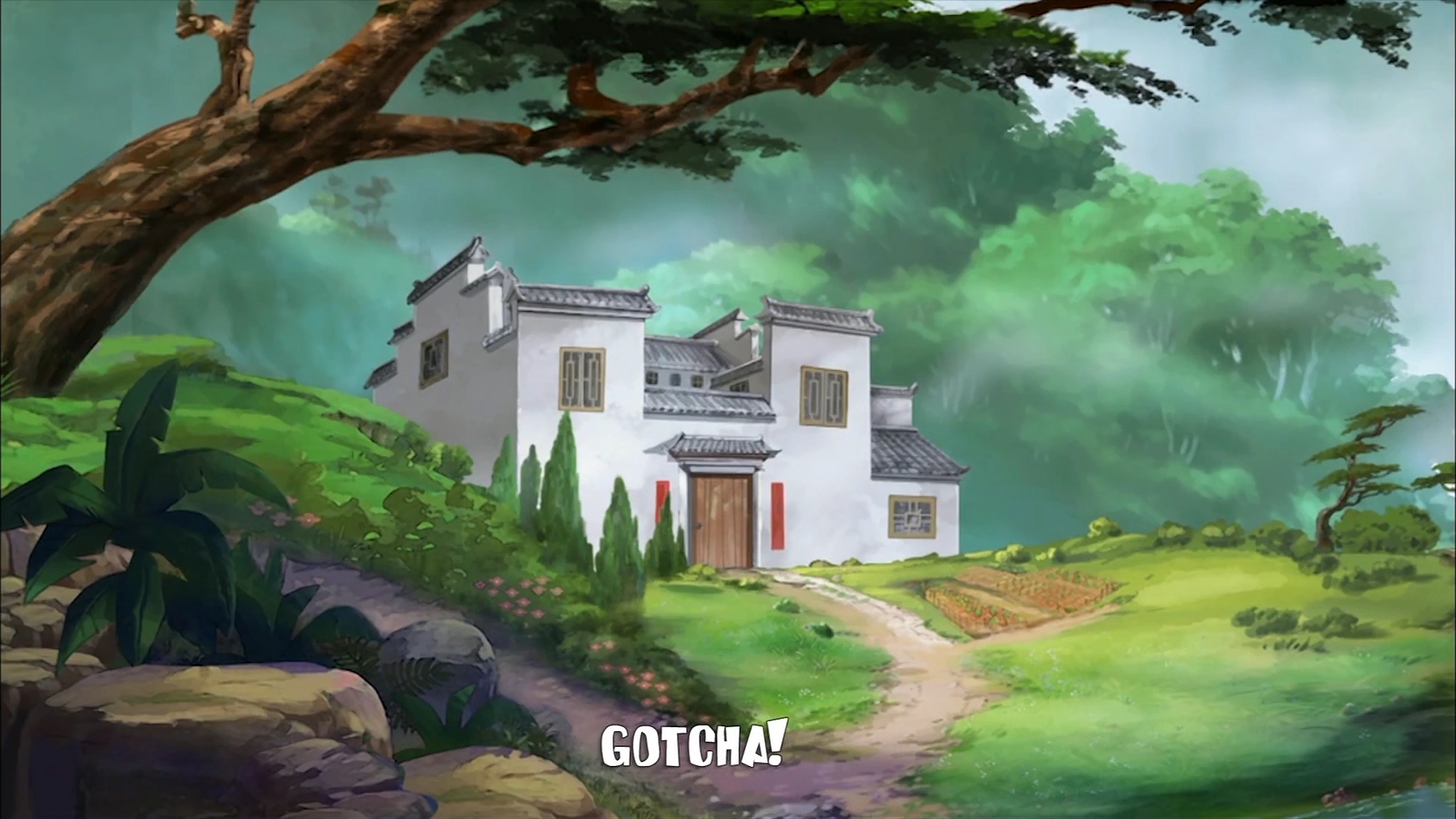
EPISODE 3 · CHINESE TELEVISION BRANCH · GOTCHA! · RAE RAE REACTS
Stitch & Ai Episode 3: Gotcha!
Jumba and Pleakley finally find Stitch, only to learn that a rescue can feel like another removal when he does not remember them clearly and has already chosen Ai as safety.
A rescue mission begins with people who already lost him once
“Gotcha!” sends Jumba and Pleakley to Earth after Stitch’s abduction, escape, fall, and disappearance. Their urgency is earned. They are family members trying to recover somebody who vanished into a conflict between armed alien factions. The episode should let that fear exist before the comedy starts because their mistakes do not cancel their attachment.
They also arrive carrying authority Stitch may not recognize after the atmospheric event damaged his memory. From their perspective they are bringing him home. From his perspective two aliens have appeared and expect him to leave the girl who helped him survive. Both realities can be sincere at once.
Finding Stitch alive does not restore the relationship automatically
Jumba and Pleakley see the person they know, but Stitch cannot simply resume the old emotional arrangement on command. Memory loss changes what he can verify. Familiar voices, names, and stories may feel like pressure when his own mind cannot confirm them.
A responsible reunion would begin with safety, medical assessment, patience, and evidence. They can show photographs, records, objects, and habits connected to his earlier life without demanding an immediate performance of recognition. Love does not become false because the injured person cannot access it.
Jumba’s creator status gives him information, not ownership
He knows Stitch’s design, abilities, vulnerabilities, and history better than almost anyone. That expertise matters during recovery. It does not grant the right to remove Stitch by force. The franchise already rejected the idea that creation equals possession when Stitch became a legal and emotional member of Lilo’s family.
Jumba must approach as a caregiver who owes answers. He helped create the danger built into Stitch’s body and should provide treatment without turning the examination into another claim over where Stitch belongs.
Pleakley understands belonging better than the mission language suggests
Pleakley has lived inside an improvised household, adopted Earth routines, and learned that family does not follow species or job description. He should recognize quickly that Ai is not a random obstacle. She fed, guided, protected, and listened to Stitch while everybody else was absent.
That does not mean Pleakley should accept the situation without questions. Ai is a child, the home faces military pursuit, and nobody has coordinated with Jiejie. His strength is asking how the household will function rather than reducing the decision to whether Stitch can be transported.
Ai hears “we came to rescue him” as “we came to take him”
She met Stitch while adults were threatening to remove her from Huangshan. Now strangers arrive and describe relocation as care. The parallel makes her defensive response emotionally coherent. She has little reason to trust a rescue defined by the people performing it.
Jumba and Pleakley need to separate immediate safety from permanent residence. They can help protect Stitch today without deciding his whole future during the first conversation. Ai deserves truthful information, and Stitch deserves time to choose with a clearer mind.
Stitch’s refusal to leave is a decision, but not yet an informed one
He has bonded with Ai and associates her with safety. He also lacks access to important memories and may not understand the danger following him. Respecting autonomy means hearing the refusal and making sure he has the information, support, and cognitive capacity needed for a major decision.
The answer cannot be forced removal or passive acceptance. A temporary safety plan, independent advocate, medical evaluation, and gradual contact with the earlier family would protect choice better than demanding one permanent home immediately.
The episode turns a custody crisis into a test of language
Words such as home, family, rescue, pet, experiment, and creator mean different things to each participant. Jumba may call Stitch an experiment while intending affection. Ai may call him her dog while intending protection. Both labels can still deny part of his personhood.
Stitch needs language that places him at the center: his name, preferences, memories, fears, and chosen relationships. Adults should talk to him, not trade competing descriptions across the room.
Jiejie should be present before strangers negotiate Ai’s new family member
Ai cannot authorize a high-risk alien to live indefinitely in the household by herself. Jiejie carries the practical responsibility for housing, food, school, medical emergencies, secrecy, and whatever damage the pursuing factions cause. Excluding her would repeat the franchise habit of making older sisters clean up decisions made during an adventure.
A fair meeting must give Jiejie time to ask questions and refuse unsafe conditions without being framed as heartless. If Stitch stays, the Galactic Federation and Jumba owe resources rather than another unpaid crisis-management job.
Daiyu’s concern becomes harder to dismiss when spaceships keep arriving
She already believes Ai should leave the mountain community for a different future. Alien raids appear to strengthen her case that Ai is unsafe. Yet moving Ai does not neutralize factions tracking Stitch, and secrecy could place a city household in greater danger because more people occupy the surrounding area.
The adults need a threat assessment based on actual pursuit capabilities, not a tug-of-war between city prestige and mountain loyalty. Ai’s residence should never become a prize awarded to whichever adult sounds more frightened.
The Jaboodies and Woolagongs exploit reunion confusion
While the family argues about Stitch, both factions continue treating him as military property. Their timing proves why a prolonged confrontation in public is dangerous. Emotional disputes narrow attention, and the hunters use that opening.
A reunion protocol should establish a secure location before discussing permanent choices. Jumba and Pleakley should arrive with detection equipment, escape routes, and Federation backup. Family conversation cannot be meaningful while armed groups are preparing another abduction.
The factions share a belief even while fighting each other
The Jaboodies and Woolagongs present themselves as enemies, but both accept that Stitch’s power can be seized and deployed. Their disagreement concerns who benefits from coercion. Neither offers freedom, accountability, or a life outside war.
Stitch does not owe allegiance to the faction that harms him less. The episode is right to treat escape from both as the only acceptable outcome. Choosing between captors is not consent.
Jumba’s rescue equipment needs safeguards around civilians
His inventions often solve one problem and introduce three more because he assumes technical control will hold. Huangshan contains residents, visitors, animals, historic structures, and terrain that turns a malfunction into a long fall. Weapons and traps need limits before deployment.
Jumba should use nonlethal containment, verify targets, prevent transfer of control, and record every activation. Ai and classmates cannot become field assistants because they happen to be nearby.
Pleakley should handle evacuation instead of being assigned comic panic
He pays attention to social cues and environmental detail that Jumba overlooks. During an attack, those habits can help move residents, explain danger without creating a mob, and keep Ai connected to Jiejie. The role is operational, not decorative.
Letting Pleakley contribute this way would respect the family skills built across the Hawaiian stories. Science and strength are not the only forms of competence needed during an emergency.
Ai proves loyalty without needing to fight like Stitch
Her value comes from local knowledge, quick decisions, and refusal to hand him over. She does not need alien strength to matter. The episode is strongest when she changes the options available rather than merely cheering while Stitch handles combat.
The series should protect that distinction. Giving every human companion an impossible physical stunt can make courage look like recklessness. Ai can lead people through terrain, identify a hiding place, communicate, and recognize deception.
Stitch defending Ai confirms a bond and creates a targeting risk
His attackers quickly learn that Ai influences him. Love becomes leverage when hostile groups know whom he will protect. The family must respond without isolating Stitch or blaming Ai for becoming important.
Safety planning should include privacy, varied routines, secure communication, and adults who can intervene before Ai is used as bait. Telling them never to see each other would reward the captors by letting violence dictate the relationship.
A temporary home can be real without being the only home
Stitch may stay with Ai while his health, memory, and safety are assessed. That arrangement does not erase Lilo’s household or force an immediate final choice. People can belong to more than one family, place, and period of life.
The franchise should stop treating affection like a single chair. Ai gains nothing from deleting Lilo, and Lilo gains nothing from denying the care Ai provides. The conflict exists because the story has not connected the branches honestly.
Lilo’s absence becomes louder when Jumba and Pleakley appear
Their arrival proves the Hawaiian family still exists somewhere in continuity. If they knew Stitch was missing, Lilo should have been searching or at least informed. If they did not tell her, the episode needs a reason. Protecting her from worry would be a weak excuse after everything she has survived.
A later reconciliation should explain who authorized the mission, what Lilo knows, and why she is not there. Leaving her name unspoken may simplify the new series, but emotionally it makes the room feel incomplete.
Amnesia should trigger care, not a convenient franchise reset
Stitch’s lost memory allows the production to rebuild familiar dynamics in China. The narrative cost must remain visible. He may experience fragments, distress, confusion, sleep disruption, or fear around people who claim intimacy. Recovery needs more than one gadget and a cheerful ending.
Jumba should document neurological changes, rule out ongoing damage, and avoid invasive procedures without consent. Ai should receive guidance about supporting memory without testing Stitch or treating every forgotten detail as rejection.
The title “Gotcha!” keeps changing who has whom
Jumba and Pleakley think they have found Stitch. Ai thinks she has protected her new friend. The factions think they can capture him during the confusion. Stitch ultimately proves that being located is not the same as being owned.
The joke works because every group announces control too early. The episode’s better answer is relational: people can find one another without possessing one another.
The Grand Councilwoman owes more than another retrieval order
Her government previously tried to imprison Stitch, later recognized the family, and now faces armed factions pursuing him. The Federation has a duty to protect him as a person, investigate the abduction, support affected Earth communities, and coordinate with his existing guardians.
A mission focused only on bringing him back would repeat the original failure. Safety must include his chosen relationships and legal status, not merely his physical location.
Ai and Stitch need rules after the attackers leave
Choosing to remain together is the beginning of a household agreement, not the end of conflict. They need school boundaries, supervision, sleeping arrangements, food, medical contacts, emergency signals, and limits on dangerous experiments in public.
Stitch also needs responsibilities appropriate to his abilities and condition. Ai should not become his sole interpreter, behavior manager, or emotional regulator. Children can love each other without being assigned adult care work.
Jumba and Pleakley can stay without taking over
Their knowledge makes them necessary, and their history with Stitch makes them family. They should contribute housing support, technology, protection, and truthful context while respecting Jiejie’s household and Ai’s local knowledge.
Moving into a new cultural setting also requires humility. Pleakley’s fascination and Jumba’s confidence cannot substitute for learning language, customs, laws, and community expectations. Being aliens does not excuse behaving like tourists who assume every place exists for their mission.
What I would keep
I would keep the emotional collision between rescue and removal, Stitch refusing to abandon Ai, Jumba and Pleakley recognizing that a new bond has formed, and the two enemy factions exposing their shared hunger for control.
I would also keep the awkwardness. A clean reunion would be less honest. People who love Stitch can disagree about what protects him, especially when his own memories are unreliable.
What I would repair
I would bring Jiejie into the conversation immediately, give Stitch a visible medical assessment and independent advocate, explain what Lilo knows, and establish a temporary arrangement instead of treating one action scene as permanent custody resolution.
I would also make the Federation responsible for security and funding. Families should not have to absorb an interplanetary conflict because the government finally located the person it failed to protect.
RaeRae’s verdict
“Gotcha!” is interesting because everybody arrives believing the hard part was finding Stitch. The hard part is listening after they find him. Ai is scared that rescue means loss. Jumba and Pleakley are scared that leaving him means failing again. Stitch stands between them with damaged memory and one clear choice: he does not want Ai abandoned.
My verdict: let him stay temporarily, tell Lilo the truth, give Jiejie actual authority and resources, and make the Federation guard the door it left open. Family should be the place where nobody has to win custody by shouting “gotcha” first.
Where to watch
Stitch & Ai is not currently available through its former United States DisneyNOW route. CVM Sekai records all thirteen produced episodes in original Chinese broadcast order and will update legal availability when a complete licensed option appears.
Keep exploring
Return to the complete Stitch & Ai episode directory, return to the Stitch & Ai hub, or return to the full franchise hub.