
Ritsuko Akagi
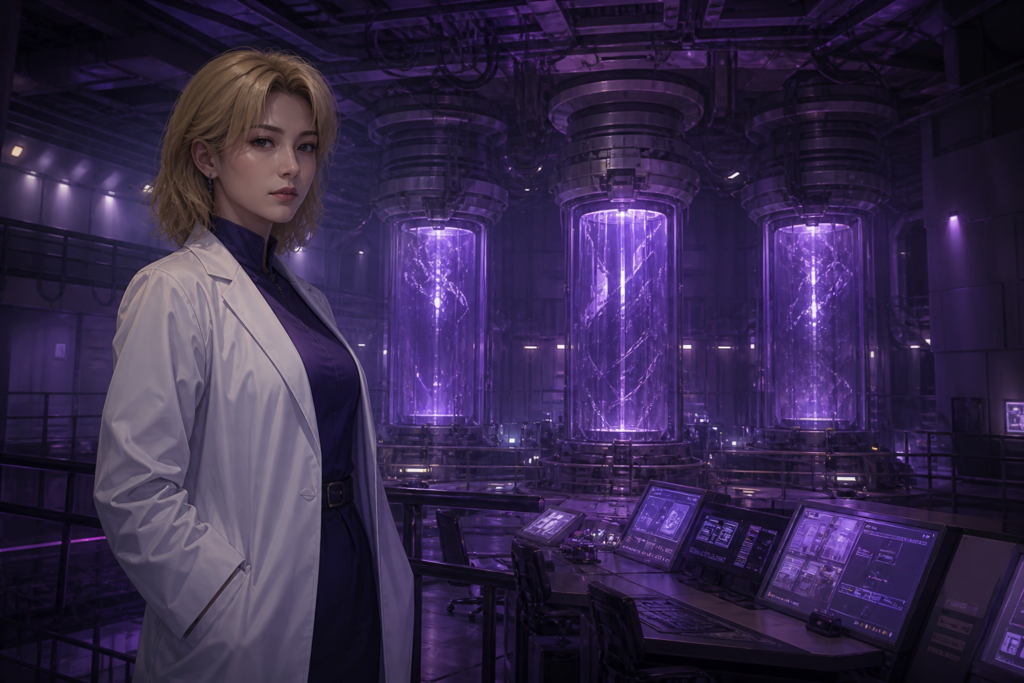
CVM Sekai Character File · Evangelion
Ritsuko can explain the impossible machine, repair the living weapon, and outthink an invading Angel. Her real blind spot wears Gendo Ikari’s glasses.
Character File
NERV chief scientist, Project E director, MAGI operator, and keeper of dangerous institutional secrets.
Yuriko Yamaguchi
GEHIRN, NERV, and WILLE in the Rebuild continuity.
Bottom Line
Ritsuko knows how the system works because she helps the system hide.
Ritsuko Akagi is one of Evangelion’s smartest adults and one of its clearest warnings about intelligence without freedom. She understands Evangelion biology, Angel analysis, the Dummy System, the MAGI, and NERV’s technical architecture better than nearly anybody alive. That knowledge does not rescue her from repeating her mother’s choices. Expertise gives Ritsuko access to the truth, but access becomes another chain when Gendo controls the laboratory, the mission, and the relationship she refuses to name in public.
Her tragedy is not that science makes her cold. Science gives Ritsuko a language that feels safer than grief, jealousy, shame, or dependency. She can diagnose an Eva’s failure faster than her own. Every polished briefing therefore carries another question underneath: how much does she know, how much does she permit, and how long can a person call complicity professional duty?
Her Mother’s Machine
The MAGI preserve Naoko Akagi as scientist, mother, and woman.
Ritsuko inherits more than Naoko’s profession. The MAGI supercomputers contain three patterns modeled on her mother’s divided identity: Melchior reflects the scientist, Balthasar reflects the mother, and Casper reflects the woman. NERV treats the system as infrastructure, yet Ritsuko works every day inside a machine built from the emotional contradictions that shaped her childhood.
Episode 13 lets Ritsuko save headquarters through intimate knowledge of the MAGI during Ireul’s computer invasion. The sequence proves that she is not a decorative lab-coat character waiting for a pilot to solve the crisis. Ritsuko enters the system, thinks like her mother, and counters an Angel through code, timing, and nerve. The victory also shows why leaving NERV is difficult. Her competence matters there, and the entire facility tells her that nobody else can carry the burden.
Naoko’s legacy becomes crueler because Ritsuko repeats the relationship that damaged her mother. Both women become brilliant collaborators and secret lovers to Gendo. Evangelion does not present repetition as fate written in blood. The series shows how institutions, grief, secrecy, and unmet emotional needs can make a familiar trap feel like a private choice.
Misato and the Missing Truth
College friendship cannot survive unlimited classified information.
Ritsuko, Misato, and Kaji knew one another before NERV turned every conversation into a security problem. Their adult friendship retains teasing, shared history, and real affection. Ritsuko often translates the laboratory for Misato, while Misato translates operational risk into decisions that pilots and soldiers can follow. Together they could form a strong ethical counterweight to Gendo.
The partnership fractures because Ritsuko keeps withholding the scale of NERV’s deception. She knows more about the Evas, Rei, the Dummy System, and Instrumentality than Misato can safely ignore. Misato’s suspicion grows as each explanation arrives after the damage. Ritsuko believes secrecy protects the work and perhaps protects herself. Misato sees the same secrecy turning children into equipment.
Their conflict is painful because neither woman is a simple opposite. Misato sends pilots into combat and accepts military compromises. Ritsuko risks her life during technical emergencies and genuinely wants humanity to survive. The divide concerns where each woman finally draws a line, who receives the truth before crossing that line, and whether loyalty to a friend can survive loyalty to an institution.
Rei and the Dummy System
Ritsuko turns a person into spare parts because Gendo already taught the laboratory to do so.
Ritsuko’s treatment of Rei Ayanami exposes the ugliest collision between professional knowledge and personal resentment. She understands the clone bodies, their connection to the Dummy System, and Gendo’s dependence on Rei. Knowledge should make Rei’s exploitation impossible to deny. Ritsuko instead repeats the system’s language and calls the bodies replaceable components.
When Ritsuko destroys the reserve bodies, the act looks like rebellion against Gendo. Rei absorbs the violence. The scene reveals how power travels downward. Gendo uses Ritsuko. Ritsuko cannot safely destroy Gendo, so she destroys the bodies tied to his plan and her jealousy. Technical control briefly feels like personal control, even though the real hierarchy remains intact.
The sequence also separates understanding from empathy. Ritsuko can explain what Rei is made from without accepting who Rei has become. Evangelion repeatedly asks whether a human life depends on origin, body, memory, soul, or choice. Ritsuko possesses enough data to enter that argument and too much pain to answer honestly.
Gendo’s Laboratory
He does not need to love Ritsuko when the entire workplace rewards her attachment.
Gendo Ikari keeps Ritsuko close through professional authority, classified access, and private intimacy. Their relationship cannot be separated from the chain of command. Gendo decides what she may know, what projects receive resources, and whether her objections matter. Ritsuko’s scientific power remains enormous inside boundaries he controls.
Her awareness makes the relationship more disturbing, not less. Ritsuko knows Gendo used Naoko. She recognizes his continuing devotion to Yui and his instrumental treatment of Rei. She also understands that Gendo values her work. Emotional hope survives beside professional evidence because people do not become immune to dependency after identifying the mechanism.
By the end of the original continuity, Ritsuko tries to make the MAGI destroy NERV. Casper rejects the command. Ritsuko reads the refusal as her mother choosing Gendo again. The final humiliation arrives when Gendo speaks an unheard sentence and shoots her. The missing words remain powerful because no explanation can repair the pattern. Whatever he says, Ritsuko knows the relationship ended exactly where the hierarchy always pointed.
Rebuild Continuity
WILLE gives Ritsuko a future outside Gendo’s direct command.
The Rebuild films change important parts of Ritsuko’s route. Her early scientific role remains familiar, but the later continuity places her beside Misato Katsuragi aboard the AAA Wunder. Ritsuko serves as vice captain within WILLE, helping oppose NERV rather than maintaining Gendo’s secret machinery.
The altered relationship with Gendo matters. Rebuild does not center the same inherited romantic trap, which gives Ritsuko more room to exist as a scientist, officer, and long-term ally. She still makes severe decisions and carries the hard edge of somebody who understands extinction-level risk. The difference is structural: her expertise no longer depends on remaining Gendo’s private instrument.
Her cropped hair and stripped-down uniform visually support the break without needing to become a coded confession. Ritsuko has crossed continuity, age, catastrophe, and allegiance. The later films allow competence to become part of resistance instead of proof that she belongs inside the old laboratory.
Key Relationships
Naoko Akagi
Mother, scientific predecessor, MAGI architect, and the painful model Ritsuko both surpasses and repeats.
Gendo Ikari
Commander, lover, employer, and the man who turns professional access into emotional captivity.
Misato Katsuragi
College friend, operational counterpart, ethical challenger, and later WILLE commander.
Rei Ayanami
Human subject, clone, rival symbol, and the person who receives violence meant for Gendo.
Maya Ibuki
Protégé and technical officer whose admiration reveals the mentor Ritsuko can become.
The MAGI
Workplace, inheritance, weapon, and a three-part argument with her dead mother.
Voice Performance
Yuriko Yamaguchi lets professional calm erode one controlled breath at a time.
Yamaguchi gives Ritsuko a measured Japanese performance suited to a scientist who must make impossible information sound operational. Her calm differs from Gendo’s command voice. Ritsuko sounds like somebody actively maintaining control, which makes small changes in pace and pressure reveal the cost of the performance.
The strongest scenes allow technical certainty and emotional collapse to occupy the same voice. Ritsuko can state a fact, recognize what the fact means about Gendo or Rei, and continue speaking because the room still needs an answer. Yamaguchi never turns the character into a generic ice queen. Restraint becomes work, and the audience hears when the work stops holding.
Research Routes
Character facts and interpretation need visible receipts.
Research consulted EvaGeeks’ Ritsuko Akagi reference, MechaBay’s Ritsuko character file, and the franchise episodes and films discussed throughout this profile. CVM Sekai treats fan references as research routes, checks precise production and credit claims against official or licensed material, and writes an independent editorial analysis.
Continue with the Episodes 1–26 directory, the Evangelion Movies hub, or the main Evangelion hub.