
Lost Bonds
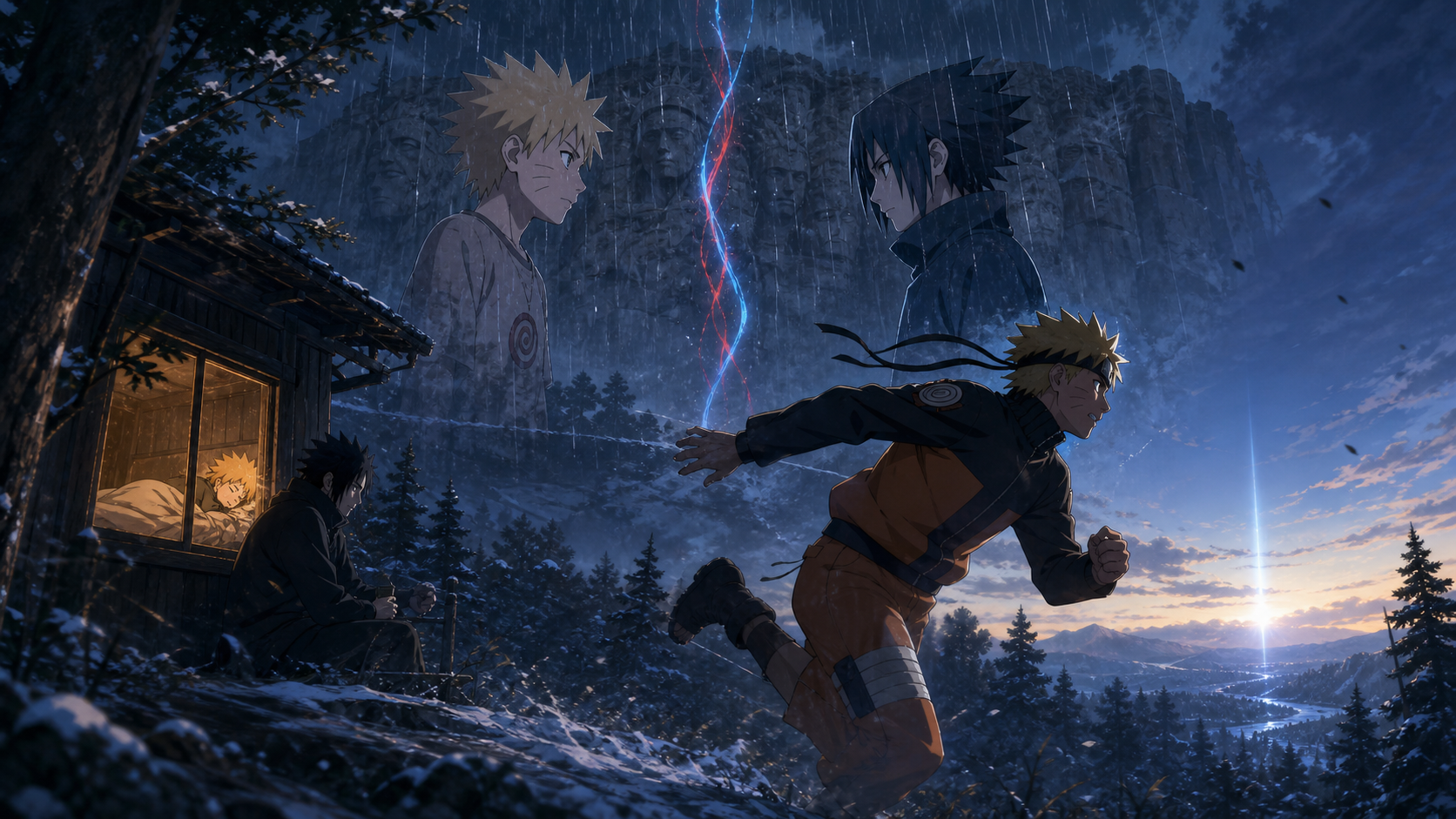
Naruto revisits the Valley of the End, understands what Sasuke tried to sever, and refuses to let Team 7 reach its ending without him.
Quick reaction
“Lost Bonds” spends most of the episode inside Naruto’s memory, but the story is not simply replaying the Valley of the End for nostalgia. Naruto has just learned that Sakura and Kakashi are moving toward Sasuke with intentions he cannot control. As his body recovers from hyperventilation, his mind returns to the first time Sasuke described their friendship as something he had to destroy. Naruto finally understands the terror beneath that declaration: a bond can only hurt this badly after becoming precious.
That realization pushes Naruto out of bed and back into motion. Yamato has orders to take him home, the summit has made Sasuke an international criminal, and every practical argument says Naruto should stay where he is. None of those facts change his answer. He cannot let the ending of Team 7 happen somewhere beyond his reach.
Back at the Valley of the End
The episode revisits Naruto and Sasuke’s first decisive battle from Naruto’s present perspective. When they fought beneath the stone figures of Hashirama and Madara, Naruto understood Sasuke’s departure as rejection. Sasuke had chosen Orochimaru, revenge, and power over the village and the people who loved him. Naruto heard the words “best friend,” but the fight made that confession feel like one more cruelty.
Years later, the meaning has changed. Sasuke was not claiming that their bond was false. He was admitting that the bond mattered enough to threaten his chosen path. He believed he needed to kill Naruto because Naruto had become the person capable of pulling him back. The violence was real, but so was the attachment Sasuke was trying to erase.
Naruto now sees the contradiction clearly. Sasuke’s insistence that he could sever every tie was itself proof that those ties existed. Someone who felt nothing would not need a final battle, a declaration, or the lonely ritual of walking away. Sasuke was fighting the part of himself that still recognized home.
The memory of being chosen
For Naruto, that bond mattered because Sasuke was among the first people his own age to see him as a person rather than the Nine-Tails. Their rivalry was petty, loud, and often ridiculous, but the competition gave Naruto a place beside someone who understood loneliness without needing an explanation. They challenged each other, rescued each other, and competed for recognition neither knew how to ask for directly.
The episode returns to those moments because Naruto is trying to name what he stands to lose. Iruka gave him acceptance. Team 7 gave him belonging. Sasuke gave him a mirror: another lonely child whose pain looked different but felt familiar. Losing Sasuke would not erase Naruto’s other bonds, yet such a loss would mean accepting that one of the first could be abandoned when the relationship became too difficult.
That is the line Naruto cannot cross. His determination is not based on an innocent belief that Sasuke has done nothing wrong. The Five Kage Summit destroyed that illusion. Naruto knows Sasuke is dangerous, knows the village has reasons to stop him, and knows Sakura and Kakashi may be forced to kill him. His choice survives that knowledge rather than avoiding the truth.
Yamato’s impossible assignment
Yamato stands between Naruto and the door with sensible orders. Kakashi has gone after Sakura, and Yamato is supposed to return Naruto safely to Konoha. Naruto is exhausted, emotionally unstable, and too valuable as a jinchūriki to gamble on an impulsive pursuit. From a command perspective, keeping him inside is the only responsible decision.
The problem is that Naruto has never been good at accepting safety purchased with someone else’s risk. He hides a shadow clone beneath the covers and makes his escape while Yamato believes he is still resting. The trick is familiar, but the tone differs from his cheerful pranks. Naruto is not dodging responsibility. He is refusing a version of responsibility that asks him to stay passive while his family fractures.
Yamato’s frustration is understandable. Naruto’s independence can look reckless because recklessness remains part of his method. Yet the escape also shows how far Naruto has come. He reads the situation, conceals his movement, and follows the chakra he recognizes. The child who once demanded attention by causing trouble now uses the same ingenuity to make sure no one faces Sasuke alone.
Everyone is choosing for everyone else
Episode 213 lands at a moment when every member of Team 7 is making decisions on behalf of the others. Sakura has put her allies to sleep because she believes killing Sasuke is her burden. Kakashi follows because he believes a teacher must handle the student he failed. Yamato restrains Naruto because he believes preserving the jinchūriki and obeying Kakashi’s order must come first. Naruto escapes because he believes neither Sakura nor Kakashi should decide Sasuke’s fate without him.
Even Sasuke’s original departure fits the pattern. He decided that bonds would prevent his revenge, so he severed them without allowing anyone else a voice. Team 7’s tragedy has never been a lack of care. Their care repeatedly turns into secrecy, isolation, and sacrifice performed without consent.
Naruto’s answer is imperfect, but his answer points toward something better. He does not want Sakura to carry his pain, Kakashi to carry his failure, or Sasuke to carry the Uchiha tragedy alone. His insistence on sharing those burdens frustrates everyone around him and explains why he keeps reaching people they have written off.
Why the flashbacks matter
“Lost Bonds” is deliberately reflective. Viewers who remember the original battle may feel that little new information is being delivered, but the episode’s purpose is not to reveal a missing fact. The purpose is to show Naruto interpreting the same facts with greater maturity.
As a child, he wanted to bring Sasuke back because losing him felt unbearable. Now he understands that Sasuke also found the bond unbearable, but for the opposite reason. Their connection threatened the hatred that gave his life direction. Naruto recognizes that saving Sasuke will require confronting that hatred rather than merely overpowering him and dragging him home.
This is the bridge between Naruto’s panic and the confrontation ahead. The memories settle his breathing because they give shape to what he could not express. He is afraid of losing Sasuke, but he is also certain the bond was real. That certainty gives him somewhere to run.
Hyperventilation was not weakness leaving the body
Naruto’s collapse after the summit matters because his body rejects the fantasy that every demand can be carried through determination alone. Gaara asks him to think as a future Hokage. The other villages have named Sasuke an international threat. Sakura offers a false confession meant to release him. Tobi reveals the machinery behind the Uchiha massacre. Naruto receives political history, personal betrayal, and an execution question almost without pause.
The panic does not mean Naruto cares too much or lacks a leader’s strength. His breathing fails because every available role appears to require betrayal. A loyal Leaf shinobi should accept the order against Sasuke. A friend should refuse abandonment. A future Hokage must consider other villages, while an orphan who built family through Team 7 cannot treat one member as acceptable collateral. His body reaches the contradiction before his language does.
Memory becomes useful only when Naruto stops treating the past as a collection of happy proof. The Valley of the End was violent, selfish, and devastating. Returning there allows him to recognize that love and harm were present together. Recovery begins when he can hold both facts without forcing either one to disappear.
The Valley statues are not neutral scenery
Hashirama and Madara stand over Naruto’s remembered battle as an inherited warning. Their friendship also became a political argument, then a physical division that shaped the shinobi world. Naruto and Sasuke fought beneath those figures before either boy understood how closely their private bond echoed an older conflict.
Episode 213 revisits that setting after Tobi has explained more of the Uchiha history. The landscape now carries information Naruto lacked during the first fight. Sasuke was not only a lonely teammate choosing revenge. He was the surviving child of a clan destroyed through village power, manipulation, and silence. Naruto’s new understanding cannot excuse Sasuke’s current violence, but the knowledge changes what “come home” must mean.
Dragging Sasuke back to the same institutions without confronting their failures would not heal the fracture. Naruto has not yet developed a complete political answer, and the episode wisely avoids pretending otherwise. He does recognize that victory cannot mean restoring the old arrangement unchanged.
Yamato protects a weapon and a child at once
Yamato’s orders contain the same double vision that has followed Naruto since infancy. Konoha needs to protect the Nine-Tails jinchūriki as a strategic asset, especially with Akatsuki hunting tailed beasts. Yamato also cares about Naruto as a teammate whose exhaustion and panic are obvious. Command and affection point toward the same locked room, even though Naruto experiences confinement as exclusion.
That tension prevents Yamato from becoming a foolish guard defeated by a familiar clone trick. His caution is justified. Naruto leaves in poor physical condition and heads toward an enemy who has already attacked multiple Kage. The escape works because Yamato chooses care through restriction while Naruto chooses care through presence.
Neither choice is complete. Naruto’s decision risks the village asset and his own life. Yamato’s decision would leave him absent from the encounter defining Team 7’s future. The series keeps returning to this problem: institutions often call confinement protection, while the protected person loses any voice in what protection costs.
Junko Takeuchi turns recognition into forward motion
Junko Takeuchi begins from fatigue rather than Naruto’s usual vocal brightness. The reflective passages do not sound like a motivational speech waiting for percussion. Naruto is listening to an older wound with new knowledge, and Takeuchi lets the realization arrive through quieter certainty.
Noriaki Sugiyama’s remembered Sasuke gives the flashbacks their second meaning. His claim that Naruto is his closest friend once sounded designed mainly to wound. Heard from Naruto’s present perspective, the same restraint exposes how much Sasuke needs the confession to sound final. The voice never makes severance convincing, which is exactly why Naruto can reinterpret the battle.
The episode’s direction supports those performances by allowing familiar images to remain uncomfortable. Flashbacks are not arranged as a victory reel. Bruised faces, failed persuasion, and the physical distance between the boys stay visible. When Naruto finally moves, the choice feels earned through recognition rather than manufactured by a sudden burst of confidence.
Memory becomes interpretation instead of evidence for innocence
Naruto does not revisit the Valley to prove Sasuke was secretly harmless. He returns with knowledge of the summit, Itachi, the massacre, and the people endangered since their first fight.
The same memory now holds attachment and violence together. Maturity arrives through reading the past more completely, not polishing it into a reason consequences should disappear.
Sasuke’s attempt to sever the bond confirms its power
Indifference would require no ritual, final battle, or declaration that Naruto was the closest friend he needed to kill. Sasuke attacked because connection threatened the revenge identity he was trying to stabilize.
That recognition does not make the attack romantic. It tells Naruto the bond was mutual while showing how violently Sasuke responded when mutuality endangered his chosen path.
Being precious never guaranteed being safe
Naruto once understood attachment mainly as the answer to loneliness. The Valley taught him that becoming important to someone can also place a person directly inside that someone’s fear.
Sasuke valued him and therefore tried to destroy him. The contradiction becomes essential to Naruto’s next answer: love can remain real while the loved person causes deliberate harm.
The old promise can no longer carry the moral argument
Sakura withdrew her request and Naruto still needs to move. His bond with Sasuke has outgrown the childhood transaction where returning a teammate might earn gratitude or romantic approval.
That independence strengthens his choice and enlarges its responsibility. Naruto must defend the pursuit in relation to Sasuke’s victims, not merely the promise once made beside a hospital bed.
Staying behind would make safety another form of absence
Yamato’s order is sensible because Naruto is exhausted, hunted, and strategically essential. The room protects his body while placing the defining Team Seven encounter beyond his participation.
Naruto recognizes that survival alone cannot decide the matter. If other people kill or die while choosing for him, physical safety becomes the location from which he inherits an irreversible answer.
The clone trick carries a different emotional weight
Childhood Naruto used clones to demand notice, evade rules, and turn humiliation into spectacle. Here deception creates presence somewhere the institution has decided he must not go.
The familiar trick shows continuity without stagnation. He remains disruptive, but the disruption now serves a responsibility he can name rather than attention he cannot request.
Yamato’s care and Naruto’s escape can both be sincere
Yamato knows Akatsuki needs the Nine-Tails and has watched Naruto’s body collapse. Allowing departure would ignore immediate medical and military danger.
Naruto knows Sakura and Kakashi are moving toward Sasuke with lethal stakes. Obedience would ignore relational danger. Their conflict is painful because neither position requires indifference.
Team Seven keeps replacing conversation with protective action
Sakura uses gas, Kakashi follows alone, Yamato confines Naruto, Naruto leaves a clone, and Sasuke once departed before bonds could interfere. Everyone acts for someone else without waiting for an answer.
The family is not failing from insufficient love. Care becomes secrecy so repeatedly that every rescue creates another reason trust must be repaired.
The Valley monuments make private conflict political
Hashirama and Madara tower over two children reenacting a fracture that shaped villages, clans, and war. Their landscape suggests inherited patterns without removing present choice.
Naruto returns after learning more history and understands that bringing Sasuke home cannot mean restoring him to unchanged institutions. The bond needs a political truth large enough to include what Konoha did.
Movement follows acceptance rather than denial
Naruto begins breathing toward action when he stops demanding that Team Seven remain the picture he remembers. Sakura has chosen, Sasuke has harmed, and Kakashi may use lethal force.
Accepting those facts does not require surrender. It allows Naruto to pursue a real encounter instead of chasing restoration of a past that never contained the current truth.
What this episode changes
The plot advances through one crucial action: Naruto leaves. He will not remain a protected observer while Sakura, Kakashi, Sasuke, and Karin move toward a lethal encounter. The emotional work behind that action is the episode’s true subject.
Naruto no longer treats his promise to Sakura as the sole reason for pursuing Sasuke. Sakura tried to release him from the promise, and he kept going. The bond is his own choice now, stripped of childhood romance and easy optimism. He knows exactly how much pain the relationship contains and decides the bond remains worth protecting.
That makes “Lost Bonds” a quiet but necessary turn. Naruto does not solve the conflict from his bed. He decides what he believes before entering the confrontation: bonds do not become meaningless because someone tries to break them, and love does not become simple because love survives betrayal.
Naruto refuses both abandonment and exemption
He will not abandon Sasuke to the conclusion others reached, but the summit report prevents him from pretending friendship places Sasuke outside accountability.
The next confrontation must contain opposition as well as recognition. Saving somebody cannot mean protecting him from every consequence of being found.
The title names bonds as lost before the characters agree
Sakura behaves as though killing Sasuke will close the relationship. Sasuke behaves as though discarded teammates prove independence. Naruto treats the bond as damaged, dangerous, and still present.
The disagreement matters because loss is not only an event. People choose which relationship remains legible after betrayal and which future they believe damage permits.
A future Hokage must run toward more than one person
Naruto’s friendship supplies urgency, but leadership requires carrying B, the samurai, the villages, Sakura, Karin, Kakashi, and Sasuke inside the same moral field.
He does not yet have that answer. Leaving the room is the decision to confront its full human scale rather than accept a solution produced through his exclusion.
Naruto’s memory does not tell him that Sasuke is innocent. It tells him that the person choosing cruelty once chose connection too, and that both choices belong to the same life. That knowledge creates responsibility without certainty. Naruto must oppose the harm, protect everyone caught in it, and still speak to the part of Sasuke that recognized him. A bond worthy of survival cannot demand blindness from either person. It must withstand the full record, including the moments when love became fear and fear became violence without granting violence the ending.
RaeRae’s final word on Lost Bonds
This episode returns to footage we know because Naruto no longer knows the boy inside it the same way. Sasuke called him precious and tried to kill him in the same conversation. Both truths survived.
Naruto’s growth is not believing harder that friendship fixes everything. He finally sees that a bond can be mutual, violent, politically dangerous, and still require an honest answer.
Yamato is right that leaving is reckless. Naruto is right that safety cannot mean allowing Team Seven’s ending to happen in a room where his voice is absent.
The clone beneath the blanket is familiar Naruto. The reason for leaving is new. He is running toward reality, not back toward an untouched past.
RaeRae’s call
Naruto remembers the Valley without cleaning it up. Sasuke’s violence proved the bond mattered and proved love offered no automatic safety. Naruto leaves because the next answer must face both facts.