
Sound vs. Leaf
Sasuke becomes sealed cargo, two exhausted jonin make the Sound Four pay for passage, and Shikamaru’s first ambush dies one disturbed leaf too early.
RaeRae Reacts
Episode 111 puts Sasuke in a barrel, makes two exhausted jonin pay for finding him, and then lets the Sound Four discover the retrieval squad before Shikamaru can spring his first ambush.
The curse-mark procedure has started.
Sasuke cannot walk, fight, object or even monitor what happens to his body. The Sound Four seals him inside a container and carries him toward Orochimaru like dangerous cargo.
Genma and Raido intercept the group while returning from another mission. They fight while already depleted and lose after forcing all four enemies to activate their curse marks.
That loss still matters.
The Sound Four spends enough power that it must stop and recover. Shikamaru finds the aftermath, reads the danger correctly and leads his squad toward the opening the jonin created.
The children nearly get their sneak attack.
Nearly has never sounded so expensive.
Sasuke Becomes Cargo
The Sound Four gives Sasuke the promised procedure for advancing his curse mark.
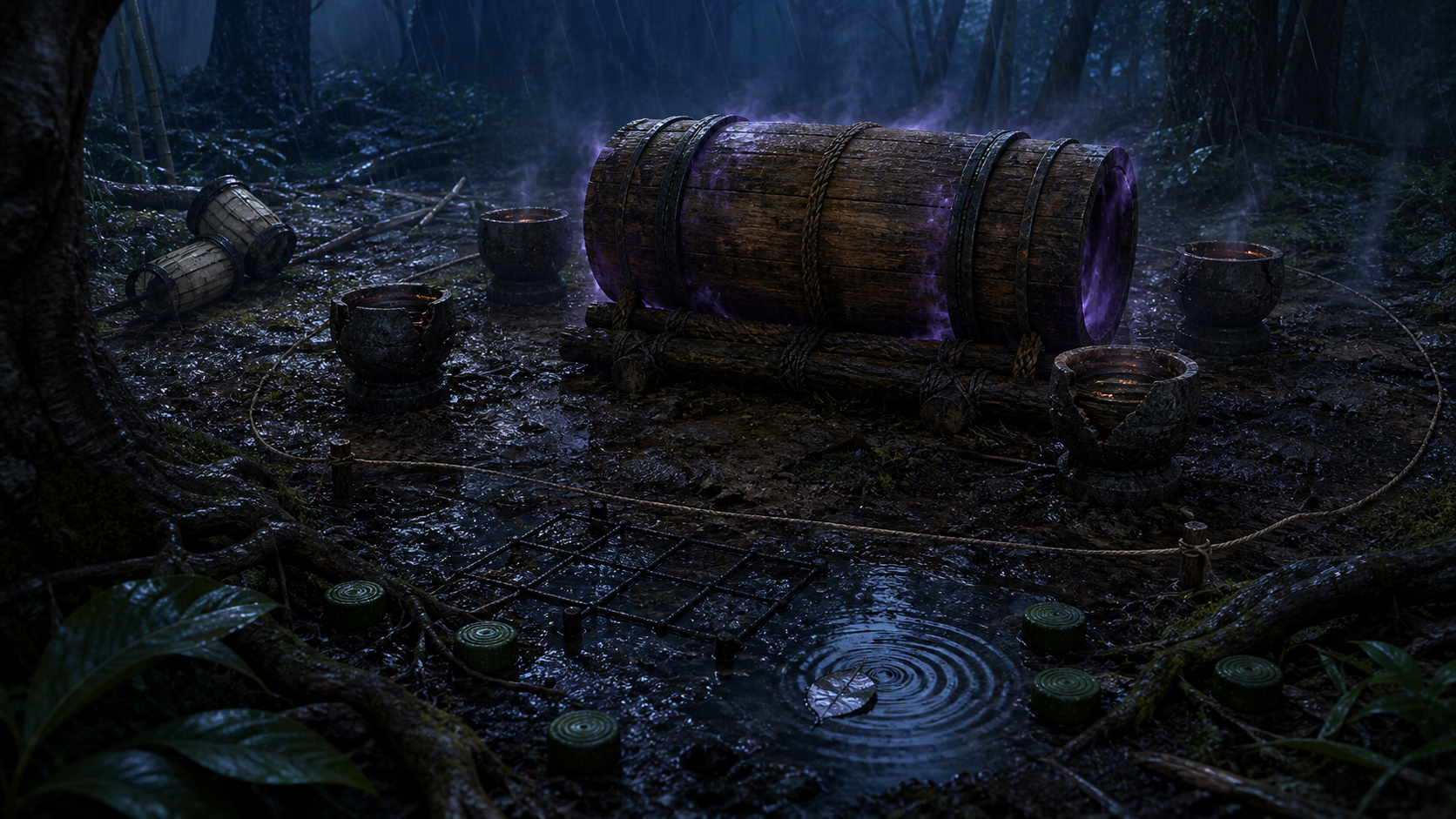
They seal him inside a barrel while his body enters the death-like state required for the mark to reach its second level.
This is the first practical result of Sasuke's decision to leave Konoha for power. He wanted control over the strength needed to kill Itachi. Orochimaru's path immediately removes control from him.
Sasuke cannot inspect the process or change his mind halfway through it. He must trust four enemy shinobi to manage his body while he remains unconscious inside a sealed container.
The Sound Four does not treat him like a future equal. They treat him like a package that must arrive intact enough for Orochimaru to use.
That distinction matters.
Orochimaru sold Sasuke the idea that Konoha was limiting him. His alternative begins with confinement, chemical intervention and total physical dependence.
The barrel is not a shortcut to freedom.
It is a shipping crate.
The Procedure Reveals the Real Agreement
Sasuke consented to leaving the village. That does not mean he understands every risk built into this transformation.
The Sound Four told him he would need to die once. Episode 111 shows what their polished little phrase means in practice.
His body has to be pushed into a state close enough to death for the curse mark to change. The people supervising it serve the man who wants Sasuke's body as his next vessel.
Nobody in this arrangement has an incentive to preserve Sasuke's independence.
They need his body powerful, compliant and delivered.
The procedure turns his grief and desperation into logistics. Seal the barrel. Carry the target. Eliminate interference. Continue to the hideout.
Sasuke believes he is chasing power for his own revenge.
Orochimaru's people are transporting an acquisition.
Genma and Raido Intercept the Sound Four
Genma Shiranui and Raido Namiashi encounter the Sound Four on their return to Konoha.
They are already tired from a mission.
They still recognize a hostile group moving through the area and engage.
This is not the clean test people later use when comparing power levels as if every fighter arrived rested, informed and standing on a tournament floor. Genma and Raido begin at a serious disadvantage. They do not know the full nature of the curse marks, and their opponents have four bodies available to coordinate around the barrel.
The jonin fight anyway because allowing an enemy unit to pass uncontested would hand danger directly to the village.
Their interception looks like a defeat when measured only by who remains standing.
The battlefield tells a better story.
The Sound Four Has to Spend Its Curse Marks
The Sound Four activates its curse marks to overcome Genma and Raido.
That choice proves the exhausted jonin were not disposable obstacles.
The enemy needed access to Orochimaru's enhancement to win. It won, but the effort drained the group enough to force a recovery stop.
That cost changes the pursuit.
Genma and Raido cannot rescue Sasuke themselves. They can make the kidnappers slower, weaker and easier for the next Leaf team to reach.
Shinobi missions rarely offer the courtesy of one person completing every stage. Sometimes the contribution is creating an opening another squad must inherit.
The jonin buy that opening with blood.
The Sound Four talks like Konoha's forces are beneath it, yet two fatigued opponents make all four members expose their enhanced state and interrupt the schedule.
Victory belongs to the Sound Four.
So does the bill.
The Recovery Stop Is the Jonin's Achievement
After the fight, the Sound Four must stop moving and recover.
Sasuke remains sealed inside the barrel while the people carrying him sit vulnerable in enemy territory.
This pause is not luck falling into Shikamaru's lap. Genma and Raido created it.
That is worth stating because stories often celebrate the squad that arrives for the decisive fight and forget the injured people who made that fight possible.
The retrieval team started later and lacks the Sound Four's experience. Without the delay, the children might never close the distance before Sasuke reaches Orochimaru.
Genma and Raido lose their encounter and still advance the mission.
Competence does not always look like winning cleanly.
Sometimes it looks like making sure the enemy cannot leave cleanly either.
Shikamaru Reads the Aftermath
Shikamaru's squad reaches the site of the battle and studies what happened.
He does not see injured jonin and decide youthful determination will solve the power gap. He recognizes the warning.
The people ahead defeated two jonin.
The fact that Genma and Raido were exhausted provides context, not comfort. Shikamaru's team consists mostly of genin on a rushed pursuit mission. Nobody gets to assume the Sound Four will remain drained long enough to become easy targets.
Shikamaru slows the squad enough to read the evidence and plan.
That restraint is leadership.
Naruto's promise to Sakura creates urgency. Kiba's tracking keeps the route available. Neither fact removes the need to understand the enemy before contact.
Charging forward because the trail is fresh would satisfy emotion and waste the opening the jonin paid to create.
Shikamaru treats the battlefield like a message.
He listens.
The Squad Finds Its Opening
The retrieval team catches the Sound Four during its recovery break.
For a moment, Shikamaru's caution appears ready to pay off perfectly.
The enemy is stationary. Sasuke is contained. The Leaf squad has surprise available and enough information to understand that a direct, careless clash would be a terrible idea.
Shikamaru prepares a sneak attack.
This is exactly why Tsunade placed him in command. He does not confuse courage with announcing himself before a stronger opponent. His job is to recover Sasuke and keep his team alive, not stage the most honorable-looking entrance.
The squad needs its first strike to disrupt the four-person formation, control the barrel and prevent the Sound Four from using its curse marks freely.
It is a good plan built from limited time and ugly conditions.
Then the enemy notices them.
Detection Ends the Clean Version of the Mission
The Sound Four detects the retrieval squad before the ambush begins and attacks first.
The pursuit becomes a direct fight.
This does not make Shikamaru's preparation pointless. Planning cannot guarantee that an experienced enemy will remain unaware. It gives the team a structure for responding when the preferred opening disappears.
The detection also confirms the gap between classroom tactics and field command.
On paper, Shikamaru can identify the best approach. In the forest, opponents sense danger, terrain hides variables and one missed signal can reverse initiative instantly.
He now has to lead after the plan breaks.
That is the real examination.
The Sound Four has recovered enough to react, Sasuke remains sealed beyond his friends' reach, and the squad cannot retreat without surrendering the mission.
Episode 111 ends at the moment careful pursuit stops being enough.
What Changes After Episode 111
The Sound Four begins advancing Sasuke's curse mark to its second state.
Sasuke enters a death-like condition and is sealed inside a barrel for transport.
Genma and Raido intercept the Sound Four while exhausted from another mission.
The Sound Four activates its curse marks to defeat them.
The fight costs the enemy enough power that it must stop and recover.
Shikamaru's squad finds the aftermath and recognizes the danger ahead.
The retrieval team catches up during the Sound Four's recovery break.
Shikamaru prepares a sneak attack.
The Sound Four detects the squad and strikes first.
The pursuit has become a battle.
Sasuke leaves seeking agency and immediately becomes cargo
The Sound Four seals Sasuke inside a container while the curse-mark procedure alters his body. He chose to leave Konoha, but the physical reality of that choice looks nothing like freedom. Other people now control his movement, timing, consciousness, and access to information.
Orochimaru’s promise was greater personal power. The first price is surrendering the most basic control over his own body.
The transport container exposes the lie inside the invitation
The Sound Four told Sasuke that joining them would advance his revenge. They did not frame the process as becoming unconscious freight carried through hostile territory. The image corrects their sales pitch without needing dialogue.
Coercive systems often sell transformation as liberation while demanding isolation and submission first. By the time the contradiction becomes visible, the target has crossed enough boundaries that returning feels impossible.
The procedure treats bodily danger as proof of commitment
Sasuke must endure a state described through death and rebirth to expand the curse mark. Pain becomes initiation, and survival becomes evidence that he belongs on Orochimaru’s path.
This structure discourages doubt. If suffering proves worthiness, questioning the process can be framed as weakness instead of self-protection.
The Sound Four protects an asset, not a teammate
They carry Sasuke because Orochimaru wants his body and potential. Their coordination may look like loyalty, but the relationship is organized around delivery. Sasuke’s wishes matter only while they align with the mission.
Team 7’s bonds were messy, emotional, and mutual. The Sound formation appears efficient because it removes negotiation and reduces one person to cargo.
Genma and Raido encounter the extraction by chance
The two Leaf shinobi are returning from another assignment when they intercept the Sound Four. Their presence is not part of a coordinated retrieval net. Konoha benefits from timing rather than a perimeter designed around Sasuke’s known risk.
Chance can create an opening. It should not be mistaken for effective safeguarding.
Two exhausted jōnin still force the Sound Four to escalate
Genma and Raido are not fresh, fully staffed, or specifically briefed for Orochimaru’s operatives. They engage because hostile movement near the village requires response. Their skill pushes all four enemies into advanced curse-mark states.
The encounter establishes the pursuers’ danger through cost. The Sound Four wins, but it cannot do so casually.
The curse marks reveal a team built around controlled self-destruction
Each Sound operative accesses greater power by allowing Orochimaru’s mark to transform the body. The system rewards members for treating damage and loss of ordinary control as professional tools.
Their strength is real. So is the exploitation underneath it. Orochimaru creates powerful subordinates by making their bodies extensions of his research and ambition.
Genma and Raido’s injuries become intelligence for the squad
The fallen jōnin show Shikamaru’s team that the Sound Four has already fought, spent chakra, and used higher curse-mark levels. The injuries also confirm that direct confrontation can overwhelm experienced adults.
Good pursuit reads aftermath as information. Blood, terrain, and recovery stops tell the squad what the enemy can do and what it has already paid.
The Sound Four’s recovery stop is the jōnin’s achievement
Because Genma and Raido forced escalation, the enemy must pause to restore chakra and stabilize the transport. That delay narrows the distance between the two teams.
A battle can matter even when its participants lose. The jōnin change the timeline enough to create the retrieval squad’s opening.
Calling the encounter a loss would erase the mission-level result
Genma and Raido fail to capture the Sound Four and suffer serious harm. They also consume enemy resources and interrupt an extraction that depended on speed.
Outcome should be measured against the wider objective, not only who remained standing at the end of one exchange.
Shikamaru reads the site instead of charging through it
He studies what happened, recognizes the strength disparity, and considers why the enemy stopped. Leadership requires turning evidence into a decision while Naruto’s urgency demands immediate movement.
The pause is not cowardice. It protects the squad from interpreting emotional speed as tactical speed.
Naruto sees distance while Shikamaru sees conditions
Naruto wants to close the gap before Sasuke reaches Orochimaru. That priority is correct. Shikamaru knows pursuit fails if the squad enters the enemy’s chosen ground without understanding formation or exhaustion.
Their tension gives the mission both engine and steering. Naruto supplies refusal to quit. Shikamaru decides where that energy can survive.
Neji’s vision turns concealment into a measurable problem
Byakugan allows the squad to inspect terrain and chakra activity beyond ordinary sight. That capability makes Neji central to avoiding traps and locating the transport.
Information still requires interpretation. Seeing more does not automatically explain what the Sound Four wants the pursuers to see.
Kiba and Akamaru preserve the trail through deliberate disruption
The enemy understands that scent can guide pursuit and can manipulate routes, speed, and contamination. Kiba’s value lies in distinguishing a meaningful trace from environmental noise.
Tracking is an argument with an opponent who knows somebody is reading the ground. Every clue may be evidence or bait.
The retrieval squad reaches an enemy that has planned for followers
The Sound Four expected Konoha to notice Sasuke’s disappearance. Their formation protects the container, rotates roles, and prepares ambushes. Closing distance does not create surprise.
Shikamaru’s squad must assume detection even before it confirms detection. A pursuit target with professional escorts is never simply fleeing forward.
Detection ends the clean version of the mission
Once the Sound Four knows the Leaf team is behind them, speed alone cannot recover Sasuke. The enemy can shape terrain, assign rear guards, and force individual confrontations.
The mission becomes a series of separation decisions. Every person left to hold an opponent gives the remaining squad a chance to continue and carries terrible personal risk.
The formation’s strength will be tested by subtraction
Shikamaru built roles that support one another. The Sound Four will try to remove those roles one at a time. Tracking, vision, strength, unpredictability, and command become harder to sustain as the group shrinks.
A resilient formation needs contingency plans for missing members, not only perfect operation at full strength.
The children are pursuing people who defeated jōnin
Genma and Raido’s condition gives the squad direct evidence of the mismatch. Continuing may be necessary to save Sasuke, but necessity does not make the children adequately supported.
Konoha’s personnel crisis places them inside a mission where courage must compensate for absent adult capacity. That debt belongs to the village, not the squad.
Sasuke’s unconsciousness complicates every claim about voluntary departure
He chose the gate, then entered a procedure that removed his ability to revise the choice while others transported him. The farther the Sound Four travels, the less practical agency he possesses.
Retrieval therefore protects more than Konoha’s rules. It preserves the possibility that Sasuke can decide outside Orochimaru’s controlled environment.
The Sound Four calls obedience strength because it serves their system
They mock Leaf bonds as weakness while coordinating completely around Orochimaru’s objective. Their own unity depends on hierarchy, punishment, and shared bodily exploitation.
They are not free individuals transcending attachment. They are a disciplined delivery team carrying another recruited child toward the person who owns their power.
RaeRae’s full take
Episode 111 makes Orochimaru’s invitation look honest by showing the container. Sasuke leaves to gain power and immediately loses control of his body, movement, and timeline. Freedom was never the product. Delivery was.
Genma and Raido lose the encounter and still change the mission. They force the Sound Four to spend curse-mark power, stop, and recover. Shikamaru’s squad inherits that opening because adult effort created time.
The pursuit becomes more dangerous once detection is confirmed. Children are now chasing operatives who just defeated jōnin, and every tactical success will require somebody to absorb risk the village did not have enough adults available to carry.
RaeRae checkpoint: Sasuke sought control and became sealed cargo. The container tells the truth about Orochimaru’s offer before Sasuke can wake and see it.
The recovery pause belongs to the people who forced it
Genma and Raido are absent from the pursuit formation, but their work travels with it. Every minute the Sound Four spends restoring chakra is time the younger squad did not create alone.
That continuity matters. Missions are built from contributions passed between teams, including the people injured before the visible heroes arrive.
RaeRae's Verdict
“Sound vs. Leaf” refuses to make defeat simple.
Genma and Raido lose, but they force four curse-marked enemies to spend enough power that Shikamaru's team can catch them. The jonin do not finish the rescue. They keep it possible.
Sasuke, meanwhile, has gained none of the freedom Orochimaru's offer implied. He lies unconscious inside a barrel while strangers manage whether his body survives its transformation.
Shikamaru reads the evidence, respects the threat and nearly turns the enemy's recovery into an ambush.
Nearly.
The Sound Four detects the squad first, and the clean version of the mission ends before it begins.
The adults created an opening.
Now the children have to survive inside it.
Receipts and official routes
- Episode number and licensed title: Naruto Official Site.
- Japanese title, synopsis, and November 24, 2004 special broadcast record: TV Tokyo.
- Streaming availability varies by region; use the licensed route maintained in the episode directory.