

Legend, animation, remake, family duty, war, and the receipts Disney keeps stepping around
Mulan
I like Mulan most when she is observant, awkward, stubborn, scared, and forced to solve a problem built by people who already decided she was the problem. The franchise gets weaker whenever exceptional power replaces ordinary intelligence or Chinese history becomes expensive scenery.
This is the front door for the ballad connection, both animated films, the 2020 remake, characters, full reviews, cultural arguments, and every future guide. Mulan can be valuable without becoming the only Chinese woman Western audiences are expected to know. Frankly, she should not have to carry all of China on one animated shoulder.
Story overview
Mulan begins with a family and a state demanding different versions of the same duty. The household needs a daughter who can protect reputation through marriage. The state needs a son who can answer conscription. Mulan crosses both assignments because Fa Zhou’s injured body makes obedience look like a death sentence, and because the qualities everybody keeps trying to discipline out of her are the qualities that later keep people alive.
The earliest surviving ballad is leaner than Disney’s musical and far less interested in romance, talking dragons, or a singular warlord. Later adaptations kept rebuilding the heroine around their own politics. That history matters here. The franchise is not one fixed Chinese story transported intact into American animation. Every version selects what kind of woman, family, nation, and hero the production wants audiences to recognize.
The franchise road
Start with the 1998 animated film for the version that made Mulan globally familiar, continue to Mulan II for the direct-to-video argument about duty and marriage, then approach the 2020 remake as a separate adaptation that trades songs and Mushu for chi, Xianniang, a phoenix motif, and a much more solemn face. The three films share names and broad concerns. They do not share one clean continuity or one understanding of Chinese culture.

Animated Movie
Mulan (1998) Review: She Saved China and Still Had to Bring Home Receipts
The animated feature turns matchmaker failure, military disguise, family fear, and strategic improvisation into one of Disney’s sharpest arguments about who gets recognized as capable.

Animated Movie
Mulan II Review: Mushu Chose His Pedestal and Everybody Else Paid the Price
The sequel tests Mulan and Shang through royal marriages, a dangerous journey, and Mushu’s fear that love will make his guardian role disappear.

Live Action and CGI
Mulan (2020) Review: She Should Not Need Superpowers to Prove the Rule Was Wrong
The remake gives Mulan visible chi and a powerful female mirror, then struggles with the idea that an ordinary woman should have been enough to expose the rule.
Characters
The character shelf follows the people who carry the argument instead of treating Mulan as a lone symbol. Family authority, military leadership, comic friendship, female exile, and invading force all decide which forms of courage receive belief. Each profile keeps the film branches separate and builds the factual record before RaeRae starts judging everybody’s decisions.

Character Profile
Mulan
Ballad heroine, daughter, soldier, strategist, teacher, and the woman every adaptation keeps rewriting.

Character Profile
Li Shang
A captain whose strongest quality is the ability to revise his judgment when another person’s evidence beats his rule.

Character Profile
Mushu
A demoted guardian whose need to feel essential can become practical loyalty or emotional sabotage.

Character Profile
Fa Zhou
An injured veteran and father learning that accepting rescue does not diminish his dignity.

Character Profile
Xianniang
Mulan’s powerful mirror, recruited through exile and discarded when the remake cannot imagine accountability with survival.

Character Profile
Shan Yu
The warlord who reads conventional power clearly and loses to the people and objects his worldview discounts.
Reviews
These are full movie editorials, not plot listings wearing review labels. Each review follows scenes, character decisions, animation or visual effects, adaptation choices, Chinese cultural context, production history, music, performance, symbolism, criticism, ending, and the details that change after another watch.
Full Movie Review
Mulan (1998) Review: She Saved China and Still Had to Bring Home Receipts
Why Reflection, the training pole, the ruined village, the avalanche, the fan, and Fa Zhou’s embrace still work together.
Full Movie Review
Mulan II Review: Mushu Chose His Pedestal and Everybody Else Paid the Price
Why a smaller relationship story had a real adult conflict available and chose manufactured misunderstanding instead.
Full Movie Review
Mulan (2020) Review: She Should Not Need Superpowers to Prove the Rule Was Wrong
Why solemnity, chi, and expensive landscapes cannot replace the ordinary intelligence that made Mulan radical.
RaeRae Reacts
These scene-level reactions stay with the exact moment long enough to follow what Mulan notices, what the institution misses, and why the emotional receipt becomes more complicated after another watch.

Scene React
Mulan Reflection React: The Mirror Was Never the Problem
The mirror was never the problem. The approved frame for daughter, bride, woman, and worthy person was too small.

Battle React
Mulan Avalanche React: She Did Not Win the Battle, She Changed the Question
One cannon could not defeat an army through firepower. Mulan used scarcity, terrain, and judgment to change what the cannon was for.

Decision React
Mulan Hair-Cut React: She Carried the Family’s Impossible Choice
The iconic transformation holds conscription, family duty, historical shorthand, secrecy, gender performance, and a decision with no harmless option.
Rants
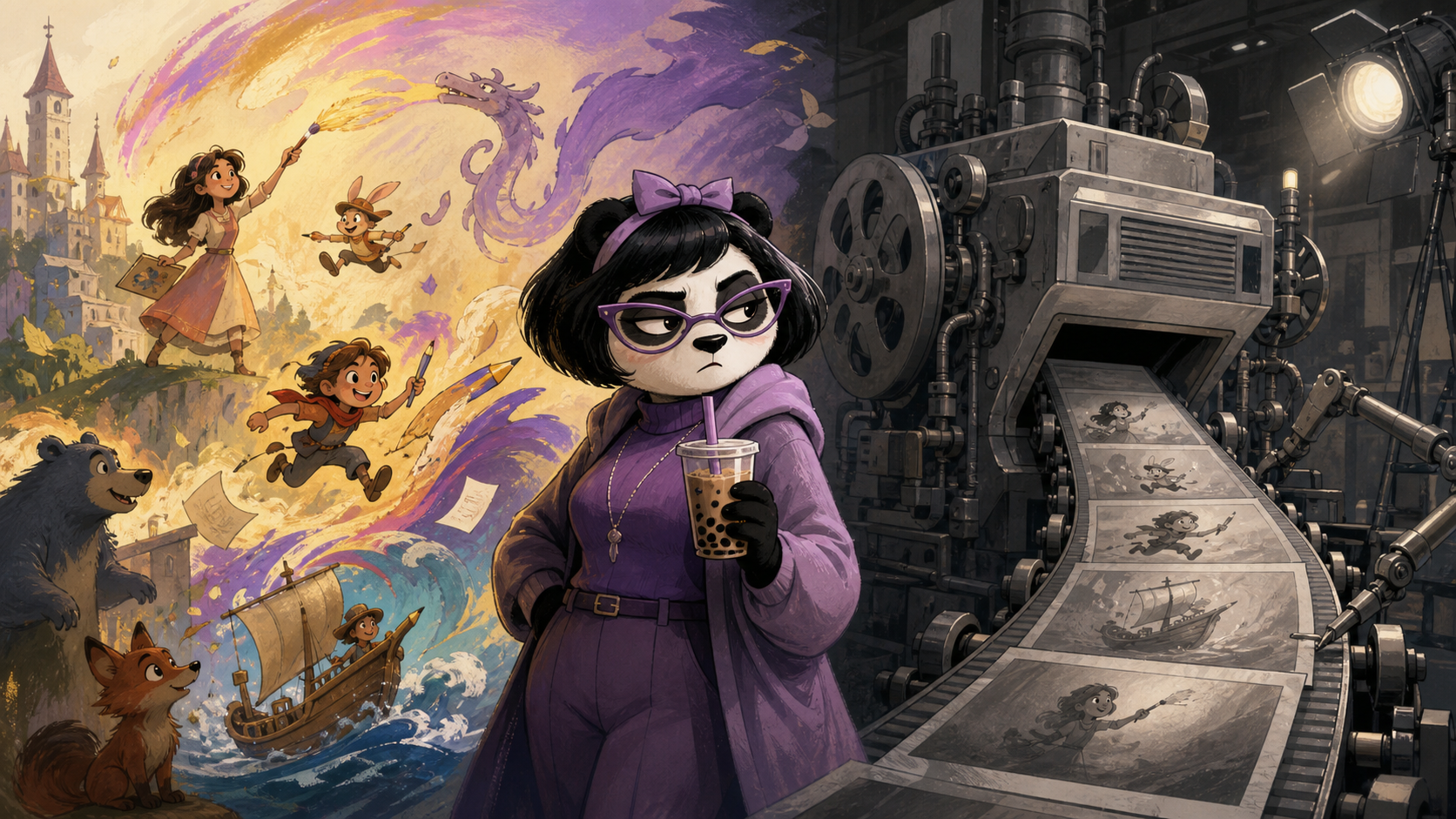
The remake problem is bigger than one casting choice or one missing song. Disney keeps treating animation as a draft that becomes culturally serious after real sets, famous actors, and digital spectacle arrive. That assumption gets especially ugly when a living culture becomes visual proof of importance while the adaptation still avoids the people, history, and arguments behind the scenery.
RaeRae Rant
Disney, Animation Was Already Alive
Animation was already alive. The rant follows what gets flattened when cultural texture becomes remake décor and corporate nostalgia substitutes for a new point of view.
World, lore, and guides
The Mulan guide shelf begins with the Ballad of Mulan because Disney did not invent the woman, the war, the disguise, or the return home. The first guide separates the surviving poem from later legend, uncertain biography, theater, cinema, and Disney’s own inventions. Future guides will take on chi, Chinese dragons, ancestor traditions, conscription, wuxia, and the real Chinese women pushed outside the tiny Western history window.

Anime 101 · Source History
The Ballad of Mulan: What the Poem Says and Disney Changed
Start with the northern ballad, its divided political world, family duty, gender disguise, uncertain history, long adaptation life, and the choices Disney added centuries later.

Anime 101 · Cultural Context
Qi Is Not Mulan’s Superpower Battery: What Chi Means Beyond Disney
Qi belongs to breath, material force, cultivation, body, and world. The remake turned that cultural field into a gender-policed combat credential.

Anime 101 · Women in History
Mulan Is Not the Only Chinese Woman Worth Knowing
Fu Hao, Ban Zhao, Wu Zetian, Princess Pingyang, Li Qingzhao, Qin Liangyu, and Qiu Jin prove one warrior daughter cannot carry Chinese women’s history alone.