
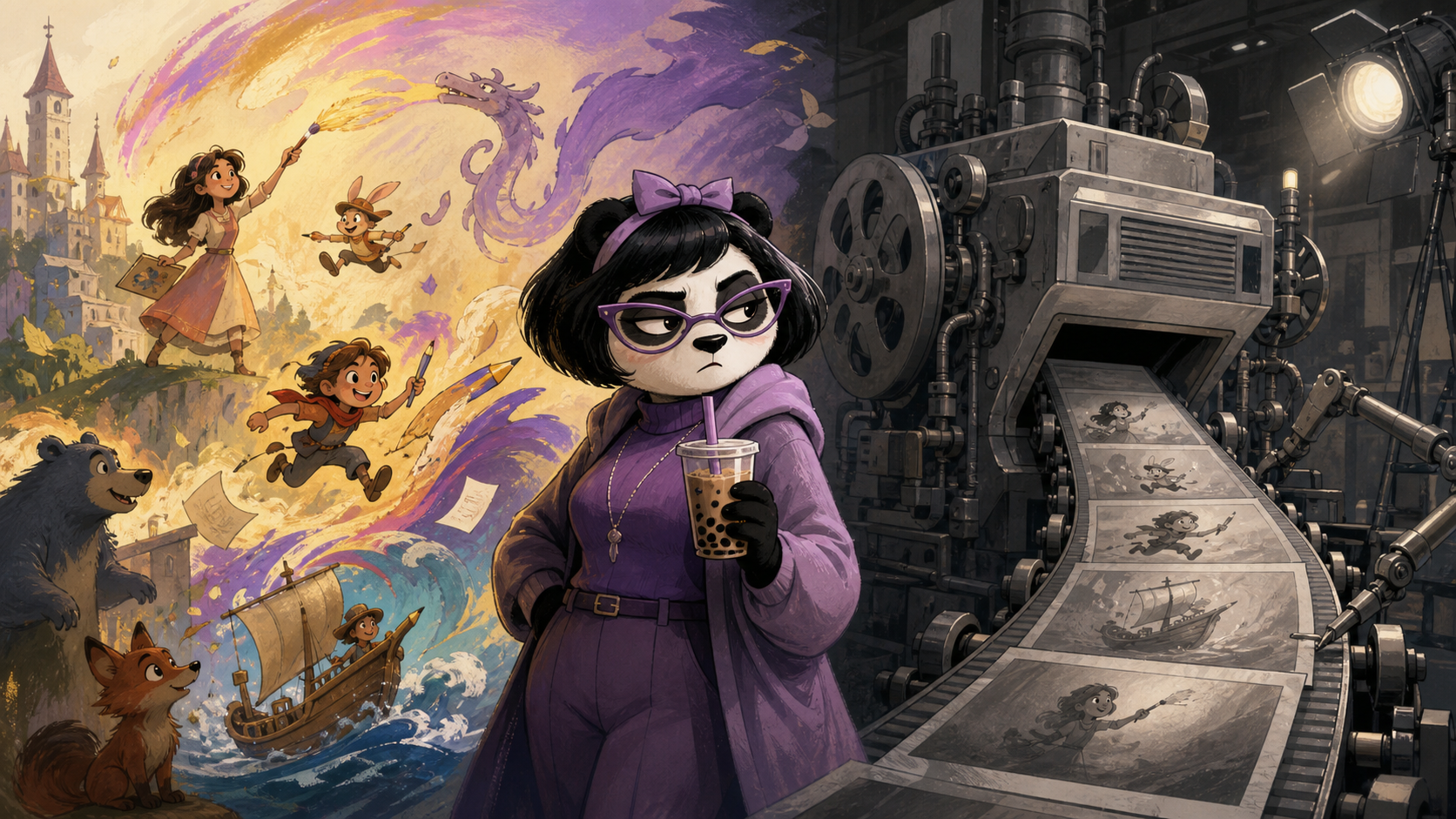
Disney, Animation Was Already Alive
I do not object to Moana or Coco introducing children to cultures they may not know. That exposure can open a door. My complaint is simpler: an animated story does not become more legitimate, mature, or alive because human actors perform beside several warehouses of CGI.
Moana proves cultural exposure can matter
Moana gave many children their first accessible encounter with Pacific wayfinding, community, music, and mythology. That was not a documentary and did not represent every Pacific culture separately. But it treated cultural research as part of building the world rather than sprinkling a few objects over a generic princess story.
The 2026 live-action production involved Pacific Islander performers, musicians, dancers, navigators, tattoo artists, weavers, and cultural experts. That work is worth seeing. Real bodies, textiles, landscapes, languages, and movement can offer something animation does not. I do not need to pretend otherwise to defend animation.
Those strengths did not require retelling the same plot only ten years later. That remarkable team deserved a new Pacific story.
Another medium is not automatically an upgrade
Animation controls every line. A character can stretch beyond anatomy because emotion requires it. Water can behave like an ancestor without being judged as a special effect. Maui’s tattoos can become a silent scene partner. Color, scale, rhythm, and gravity can shift from one frame to the next.
Live action offers faces, physical landscapes, fabric, weather, and human presence. Those are different tools. Live action does not outrank animation.
Yet remake marketing repeatedly uses phrases such as “brought to life” and “reimagined for a new generation.” That language treats animation like a charming diagram waiting to be completed. I hate that.
The drawing breathed. The color acted. The ocean was already alive because animators made it so.
Photorealism often removes information
A realistic animal face cannot move like an expressive drawing without becoming unsettling. A real forest cannot rearrange itself around a heroine’s fear as freely as a painted one. Realistic lighting can make a magical world darker, muddier, and visually smaller even when the budget is enormous.
The Lion King remake demonstrated the contradiction beautifully: nearly everything onscreen was digitally animated, but the film’s prestige rested on making that animation imitate nature closely enough to suppress the exaggeration that allowed the original characters to emote.
That is not “more alive.” That is animation ordered to disguise itself.
If the culture is valuable, let it generate more than one plot
This is where my corrected argument lands. I do not want Disney to retreat from culturally specific stories. I want it to go further.
Keep the Pacific Islander creative teams. Keep the language work, navigation knowledge, music, dance, weaving, and consultation. Then ask what else they want to tell. A new heroine does not have to compete with Moana; she can prove Moana was an opening rather than a limit.
Coco did not need to remake an older Disney hit to introduce audiences to Día de los Muertos. That created Miguel, his family, his music, and its own emotional architecture. That is the model: accessibility without pretending one film can contain an entire culture, and specificity without requiring a pre-sold title.
The original can remain the original
Not every beloved film needs technical correction. Not every new generation requires human actors before it can connect with a drawing. Children understand animation just fine. Adults do too, when we stop apologizing for watching it.
Make live-action fantasies. Make culturally rooted spectacles. Let talented casts inhabit worlds designed for their bodies from the beginning. Just stop using animation’s success as evidence that the same story needs to audition again in another medium.
Animation was not waiting to become real. That was waiting for us to respect what it already was.
What live action can genuinely add
A new medium can reveal texture that a drawing chooses to simplify. Human breath, fabric weight, weather, landscape, and the small hesitation in an actor’s face can create intimacy. Dance filmed through real bodies can emphasize balance and effort. Practical sets can give performers a shared space that changes how they move. A live-action adaptation earns respect when directors build around those strengths instead of treating realism as an automatic promotion.
The best adaptation would ask which parts of the story need a human body and which parts should remain stylized. The answer may include puppetry, painted backgrounds, theatrical movement, or visible artifice rather than a race toward photorealism. Cinema has never needed to hide every seam. A stage musical can admit that a room is a set and still make the audience cry. Live action becomes interesting when the medium interprets, not when digital artists spend years copying the exact animated frame.
Cultural collaboration can also become more visible through performance. A gesture taught by a community artist, a song carried in a living language, or a canoe handled by navigators can communicate knowledge through bodies. Those contributions matter. The remake problem begins when the production borrows cultural labor to authenticate a plot already fixed by corporate memory. The experts become responsible for surface truth while the company keeps ownership of the only story considered safe enough to fund.
Photorealism is an artistic choice, not a neutral upgrade
Realistic light and anatomy communicate one kind of truth. Stylization communicates another. A drawn face can enlarge an eye, flatten a silhouette, or change color because emotion matters more than anatomy. A moving line can show speed before a body crosses the screen. A background can bend toward a character’s fear. Such choices provide information that photorealism often removes in the name of physical credibility.
The removal becomes obvious with animals. Real lions do not form human vowels or raise brows like stage actors. Digital artists must choose between natural movement and readable emotion. A realistic muzzle may look impressive while giving the performer less room to communicate. The audience receives more fur and less face. Calling the result alive confuses visual detail with expressive life.
Animation also controls rhythm at the level of a single frame. A character may pause for two frames longer than physics would allow because the joke needs time. An impact may stretch or smear so the eye feels force. A musical sequence may let architecture dance with the chorus. Live action can create its own rhythm, but reproducing an animated sequence through realistic bodies often exposes how much the original depended on freedom from gravity and anatomy.
The language around remakes matters
Marketing phrases such as “brought to life” sound harmless until the phrase is repeated across an industry. The words teach audiences that animation was incomplete, artificial, or less alive. Animators become invisible twice. Their original work is described as a draft, and their enormous contribution to the remake is hidden behind a live-action label.
Modern fantasy films rely on animation for creatures, crowds, water, skies, environments, stunts, and sometimes most of the final frame. Actors may perform on partial sets while digital teams construct the world around them. The completed movie remains a hybrid. Studios still reserve prestige language for the photographed portion because Hollywood has spent generations treating animation as a genre for children instead of a medium.
Respect begins with honest credits and honest publicity. Call the new film a hybrid adaptation. Explain what performance capture, simulation, compositing, and character animation created. Let visual-effects and animation supervisors speak during the campaign. Acknowledging craft would not weaken the actors. The truth would reveal that every supposedly living remake depends on artists who already knew how to make images breathe.
Culture should produce more than brand recognition
A culturally rooted success gives a studio evidence that audiences will follow unfamiliar myths, music, and family structures. The logical creative response should be more stories, not one story repeated through every available medium. A Pacific creative team could explore another island community, historical period, navigation tradition, family conflict, or contemporary fantasy. The same knowledge that enriched one film can support a library rather than a loop.
No single movie can represent a whole region. Treating Moana as the permanent Pacific slot reduces many cultures to one corporate doorway. Audiences may believe that supporting the remake is the only way to prove continued interest. Artists may be asked to join the established brand because original projects are considered too risky. Representation becomes a bottleneck instead of an opening.
A better system would fund several projects with different creative leaders and audiences. One might be a family musical, another an adult historical drama, another a science-fiction adventure, and another a short experimental film. Cultural specificity would stop functioning as a special event and begin functioning as ordinary authorship. That change requires the studio to trust people with plots, not merely research assignments.
Children do not need realism to understand importance
Children accept drawings, puppets, stop motion, paper cutouts, and imaginary friends without asking whether the medium has matured into live action. Adults create the hierarchy. A child can recognize grief in a colored shape and courage in a character whose proportions could never exist. Emotional truth does not wait for skin pores.
Adults sometimes justify remakes by claiming a new generation needs a contemporary version. The animated originals remain widely available, and many continue attracting young viewers. Visual age can even become part of their identity. A film made in a different era shows children that art changes. Replacing every style with current photorealism narrows media literacy instead of expanding access.
New generations deserve new stories more than they need old stories wearing current technology. A young viewer can inherit Moana and still meet another heroine whose adventure belongs to the present. The older film does not become a barrier simply because the animation has a date. Continual access, thoughtful restoration, subtitles, dubbing, and educational context can keep a work alive without staging another audition for legitimacy.
How a remake could justify itself
A live-action adaptation should have a clear artistic question. Perhaps the story moves to a different historical setting, centers a secondary character, changes genre, or examines consequences the original left outside the frame. Perhaps a director has a visual language that transforms the material. Recognition can invite viewers inside, but interpretation must give them a reason to stay.
The production should also preserve the dignity of the original medium. Marketing can say “adapted for live action” instead of “finally brought to life.” Publicity can celebrate differences without claiming superiority. The studio can release documentaries about both productions, fund restorations, and commission new animated shorts alongside the adaptation. One version does not need to stand on the other’s grave.
Most important, cultural experts and performers should help shape the new story early. Consultation after the plot is locked produces accurate props inside an unchanged corporate frame. Shared authorship can change relationships, themes, music, language, and the reason the adaptation exists. The result may still use a familiar title, but the work would carry creative life that no camera format supplies automatically.
Animation was already alive because artists made choices in every frame. Live action can become alive through different choices. The industry loses both forms when a remake treats one as a ladder and the other as the top rung. Fans do not need a ranking. Fans need stories whose medium has a reason.