LE SSERAFIM Profile: Members, History, Music and Official Videos
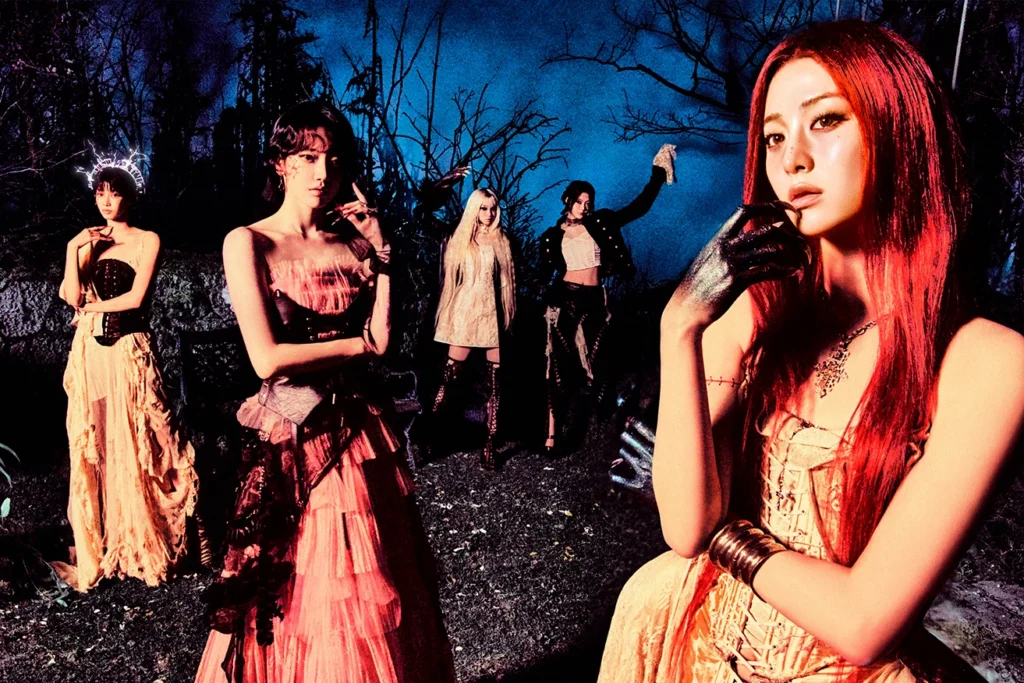
Group profile
| Members | Sakura, Kim Chaewon, Huh Yunjin, Kazuha and Hong Eunchae |
|---|---|
| Former member | Kim Garam |
| Company | SOURCE MUSIC |
| Debut | May 2, 2022 |
| Current status | Active five-member group |
| Fandom | FEARNOT |
Active five-member girl group · Source Music / HYBE · 2022–present
LE SSERAFIM built a career around fearlessness, then became more interesting every time the work exposed how much fear, repetition, criticism and labor sit underneath that word. Sakura, Kim Chaewon, Huh Yunjin, Kazuha and Hong Eunchae are the current lineup. Five—not “five for now,” not six with an invisible chair, and not a rumor-thread choose-your-own-adventure.
Bottom line
The brand says strength. The catalog is better when it says maintenance: survive the hit, learn from it, keep moving and occasionally admit the performance costs something. From the minimal control of “FEARLESS” through “ANTIFRAGILE,” “Perfect Night,” “EASY,” “CRAZY,” “HOT,” “DIFFERENT,” “SPAGHETTI,” PUREFLOW pt.1 and “ICONIC BY MISTAKE,” the group keeps testing whether confidence can change shape without becoming empty posture.
Meet the current five members
Every image card opens one combined member-and-artist page. Solo songs, OSTs and collaborations stay with the same human; the site will not create duplicate profiles because a member releases work outside the group.

SAKURA
veteran idol, performer and one of the group’s clearest examples of reinvention · born March 19, 1998

KIM CHAEWON
leader, vocalist and compact performance engine · born August 1, 2000

HUH YUNJIN
vocalist, songwriter and the member most visibly building an individual catalog inside the group record · born October 8, 2001

KAZUHA
performer, rapper-vocalist and the member whose ballet background became useful only after the novelty caption wore off · born August 9, 2003

HONG EUNCHAE
vocalist, dancer and maknae whose public growth has been documented through stages, interviews and a major music-show hosting job · born November 10, 2006
The official roster and the six-member beginning
Source Music’s current profile lists Sakura, Kim Chaewon, Huh Yunjin, Kazuha and Hong Eunchae. The group debuted May 2, 2022 with six members. Kim Garam’s contract ended July 20, 2022, after the company announced her departure; LE SSERAFIM continued as five. That history should be stated once, accurately, without turning a former minor’s school dispute into permanent entertainment.
The five-member formation is not temporary crisis choreography. It is the group that recorded the later catalog, toured, weathered public scrutiny and built the current identity. Archival debut material remains six-person material; current profile cards remain five-person cards. Both facts can exist without a conspiracy board.
FEARLESS: confidence as a controlled surface
The first mini album announces desire without apology. “FEARLESS” is almost stubbornly restrained: bass, repetition and low-temperature delivery force the members to create focus through posture and micro-timing. “Blue Flame” gives the debut a more melodic pulse, while the album’s framing treats the gaze of other people as something to walk through.
In hindsight, the clean confidence is less interesting than the pressure surrounding it. LE SSERAFIM’s career would repeatedly test the gap between saying “I am fearless” and being expected to look invulnerable every time a microphone, airport camera or comment section opens.
ANTIFRAGILE: the thesis that stuck
The October 2022 mini album turns damage into fuel. Its title track draws on reggaeton rhythm and a hook built for bodily repetition. “Impurities” supplies smoother restraint. More importantly, the era establishes five-person LE SSERAFIM as a complete visual and musical unit after a turbulent debut season.
“Antifragile” is not the same as unhurt. Something antifragile changes because pressure occurred. That distinction explains why the song still fits later eras better than a generic empowerment slogan would. The members’ public narrative contains criticism, injuries, live-performance debates and relentless evaluation; the work becomes richer when strength includes response rather than denial.
UNFORGIVEN and the first full-length argument
The 2023 studio album folds earlier releases into a longer sequence, then adds “UNFORGIVEN,” “Eve, Psyche & The Bluebeard’s wife,” “FEARNOT” and “Fire in the belly.” Nile Rodgers is credited on the title track, while the B-side’s house-driven repetition became a performance and remix platform of its own.
The album’s “we choose our route” message risks becoming branding circularity—independence sold by one of the largest entertainment systems in the world—but the members make the contradiction watchable. Idol music can be corporate and personally meaningful at the same time. The analysis gets weaker when it pretends only one side exists.
Perfect Night: an Overwatch collaboration becomes a real hit
The digital single is connected to Overwatch 2, but it refuses to sound like a product trailer with a chorus attached. Light production, friendship-centered lyrics and an easy performance let the five members sell comfort instead of combat. The track’s Korean chart run proved the public would stay when the group lowered the armor.
The collaboration also creates a filing question the user raised with PUBG: a game is not a member or music artist. “Perfect Night” stays under LE SSERAFIM and receives an Overwatch collaboration tag/relationship for discovery. A future game-song directory can aggregate that tag without pretending the game has a singer profile.
EASY and Smart: influence, skill and the live-vocal storm
EASY uses laid-back production and extremely unlaid-back choreography. “Smart” draws on amapiano and Afropop-associated sounds, prompting fair questions about influence, credit and K-pop’s habit of treating globally Black music as an anonymous mood board. Those questions should be aimed at credits and production systems with precision, not flattened into abuse of five performers.
The era’s live-vocal debate became a harassment engine after major festival stages. Some criticism was specific and deserved: unstable moments happened, arrangements and keys can be discussed, and a performance sold as live is reviewable. The pile-on went far past music. Accountable coverage names the stage, hears later evidence and allows improvement to remain visible.
CRAZY: ballroom vocabulary and exact-upload discipline
The fourth mini album moves through house and ballroom references while the title track turns repetition into fashion-camera pressure. The official MV, English-version MV and moving dance practice are three separate playlist objects. One changes language, one shows the concept edit and one exposes the choreography. Matching only by the word “CRAZY” would silently erase those differences.
The era works when precision leaves room for personality. Ballroom vocabulary is not an interchangeable “crazy fashion” costume; it carries queer and Black/Latino history. K-pop can engage it, but the coverage should name the lineage and examine credits rather than praising “innovation” as if the culture appeared when HYBE uploaded it.
HOT closes a trilogy quietly
HOT completes the EASY–CRAZY–HOT sequence with a title track more restrained than its burning-world visual scale. That mismatch divides listeners. I like the whispery tension more than the song’s unwillingness to fully erupt. The members sell heat as proximity and persistence, not only volume.
The official MV remains one exact playlist React. Its surrounding era should not be confused with every live stage or performance cut. The tracker preserves what was actually reviewed.
Japan, SPAGHETTI and the 2026 catalog
“DIFFERENT” gives the group a cleaner groove in Japanese promotion, while “Kawaii,” produced by Gen Hoshino, turns cuteness into deliberate performance rather than a retreat from strength. “SPAGHETTI” features j-hope and builds a knowingly irritating hook around the image of a song stuck in your head.
Source Music’s current discography lists the second studio album PUREFLOW pt.1 and the digital single “ICONIC BY MISTAKE,” a LE SSERAFIM/ILLIT/KATSEYE collaboration. The latter has one React spanning three group ecosystems; this hub links the exact upload and all participating canonical profiles instead of pretending the women are one temporary supergroup.
Five biographies, not five functions
Sakura brings more than a decade of idol adaptation. Chaewon leads with compact vocal and rhythmic authority. Yunjin connects a large vocal identity to an expanding self-written catalog. Kazuha translates classical control into pop groove while learning skills ballet never required. Eunchae’s growth includes both performance and a long public interviewing record.
Those sentences describe visible work, not permanent position cages. Songs redistribute weight. A useful group understands that somebody outside center may be holding the geometry together, and a useful profile understands that the loudest moment is not the only labor worth recording.
LE SSERAFIM React image cards
Every card uses the same unique local image as that React’s featured, hero, Open Graph and Twitter image. Alternate uploads remain separate cards because each exact video has its own review record.


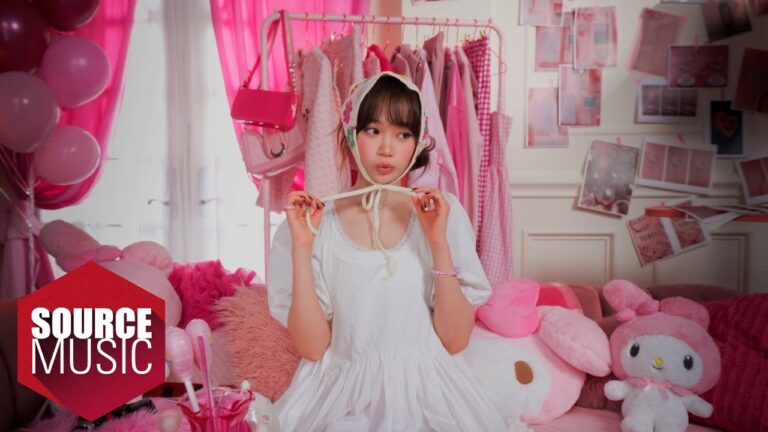


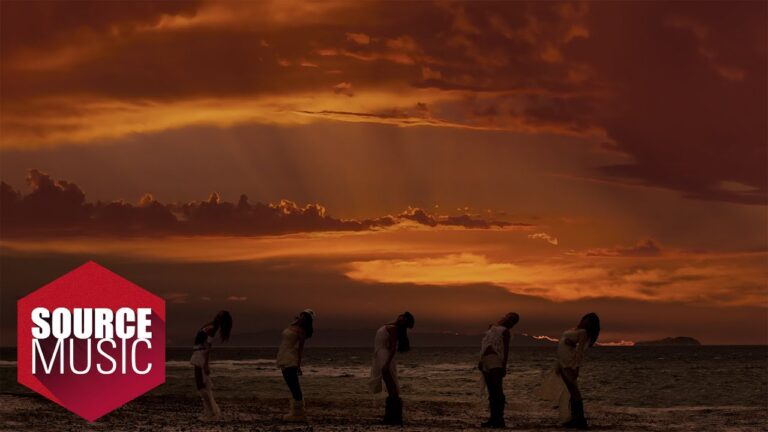







RaeRae React library
ICONIC BY MISTAKE
SPAGHETTI featuring j-hope
Kawaii
DIFFERENT performance film
HOT
All remaining exact playlist React routes appear beside their players below.
Official video tracker
Exact alternate uploads stay separate. The tracker includes every assigned playlist item plus the essential official MVs needed to understand the core catalog.
ICONIC BY MISTAKE
SPAGHETTI featuring j-hope
Kawaii
DIFFERENT performance film
DIFFERENT official MV
HOT
CRAZY English version
CRAZY moving dance practice
CRAZY official MV
Smart
EASY choreography version
Perfect Night with Overwatch 2
ANTIFRAGILE
FEARLESS
UNFORGIVEN featuring Nile Rodgers
Eve, Psyche & The Bluebeard's wife
EASY official MV
Current status
LE SSERAFIM remains an active five-member Source Music group as of August 27, 2026. Current status comes from the official company profile, not from line distribution, health pauses or social-post frequency.
The name is an anagram, not a complete philosophy
“LE SSERAFIM” rearranges “I’M FEARLESS,” an excellent branding trick that can become a trap if every discussion ends there. Fearlessness is a pose; the catalog becomes human when it reveals preparation, doubt, recovery and the labor required to return after public failure. The group’s strongest songs turn the slogan into a process rather than a permanent personality.
“ANTIFRAGILE” works because damage is acknowledged. “Perfect Night” works because safety comes from companionship. “EASY” works when the cool surface clashes with visible difficulty. “HOT” works when closeness is quieter than the burning set. The brand remains recognizable, but the meaning moves.
The five-member formation became its own instrument
After the debut lineup changed, choreography, recordings and public identification had to settle around five. Odd-number formation gives a natural center, but the group avoids making four permanent background figures by rotating depth and using paired handoffs. The best stages let the viewer understand the whole picture before the edit selects a face.
That stability is why the current hub does not keep an empty historical card. Garam belongs in the debut chronology and official archival credits. Sakura, Chaewon, Yunjin, Kazuha and Eunchae belong in the current directory. A history can preserve what happened without confusing what exists.
The trilogy framing—and where it strains
EASY, CRAZY and HOT are marketed as a connected sequence: effort concealed by ease, surrender to the irrational, then commitment intense enough to burn. The arc is legible, but title slogans sometimes carry more narrative weight than the songs themselves. A trilogy should deepen an idea, not merely align three poster fonts.
Musically, the sequence moves through relaxed hip-hop/R&B textures, house and ballroom references, then softer heat. The five members provide continuity through timing and performance identity. The criticism is fair: some eras borrow heavily from external Black musical languages while promotional language can make influence sound like spontaneous corporate invention. Credits and cultural history should stay visible.
Japanese releases are not side quests
“DIFFERENT” and “Kawaii” belong in the main chronology because the group’s Japanese work develops its sound and reaches a distinct market; it is not bonus material for collectors who finished the “real” Korean story. Sakura and Kazuha’s presence adds regional context, but all five members are doing the release work.
The exact tracker separates “DIFFERENT” performance and MV uploads because one documents groove and formation while the other adds concept editing. “Kawaii” uses Gen Hoshino’s production and a Sanrio collaboration to ask whether cuteness can function as agency rather than regression. Those are substantive chapters, not merchandise footnotes.
Game collaborations get relationships, not fake artist profiles
“Perfect Night” is tied to Overwatch 2. The game helped frame and distribute the song, but it is not a performing member. CVM Sekai files the music under LE SSERAFIM, gives the project a game-collaboration relationship/tag and can later aggregate all game-linked songs into a directory. No “Overwatch artist profile” is needed.
That same rule handles PUBG and future franchises. The human or musical act gets the canonical profile. The game, film, drama or brand gets a discoverable collaboration taxonomy. Search remains useful without pretending corporate IP belongs in a member grid.
Authorship across the group ecosystem
Yunjin has the most visible individual songwriting catalog, but the group record also contains member writing participation, including fan-directed material. Credits should be attached to specific songs, not generalized into “self-producing group” marketing unless the evidence supports that label across the catalog.
The opposite mistake is treating corporate production as proof the members contribute nothing. Performance interpretation, arrangement adaptation, movement, vocal choices and the public translation of a concept are real work. The ledger can distinguish roles without deciding only one role counts as art.
What the official-video tracker includes
The tracker prioritizes official music videos, official performance films and dance versions assigned in the owner’s playlist, then adds essential core MVs required to understand the group’s chronology. It does not dump every challenge, teaser and vertical edit into one endless wall. Complete means complete for the defined canonical scope, not incapable of saying no.
Alternate language and choreography uploads remain separate when they have their own IDs. That is why “CRAZY” appears three times and “DIFFERENT” twice. Titles are labels; IDs are records. The page and workbook preserve both.
How to follow LE SSERAFIM internationally
Use Source Music’s profile for the current roster and its discography for release order. Use the official LE SSERAFIM channel for member and performance content, HYBE LABELS for major MVs, Weverse for company notices and the Japanese site for Japan-specific schedules. Cross-check health and lineup claims against official notices before repeating them.
The network is still fragmented, but the sources have different jobs. A fan translation can be faster and clearer; it should not become the sole authority for contracts, medical status or ticket money. This hub keeps durable profiles and exact videos together so the next campaign does not require rebuilding the group from scattered posts.
Awards, charts and the useful limit of numbers
LE SSERAFIM has major chart results, sales, awards and festival appearances. Those prove reach and professional scale. They do not automatically settle whether a song is good, a cultural influence was handled well or a live stage succeeded. Numbers answer “how much attention?” more reliably than “what did the work mean?”
Use milestones to establish chronology and impact, then return to the artifact. A million sales can coexist with a weak lyric. A viral B-side can outgrow its original campaign. A criticized stage can become the reason later preparation changes. Career records are evidence, not argument-ending weapons.
The next-era test
The group’s next strong chapter should trust longer musical ideas and visible live work as much as instant slogans. Keep the physical precision and willingness to borrow new forms, but make influence and credit explicit. Give the members enough space that a listener can identify tone and intention without waiting for a fancam guide.
Information should improve too: one multilingual chronological page, exact video links, accessible schedule text and individual credits that do not vanish when teaser season ends. Global reach should not require global fans to perform unpaid database archaeology.
The RaeRae verdict
LE SSERAFIM is not interesting because five women never break. They are interesting because the system keeps selling invulnerability while the work keeps leaking effort, humor, strain, recovery and choice through the seams. That contradiction is the group’s real identity.
The hub therefore refuses both extremes: no corporate worship, no harassment dressed as honesty. Credit what lands, name what fails, preserve the receipts and let the next performance add evidence.
Why the hub stops at a defined scope
A useful official-video tracker is selective enough to remain navigable. Major MVs, assigned playlist uploads, performance films and meaningful choreography versions belong. Every teaser, challenge and vertical crop does not. Complete means the canonical music-and-performance record defined by the site, not an inability to distinguish a release from promotional exhaust.
That boundary also keeps future updates honest. New exact uploads can be added with their own IDs and relationships; old rows do not need to be silently repurposed because a title looks close. The result is less flashy than an endless feed and much more useful six comebacks later.
FEARNOT: the fandom file
FEARNOT is the official fandom name. Source Music connects the English “fear not” to the Korean sound of 피어나, “to bloom”: the group moves without fear, fans support them without fear, and the relationship is supposed to make new moments bloom. The official color is FEARLESS BLUE, Pantone 7453 C. Those details belong in the file because they are documented, not because every fandom needs a branding quiz.
Source Music’s official FEARNOT announcement and the official FEARLESS BLUE notice are the primary receipts.
Official accounts and receipts
React image card

React image card

React image card

React image card
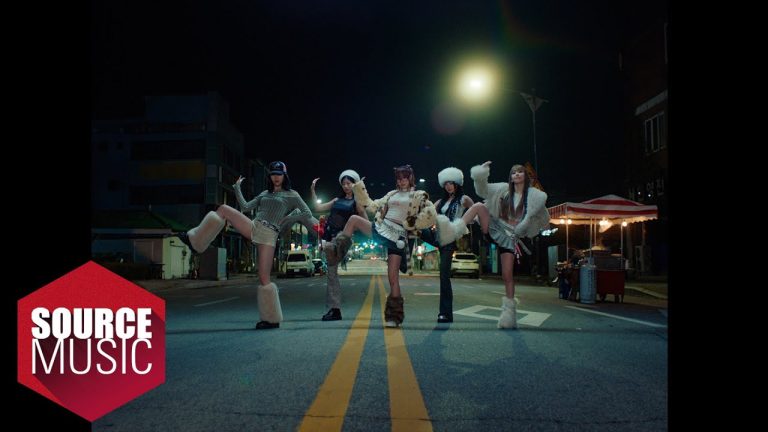
<a href="/le-sserafim-crazy-japanese-version-mv-react/">CRAZY Japanese Version MV React: LE SSERAFIM Took Ballroom Into a Different Frame</a>
React image card

<a href="/le-sserafim-easy-mv-react/">EASY MV React: LE SSERAFIM Made Confidence Sweat in an Empty Church</a>
React image card

<a href="/le-sserafim-unforgiven-japanese-version-mv-react/">UNFORGIVEN Japanese Version MV React: LE SSERAFIM Rode the Western Into a New Language</a>
React image card

<a href="/le-sserafim-unforgiven-mv-react/">UNFORGIVEN MV React: LE SSERAFIM Borrowed the Western and Owed the Groove a Longer Memory</a>
React image card
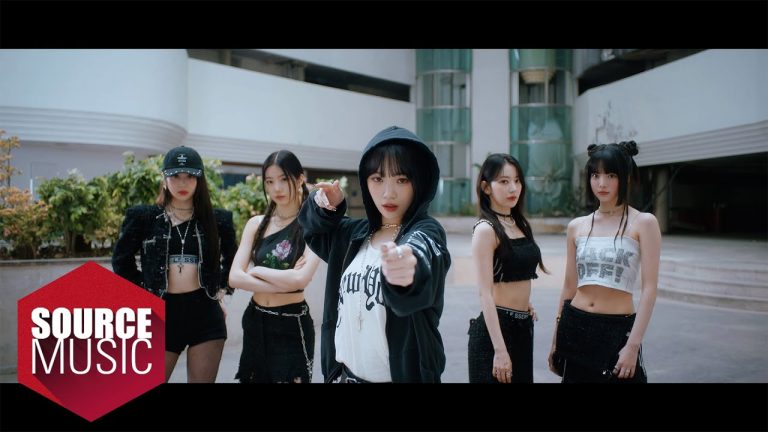
<a href="/le-sserafim-eve-psyche-bluebeards-wife-mv-react/">Eve, Psyche & the Bluebeard’s wife MV React: LE SSERAFIM Put Three Punished Women on the Same Beat</a>
React image card
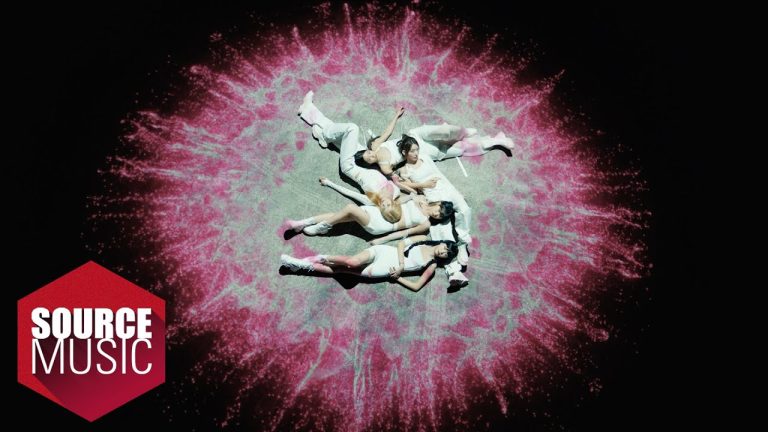
<a href="/le-sserafim-impurities-mv-react/">Impurities MV React: LE SSERAFIM Let the Scar Stay in the Choreography</a>
React image card

<a href="/le-sserafim-fearless-original-mv-react/">FEARLESS Original MV React: LE SSERAFIM Debuted Like the Camera Already Owed Them Rent</a>
React image card