
RAERAE REACTS · LE SSERAFIM · EXACT OFFICIAL MV
UNFORGIVEN Japanese Version MV React: LE SSERAFIM Rode the Western Into a New Language
The Japanese “UNFORGIVEN” keeps the spaghetti-western posture, Nile Rodgers guitar and refusal hook, then asks new phrasing to ride across an image already built from American genre mythology. That is more than a translation problem. LE SSERAFIM are Korean and Japanese performers circulating a Western borrowed form through another Japanese-market edition. The result is loud, catchy and culturally layered enough that “cowgirl concept” is nowhere near a complete review.
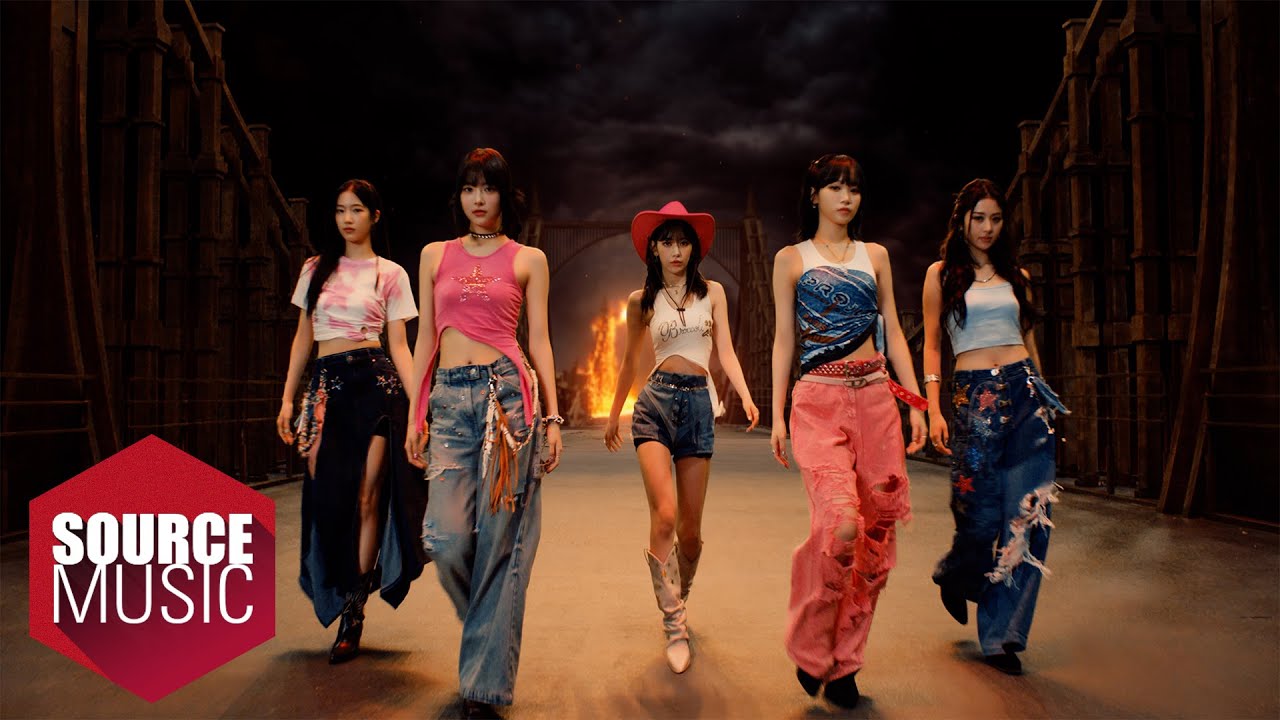
Release file
Released: August 22, 2023
Runtime: 04:02
Artist: LE SSERAFIM — Sakura, Chaewon, Yunjin, Kazuha and Eunchae
Edition: Japanese-language official MV
Label / channel trail: SOURCE MUSIC · HYBE LABELS
Exact-video distinction: Official Japanese-version MV vMddOrUGwDw, separate from the Korean master UBURTj20HXI and performance editions
Sound: Funk-guitar-driven pop with western-film quotation, chant hook, firm low end and choreography that turns refusal into collective forward motion
Sources: Exact official MVDaily+10.4KTotal views12M; official channel description and release metadata.
First reaction: the outlaw passport has another stamp
The song already travels through genre references before Japanese lyrics arrive. Western-film sound, pop choreography and idol marketing meet inside one refusal slogan.
The new edition makes that circulation visible instead of pretending culture moves in a straight line from one owner to one borrower.
Nile Rodgers gives the guitar a living credit trail
The riff is not an anonymous retro preset. Rodgers carries a specific history across disco, funk and pop production.
Naming him keeps the groove connected to Black musical labor rather than treating “western” styling as the only heritage in the room.
The spaghetti-western quote is doing marketing work
Outlaw images quickly communicate rebellion because audiences have already learned the code through decades of film.
Borrowing that shorthand is effective, but rebellion becomes costume when the video never asks who historically received permission to be an outlaw hero.
Sakura anchors the Japanese edition without becoming its translator mascot
Her language and market experience are obvious assets, but the release still belongs to five performers.
The camera lets her authority register without assigning her the job of making every cross-market choice culturally legible.
Chaewon keeps the chant from sagging
A repeated refusal requires timing that sounds decisive rather than merely loud.
Her attack gives the group hook a front edge and makes the next member handoff feel intentional.
Yunjin makes rebellion sound slightly dangerous
Her texture prevents the outlaw posture from becoming clean brand compliance.
A little abrasion reminds the listener that being unforgiven should cost more than buying the correct boots.
Kazuha turns forward motion into line
Her balance gives the choreography a sense of direction, especially when the formation behaves like a group crossing territory.
The elegance works best when it sharpens defiance rather than civilizing it.
Eunchae adds mischief to the refusal
Her energy stops the concept from aging into permanent seriousness.
Defiance can be playful, especially when a younger performer rejects the demand to inherit everybody else’s respectable behavior.
Japanese syllables alter the hook’s swing
The translated lines redistribute breath and consonant pressure around a groove listeners already know.
The members do not simply lay new words on top; they adjust attack so the refusal still arrives before the beat loses patience.
The ending keeps the collective larger than the prop world
Horses, hats and desert codes sell the campaign, but the final impact comes from five bodies landing the same decision.
The borrowed genre becomes useful when performers exceed it instead of disappearing inside an expensive costume rack.
The five-member performance is the continuity
Sakura understands how to make a camera feel acknowledged without surrendering the scene to it. Chaewon gives every stop and handoff a clean edge. Yunjin adds vocal grain and facial disruption when the polish risks becoming too obedient. Kazuha turns line and balance into architecture. Eunchae brings elasticity that keeps the formation from looking manufactured by a ruler.
Those tendencies matter because an alternate-language or alternate-market video can easily become a packaging exercise. The current lineup supplies continuity without copying the exact emotional temperature of the other edition. Every participating member receives the same canonical React card on her profile, because a group release does not belong only to the thumbnail face.
Language changes the mouth, not only the subtitle
Japanese phrasing opens and closes lines differently, changing how the members approach the chant. Some bars flow more continuously, while others need sharper internal accents to preserve the Korean master’s refusal.
That adaptation is performance labor. A listener may recognize the production immediately, but the members still rebuild personality inside new mouth shapes and market expectations. The exact video deserves metadata and analysis that preserve that difference.
What changed every time I replayed it
The first watch followed the western props. The second followed the guitar and asked whose musical history was carrying the cool before any hat appeared.
The third replay focused on language: small shifts in attack made the familiar hook sound less like a copy and more like a decision repeated under new conditions.
What I kept replaying
- Nile Rodgers’ guitar cutting through the western-film costume.
- Sakura giving the Japanese edition authority without carrying it alone.
- Chaewon placing a hard edge on the collective chant.
- Yunjin making branded rebellion sound less safe.
- Eunchae letting refusal contain humor.
Where the exact video could hit harder
The western imagery depends heavily on inherited shorthand and rarely complicates who gets imagined as outlaw, settler or owner of the landscape.
Several scenes reproduce the Korean campaign’s emotional posture so closely that the Japanese edition could push its own visual argument further.
Meaning: outlaw mythology often hides possession
Western films turn land into an empty stage waiting for the boldest rider, even when real landscapes held Indigenous nations, borders and violent contests over ownership. Pop borrowing usually keeps the freedom fantasy and discards that history.
This MV does not need to become a documentary, but criticism should notice what the shorthand asks viewers to forget. Rebellion looks different when the “open” territory was never empty.
Cross-market editions deserve more than completionist treatment
Japanese versions are often filed as bonus inventory even when pronunciation coaching, rerecording, styling, editing and promotion required another production cycle. Fans then struggle to find the exact video because trackers collapse every edition under one song title.
Separate cards and release dates correct that practical problem. They also respect the performers’ work: a familiar composition can still contain a new set of vocal decisions, visual evidence and audience relationships.
The guitar refuses to become scenery
Rodgers’ playing keeps returning the track to rhythmic conversation. The riff leaves spaces for bodies and voices instead of behaving like a cinematic wallpaper labeled “cowboy.”
That musical specificity is why the record survives its busiest concept decisions. The western frame may age as styling; the guitar’s pocket keeps teaching the chorus where to land.
RaeRae verdict
The Japanese “UNFORGIVEN” works as a separate performance because language changes attack and five members rebuild refusal inside the familiar groove.
Its cultural borrowing deserves a longer memory than cowboy styling, especially when Nile Rodgers’ guitar supplies the record’s living spine.
Bottom line
LE SSERAFIM ride “UNFORGIVEN” into Japanese with the refusal intact. The exact edition earns its place through altered mouth work, five-member attack and a groove whose Black musical credit trail matters more than the hat rack.