
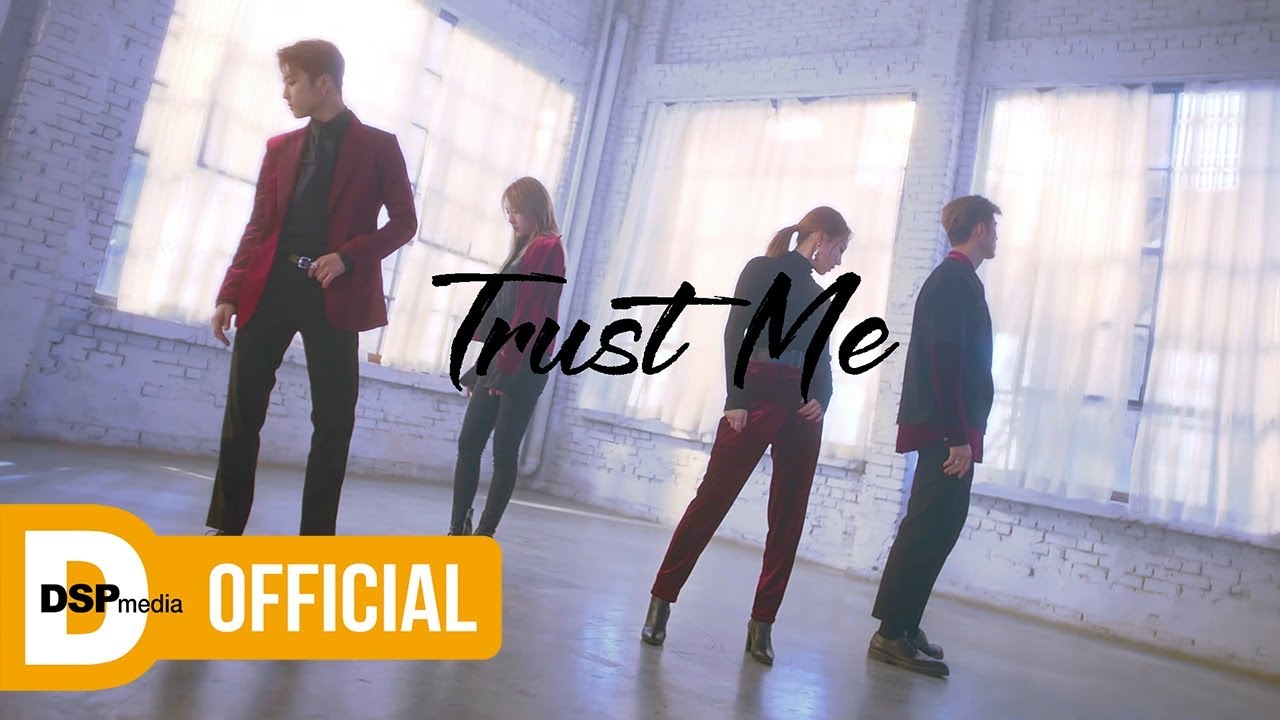
Trust Me Prequel MV React: KARD Built the Alibi Before the Crime Scene
Trust Me builds the alibi before the crime scene. KARD make reassurance sound suspicious on purpose, because the prettiest promise in a damaged relationship is often the one evidence cannot support.
Release file
Released: December 6, 2017
Runtime: 02:47
Artist / channel: KARD / KARD
Exact-file focus: Official Trust Me music video.
RAERAE REACTS · KARD · EXACT OFFICIAL MV
“Trust Me” arrives after “You In Me” was released but calls itself the prequel, which means KARD hand us the alibi after showing the crime scene. Softness becomes suspicious on contact. Every reassuring look and shared moment is now evidence the viewer knows will curdle. The MV’s power comes from that reversed order: trust is not introduced as innocence, but as the memory an already-dark story wants us to reconsider.
First reaction: we already know the reassurance has a body count
Watching the prequel after the darker main story makes every tender image double-coded. The audience cannot receive “trust me” as a neutral request.
Chronology turns sweetness into suspense without changing the expression on screen.
A prequel is an argument about cause
The cut does more than provide earlier events. It asks viewers to reinterpret consequences through what appeared normal before them.
That structure can deepen motive without excusing harm, and the video has to preserve that boundary.
Somin makes assurance sound beautifully complete
Her polished delivery can create the stability the title requests. Knowledge of the sequel makes that completeness ache.
The voice becomes a memory the darker story will later disturb.
Jiwoo introduces doubt through attack
A sharper phrase or guarded look prevents softness from becoming unanimous.
She gives the viewer a seam to pull before the narrative officially tears.
BM makes promise feel heavy
His low register adds commitment and potential control to the same line. Weight can read as safety or pressure.
The ambiguity is the useful part; the MV does not need to announce which reading will win.
J.Seph sounds like the detail someone forgot to question
His precise restraint creates unease without melodramatic warning.
The phrase lands, ends and remains available for later reinterpretation.
Four-person casting complicates couple logic
The connected narrative invites pairing, but performance roles should not become private relationship claims.
The review stays with blocking, edit and fictional causality rather than shipping the performers.
Subtitles are part of international access
The official upload explicitly provides English, Spanish, Portuguese and Japanese subtitles. That is not bonus decoration for a narrative MV.
Meaning depends on reassurance and sequence, so translated access changes whether viewers can follow the actual argument.
Reverse release order makes replay mandatory
“You In Me” changes “Trust Me,” and this prequel changes the earlier video in return.
The two exact pages should link without collapsing into one review because each cut controls different evidence.
The short runtime behaves like recovered memory
At 2:47, images arrive with enough context to revise the story and leave before explanation becomes certainty.
The incompleteness suits a prequel whose purpose is to destabilize what viewers thought they knew.
The KARD connection is context, not a substitute for listening
KARD’s early narrative work used the co-ed lineup for unstable relationship stories, but screen fiction is not evidence about member intimacy. The artistry lies in how four performers distribute reassurance, doubt and consequence.
This exact prequel routes to all four profiles and the group hub, with a distinct image and release date separate from “You In Me.”
What changed every time I replayed it
The first watch searched for answers. The second noticed how many ordinary gestures became suspicious only because release order had already changed the viewer.
The third focused on subtitles and phrasing. Reassurance sounded different depending on which member carried the sentence.
What I kept replaying
- Somin making trust sound complete enough to mourn.
- Jiwoo revealing the seam in that completion.
- BM giving promise both safety and pressure.
- J.Seph leaving a precise detail available for later suspicion.
- The final recovered-memory feeling refusing a full explanation.
Where it could hit harder
The prequel depends heavily on knowledge of “You In Me”; viewed alone, some images may feel more atmospheric than narratively specific.
Reverse chronology can tempt viewers to treat every tender moment as secretly sinister, flattening genuine ambiguity into clue hunting.
Release order turns the audience into an unreliable witness
Because “You In Me” arrived first, viewers enter “Trust Me” carrying conclusions. We look for the gesture that caused the later damage and may mistake hindsight for evidence. The prequel manipulates that tendency, offering soft moments that can support several readings.
A careful React resists treating every smile as a concealed crime. People and fictional characters can experience genuine tenderness before harm. Earlier warmth does not excuse later violence, and later violence does not prove every earlier feeling was fake.
Trust is a request for risk, not proof of safety
The phrase asks another person to act under uncertainty. Reassurance can be sincere, manipulative or both as a speaker’s understanding changes. The song’s restrained production preserves that ambiguity better than a clearly villainous arrangement would.
Each member shifts the request’s weight. Somin can make it sound stable, Jiwoo guarded, BM substantial and J.Seph carefully bounded. Four textures prevent one moral answer from settling too early.
Subtitles are part of the creative delivery
The official upload includes four subtitle languages because narrative comprehension matters. International viewers need more than a translated title when the central mechanism is the difference between what is promised and what later occurs.
Accessibility is still incomplete without readable credits and clear cross-links, but the multilingual release acknowledges that the audience was global at the point of publication, not as an afterthought.
The prequel and sequel need mutual routes
This page links forward to “You In Me,” and the eventual audit must ensure the sequel links back. Exact pages remain separate while the tracker makes narrative order discoverable.
That structure prevents one giant review from blending two runtimes, images and edit decisions. Relationship is preserved without sacrificing evidence boundaries.
The image cannot borrow the sequel’s crime scene
The featured and hero frame comes from dhF3Y7esoWM. Using the darker “You In Me” thumbnail would force hindsight into the prequel before the first paragraph begins.
Unique source imagery allows the two pages to argue with each other visually: reassurance here, consequence there, and the reader deciding what the release order changed.
RaeRae verdict
“Trust Me” succeeds because it makes reassurance unstable without declaring that tenderness was always fake. Release order becomes part of the storytelling.
The subtitled exact upload deserves its own page because its evidence, chronology and emotional job differ from the sequel MV.
Bottom line
KARD built the alibi after showing us the crime scene. “Trust Me” works because reverse chronology turns reassurance into evidence without pretending the prequel can fully explain what follows.
Sources and official routes
- KARD — Trust Me exact official MVDaily+464Total views5.7M
- Official subtitled KARD “Trust Me” prequel MVDaily+464Total views5.7M
- Connected “You In Me” exact MV React
- CVM Sekai KARD hub and official-video tracker
- BM · J.Seph · Somin · Jiwoo
Lyrics and meaning
The lyric asks for faith after damage has already made faith expensive. KARD leave the request unresolved, which matters because trust cannot be demanded as proof of love; it has to survive receipts, time, and the right to say no.