HUTA (Lee Minhyuk): BTOB Member, Solo Artist, Producer and Official Videos
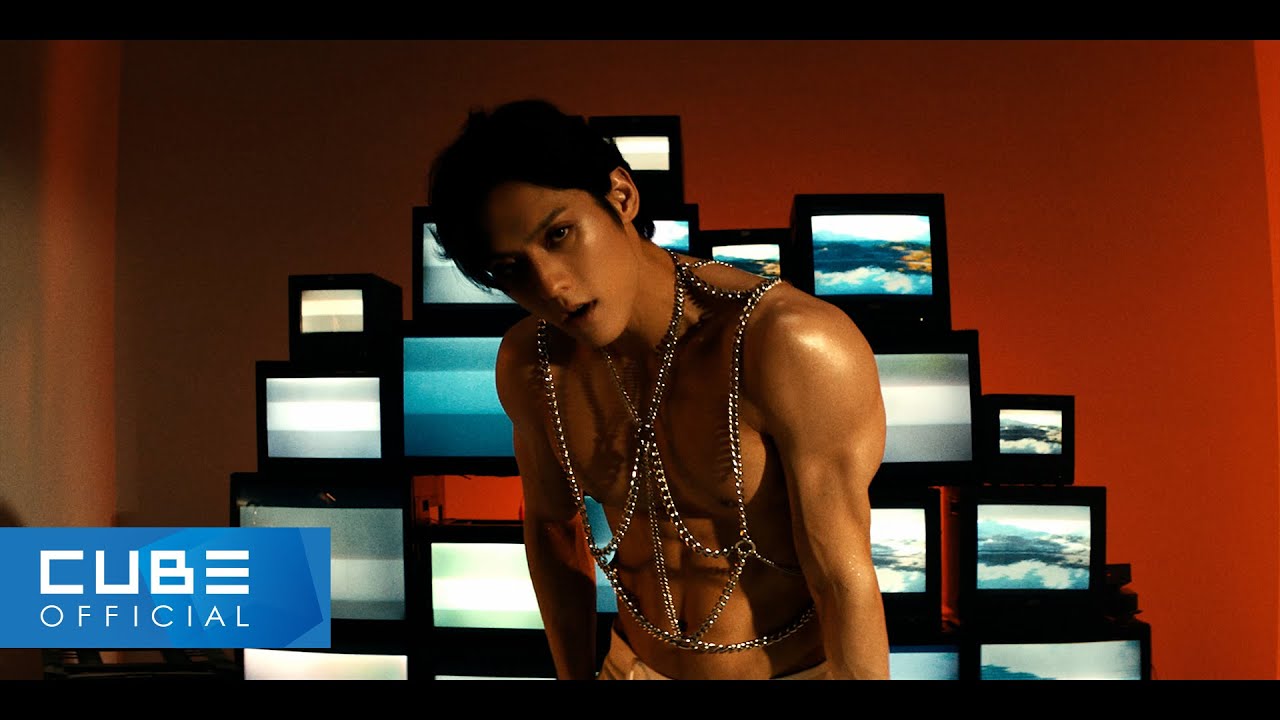
Lee Minhyuk, professionally known as HUTA, is a South Korean rapper, singer, songwriter, producer, performer, actor, radio host and current member of BTOB. The two names are not competing identities. Lee Minhyuk is the person and BTOB member; HUTA is the solo name under which he concentrates his own writing, composition, rap, singing and performance language. This page is both his member file and artist profile because separating them would split one career into two incomplete stories.
Quick profile
- Stage names: HUTA; Minhyuk
- Birth name: Lee Minhyuk (이민혁)
- Born: November 29, 1990
- Group: BTOB
- Current company: BTOB Company for the group and current solo activity
- Core work: rap, vocals, songwriting, composition, production and performance
- Solo albums: HUTAZONE (2019) and BOOM (2022)
- Recent solo chapter: HOOK (2025) and 2026 releases including “TEMPERATURE”
Why the HUTA name matters
HUTA predates the polished solo rollout. Minhyuk used the name in his pre-debut underground work, then returned to it when he needed an artist label broad enough to hold music that was not simply “the rapper from BTOB releases a side song.” The name allows harder hip-hop instincts, intimate writing, physical performance and full vocal lines to occupy the same file. It also prevents a common profile error: treating his solo singing as a surprising departure when melody has always been part of his group function. HUTA is not an alter ego that excuses choices Minhyuk would never make. It is the credit line that places responsibility for those choices directly on him.
BTOB is the foundation, not a former chapter
Minhyuk debuted with BTOB in March 2012. The group became known for vocal control, emotionally direct ballads, live reliability and the kind of variety chemistry that can make six adults look like nobody remembered to appoint a supervisor. Minhyuk’s role has never been limited to filling the rap break. He contributes writing, composition, melodic support, stage architecture and athletic movement. BTOB’s current company structure is unusual: after the members left Cube Entertainment, BTOB Company became the home for group activities involving Seo Eunkwang, Lee Minhyuk, Lim Hyunsik and Peniel, while Changsub and Sungjae maintain separate solo-agency arrangements and still remain BTOB members. A company line and a membership line are not the same field.
Rap speed is the obvious skill, not the whole instrument
Minhyuk can deliver dense syllables with clean consonants, but speed matters only when it preserves intention. His strongest rap writing gives each phrase a physical direction: attack, recoil, joke, command or confession. He often changes pressure inside a verse instead of performing every bar at maximum force. That control is why a fast section can remain readable and why a lower, slower phrase can suddenly feel more dangerous. Calling him only a fast rapper misses the craft. The real instrument is pacing. He knows how long the listener needs to register one idea before the next line changes the temperature.
The vocalist was never hiding
BTOB’s vocal reputation can make any member standing near Eunkwang, Changsub, Hyunsik and Sungjae look like “the rapper” by comparison. Minhyuk’s solo catalog corrects that shortcut. He sings full hooks, carries connective melody and uses a lighter upper register without pretending his voice has the same weight or resonance as the group’s main vocalists. That difference is useful. His tone can move from dry rhythmic speech into a cleaner sung line without sounding like two unrelated performers were edited together. The transition is central to HUTA records: rap establishes muscle, melody exposes what the muscle was protecting.
HUTAZONE made authorship the headline
The 2019 album HUTAZONE arrived before his military service and functioned as a complete authorship statement. “YA” introduced a direct, performance-heavy center, while the album moved through confidence, affection, tension and fan-facing warmth without asking one genre to certify his identity. The release mattered because it made the solo argument in album form. He was not testing whether one digital single could survive on name recognition. He was building a catalog in which writing credits, vocal choices and sequencing had to carry the same responsibility as choreography and image. That scale remains important when later releases are judged only by the most revealing costume or the hardest dance clip.
BOOM understood spectacle as structure
His 2022 second full album BOOM used the title track’s hybrid wonk-trap production to create unstable ground under an extremely controlled performer. The official credits identify Minhyuk as lyricist and co-composer. That distinction matters: the swagger is not styling placed on a song delivered by somebody else. Bass distortion, clipped rhythm, vocal layering and choreography are parts of one authored impact. The video foregrounds his body because physical precision is part of the composition, not because a shirtless frame is a substitute for musical analysis. The best way to understand “BOOM” is to hear how every visual hit answers a production event.
Military service changed the chronology, not the identity
Minhyuk enlisted in February 2019 and completed service in September 2020. Profiles sometimes treat mandatory service like a creative death followed by a magical re-debut. His timeline is more continuous. Work made before enlistment established the HUTA vocabulary; BTOB activities after discharge restored group chemistry; BOOM expanded the solo scale with the patience of someone who had already proved he could carry an album. Service explains the gap in public releases. It does not explain the artistry, and it should not become the dramatic center of a career that contains far more interesting decisions.
HOOK moved from display toward grip
The 2025 EP HOOK returned HUTA to a concentrated solo format. Even the title suggests connection, capture and the part of a song designed to remain after the performance ends. That is a useful frame for his development. Earlier solo work often made range itself the event: rap, vocals, production, physique, speed, acting and stage control all arriving with receipts. The later chapter has more interest in what holds. A track does not need to display every skill if one melodic or rhythmic idea can keep the listener inside it. Restraint is not smaller ambition; it is confidence that the catalog already remembers the rest.
Bora made pursuit the choreography
The local “Bora” Off The Stage React examines a performance built around camera pursuit, spatial control and the friction between sung line and athletic movement. The important relationship is exact: that page reviews official upload gWu15BPcIlU, while this profile holds HUTA’s broader chronology. The tracker should not collapse every performance into one song row or send the viewer to a generic tag. “Bora” is evidence of his current performance grammar—close camera, rhythm carried through the torso, and choreography that lets him look chased while he is quietly directing where the lens has to go.
Performance is not the same as fitness content
Minhyuk’s athleticism is real and publicly visible, but reducing his stage work to physique replaces analysis with inventory. Strength matters because he can stop momentum cleanly, lower his center without losing breath, and move from explosive travel into small hand detail. Stamina matters because rap articulation and sung support must survive the choreography. The body is an instrument under load. A useful performance profile asks what the movement communicates and how the voice behaves while it happens. It does not pretend abdominal definition is a musical genre.
Songwriting means the praise and criticism both belong closer to him
HUTA’s recurring lyric and composition credits make authorship central to the profile. That earns respect, but it also removes the convenient fiction that every weak line or familiar pose came from an anonymous company committee. When sensual writing lands, his control of rhythm and point of view deserves the credit. When the imagery stays on the surface, the limitation belongs in the same file. Artist profiles should not use credits only as trophies. Credits tell readers where to direct interpretation, praise and disagreement.
Acting, radio and variety work sharpen different timing
Minhyuk has worked in television drama, hosting, radio and entertainment formats alongside music. Those activities are not interchangeable proof that an idol is “well rounded.” Acting teaches continuity across takes and how little a camera may need. Radio removes choreography and asks voice, pacing and attention to hold the room. Variety rewards quick reaction but also exposes whether a performer can give another person space. His stage presence benefits from all three. He knows when to project, when to listen and when one delayed reaction will be funnier or more intimate than another attempt to dominate the frame.
Current status in 2026
HUTA remains active as a BTOB member and solo artist under the BTOB Company ecosystem. The company’s official artist navigation lists LEE MINHYUK, and its current media and notices continue to publish HUTA activities. The recent catalog includes HOOK, concerts connected to that release, “Icy & Spicy,” and 2026 activity including “TEMPERATURE.” Current status should be read precisely: he is not a former BTOB member who occasionally reunites, and HUTA is not a temporary project name retired after BOOM. Group member and solo artist are simultaneous routes.
How international listeners can follow without losing the plot
Start with the official BTOB channel and BTOB Company site, then separate group releases from HUTA solo releases in your own tracker. Watch “YA” for the first-album statement, “BOOM” for authored spectacle, a HOOK-era clip for the later concentration, and “Bora” for current camera-performance language. Do not let short-form edits become the only archive; they overrepresent the body reveal and underrepresent the writing, singing and arrangement decisions that make the reveal land. Use release dates, exact video IDs and official credits. Translation accounts can help with context, but the primary object should remain the complete song or performance.
What HUTA adds to the K-pop archive
HUTA is a useful answer to the false choice between idol craft and artist authorship. He learned group discipline, camera awareness and audience communication inside BTOB, then used those tools to carry records he helped write and compose. The result is not automatically profound because he has credits, and it is not automatically shallow because sensual performance is part of the package. The interesting work happens in the collision: precision and looseness, muscle and breath, rapid rap and exposed melody, veteran confidence and the continuing need to make the next hook earn its place.
The BTOB 4U chapter proved adaptation without erasure
During the military-service rotation that prevented the full group from promoting together, Minhyuk joined Eunkwang, Changsub and Peniel in BTOB 4U. The unit did not attempt to manufacture a miniature copy of the complete BTOB arrangement. Its brighter performance language and redistributed vocal weight required Minhyuk to move more visibly between rap, singing and connective stage leadership. That period matters to the solo profile because it tested flexibility inside a group frame. He could not rely on the exact seven-member architecture audiences already understood, and he could not treat the unit as a private HUTA stage with three guests. Adaptation had to preserve the BTOB promise while admitting that the available voices and bodies had changed.
Fan service and artistic service are not always the same thing
Minhyuk understands what an audience expects from him: athletic impact, controlled sensuality, rapid rap, humor and unusually direct communication. Meeting an expectation can be generous. Repeating it automatically can also turn a performer into his own tribute act. The most interesting HUTA choices use familiarity as an entrance and then adjust the terms. A body-focused moment lands better when the production has created tension first. A fast verse matters more when a slower line establishes contrast. A fan song carries weight when gratitude becomes a specific image instead of a general promise to stay together forever. The archive should track when he serves the audience and when he challenges the audience to notice a quieter skill.
Masculinity in the HUTA frame
HUTA’s presentation is openly invested in strength, discipline, appetite and visual control, but it is not limited to the invulnerable male fantasy those ingredients can produce. Singing allows uncertainty to remain audible. Fan-facing writing permits tenderness without turning it into an apology. Humor punctures the demand that a muscular performer must remain severe in every room. This does not make every concept radical; K-pop has a long commercial history of selling the disciplined male body. What makes Minhyuk worth examining is how often he lets that body coexist with care, embarrassment, sentiment and playful excess. The contradiction is more human than a profile that calls him “dual” each time he smiles after rapping.
Production choices reveal his relationship with control
Across HUTA releases, bass and percussion often provide surfaces he can strike cleanly, while melodic sections open a different kind of exposure. He favors arrangements that translate easily into physical events, but the strongest songs do not map every drum hit onto an obvious movement. They leave some friction between what the ear expects and what the body does. “BOOM” uses instability under precision; later work increasingly trusts a hook to hold attention without constant escalation. That production evolution mirrors the performance arc. Early solo statements needed to prove how much he could control. A veteran record can become more interesting by choosing which part of the room does not need to be controlled at all.
A profile should separate fact, inference and fandom language
Official sources confirm his birth date, BTOB membership, current company placement, releases and credited roles. Close viewing supports analysis of breath, camera timing and movement. Terms such as “all-rounder,” “ace” or “stage genius” belong to evaluation, not biography, unless a source is being quoted. This page keeps those layers separate because admiration becomes stronger when the evidence is visible. HUTA does not need an inflated position list or an invented secret meaning behind every costume. The documented career already includes two full solo albums, a later EP, group and unit work, writing and composition, acting, radio, concerts and a performance archive large enough to reward exact comparison.
Where this profile connects next
The immediate local relationship is the passing “Bora” React, but the ecosystem still needs a canonical BTOB group hub and separate member files before every historical relationship can resolve cleanly. This profile should not wait for that future package to exist, and it should not create fake links in advance. When the group hub is built, HUTA will remain the same URL and serve as both Minhyuk’s member route and solo-artist route. That one-object rule prevents contradictory biographies, duplicated images and two video trackers drifting apart. New random-song recommendations can then update the exact React, this tracker and the BTOB hub without rewriting his identity from scratch.
Official video tracker
- BOOM — official music videoDaily+798Total views15.1M (2022; HUTA lyrics and co-composition)
- YA — official music videoDaily+6Total views1.4M (2019; HUTAZONE)
- Bora — Off The Stage performanceDaily+21Total views232.6K (exact upload reviewed locally)
Sources
- BTOB Company official artist and current-activity site
- BTOB Japan official profile
- BTOB official channel: BOOM credits and release descriptionDaily+798Total views15.1M
- BTOB Japan official BOOM release coverage
React image cards
Static cards route each exact official upload to its own in-depth React. Every card repeats that React’s featured and hero image so the archive stays visually traceable.