
FREAK: YUQI Made Being the Weird Girl Look Like the Safest Room in Town
YUQI walks into monster camp, refuses the usual makeover and discovers the obvious truth: the safest room is the one where nobody has to become normal enough to deserve company.
Release file
Released: April 23, 2024
Runtime: 3:06
Artist / channel: YUQI / i-dle
Exact-file focus: The exact official FREAK music video, not the choreography practice, stage, fancam, dance challenge, short or fan edit.
Verdict first: the exact upload matters. This React follows the performance and visual choices in this video, not a neighboring stage, fan lyric upload or different song with the same English title.
First reaction: what the hook is actually doing
“FREAK” treats weirdness as community, not confession. The hook is bright enough for immediate access, while Yuqi’s rough low tone prevents the acceptance message from becoming weightless children’s television. She sounds like somebody who has already survived the room’s judgment and decided to improve the guest list.
Catchiness is the entrance, not the verdict. The useful question is how percussion, bass, vocal register and phrasing make the central idea feel repeatable—and whether the repetition reveals more feeling or merely occupies time.
Production under the topline
The arrangement creates a floor before the performers decorate it. Follow the kick and low end, then notice which sounds vanish before a line begins. Empty space can give a low voice more authority than another layer of volume, while a bright response can reset the ear without flattening the groove.
i-dle-related solo work is strongest when the production recognizes the featured voice instead of renting a generic trend. Yuqi’s grain and delayed pocket, Minnie’s atmosphere and Soyeon’s percussive diction require different rooms. The mix here succeeds where it lets identity change structure.
The video argument
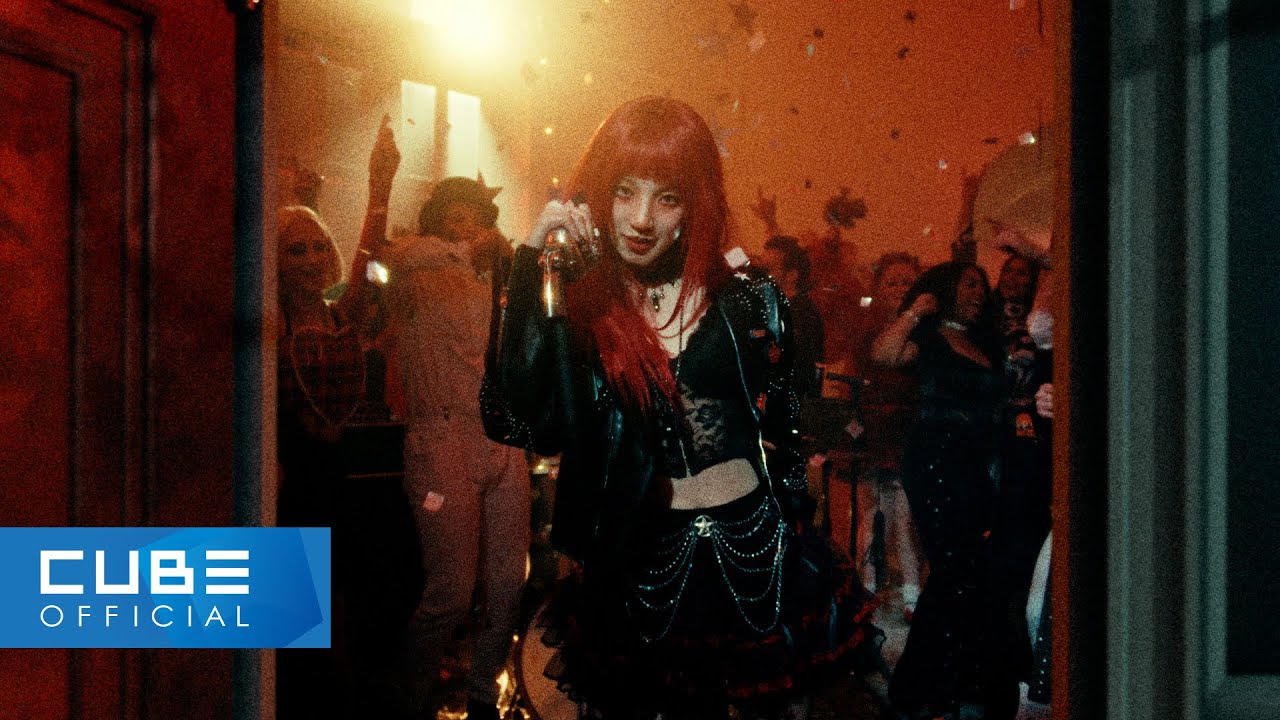
The official video builds retro monster camp around that premise. Creature styling, theatrical sets and comic exaggeration make difference visible without turning the characters into objects of pity. The frame keeps asking who is actually strange: the people enjoying themselves or the social order demanding one acceptable face.
The canonical still above comes from this exact upload. It remains the featured image, hero, Music Reviews card and social preview, so a reader does not click one visual promise and arrive inside another video’s page.
Performance details worth the replay
Yuqi is unusually suited to this scale because variety timing and musical timing cooperate. She knows when to hold a ridiculous image long enough for the joke to land, then return to vocal authority before camp dissolves into sketch comedy. Watch how costume and movement negotiate attention. Yuqi never lets the production wear her; she changes posture and gaze to become the person who owns each strange room. The concept succeeds because the performer remains larger than the props.
Watch preparation rather than only impact: the breath before a phrase, the body loading weight before a directional change and the eye line that tells the editor where the next cut can land. Those decisions are the bridge between choreography and camera.
What works, and what I would change
The empowerment is broad rather than psychologically specific. One scene exposing an actual cost of exclusion would sharpen the stakes. The video chooses sanctuary over injury, and that choice makes it generous even if it is less dangerous than the title suggests.
That tradeoff matters. A harder bridge, longer ending or stranger cut might create complexity, but it can also break the release’s chosen scale. Criticism should identify the price of the existing choice without pretending every song wants to become a different genre.
Participation, not inheritance
The i-dle hub remains connected because the career grew from and continues beside the group. The profile trail follows actual participation, however. A Yuqi and Lexie Liu performance does not automatically belong to all five members; a Yuqi and Minnie duet belongs to both women; a solo choreography file links the solo artist and group history without fabricating group presence.
Bottom line
FREAK: YUQI Made Being the Weird Girl Look Like the Safest Room in Town understands the mechanism beneath its hook and gives the camera enough performance evidence to make that mechanism visible. The release has limits, but none of them erase the reason to replay it.
Replay section
- First replay: watch only the performer outside the obvious focal point or the body between named moves.
- Second replay: isolate drums and bass; mark every place the groove removes sound instead of adding it.
- Third replay: follow vocal color and breath, not volume or line count.
- Fourth replay: test the criticism—imagine the proposed change, then decide what pleasure it would cost.
Canonical profile trail
Sources and receipts
Who gets called strange
The video’s acceptance message works best when “freak” is understood as a social label, not an objective species. The monsters are visually conspicuous, but the emotional conflict comes from a world that treats one approved appearance as safety. Yuqi’s performance flips the gaze: the room judging difference begins to look impoverished.
Camp is crucial because solemn inspiration would place the unusual characters back under observation. Humor gives them activity, appetite and bad decisions. They are not symbols waiting for a respectful audience; they are participants capable of enjoying a scene before anyone grants permission.
Yuqi’s variety instincts prevent the comedy from becoming nervous. She holds a reaction past naturalism, lets a prop finish its ridiculous work and then returns to the song without apologizing. That control keeps the MV musical even when individual shots resemble a creature sitcom.
The bright hook and retro-pop framing create broad accessibility, but they also soften the exclusion being answered. One moment of genuine social cost could sharpen why sanctuary matters. The video instead begins near the solution: once the right people find each other, the town becomes survivable.
That optimism is not worthless. K-pop frequently sells uniqueness while demanding visual conformity from the bodies delivering the slogan. Casting and styling a visibly varied fictional community gives the message more evidence than another lyric telling a conventionally perfect star she is secretly weird.
The closing replay belongs to posture. Watch Yuqi enter each set and decide whether she is visitor, host or threat. Her body answers before dialogue could: she owns the room by behaving as if every strange detail was invited for her arrival.
The MV’s monster camp is welcoming because it reverses the usual test. Yuqi does not have to become normal enough to enter; the environment becomes legible once she stops treating its residents as warnings. Production design turns difference into social texture, with every costume and room suggesting another way a person might refuse the default.
Yuqi anchors that crowded concept through commitment rather than ironic distance. She plays the comedy fully, but her vocal confidence makes belonging sound like a serious proposition underneath it. Replay the moments when grotesque details and polished pop framing occupy the same shot. “FREAK” is not arguing that outsiders are secretly conventional. It imagines safety as a place where strangeness no longer needs an apology.
The ending matters because community, not romantic validation, resolves the visual problem. Yuqi does not win safety by being selected as exceptional among outsiders. She finds a room where exception is the ordinary social condition.
That social ending makes the replay warmer. The monsters are not obstacles conquered on the way to self-esteem; they are neighbors with their own styles. Belonging becomes reciprocal recognition rather than a prize Yuqi takes home.
The safest room is therefore not hidden from difference; it is built by people who recognize difference as ordinary company.
RaeRae verdict
FREAK gives YUQI exactly the right playground: bright pop, creature comedy and enough social bite to keep the costumes from becoming empty Halloween inventory. I wanted one moment where exclusion carried a sharper cost, because sanctuary matters more when the threat is specific. Still, the ending gets the politics right. She does not win safety by being chosen above the other freaks. She finds a room where exception is the ordinary condition.
What changed every time I replayed it
The second replay tracks who gets framed as strange before YUQI changes the room’s rules. The third watches production design for evidence that every creature has a life beyond decorating her self-acceptance lesson. The fourth follows posture: when she enters as visitor, when she behaves like host and when the camera finally stops treating difference as a reveal. The fifth listens to how the bright hook softens the social exclusion underneath it. By the sixth, the ending matters most because community—not romantic selection or a magical normalization—solves the visual problem.
Lyrics and meaning
FREAK works when the word names a judgment imposed from outside, not an objective species. The monsters are conspicuous, but the poor imagination belongs to the world that treats one approved appearance as safety. YUQI flips that gaze through camp. These characters receive appetite, humor and bad decisions instead of waiting like symbols for a respectful audience. Belonging becomes reciprocal recognition, not a prize awarded to the exceptional outsider who proves she was secretly normal all along.