
Spill the Tea · CLOSE YOUR EYES · UNCORE · PocketDol Studio
CLOSE YOUR EYES’ Debut Contract Fight Included Dual-Activity Claims and a Missing-Person Report
Before CLOSE YOUR EYES could release one song, two companies were arguing over who controlled Jeon Minwook and Sakurada Kenshin’s schedules. Then PocketDol Studio said a missing-person report had been filed because the company could not confirm where its trainees were staying. Rookie rollout, but somebody accidentally ordered the legal-thriller package.
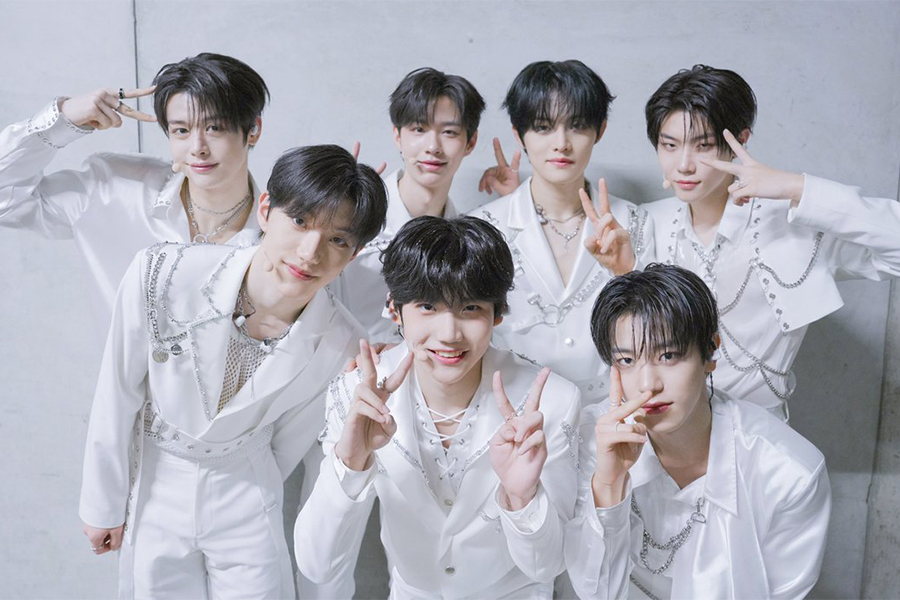
Bottom line: The public record supports a contract dispute, competing interpretations of a dual-activity clause, blocked-contact allegations and a missing-person report. The public record does not support kidnapping claims. Minwook and Kenshin were performers caught between companies with incompatible readings of the same project-group arrangement.
Status
CLOSE YOUR EYES debuted April 2, 2025 and continued group activities.
Confirmed parties
UNCORE, PocketDol Studio, Jeon Minwook and Sakurada Kenshin.
Evidence boundary
Company statements and entertainment reporting, not private contracts or police records.
What happened before debut
PROJECT 7 created a seven-member group from the show’s final winners. UNCORE managed the new group. PocketDol Studio represented Minwook, who had already promoted as J-Min in BAE173, and Kenshin. The arrangement became a fight when PocketDol wanted room for activities outside the project group and UNCORE treated conflicting schedules as a breach of the audition contract.
UNCORE announced legal action in January 2025. According to the agency’s public statement, contestants selected for the final group had to sign a thirty-six-month management contract and avoid outside contracts that conflicted with CLOSE YOUR EYES. UNCORE said the same terms applied to all 200 participants. The company also argued that a clause covering unavoidable prior commitments did not create a general right to schedule separate work during the group’s activity period.
PocketDol read the arrangement differently. The company said participation had been accepted on the condition that existing activities could continue and claimed the production side changed its position after the lineup was chosen. PocketDol also alleged that contact with Minwook and Kenshin had been blocked and that dormitory information was withheld.
The missing-person report needs a very firm boundary
PocketDol told reporters that the company filed a missing-person report while trying to locate its trainees. Reporting noted additional concern because Kenshin was a minor and PocketDol described itself as a guardian responsible for him in Korea. Filing a report is a documented claim from the company. A filed report does not prove abduction, unlawful confinement or any criminal act by UNCORE.
The internet loves a sentence with “missing person” because the phrase arrives preloaded with danger. Fan retellings can cross the evidence line in one repost: “PocketDol said contact was blocked” becomes “the members vanished,” then somebody adds kidnapping as if a dramatic noun counts as a police finding. No public source reviewed for this page establishes kidnapping. The responsible wording stays less exciting and more accurate.
Two contract stories were competing
UNCORE’s version centers fairness and group stability. If one agency can pull two members into separate schedules, the remaining members absorb changes to rehearsals, recordings, formations, travel and promotion. UNCORE also argued that special treatment would be unfair to the other PROJECT 7 contestants who accepted the same terms.
PocketDol’s version centers prior rights and consent. Minwook already had a career through BAE173, and the company said existing commitments had been disclosed. From that position, a blanket ban after the final lineup could look like a new restriction imposed only after the artists became valuable to the project.
Both narratives also protect corporate interests. UNCORE needed an exclusive, workable project group. PocketDol had invested in artists whose labor and existing fanbases still carried value outside the project. Companies can use the language of artist protection while arguing over control, scheduling and revenue. The artists remain the people whose sleep, bodies, reputations and limited project-group time pay for every delay.
Project groups make ownership look temporary until the fight begins
A project group asks several agencies to surrender part of their control for a fixed period. Fans see a lineup. Managers see calendars, exclusivity clauses, revenue splits, endorsements, recordings and obligations that existed before the show. Problems begin when the public phrase “dual activities allowed” is expected to carry the weight of a complete contract.
Parallel activity is not a simple yes-or-no setting. A schedule can be technically permitted and still collide with rehearsals. An original agency can retain rights and still make demands that weaken the project. A project manager can need exclusivity and still communicate badly with the company that remains legally connected to a minor. The private contract would answer some questions, but neither fandom certainty nor polished company statements can substitute for the document.
What the clean debut photos hide
CLOSE YOUR EYES debuted on April 2, 2025 and won a music show six days later. The group’s quick start can make the pre-debut dispute feel resolved by success. A trophy does not erase the machinery that almost disrupted rehearsals before the first release. The members still had to learn a seven-person system while adults argued about who could place two of them on another calendar.
Minwook carried the added complication of an established BAE173 identity. Kenshin carried the vulnerability of being a minor in a cross-company fight. The other five members had no control over either contract reading, yet any delay or formation change would have landed on their debut too. “Company dispute” sounds administrative until seven people have to dance through the consequences.
RaeRae’s take
I understand why PocketDol did not want two artists to disappear behind another company’s locked calendar. I understand why UNCORE could not build a three-year group while accepting surprise schedules from every original agency. I do not accept young performers becoming the rope in a corporate tug-of-war and then receiving the blame when fans choose sides.
The missing-person language deserved reporting because a company publicly raised the issue, especially with a minor involved. The same language demanded restraint. Treat the filing as a filing. Treat blocked contact as PocketDol’s allegation. Treat UNCORE’s exclusivity argument as UNCORE’s contractual position. Nobody needs to invent a crime to explain why the situation was already serious.
What fans should actually watch now
Watch the calendars, not the fan-war edits. A real dual-activity problem leaves boring receipts: an announced schedule disappears, a member misses rehearsals, two agencies publish incompatible notices, or a court filing changes who can book the artist. A dramatic translation account yelling “mistreatment” before breakfast proves only that somebody owns a caps-lock key.
Also watch how the companies name the artists. Minwook was not a blank trainee waiting for PROJECT 7 to give him a history. He entered with BAE173 work, a stage name and an audience. Kenshin was a minor whose guardianship and housing deserved direct communication. UNCORE still needed seven reliable calendars to run CLOSE YOUR EYES. Those facts can occupy the same room without turning either company statement into scripture.
The clean outcome is not “my company won.” The clean outcome is seven members receiving stable schedules, prompt information and enough control over their own lives to stop serving as evidence in somebody else’s press release. If another notice appears, read the date, identify who made the claim and ask what document backs the sentence. Fandom does not need less emotion. Fandom needs fewer imaginary subpoenas.
Where to go next
Read the complete CLOSE YOUR EYES group profile, then open the canonical profiles for Jeon Minwook and Sakurada Kenshin. The group’s “SOB” performance React shows what the seven members built after the contract argument stopped being the only story.