
Character profile · Light Novel canon · Volume 1 boundary
Ganesha
A theatrical god whose festival goes wrong and whose first useful instinct is to put civilian survival above divine embarrassment.
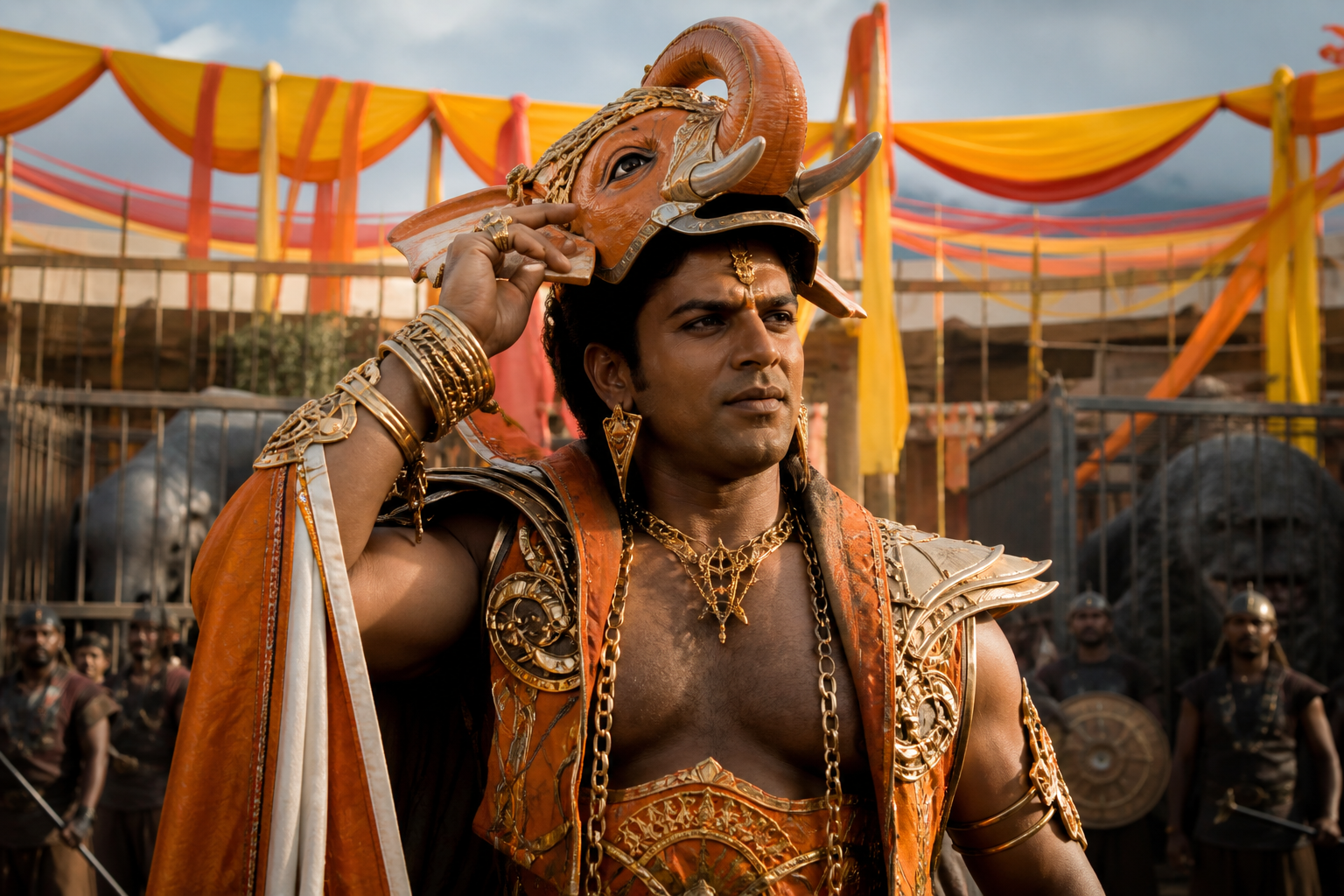
The file
Who Ganesha is before later volumes get a vote
Ganesha performs largeness because Monsterphilia is designed as civic spectacle. Monsters are displayed inside a controlled public event so Orario can convert terror into entertainment and institutional confidence. Then control breaks.
The important character beat arrives when reputation could become the priority. Ganesha orders safety first. His Familia’s failure is public, but he does not spend the emergency protecting the brand while monsters move through the city. Volume 1 gives him limited page space and one clear standard: the people outside the cages matter more than the god hosting the show.
Volume 1 receipts
The scenes doing the character work
Spectacle
Monsterphilia opens
Ganesha’s public persona suits an event built to make divine institutions visible, entertaining and reassuring.
Failure
The monsters escape
Freya’s interference turns controlled danger into an actual city emergency.
Order
Safety before reputation
Ganesha’s response establishes the line between theatrical ego and civic responsibility.
Connections
Nobody becomes interesting alone
City
Orario
His Familia carries a public role that makes failure more consequential than a private household dispute.
Interference
Freya
Freya exploits Ganesha’s event for a private test, using public infrastructure without public consent.
Response network
The Guild and other Familias
Monsterphilia proves no Familia contains the consequences of disaster once danger reaches the streets.
Volume 6 update · Full spoilers
What the War Game changes for Ganesha
God · War Game host · Alive
Ganesha hosts the War Game because spectacle in Orario still needs an institution capable of translating divine chaos into rules, witnesses and a result the city will accept. His public excess disguises a serious civic function: somebody has to keep the gods’ entertainment from becoming unbounded private war.
The Divine Mirrors turn the siege into a citywide event. Ganesha’s role therefore cuts both ways. He helps enforce terms that can punish Apollo, but he also packages an attempted acquisition of Bell as mass entertainment with commentary and crowds.
Host
The contest gets a public spine
Ganesha supplies procedure, arena authority and the voice declaring what the Divine Mirrors show.
Spectacle
The whole city watches
The War Game becomes food stalls, betting and communal theater without losing the coercion that caused it.
Result
Terms become consequences
Apollo’s defeat matters because a recognized host can make exile, disbandment and property transfer stick.
Current spoiler boundary
This biography now runs through Volume 6.
Later developments remain sealed until their owned Kindle volume receives its own completed reading pass.