
The Hardest Rock in the World
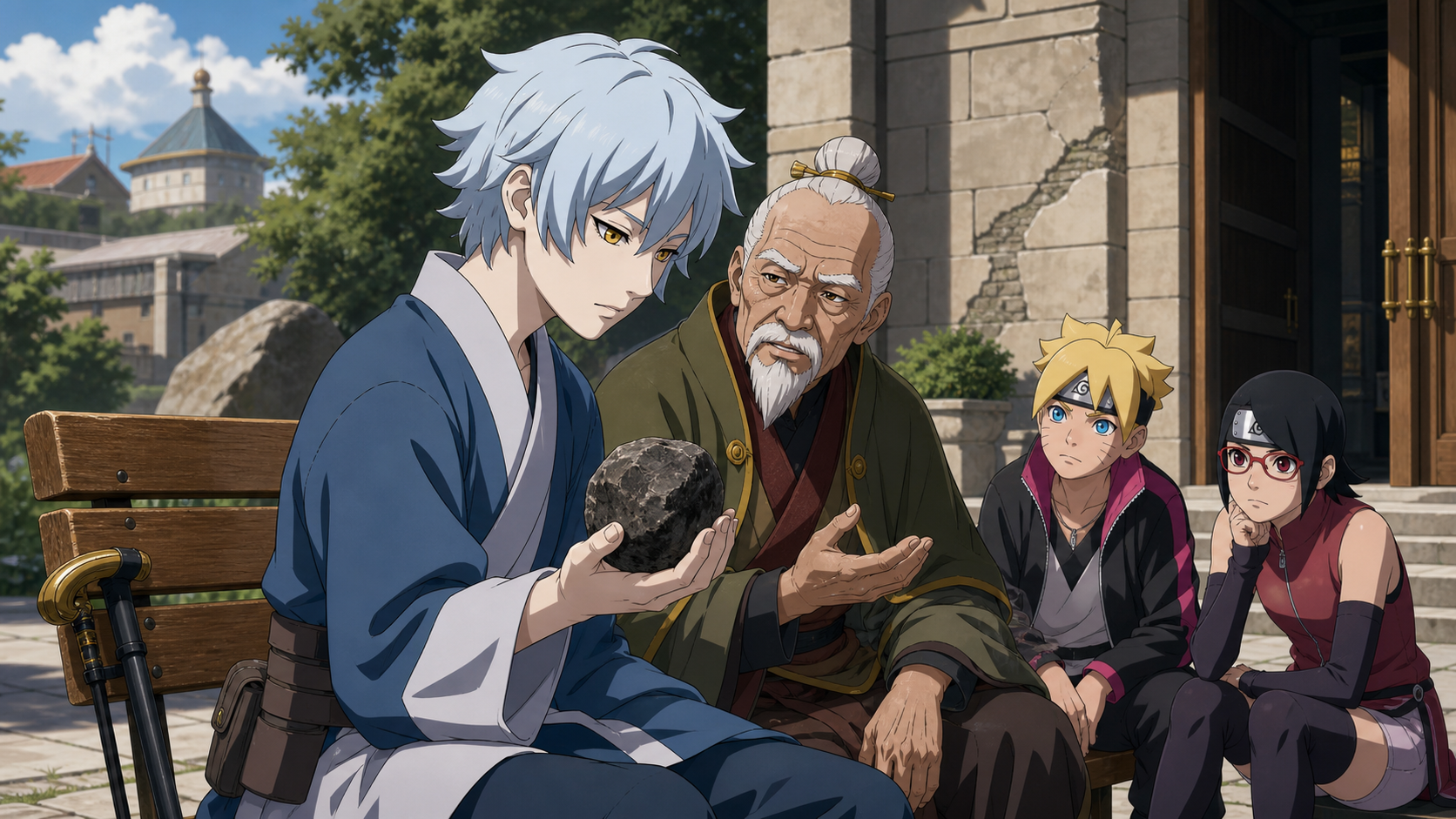
Ōnoki calls human will the hardest rock, while Mitsuki wonders whether any choice belongs to him after Orochimaru designed the path that led toward Boruto.
Series: Boruto: Naruto Next Generations
Episode: 71 · The Hardest Rock in the World
Arc: Mitsuki Disappearance Arc
Release: 2018-08-30
Previous: Episode 70 · The Other Side of Anxiety
Directory: All 293 Boruto episodes
Bottom line
Boruto Episode 71 starts the Mitsuki Disappearance Arc with a dream, an old Kage playing hooky, and a question Boruto barely realizes his friend has been asking for a long time. Mitsuki dreams about the laboratory trial where Orochimaru forced him to choose between his creator and Log. He wakes with the same uncertainty: when a person has been designed, guided, and tested toward a decision, how can that person know which part of the choice belongs to them?
Team 7 is assigned security duty during the first Five Kage Summit after Momoshiki’s attack. Boruto is bored, Sarada is trying to act like a future Hokage, and Mitsuki asks what the hardest rock in the world might be. The question sounds random until they meet Ōnoki, the missing Third Tsuchikage who has decided wandering around Konoha is more appealing than another meeting.
Ōnoki trades his answer for a tour. He tells them that the hardest rock is a person’s will, the bedrock that holds firm when everything else breaks. Boruto hears a good shinobi lesson. Mitsuki hears a problem. If Orochimaru built the circumstances that led him toward Boruto, does his devotion count as his own will? By night, a letter has appeared inside Mitsuki’s home. He burns the message, walks toward Konoha’s gate, and leaves with strangers. The hardest rock has begun moving.
Episode file
- Series: Boruto: Naruto Next Generations
- Episode: 71
- Title: “The Hardest Rock in the World”
- Arc: Mitsuki’s Disappearance Arc
- Japanese airdate: August 30, 2018
- Previous episode: “The Other Side of Anxiety”
- Next episode: “Mitsuki’s Will”
The official guide centers the missing Ōnoki and Team 7’s unexpected time with him during the Kage Summit. The larger arc begins quietly through Mitsuki’s questions and the letter waiting at home.
Mitsuki dreams about a choice built by Orochimaru
The opening returns to Mitsuki’s origin. He remembers fighting Log, the older version of himself, while Orochimaru arranged another test of his will. Mitsuki’s past is full of staged choices where the person offering freedom has already designed the room, the information, and the available exits.
That history explains why a basic question about human will feels enormous to him. Boruto can decide he wants to become a shinobi who supports Sarada. Sarada can decide she wants to become Hokage. Both choices grow within family expectations, but neither friend was created in a laboratory and repeatedly reset until a desired answer appeared.
Mitsuki has genuine feelings. The dream does not make those feelings fake. The dream makes him wonder whether genuine feelings can grow from somebody else’s plan.
The Kage Summit brings every generation into one village
Konoha hosts the current Five Kage and several former leaders after the Ōtsutsuki attack. Momoshiki and Kinshiki proved that the threat reaches beyond any single village, so the summit carries more than ceremonial importance. Naruto, Gaara, Kurotsuchi, Chōjūrō, and Darui need a shared response to enemies who treat shinobi history as a supply cabinet.
Former Kage are present because their experience still matters. Kakashi, Tsunade, and Ōnoki remember conflicts the younger leaders inherited rather than lived. The gathering lets Boruto place the peaceful village around him beside the people who survived the wars that created that peace.
One problem: Ōnoki does not arrive at the meeting. The Third Tsuchikage has apparently decided international security can wait while he takes himself on a field trip.
Team 7 gets the glamorous job of standing around
Team 7 joins other shinobi on summit security. Boruto is bored almost immediately. Guard duty requires attention precisely because nothing should happen, which makes the assignment torture for somebody who measures work through visible action.
Sarada treats the summit with more respect because the office she wants is represented inside that building. The current Kage are not legends in a history book. They are leaders handling the consequences of the attack Boruto survived.
Mitsuki watches both friends and asks his strange question about the hardest rock. Boruto throws out answers from the physical world. Sarada considers the problem more seriously. Neither recognizes that Mitsuki is asking about himself.
Sarada notices Mitsuki before Boruto does
Sarada can see that Mitsuki’s question carries more weight than idle curiosity. She tells Boruto to listen more carefully because Mitsuki may stop liking him if Boruto keeps brushing past what he says. Her teasing lands on a real imbalance.
Mitsuki pays close attention to Boruto. He studies Boruto’s values, moods, relationships, and choices because Boruto has become his sun. Boruto enjoys Mitsuki’s loyalty without consistently returning the same attention. He assumes the calm teammate will remain calm until a mission requires otherwise.
Sarada is not fully inside Mitsuki’s private world either. She simply notices the gap before Boruto does.
Ōnoki chooses wandering over another meeting
Team 7 encounters Ōnoki away from the summit. The former Tsuchikage is elderly, physically limited, stubborn, and still carrying enough personality to overwhelm the scene. Boruto recognizes the title before understanding why a legendary leader would be outside without his attendants.
Ōnoki refuses the obvious solution of returning immediately. When Boruto asks about the hardest rock, Ōnoki offers a trade: show him around Konoha and he will give the answer later.
The arrangement lets Ōnoki spend time with children who know his reputation without living under his authority. He can joke, complain, remember, and teach without performing diplomacy for the summit table.
Boruto sees a legend and a chance for an answer
Boruto becomes excited once he realizes a former Tsuchikage may solve the riddle. His interest begins as curiosity rather than concern for Mitsuki. A famous old shinobi has entered the afternoon, and Boruto wants the story.
That energy helps Ōnoki enjoy the village but keeps Mitsuki’s reason in the background. Boruto treats the hardest-rock question like a puzzle assigned to the group. Mitsuki is looking for language capable of explaining whether his life belongs to him.
Boruto is not cruel. He simply assumes that when Mitsuki needs something important, Mitsuki will say so in a way Boruto recognizes as important. Mitsuki has never learned to make that demand loudly.
Ōnoki has earned the right to talk about will
Ōnoki’s history gives the answer weight. He carried Iwagakure through years of war, made compromises that stained his leadership, faced Madara, and helped the Five Kage stand again when despair would have been easier. His body has become fragile. His stubbornness remains fully operational.
When he calls human will the hardest rock, he speaks from survival rather than motivational-poster wisdom. Jutsu can break mountains. Bodies age. Political offices pass to another generation. A person’s reason to keep standing can outlast all of that.
The metaphor also contains a warning Ōnoki does not emphasize. Will can protect a person from pressure, and stubborn conviction can lead entire villages into terrible decisions. Ōnoki’s own life includes both versions.
Mitsuki hears an answer and another question
Boruto receives the lesson easily. Decide what matters, hold firm, and keep moving. Mitsuki cannot use that answer without first knowing where his will began. Orochimaru designed him, erased memories, staged tests, and placed Boruto’s image along the route toward Konoha.
If Mitsuki chooses Boruto after being guided toward Boruto, the choice may still be his. Human beings develop preferences inside families, cultures, schools, and relationships they did not design. Influence does not erase every feeling.
Mitsuki’s problem is that Orochimaru’s influence is unusually direct and hidden. He cannot evaluate the shape of his own path without seeing who built the path.
Boruto is Mitsuki’s sun, but a moon needs more than reflection
Mitsuki has described Boruto as his sun, the light that helps him find direction. The image is affectionate and dangerous. A moon defined only through reflected light can disappear whenever the sun moves out of view.
Team 7 has treated Mitsuki’s attachment as sweet because Mitsuki never asks Boruto to carry the responsibility consciously. Boruto gets a loyal friend. Mitsuki gets a purpose. Nobody asks whether purpose organized around one boy gives Mitsuki enough room to become somebody beyond the orbit.
Ōnoki’s answer pushes Mitsuki toward the missing half of the metaphor. His will has to become bedrock inside himself, not merely proof that Boruto shines brightly.
Sarada’s Hokage dream offers a useful contrast
Sarada knows what she wants. Her goal differs from Sasuke’s path and builds partly from Naruto’s example. Family history influences her without dictating the entire result. She can name the influences and still claim the ambition.
Mitsuki cannot name his own construction with the same confidence. Many facts remain hidden inside Orochimaru’s laboratory and private plans. He also does not need one grand career goal to prove he has a will. Wanting time, knowledge, friendship, distance, or the right to reconsider can be enough.
The episode lets Sarada’s certainty sit beside Mitsuki’s uncertainty without declaring one person more complete than the other.
Ōnoki’s age is played for humor and concern
Ōnoki’s wandering gives the episode comedy. He is a former Kage who has slipped away from attendants and delayed a summit because he wants freedom from being managed. His body also has real limits, and Team 7 ends up looking after him.
The humor works when Ōnoki controls the joke. He is not a helpless prop. He negotiates the tour, withholds the answer, and decides when he is ready to return. The children learn that a legend can need physical help without losing authority.
Akatsuchi and the other Stone representatives have good reason to worry. Ōnoki has the confidence of his war-era body and the mobility of a man whose back has filed several complaints.
The summit waits while the old man teaches children
The current Kage are discussing threats that may define the future of the shinobi world. Ōnoki spends that time giving Team 7 a lesson about will. On paper, his priorities look questionable. Within the story, the detour becomes the first spark in a crisis that will lead directly back to the Hidden Stone.
Ōnoki does not know how Mitsuki will use the lesson. He sees a thoughtful child asking a difficult question and offers the answer that carried him through life.
That connection gives the later arc tragedy. The language Ōnoki offers Mitsuki becomes tied to choices and consequences Ōnoki cannot yet imagine.
The letter waits inside Mitsuki’s home
After the day with Team 7 and Ōnoki, Mitsuki returns to his apartment and discovers that somebody has entered. A letter or message has been left for him. The private space we will see empty in Episode 72 has already been breached.
Mitsuki reads the message and burns the evidence. No conversation with Boruto. No warning for Sarada. No request for Konohamaru. Whatever the letter contains, Mitsuki decides that secrecy belongs to the next step.
The choice is frustrating because the day has been filled with people available to help. The same day has also reminded Mitsuki that nobody around him fully understands what he is asking.
Leaving at night is Mitsuki’s first hard answer
Mitsuki moves toward Konoha’s gate and encounters the people waiting beyond the letter. The departure occurs with little explanation, setting up the attack and disappearance discovered in Episode 72.
Calling the move his will does not tell viewers whether he trusts the strangers, intends to investigate them, feels threatened, or believes they can answer the question Orochimaru left inside him. Mitsuki acts alone because autonomy and isolation have become tangled in his thinking.
He wants a choice that cannot be credited to Boruto or Orochimaru. Leaving both may feel like the only available proof.
Boruto misses the warning in real time
Mitsuki raises the question directly. Sarada tells Boruto to pay attention. Ōnoki offers an answer that clearly affects Mitsuki. Boruto still finishes the day without asking his friend what prompted the question.
That missed opening gives the disappearance emotional credibility. Boruto will later insist that he knows Mitsuki could not betray them. Episode 71 shows that Boruto knows Mitsuki’s loyalty better than Mitsuki’s doubt.
The lesson is not that Boruto failed as a friend and caused the departure. Mitsuki made his own decision inside a much larger manipulation. The lesson is that affection does not automatically produce curiosity.
What changed for me on replay
The first watch treats Ōnoki’s answer as the point of the episode. On replay, Sarada’s warning becomes the sharper line. She notices Mitsuki reaching toward Boruto and watches Boruto turn the question into a scavenger hunt for a clever answer.
The Kage Summit also feels less separate from Mitsuki’s story. Leaders gather to plan against the Ōtsutsuki while one child connected to Orochimaru quietly wonders whether he owns his decisions. The shinobi world discusses survival at the largest scale and misses the personal crisis standing on security duty outside.
Mitsuki burning the letter reads differently after the later arc reveals how many people want something from his body and choices. Secrecy is not only plot suspense. Secrecy is one of the few tools Mitsuki believes belongs entirely to him.
What works
The episode creates an arc opening without forcing immediate action. Mitsuki’s dream, question, conversation with Ōnoki, and nighttime departure form a clean emotional sequence. Ōnoki brings history and humor. Sarada recognizes the problem early. Boruto’s inattentiveness feels human rather than cruel.
The hardest-rock metaphor is simple enough for a child and complicated enough to carry the whole Hidden Stone arc. Will can be strength, stubbornness, identity, manipulation, inheritance, and the reason somebody refuses the road everyone else chose.
Mitsuki’s absence begins from character instead of a random kidnapping. He is drawn toward an answer he wants badly enough to leave without the sun he usually follows.
What does not work
The summit itself remains background decoration. After Momoshiki’s attack, the first gathering of current and former Kage should contain fascinating political material. The episode uses the event mainly to place Ōnoki in Konoha and give Team 7 security duty.
Ōnoki’s disappearance also stretches credibility. A former Kage connected to an international summit walks away long enough for genin to tour the village with him. Security around Konoha keeps having a difficult week.
The letter receives almost no visible context. Mystery is necessary, but one small reaction from Mitsuki beyond calm determination could give viewers more emotional material before he burns the message.
Ōnoki gives Mitsuki an answer nobody else can choose for him
Ōnoki’s lesson sounds simple enough for a classroom wall: a strong will becomes the hardest rock in the world. Mitsuki immediately hears the missing question. How does somebody created for a purpose know whether a desire belongs to him? Strength means very little when the foundation came from another person’s design.
That makes Ōnoki the right teacher and an imperfect one. He has lived long enough to watch conviction save villages and destroy people. He carried the Will of Stone through wars, political compromises, terrible losses, and choices that hardened into pride. When he talks about bedrock, he is not selling motivational merchandise. He knows that will must survive pressure.
Mitsuki’s pressure begins before any enemy attacks. Orochimaru created scenarios meant to push him toward independence, then sent him to Konoha with Boruto named as his sun. The choice may be genuine, but the road came with signs already installed. Mitsuki has spent his young life asking whether following Boruto counts as freedom when Orochimaru predicted the attachment.
Boruto does not understand the scale of the question. He treats Mitsuki’s concern like an interesting riddle because their friendship feels natural from his side. Boruto never wakes wondering whether a scientist manufactured his loyalty. He can choose a goal badly, loudly, and publicly, then change direction tomorrow. Mitsuki has no confidence that the voice making a choice belongs entirely to him.
Sarada notices the emotional gap. She hears Mitsuki asking for more than a definition and recognizes that Boruto’s quick answer does not reach him. Her own Hokage dream offers a useful contrast. Sarada chose a goal that frightens her, demands years of work, and sometimes places her against family expectations. The dream gains meaning through repeated decisions. Mitsuki wants that same sense of ownership.
Ōnoki cannot hand him ownership. No elder, parent, teammate, or creator can. His answer gives Mitsuki a standard: the will beneath every borrowed instruction must remain when pressure strips the instructions away. That standard is both helpful and dangerous. A child searching for proof may mistake suffering for authenticity.
The letter arrives at exactly that vulnerable point. Somebody offers Mitsuki a road where action may reveal what reflection cannot. Burning the message looks calm, but the choice carries desperation. He has asked people he trusts and received answers shaped by their own lives. Leaving Konoha becomes his attempt to hear a voice without Boruto, Orochimaru, or village expectations speaking first.
The tragedy comes from how easily everybody misses the warning. Boruto hears Mitsuki mention will and moves on. The summit consumes adult attention. Team 7 stands close enough to notice Mitsuki’s silence while assuming tomorrow will provide another chance. Mitsuki has always been calm, so distress wearing a calm face passes as normal.
That is the episode’s strongest observation. A dramatic breakdown would alert the whole team. Mitsuki instead asks precise questions, listens politely, finishes his duties, and leaves at night. The child least likely to demand attention becomes the easiest child to overlook.
His departure is not proof that Konoha failed completely. Team 7 gave him friendship, ordinary days, arguments, missions, and a home worth questioning. Those experiences made independent will possible. They also gave Mitsuki something meaningful to abandon, which raises the cost of his experiment.
The hardest rock cannot be borrowed. Mitsuki has to discover whether his loyalty survives distance, whether his doubts survive danger, and whether a choice remains his own after somebody else benefits. Ōnoki points toward the test. He cannot know how cruelly the coming journey will grade the answer.
Final take
“The Hardest Rock in the World” is a quiet, effective beginning to Mitsuki’s longest character arc. Ōnoki gives a simple answer about will. Mitsuki hears every complication hiding underneath. Boruto thinks his friend asked a riddle. Sarada realizes he asked for help.
My verdict: thoughtful setup with strong Mitsuki material, a welcome return for Ōnoki, and enough side-eye for Boruto’s listening skills to last several episodes. The Kage Summit could offer more, but the small conversation outside the meeting matters more to the story that follows.
Mitsuki ends the night by burning a letter and walking through the gate. The hardest rock is supposed to hold firm. His first attempt to discover that bedrock requires leaving every person who has been telling him what his will should look like.
Sources and lawful viewing
Official episode reference: Naruto Official episode guide
Licensed episode route: Crunchyroll licensed series page