
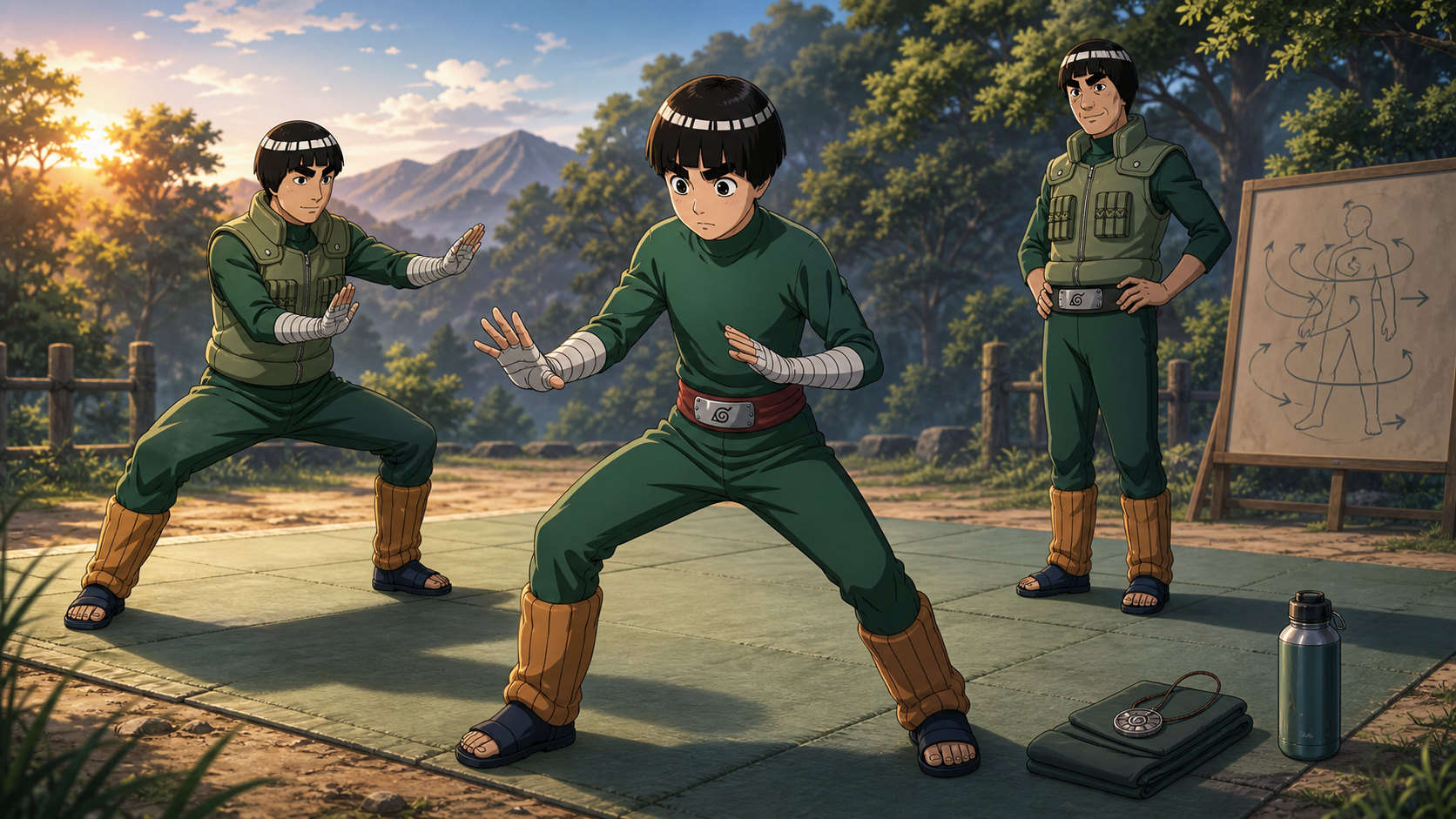
The Other Side of Anxiety
Metal Lee stops waiting for anxiety to disappear, removes the miracle necklaces, and opens the First Gate during a public match against Rock Lee.
Series: Boruto: Naruto Next Generations
Episode: 70 · The Other Side of Anxiety
Arc: Metal Lee Story
Release: 2018-08-23
Previous: Episode 69 · Super Chōchō Love Upheaval!
Directory: All 293 Boruto episodes
Bottom line
Boruto Episode 70 gives Metal Lee the spotlight and finally treats his anxiety as more than a running gag. Metal buys a necklace online because the seller promises relief from nervousness. Team 5 breaks a valuable plate during a delivery mission anyway. Rock Lee postpones Eight Gates training after seeing his son rely on the charm. Might Guy then helps Metal understand the lesson nobody else has managed to explain: courage does not require anxiety to disappear.
The climax turns Metal’s worst fear into the whole assignment. Rock challenges his son to land one hit during a public match and invites an audience. Metal removes the necklaces, admits that being watched makes him nervous, and fights while the symptoms remain. His movements become so erratic that Rock has trouble reading them. Metal unconsciously opens the First Gate, lands a Leaf Hurricane, and wins under the condition Rock set.
The episode is imperfect, especially when a serious anxiety problem gets squeezed into one charm, one speech, and one sparring match. Still, the central point is good. Metal does not defeat anxiety. He stops treating anxiety as proof that he cannot be a shinobi. Might Guy, the loudest man alive, becomes the person who sees that distinction most clearly.
Episode file
- Series: Boruto: Naruto Next Generations
- Episode: 70
- Title: “The Other Side of Anxiety”
- Story: Metal Lee side story
- Japanese airdate: August 23, 2018
- Previous episode: “Super Chōchō Love Upheaval!”
- Next episode: “The Hardest Rock in the World”
The official guide frames the conflict around Rock Lee postponing Eight Gates training after discovering Metal’s anti-anxiety necklace. The rest of the episode shows why Rock wants his son to understand his own body before learning a technique that overrides bodily limits.
Team 5 gets one expensive delivery
Suika assigns Team 5 to transport a plate considered a national treasure. Denki, Iwabee, and Metal need to move one fragile object without disaster. Metal arrives unusually confident and credits the necklace around his neck.
The setup immediately invites trouble. Metal’s anxiety becomes strongest when people watch him and when a mistake carries visible consequences. A priceless plate with teammates monitoring every movement may as well come with a banner reading PLEASE PANIC RESPONSIBLY.
The plate breaks, the mission fails, and Metal’s confidence collapses with the ceramic. Team 7 points out that the necklace did not prevent anything. Metal admits he bought the charm online because he needs to control his nerves before important training with his father.
The necklace promises the impossible
Metal wants a tool that removes anxiety instead of helping him work with anxiety. The necklace offers a clean fantasy: wear this object, become calm, perform like the version of yourself who exists during private practice.
The object may provide temporary confidence through ritual and expectation. Metal’s posture changes because he believes protection is present. The problem arrives when confidence depends on never questioning the charm. One mistake turns the failed mission into proof that Metal himself remains broken.
Boruto and the others laugh at the online purchase, which fits their age but misses the need underneath. Metal is not foolish for wanting help. He is frightened by a pattern he cannot control and found the easiest promise available.
Rock Lee introduces the Eight Gates with proper weight
Rock demonstrates the First Gate and explains the system to his son. The Eight Gates limit chakra flow and protect the body from using destructive levels of power. Opening them releases greater strength at increasing physical cost.
Nobody knows that lesson better than Rock. He opened multiple gates as a child against Gaara and nearly lost his future as a shinobi. He watched Might Guy open the Eighth Gate against Madara and survive only because Naruto intervened. The technique is family legacy, martial art, and bodily danger in one package.
When Rock sees the necklace and hears that Metal depends on the charm to keep anxiety away, he cancels the training. His explanation is terrible. His caution is not.
Rock is trying to protect Metal and communicates like Rock
Rock knows the Eight Gates require awareness, control, and commitment under stress. If Metal believes he can only function while a necklace suppresses anxiety, beginning the technique may teach him to ignore warning signs rather than understand them.
Instead of saying all of that, Rock postpones the lesson and leaves Metal feeling rejected. Classic Lee family communication: one hundred percent love, two hundred percent intensity, twelve percent usable explanation.
Metal interprets the decision as proof that his father does not believe he is ready or strong enough. Rock watches from a distance because he wants his son to reach a deeper understanding. A direct conversation could save everybody time, but then Might Guy would not get his entrance.
Might Guy arrives as anxiety mentorship in a wheelchair
Guy finds Metal and invites him along for the day. Metal helps carry Guy’s wheelchair up stairs, becoming nervous when other people watch. Guy notices the pattern without treating Metal like a disappointment.
That recognition matters. Guy spent his life beside people who underestimated him, mocked Rock, and treated taijutsu specialists as limited. He also lives with the permanent physical consequences of opening the Eighth Gate. His body is not a symbol of failure. His body is evidence that courage and consequence can occupy the same person.
Metal sees Guy fighting, teaching, laughing, and accepting assistance. The legendary hero does not need to pretend the injured leg vanished before continuing his life.
Guy’s Academy talk is beautifully Guy
Guy speaks to Academy students about the Fourth Shinobi World War and using taijutsu against overwhelming enemies. He forgets names, charges through the story on enthusiasm, and focuses on having no regrets after facing the truth of the situation.
Iwabee is thrilled because Guy represents everything loud and physical he admires. Denki listens because taijutsu remains a weakness and Guy offers a model built through effort rather than natural genius. Metal watches his father’s teacher command the room without hiding the wheelchair.
Guy’s speech is not clinical advice about anxiety. Guy gives Metal a living example of accepting reality without surrendering identity.
Guy defeats Iwabee and Metal on one leg
When Guy offers a demonstration, he picks Iwabee and Metal for a spar. The students may expect the wheelchair to limit him. Guy quickly proves that one functioning leg plus decades of elite taijutsu remains a terrible matchup for two genin.
The scene is funny and important. Guy does not perform strength by denying disability. He adapts his technique around the body he has now. Metal sees somebody fight without waiting for old conditions to return.
Metal also compares himself harshly. Guy can dominate a match on one leg, while Metal struggles when classmates look at him. That comparison pushes him deeper into shame until Guy tells him to think about the whole day rather than the highlight.
Metal keeps adding necklaces because fear loves a backup plan
Metal practices at night while wearing the charm. Rock observes from a distance and talks with Guy. By the next Team 5 mission, Metal has added more necklaces, as though stacking promises can create certainty.
The second mission involves catching a thief. Metal’s charms make noise and contribute to the team losing the target. The failure is almost too neat, but the image works: his effort to hide anxiety has become another thing announcing every movement.
Metal cannot buy enough protection to guarantee perfect performance. He also should not read the result as proof that support tools are useless. The problem is the guarantee, not the idea of grounding through an object.
Rock turns the audience into the test
Rock challenges Metal to a public match. The victory condition is simple: Metal only needs to land one hit. Rock invites people to watch because the audience triggers the symptoms Metal has been trying to avoid.
This is very Lee family therapy, meaning no licensed professional would design the exposure exactly this way, but the emotional logic fits the episode. Rock does not demand that Metal defeat him. He creates one measurable goal inside the feared situation.
Guy asks Metal what anxiety means for him and encourages him to recognize nervousness as part of his current self. Acceptance is not celebration. Metal can want better control without treating every symptom as an enemy invading from outside.
Removing the necklaces is not rejecting help
Metal arrives for the match and removes the charms. The gesture means he no longer believes they can erase the person stepping into the ring. He chooses to fight with full knowledge that the audience will affect him.
The scene should not be turned into a universal lesson that people must abandon every medication, aid, ritual, or accommodation. Metal is discarding a false promise sold online, not proving that support equals weakness. His real support is visible all around the ring: Guy’s mentorship, Rock’s adjusted victory condition, his teammates, and the chance to stop after one hit.
Metal does not become independent by doing everything alone. He becomes honest about what the necklaces can and cannot do.
Anxiety makes Metal harder to predict
The match begins with Rock in control. Metal receives hits, hears reactions from the audience, and becomes more nervous. His movements lose the clean rhythm Rock expects. That change has caused failure in previous moments. Against a master who knows his usual technique, unpredictability creates an opening.
The episode walks a delicate line. Anxiety is not secretly a superpower. Metal’s symptoms can disrupt balance, judgment, and teamwork. Here the erratic movement happens to interfere with Rock’s read because father and son share so much technical language.
Metal keeps choosing forward movement. The choice, not the symptom, becomes his strength.
The First Gate opens before Metal knows
Under pressure, Metal unconsciously opens the First Gate and launches a Leaf Hurricane strong enough to hit Rock. The strike sends his father back and satisfies the victory condition. Guy declares Metal the winner.
Rock is proud because Metal has demonstrated both the physical potential and the self-knowledge needed to begin training. Metal did not force perfect calm. He fought inside his real nervous system and discovered a capacity he had been trying to access through a charm.
The moment also gives Metal something distinct from copying his father. Rock’s taijutsu is disciplined and readable to the person who taught him. Metal’s anxiety disrupts that pattern. The son’s difference creates the hit.
Rock and Guy planned a lesson Metal could own
Rock’s decision to postpone training now makes sense. He wanted Metal to stop treating anxiety as a condition that must vanish before real work begins. Guy supplied the language because Metal was too hurt to hear the lesson from his father directly.
The mentors coordinate without turning Metal into a project. Rock watches, Guy listens, and the final match gives Metal a choice to appear. He could have kept the necklaces or refused the challenge. Showing up becomes part of the achievement.
The plan remains intense. A more ordinary family might try a conversation before arranging public combat. These are the Lees. Youth apparently has no indoor voice.
Team 5 gets another fragile object because nobody learns
The closing joke sends Team 5 on another transport mission, this time with a valuable vase. Suika warns Metal not to break the item. His anxiety rises immediately, and Denki and Iwabee scramble to protect the vase.
The gag confirms that one successful fight did not cure him. Good. Metal learned a relationship to anxiety, not a magical switch. He can still become nervous, still need support, and still be capable.
The joke would land even better if later episodes continued that development. Metal deserves more than returning to the same nervous reaction whenever the cast needs physical comedy.
Rock Lee understands dangerous ambition better than anyone
Rock’s caution deserves extra credit because he knows what desperate effort can cost. As a child, Rock believed hard work had to prove his worth against people born with abilities he lacked. The Eight Gates gave that effort devastating power and nearly destroyed his body.
He wants Metal to inherit the technique without inheriting the belief that pain is proof of commitment. Seeing the necklace tells Rock that Metal may be preparing to override fear instead of understanding why fear appears.
Rock does not express that history clearly, but the history makes his decision loving rather than punitive.
What changed for me on replay
The first watch belongs to Metal opening the First Gate. On replay, the plate and thief missions reveal the pattern more clearly. Metal tries to eliminate anxiety because every visible mistake confirms the fear that teammates and adults are judging him.
Guy’s wheelchair also carries more meaning. Metal initially sees the war hero’s adaptation as evidence that Metal has no excuse. Guy wants him to see the opposite. A changed body does not invalidate effort, and an anxious body does not invalidate skill.
Rock’s silence remains frustrating, though the concern behind the postponement becomes easier to respect once the Gates are viewed through his own injuries and Guy’s final sacrifice.
What works
The episode lets Metal own a story beyond being Rock Lee’s anxious son. His charm, failed missions, time with Guy, public fight, and First Gate form a complete arc. Guy’s return respects his disability and preserves his authority as a taijutsu master.
Rock’s love is visible even when his communication fails. The match uses a reasonable in-story condition rather than asking Metal to defeat an adult master. The ending wisely shows anxiety returning instead of declaring a cure.
Most importantly, Metal learns acceptance without becoming passive. He can accept that anxiety is present and still train to expand what he can do.
What does not work
The episode treats anxiety through broad comedy and one-day exposure. Real anxiety may require long-term support, different environments, rest, professional care, or accommodations. Metal’s lesson is emotionally useful but far too tidy as a full answer.
The necklace also risks becoming shorthand for every coping tool. The object fails because the seller promised a cure and Metal placed all control outside himself. A chosen grounding object can still help somebody focus. The script does not make that distinction carefully enough.
The First Gate opening under extreme nervousness looks exciting, though unconscious activation of a dangerous bodily technique should lead to more medical caution than celebration alone.
Metal does not need to become a quieter version of Rock Lee
The episode understands a trap that could have swallowed Metal’s whole character. Rock Lee became beloved through relentless effort, huge emotion, and a refusal to let missing ninjutsu talent define his ceiling. Giving Rock a son creates an easy temptation: repeat the same story with smaller weights and a familiar haircut. Metal needs a different fight.
Anxiety provides that difference without making him weaker. Metal trains hard, possesses excellent taijutsu, and understands the discipline behind every movement. His body can perform. An audience changes the calculation. Eyes become pressure, pressure disrupts control, and the fear of failing creates the exact failure he wants to prevent.
The necklace promises control without asking Metal to understand the fear. That promise feels irresistible because anxiety makes certainty look like medicine. One charm helps, so several charms should help more. Soon Metal is carrying reassurance around his neck while every additional layer confirms that he cannot trust himself without an object.
Might Guy recognizes the pattern because his entire life has involved turning limitation into action. He does not tell Metal to stop feeling nervous. Guy tells a ridiculous Academy story, demonstrates overwhelming skill from a wheelchair, and treats fear as something a person can move beside. The lesson arrives through lived absurdity rather than a polished speech.
Rock struggles to communicate the same truth. His caution comes from love and scar tissue. He knows the Eight Gates can destroy a body because his own path followed Guy toward that edge. Metal sees a father blocking progress. Rock sees a child reaching for a weapon before learning when the weapon should remain closed.
Their public match forces both concerns into one space. Rock creates an audience because Metal cannot learn the lesson in an empty training ground. That choice sounds harsh, but Rock and Guy prepare a controlled test rather than waiting for a mission to expose the same weakness around lethal stakes. Metal gets nervous. His movements become strange. He takes hits. None of those outcomes end the attempt.
Removing the necklaces matters because Metal chooses uncertainty over dependence. The charms never become evil. A comfort object can help somebody breathe, focus, or begin. The problem comes when Metal assigns the object total ownership of his ability. Taking the necklaces off says the skill still belongs to him on a bad day.
The First Gate opens through that collision of fear and commitment. Metal does not reach a peaceful mental state. His nervous system remains loud while his training finds a path forward. That is why the moment belongs to Metal rather than becoming another Rock Lee imitation.
Team 5 also helps preserve the comedy. Iwabee and Denki support Metal with the kind of sincere plan only friends could believe: trust a suspiciously powerful necklace, deliver an expensive vase, and hope nobody breaks anything. The vase never had a chance. Their loyalty does.
By the end, Metal has not cured anxiety. He has evidence that anxiety cannot make every decision for him. Rock gains evidence that his son can approach the Gates with judgment. Guy gains another reason to shout about youth. Everybody wins except the fragile property assigned to Team 5, which should file a formal complaint.
Final take
“The Other Side of Anxiety” is one of Metal Lee’s best episodes because the story finally lets him struggle, learn, and win without removing the trait that makes him different from Rock. Might Guy brings warmth and lived experience. Rock brings caution shaped by injury. Team 5 brings valuable objects that should absolutely be assigned to somebody else.
My verdict: heartfelt, funny, and more thoughtful than the online-necklace setup suggests. Metal does not become fearless. He removes a false promise, steps into an audience, gets hit, keeps moving, opens the First Gate, and lands the one strike he needs.
The other side of anxiety is not calm. The other side is Metal still being nervous while choosing what happens next. That is a much better foundation for Eight Gates training than pretending fear has left the body.
Sources and lawful viewing
Official episode reference: Naruto Official episode guide
Licensed episode route: Crunchyroll licensed series page