
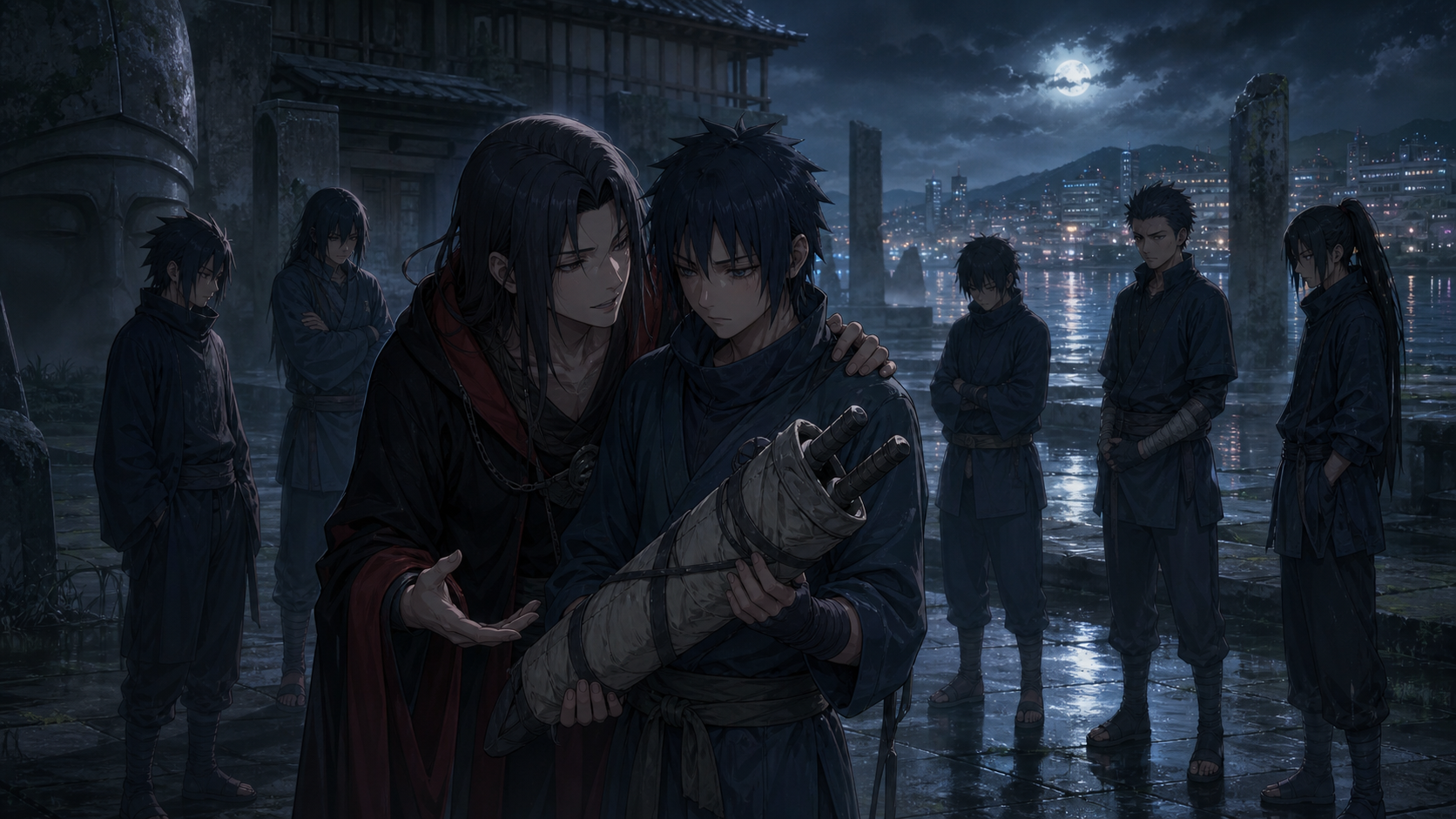
A Declaration of War
Kagura finally chooses Hiramekarei, so Shizuma traps him beside Boruto, turns an old scar into a leash, and calls murder, stolen swords, and inherited shame a revolution.
Series: Boruto: Naruto Next Generations
Episode: 28 · A Declaration of War
Arc: School Trip Arc
Release: 2017-10-11
Previous: Episode 27 · A Shinobi Bout of Friendship
Directory: All 293 Boruto episodes
Bottom line
Boruto Episode 28 takes the happiest decision Kagura has made during this school trip and lets Shizuma poison the celebration before the boy can finish saying thank you. Kagura asks Chōjūrō for the chance to wield Hiramekarei. Chōjūrō practically glows. Kagura trains, calls Boruto, and finally sounds like somebody choosing a future instead of apologizing for his bloodline. Then water closes around both boys and Shizuma arrives with a speech, six recruits, and the confidence of a man who thinks every family wound is public property.
Shizuma is effective because almost every claim contains one recognizable piece of Kagura’s pain. Kagura was shunned. Kagura did lose control. Shizuma did stop him from killing another student. Kiri does have a murderous history. Shizuma arranges those facts into a lie that says violence is Kagura’s only honest identity and Shizuma is the only person brave enough to love him. That is the ugliest move in the episode. He does not invent Kagura’s fear. He builds a cage from facts and calls the cage belonging.
Boruto fights anyway, naturally. He electrifies shuriken, launches himself with Wind Release, cuts through the lineup, and lands a lightning-infused kunai on Shizuma before Water Release folds him. The loss matters because friendship does not magically cancel years of shame in one punch. Kagura leaves with Shizuma, but his choice is not a clean conversion. He draws Hiramekarei to stop the group from killing Boruto. Even while surrendering to Shizuma’s story, Kagura uses the blade to protect the friend who gave him another one.
Kagura asks Chōjūrō for Hiramekarei
Kagura begins by thinking about how meeting Boruto changed him. He approaches Chōjūrō and asks for a test to claim Hiramekarei, which is enormous after twenty-seven episodes of watching him fear his own hands.
Chōjūrō does not hide his happiness. His faith has never been about forcing Kagura into a famous position. He wants Kagura to believe that skill can serve something besides Yagura’s shadow.
Chōjūrō makes the sword an invitation
Hiramekarei carries Seven Swordsmen history, Mizukage history, and enough sharp symbolism to crush a teenager. Chōjūrō offers the blade through mentorship rather than destiny.
Kagura can test himself. He can learn. He can choose. The sword represents a road, not a verdict. That distinction survives everything Shizuma tries to do later.
Suigetsu watches the storage building
Suigetsu appears at a distance while Kagura retrieves Hiramekarei. His presence immediately tells longtime Naruto viewers that the legendary swords are about to become everybody’s problem.
No character can look at a Mist sword vault with casual energy when Suigetsu is nearby. The man once organized major life goals around collecting those blades. A quiet Suigetsu is still a warning label.
Kagura trains like somebody who finally wants tomorrow
Kagura practices with Hiramekarei and looks focused rather than frightened. The blade is still dangerous, but danger has stopped being proof that Kagura himself is dangerous.
The scene gives him a small window of joy before the plot attacks. That joy matters. Shizuma is not rescuing Kagura from hopelessness. He is interrupting Kagura while hope is already working.
Boruto gets the thank-you call
Kagura calls Boruto because Boruto helped him make the decision. Boruto did not train Kagura, hand over the sword, or erase the past. He simply treated Kagura as a person before treating him as Yagura’s grandson.
That ordinary friendship accomplished what Shizuma’s grand speeches never could. Kagura chose movement because somebody expected him to have a future.
Water Prison ruins the moment
Shizuma catches Boruto and Kagura in water prisons before their conversation can breathe. The attack is theatrical, personal, and extremely rude.
Water belongs everywhere in the Hidden Mist, so Shizuma turns the village’s environment into control. Both boys can see and hear him while losing the freedom to answer with movement.
Shizuma wants war and brought a sales pitch
Shizuma declares his plan to end reconciliation and return Kiri to conflict. Killing the Hokage’s son would destroy peace negotiations and hand every warmonger a reason to celebrate.
He talks about revolution, but his first concrete goal is murder designed to make diplomacy impossible. That is not liberation. That is a tantrum with international casualties.
Peace made Shizuma less important
Shizuma calls the peaceful shinobi order weak because peace removes the social ladder he wants to climb. Under Bloody Mist logic, brutality creates status. Under Chōjūrō, restraint, cooperation, and actual public service matter.
Shizuma cannot dominate the new system, so he declares the system fraudulent. Some men would rather burn the village than admit the village stopped needing their favorite performance.
Chōjūrō and Mei become convenient villains
Shizuma claims Chōjūrō and Mei eliminate dissenters. The accusation is designed for Kagura, not for evidence. Kagura already fears that respected adults merely tolerate him, so Shizuma offers a reason to distrust every kindness.
If Chōjūrō’s mentorship is fake, Kagura never has to risk believing he deserves the opportunity. Cynicism feels safer because cynicism cannot be disappointed.
Shizuma uses Kagura’s worst Academy memory
Kagura remembers losing control at the Academy and nearly killing another student. Other children rejected him afterward. Shizuma stepped in when Kagura was isolated and told him nothing was wrong with being a shinobi from the Bloody Mist.
That sentence sounded like acceptance to a terrified child. Years later, the price becomes visible. Shizuma never wanted Kagura free from shame. He wanted exclusive ownership of the shame.
The scar becomes Shizuma’s favorite receipt
Shizuma shows the scar Kagura gave him. The gesture says, “I saw your violence, survived your violence, and stayed.” Kagura reads loyalty. Shizuma uses debt.
Every time Kagura resists, the scar turns a childhood mistake into proof that Shizuma understands him better than anyone else. A wound becomes a leash because Shizuma keeps deciding what the wound means.
Kagura keeps saying no
Kagura does not immediately join. He challenges Shizuma’s claims and resists the invitation. That resistance deserves attention because the later departure can look like sudden betrayal if the struggle before the choice gets ignored.
Kagura wants Chōjūrō’s future. Shizuma has simply spent years making that future feel undeserved.
Boruto is finished listening
Boruto hears enough and attacks. Subtle diplomacy has left the building. His instinct is wonderfully predictable: when somebody uses a friend’s pain as a recruitment brochure, Boruto throws metal.
Shizuma deflects the first shuriken with his sword, expecting the Hokage’s son to be loud and simple. Boruto rewards that assumption with electricity.
Electrified shuriken force Shizuma to move
Boruto channels Lightning Release through his projectiles, turning a routine block into a hazard. Shizuma has to dodge rather than casually dismiss the attack.
This is early Boruto combat at its best. His power is not overwhelming, so creativity supplies the danger. Every ordinary tool gets one annoying extra feature.
Buntan answers lightning with lightning
Shizuma lets Buntan step forward and counter the electrified shuriken through her own blade. Her introduction is short, sharp, and perfectly matched to the next episode’s Sarada fight.
Buntan does not need Shizuma’s long political monologue. She is here because Kiba, lightning, and a chance to fight sound good. Shizuma packages different appetites under one revolution.
The New Seven lineup arrives like a villain group photo
Shizuma introduces Buntan, Hassaku, Hebiichigo, Ichirōta, and Kyohō as a gesture of respect before killing Boruto. Sir, introductions do not become polite because murder follows the names.
The lineup looks impressive, which is the point. Shizuma understands visual storytelling. Six dangerous silhouettes behind one speech can make a fringe movement feel like history arriving on schedule.
Boruto Stream turns recklessness into speed
Boruto uses Wind Release to accelerate, slipping through the group before their formation can close. The technique converts his forward-only personality into literal propulsion.
He is outnumbered and injured, but hesitation would let Shizuma control the scene. Boruto attacks the speaker because every other recruit is part of the stage Shizuma built.
Lightning reaches Shizuma
Boruto gets close enough to stab Shizuma with a lightning-infused kunai. For one satisfying second, the boy with the endless speech learns that the audience has sharp feedback.
The hit proves Shizuma is not untouchable. Boruto can break the formation, read an opening, and reach the leader. The problem is surviving the counter.
Water Release folds Boruto
Shizuma answers with Water Release and puts Boruto down. The difference in experience becomes clear. Boruto’s clever burst creates one opening, but Shizuma still controls the battlefield and has six allies waiting behind him.
Losing does not make Boruto foolish for fighting. The attack prevents an execution and gives Kagura another chance to choose.
Kagura helps Boruto stand
Kagura moves to Boruto after the counterattack. That small action contradicts Shizuma’s entire framing. Kagura has not accepted Boruto as an enemy, even after hearing every accusation and reliving the Academy scar.
His loyalty is split, not erased. Shizuma can pressure Kagura’s decision, but he cannot make Kagura stop caring on command.
The seventh seat was always meant for Kagura
Shizuma reveals that Kagura should complete his Bloody Mist swordsmen. The offer turns Hiramekarei into evidence that Kagura belongs with them.
Chōjūrō offered the blade because Kagura could define a future. Shizuma offers a title because Yagura’s grandson completes the poster. One mentor sees a person. The other sees branding.
Ichirōta says the quiet part plainly
Ichirōta explains that killing Boruto will collapse peace treaties and ignite conflict across the region. No romantic fog remains. The strategy requires a child’s corpse because Shizuma wants nations angry enough to stop talking.
War is not an accidental consequence. War is the product.
Kagura draws Hiramekarei
Kagura finally draws the sword and confronts Shizuma. For a moment, the scene leaves open whether Hiramekarei will defend Boruto or join the group.
Hassaku assumes Kagura is naive. Shizuma stops him because Shizuma knows Kagura could cut them down if pushed into a direct fight. Manipulation works better than force when the target is stronger than the recruiter’s backup plan.
Kagura tells Boruto to leave
Kagura chooses to go with Shizuma and orders Boruto away. The decision hurts because Kagura believes departure will keep Boruto alive. Shizuma has arranged a choice where surrender feels like protection.
Kagura’s agency remains present, but the available options have been deliberately poisoned. He is not choosing Shizuma instead of friendship. He is choosing the path that seems least likely to put Boruto’s body on the ground again.
Shizuma declares war through Naruto’s son
Shizuma tells Boruto to inform Naruto that war has begun. The message reveals how badly Shizuma needs recognition from larger men. A revolution in Kiri apparently does not count unless the Hokage hears the announcement.
Boruto becomes courier, witness, and intended political weapon. Shizuma wants his survival to spread fear almost as much as he wanted his death to spread anger.
Sarada finds Boruto after the performance ends
Boruto passes out and wakes with Sarada tending his injuries. Sarada arrives after Shizuma has taken Kagura, which spares her from the initial fight but gives Boruto exactly the teammate he needs for the response.
She does not waste time scolding him for going alone. The missing friend and opened conflict already provide the lesson.
Tsurushi finally leaves Shizuma
Tsurushi tells Sarada where to find Boruto after Shizuma’s group beats him. His break from the movement matters because Shizuma’s control depends on making departure look impossible.
Tsurushi has information, bruises, and enough honesty to name the manipulation. Leaving late still changes what happens next.
Tsurushi explains the guilt trap
Tsurushi tells Boruto and Sarada that Shizuma uses Kagura’s guilt over the old attack to control him. Boruto already understood that Kagura was hurting. Now he knows who has been arranging the hurt into obedience.
The information changes the mission. Boruto does not need to defeat Kagura’s “true nature.” He needs to reach a friend whose worst memory has been edited into somebody else’s weapon.
Suigetsu and Mitsuki almost cross paths
Suigetsu watches Shizuma’s group approach the sword storage and slips away before Mitsuki catches him. That near meeting plants the information route Episode 29 will use.
Mitsuki notices more than people expect, while Suigetsu knows more than he wants Kiri to know. Naturally, those two are about to cooperate in the least official way possible.
Kagura opens the vault
The episode ends with Kagura granting Shizuma access to the legendary swords. One turn of the key changes the rebellion from a speech into an armed threat.
The image is painful because Hiramekarei began the episode as proof that Kagura could choose his future. Shizuma makes that same trust the route into Kiri’s most dangerous storage room.
Shizuma never offers Kagura a self outside violence
Every promise Shizuma makes circles the same premise: Kagura is valuable because violence lives in his blood. Acceptance depends on becoming the Bloody Mist heir Shizuma already designed.
Boruto’s friendship asks for nothing except Kagura’s presence. Chōjūrō’s mentorship asks for discipline and choice. Those relationships can disappoint Kagura because they are real. Shizuma offers certainty because his version leaves no room for Kagura to surprise him.
Chōjūrō gives Hiramekarei as trust, not as a verdict about blood
Kagura asking to train with Hiramekarei marks a huge change because the sword once represented everything he feared about himself. He does not request the weapon to prove Yagura's blood deserves a throne. He asks because Chōjūrō's example has shown him another way to carry Kiri's history. The same object can support protection instead of terror when the wielder chooses responsibility.
Chōjūrō's response matters as much as the request. He does not make Kagura beg, complete a public purity test, or promise never to feel violent anger again. Chōjūrō recognizes a young shinobi moving toward the future and opens the door. His trust contains expectations, but those expectations concern discipline and judgment rather than ancestry.
That mentorship threatens Shizuma's entire argument. If Kagura can wield Hiramekarei under a peaceful Mizukage, then Bloody Mist violence is not the only authentic relationship to the Seven Ninja Swordsmen. Kagura becomes living evidence that Kiri can remember the weapons without rebuilding the institution that abused them.
Shizuma recruits through guilt because guilt can imitate loyalty
Shizuma uses Kagura's scarred classmates as proof that Kagura owes him obedience. He frames himself as the person who accepted Kagura after the training accident and treats that acceptance like a permanent debt. Every kind word becomes an invoice. Every secret kept becomes leverage.
Tsurushi's explanation later exposes the pattern. Shizuma gathers wounded people, offers belonging, and then convinces them that leaving would betray the only group willing to understand them. The method works best when the recruit already believes ordinary relationships will collapse after the truth appears. Kagura expects Boruto to reject the violent part of his history, so Shizuma only needs to keep that expectation alive.
Boruto interrupts the system by remaining angry at the manipulation rather than disgusted by Kagura. His loyalty cannot instantly dissolve years of shame, but Boruto gives Kagura contradictory evidence. The friend who knows more has not left. Shizuma must escalate from persuasion to force because the emotional monopoly is already failing.
The declaration of war uses Naruto's son as a symbol Shizuma has not earned
Shizuma wants Boruto present because harming the Hokage's son can transform a local conspiracy into an international message. Boruto becomes useful as a symbol even though Shizuma barely understands him as a person. That choice repeats the way Shizuma treats Kagura. Bloodlines and offices matter more than individual will.
The declaration sounds grand, but the battlefield reveals a smaller reality. Shizuma has six recruits, a stolen narrative, and a target chosen for publicity. He needs spectacle because peaceful Kiri has denied him institutional power. Violence gives him the attention ordinary civic life never promised.
Boruto's refusal to stay down ruins the clean image. He does not behave like a captured diplomatic asset. He argues, attacks, and keeps calling Kagura back toward himself. Shizuma can use Boruto's name to announce war. He cannot make Boruto perform helplessness inside the announcement.
Sarada arrives after the loss and immediately turns emotion toward action
Sarada finds Boruto injured, furious, and without Kagura. She could waste time proving that his solo intervention was reckless. Boruto already has the bruises. Sarada gets the facts and begins locating the next move. Her response brings structure back after Shizuma's emotional theater.
Their partnership works because Sarada does not dismiss the friendship driving Boruto. She understands that Kagura needs help. She also understands that rescue requires more than Boruto charging into the same formation again. Tsurushi's defection, the vault, Chōjūrō's authority, and the other students all become pieces of a larger answer.
The scene quietly previews Team 7's later balance. Boruto refuses to abandon a person. Sarada turns that refusal into a plan capable of surviving contact with the enemy. Mitsuki follows the evidence outside their immediate view. None has the complete solution alone.
Kagura opening the vault is participation, not proof that Shizuma owns him
Kagura makes a consequential choice when he uses the key. Fear and manipulation explain the decision, but the episode does not pretend his hand never touched the lock. That accountability gives his later resistance meaning. A person cannot choose another direction unless the story admits he helped create the current danger.
Shizuma treats the opened vault as final confirmation that Kagura belongs to the revolution. He mistakes compliance under pressure for permanent identity. Kagura still carries memories of Chōjūrō's trust, Boruto's friendship, and his own hopeful training. Those experiences remain available even after a terrible decision.
The stolen swords expand the consequences beyond Kagura's private crisis. Other people can now be hurt by weapons he helped release. Redemption will require action, not reassurance alone. Episode 28 ends before that action arrives, which keeps the cliffhanger honest.
Boruto Episode 28 turns friendship into unfinished resistance
“A Declaration of War” does not let Boruto rescue Kagura with one speech, and the episode is stronger for that refusal. Boruto reaches Shizuma with a lightning kunai, survives a stacked fight, and gives Kagura a reason to protect him. He still wakes up without his friend.
Kagura’s departure is tragic because the better future had already started. He chose Hiramekarei through Chōjūrō’s trust. He called Boruto with gratitude. He trained without becoming the monster he feared. Shizuma arrives after those victories and tells Kagura that every hopeful moment was a lie. Manipulation wins the evening, but Shizuma cannot erase the evidence Kagura created before the water prison closed.
Boruto now knows the rebellion’s goal, Sarada knows where Shizuma took Kagura, Tsurushi has defected, Mitsuki has noticed Suigetsu, and Chōjūrō still believes in the boy holding the vault key. Shizuma declares war as though the declaration ends the argument. Episode 28 leaves nearly every person Kagura trusts preparing a rebuttal.
Sources and lawful viewing
Official episode reference: Naruto Official episode guide
Licensed episode route: Crunchyroll licensed series page