
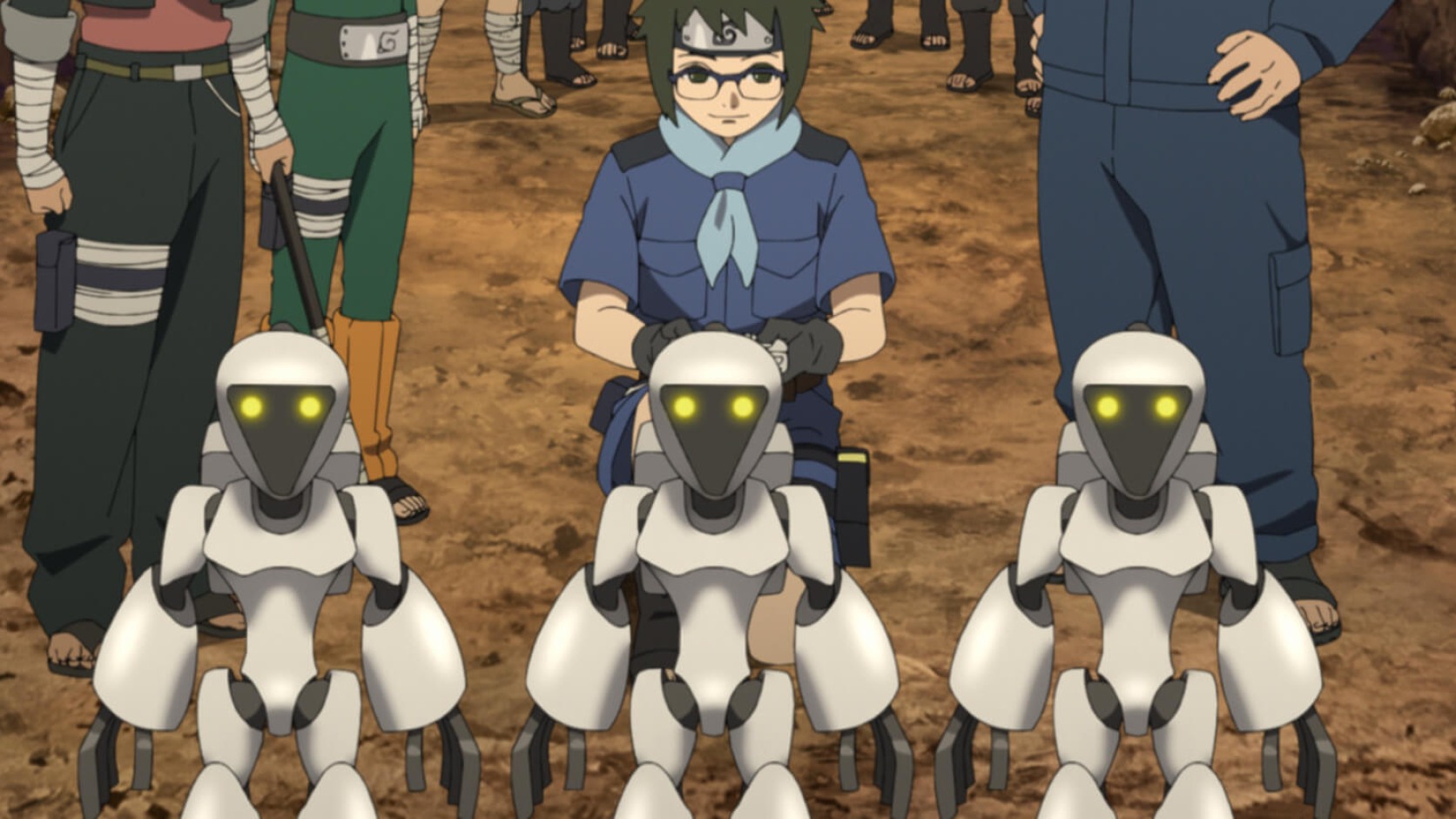
Captain Denki’s First Mission
Denki proves that planning, technical knowledge, and trust belong inside shinobi strength; he should never have needed a hostage crisis before adults respected his command.
Series: Boruto: Naruto Next Generations
Episode: 232 · Captain Denki’s First Mission
Arc: Chunin Re-Examination
Release: January 16, 2022
Previous: Episode 231 · The Rusty Sword
Directory: All 293 Boruto episodes
Bottom line
Boruto Episode 232 finally gives Denki Kaminarimon command responsibility and immediately surrounds him with people who mistake physical force for leadership. Team 5 must deliver automated puppets to a gold mine in the Land of Water, demonstrate the machines, gather information, and keep valuable technology from being stolen. Their client looks at Denki's body and decides the new captain cannot be a real shinobi. That judgment is lazy before the mission becomes dangerous and embarrassing after Denki saves everyone.
Denki proves that preparation, technical knowledge, calm delegation, and trust in Iwabee and Metal Lee belong inside shinobi competence. He should never have needed a hostage crisis and mine collapse to earn ordinary respect. Konoha also owes Team 5 a review of why three young shinobi transported experimental equipment into a mine without the developers, adult technical supervision, or a better emergency plan.
The episode at a glance
- Series: Boruto: Naruto Next Generations
- Episode: 232
- Title: Captain Denki's First Mission
- Arc: Chunin Re-Examination
- Original release: January 16, 2022
- RaeRae rating: Four bowls of ramen out of five
- Core question: Why must Denki rescue everybody before adults recognize knowledge as real strength?
A B-rank mission needs B-rank support
Naruto assigns Team 5 a mission involving new automated puppets, valuable equipment, international travel, mining operations, and a real risk of theft. That combination requires more than confidence in three teenagers. B-rank classification should trigger clear intelligence, transport security, technical documentation, medical planning, and adult backup.
Katasuke and the developers plan to arrive later because they have other work in the Land of Water. Scheduling convenience should not place the entire demonstration burden on Denki. If the machines malfunction, injure a worker, or become targets before the researchers arrive, Team 5 carries risks they did not create.
Denki prepares because preparation is leadership
Denki asks useful questions before departure. He wants to know who will operate the puppets, what the team must deliver, and what dangers officials expect. Some viewers may read that caution as nervousness. I read a captain trying to turn a vague assignment into an executable plan.
Preparation does not make a leader timid. Preparation gives teammates a shared picture of the task, available resources, known threats, and points where they should stop and request help. A loud order cannot replace that work once everybody enters a mine.
The mission combines technology and public safety
The automated puppets are not toys for Denki to show off. Miners need machines that can reduce exposure to unstable tunnels, dangerous excavation, and heavy labor. Successful delivery could prevent injuries and expand what workers accomplish without sending human bodies into every hazardous space.
That potential creates responsibility. New equipment must be tested under realistic conditions, documented honestly, and adjusted when workers identify problems. Technology serves safety only when the people facing danger can influence design, training, and deployment.
The miners are experts in their workplace
Denki understands the machines. Miners understand the tunnels, rock, ventilation, routines, warning signs, and consequences of equipment failure. Neither knowledge base should dominate the other. Safe introduction requires both.
The research team should have gathered worker input before finalizing the puppets. Controls, maintenance access, emergency shutdown, lighting, load capacity, and movement through narrow passages all depend on conditions inside the mine. A successful field test listens as much as the test measures.
Gold raises the security stakes
Dotou Island depends heavily on gold mining. Valuable output attracts theft, corruption, coercion, and pressure to keep production moving after safety warnings. The mission brief should address those risks directly instead of treating the puppets as the only valuable cargo.
Security planning needs inventory controls, restricted access, worker identification, chain-of-custody procedures, and a response for attempted theft. None of those measures should turn every miner into a suspect. Transparent safeguards protect workers from false accusations as well as outside danger.
The client's doubt is discrimination
Ounami questions Denki's ability because the new captain lacks obvious physical power. The insult does not become harmless because Denki eventually proves him wrong. Judging fitness from body type creates risk by ignoring actual skills and discouraging people from reporting what they can or cannot safely do.
Clients can ask about qualifications, authority, equipment, and emergency procedures. They should ask those questions consistently. Singling Denki out while assuming Iwabee or Metal qualifies through appearance alone reveals bias rather than serious safety review.
Physical strength is one tool
Iwabee and Metal Lee bring combat ability, speed, endurance, and physical force. Those strengths matter when transport becomes difficult and thieves create danger. Denki brings analysis, systems knowledge, navigation, and direct control of the machines.
Team 5 works because those abilities combine. Ranking one body as the only authentic shinobi form would weaken the unit. A captain does not need to outperform every specialist in every category. A captain needs to understand the mission, use available talent, communicate changes, and accept responsibility.
Denki should not apologize for his body
The episode places him in situations where others expect shame about limited physical power. He may want to prove that he can carry the same load or take the same hit. That pressure can cause injury and hide the exact skills officials selected him to use.
Denki deserves equipment and task assignments matched to his body without public humiliation. Accommodation does not lower the standard. Accommodation allows a qualified person to contribute safely and makes the team's full capacity available.
Captain does not mean strongest fighter
Konoha often links leadership with battlefield dominance. That tradition can obscure planning, listening, logistics, restraint, and technical judgment. Denki's promotion challenges the assumption that the person who hits hardest should automatically command.
Iwabee and Metal Lee need to respect his authority without pretending he knows everything. Denki should invite their expertise and still make final calls when time requires one decision. Leadership becomes credible through process, not through a contest that teammates must lose.
Iwabee's loyalty needs room to be honest
Iwabee can defend Denki from ridicule while still questioning a risky choice. Loyalty should never require silence. His experience with earth techniques and unstable ground gives him information Denki may not possess.
A strong captain tells Iwabee when disagreement is welcome, when a final order has been made, and what emergency signal overrides the plan. That structure prevents conflict from becoming personal. Denki does not need followers who perform obedience. He needs teammates who help him see the whole problem.
Metal Lee is more than comic nerves
Metal often carries anxiety into missions, and stories can turn his visible stress into a joke. Mine work, experimental technology, valuable cargo, and armed thieves give him legitimate reasons to feel pressure. His anxiety does not erase his training.
The team should use predictable roles, clear signals, and rehearsal to reduce uncertainty. Metal can contribute speed and precision without being mocked into silence. A captain who plans for a teammate's needs builds stronger performance than one who demands a personality transplant.
The journey should have included a handoff plan
International transport requires named contacts, arrival confirmation, custody records, and procedures for delays. Team 5 should know who may receive the puppets and who may not. A client greeting them at the dock does not replace verification.
The equipment's value also calls for secure storage before installation. If the research team arrives later, someone must control keys, access, and maintenance. A clear handoff protects Team 5 from blame when local procedures fail after delivery.
Demonstration is not authorization for unsupervised use
Denki can activate the automated puppets and explain basic functions. A demonstration should not automatically authorize full production use. Workers need training, emergency shutdown practice, maintenance rules, and a clear route for reporting defects.
Managers may pressure everyone to treat an early success as proof that no limits exist. Denki should record test conditions and state what the team has not evaluated. Honest limits protect workers and the designers. Overpromising creates a dangerous burden for the person operating the equipment later.
Mine safety cannot depend on heroics
Underground work involves collapse, darkness, dust, restricted movement, machinery hazards, and limited escape routes. A rescue performed by shinobi or puppets may save people after failure, but prevention remains more important.
Before deployment, officials should review tunnel stability, ventilation, communication, head counts, emergency supplies, and evacuation routes. Every worker should know who can stop production. If only the mine chief can call a halt, economic pressure may outrank survival.
The thieves exploit workplace access
Two miners recover hidden gold, take Ounami hostage, and attempt to escape. Their access reveals weaknesses that a basic security review might have identified. Valuable material can disappear when inventory, supervision, and reporting systems rely only on personal trust.
That does not make every worker untrustworthy. Broad suspicion can damage morale and hide the specific controls that failed. Investigators need evidence about planning, opportunity, prior losses, communication, and whether anyone else participated. Precision protects innocent workers.
Theft does not justify unsafe labor conditions
Management may respond by increasing surveillance or restricting all miners. Security should not become punishment for an entire workforce. Workers still deserve privacy, breaks, safe reporting, and fair treatment.
Targeted chain-of-custody controls, two-person verification, sealed transport, and independent audits may protect gold without creating constant intimidation. Any new monitoring needs a defined purpose, access limits, and review. Fear of theft should never silence safety complaints.
Hostage response requires a clear command
Once Ounami becomes a hostage, the mission changes. Recovering puppets and gold becomes secondary to protecting life. Denki needs to state priorities, assign roles, and prevent an impulsive attack from escalating the threat.
Iwabee and Metal bring powerful close-range abilities, but confined space and a blade near the hostage limit their options. Denki's ability to observe and coordinate matters more than proving personal courage. Good command reduces the number of people forced to improvise.
The collapse exposes planning gaps
The thieves lock Team 5 and the workers inside the mine. Entrapment should have been part of emergency planning before operations began. A single blocked route can become catastrophic when nobody outside expects a check-in.
Mines need redundant exits or protected refuge areas where geography permits, regular communication, surface accountability, and timed escalation when contact stops. Shinobi skill cannot substitute for those systems. Team 5 escapes because Denki can use the puppets, not because the original safety plan was adequate.
Denki turns technical knowledge into rescue
The strongest part of the episode arrives when Denki uses the automated puppets to clear rubble and free trapped people. His earlier preparation becomes immediate lifesaving action. The rescue validates knowledge that the client dismissed before danger appeared.
Denki does not become useful suddenly. He was useful when he learned the machines, asked questions, and understood their capabilities. Crisis makes that value visible to people who refused to recognize quieter competence.
Technology expands choices
The puppets can enter dangerous areas, move debris, and help track the thieves. Those functions reduce direct exposure for workers and shinobi. Technology works best here because Denki treats the machines as tools inside a broader plan.
Automation should expand human choices rather than erase workers. Miners may shift toward operation, maintenance, mapping, inspection, and safety roles. The transition needs paid training and job protections. A safer machine should not become an excuse to discard the people whose experience made deployment possible.
Automation can also concentrate power
Who owns the puppets? Who controls updates, repairs, data, and replacement parts? If the mine depends on technology supplied by an outside institution, local workers may gain safety and lose bargaining power at the same time.
Contracts should define ownership, maintenance costs, downtime support, data use, and local training. The Land of Water should not become permanently dependent on Konoha technicians. Technology transfer becomes ethical when local people can understand, repair, and govern the system.
Data collection needs boundaries
The mission includes gathering information and analyzing results. Operational data can improve design, but collection may also reveal worker performance, production rates, locations, and behavior. Miners deserve to know what the puppets record.
Researchers should collect only necessary information, protect access, set retention limits, and prohibit unrelated surveillance. Workers need a route to challenge inaccurate records. Safety research should never quietly become productivity monitoring that punishes people for slowing down around danger.
Tracking the thieves shows Denki's full value
Denki uses the puppets and available clues to follow the escape route. That choice combines technology, observation, and command rather than separating brains from action. He remains present in the pursuit without copying Iwabee's or Metal's fighting style.
The sequence gives Denki a form of action built around his established character. He does not discover a convenient hidden strength. He applies knowledge under pressure, which makes the victory feel earned.
Teamwork finishes the capture
Denki's plan needs Iwabee and Metal. Their physical and combat skills matter, while his coordination keeps those abilities focused on the hostage and escape route. Nobody succeeds alone.
The episode avoids making captaincy a solo performance. Denki earns respect by using the team well, not by replacing both teammates. That distinction should guide future missions. Promotions should expand responsibility without teaching leaders that asking for help exposes weakness.
The gold is evidence
Recovered gold cannot simply return to a storage pile. Investigators need to document weight, location, packaging, handling, and chain of custody. The material may connect the suspects to earlier thefts or reveal failures inside the mine.
Workers deserve transparency about missing inventory without public accusation. Management should explain what happened, what evidence supports the account, and what protections will change. Rumor can damage innocent employees long after the thieves are arrested.
The suspects need lawful treatment
The miners threaten a hostage and attempt theft. Team 5 has authority to stop immediate danger. Once restrained, both suspects need medical assessment, documented custody, notice of allegations, and a fair process.
Interrogation should examine motive, planning, accomplices, prior incidents, and workplace conditions without coercion. Understanding why the crime occurred can prevent repetition. Explanation does not erase responsibility. Punishment without accurate explanation produces less safety.
Ounami owes Denki an apology
The mine chief ridicules Denki before learning what the young captain can do. Gratitude after rescue should include a direct apology rather than a vague compliment. Denki deserves acknowledgment that the original judgment relied on appearance.
An apology should name the conduct, recognize harm, and commit to different behavior. Ounami can also review how workers with less visible strength or different abilities are treated at the mine. Respect should not remain a reward available only after someone saves his life.
Respect earned through catastrophe is a bad standard
Denki succeeds spectacularly under danger, but ordinary respect should not require spectacular proof. Marginalized people are often expected to be twice as prepared, calm, and useful before others grant competence.
Konoha should not celebrate the outcome without naming that burden. Denki can feel proud and still deserve a world where a routine delivery demonstrates enough. The client had access to his rank and mission authorization before the emergency.
Naruto needs to review the deployment
The Hokage selected Team 5 because Denki's knowledge matched the equipment. That choice shows insight. The mission design still left young shinobi carrying experimental technology without the developers during the most vulnerable stage.
Naruto should ask whether scheduling, staffing, and threat assessment were adequate. A successful outcome does not prove the plan was safe. Near misses often provide the best chance to correct systems before someone dies.
Katasuke's team arrived too late
The researchers appear after Team 5 has faced equipment handling, a mine collapse, theft, hostage danger, tracking, and combat. Their other assignments may have mattered, but the timing transferred technical and legal responsibility to Denki.
Future deliveries should include at least one qualified adult technician from departure through handoff. Remote communication and manuals can support that person, not replace presence. If staffing cannot meet that requirement, officials should delay deployment instead of treating youth as a convenient gap filler.
The puppets need an incident review
The machines helped save trapped workers and recover stolen gold. Researchers should preserve logs, inspect damage, interview users, and document where the puppets performed well or poorly. A rescue creates valuable evidence for safer design.
The report should also identify work the machines were never meant to perform. Emergency success can encourage dangerous expansion beyond tested limits. Engineers need to distinguish capability observed once from a function approved for routine use.
Workers need paid training
If automated puppets remain at the mine, miners need time to learn controls, hazards, maintenance, and emergency procedures. Training should occur during paid hours with hands-on practice. A manual left in an office will not protect people underground.
Different workers may need varied instruction formats, language support, or additional practice. Competency checks should confirm understanding without humiliating anyone. Refresher training matters when software, equipment, or mine conditions change.
Maintenance decides whether safety lasts
New equipment often performs beautifully during demonstration and fails later when replacement parts, cleaning, charging, calibration, or repairs become difficult. The mine needs a maintenance schedule and a funded supply chain before depending on the puppets.
Workers should know how to report faults and stop using unsafe units without losing pay. Managers must not pressure operators to bypass alarms for production. Denki's rescue proves the machines can help. Long-term reliability requires less dramatic work.
Denki needs feedback beyond praise
After the mission, adults should tell Denki which decisions worked and where his plan needs improvement. Generic praise may feel good and teach little. He deserves a professional debrief that respects his success enough to examine details.
Feedback could cover briefing, delegation, client communication, mine-entry planning, hostage priorities, puppet control, pursuit, force, evidence, and teammate welfare. A new captain learns through specific review. Honest critique should never become an excuse to minimize achievement.
Iwabee and Metal need individual debriefs
Team members may notice risks their captain missed. Separate interviews let Iwabee and Metal describe confusion, disagreement, fear, injury, and useful choices without worrying about embarrassing Denki.
Those accounts should support team learning rather than secret scoring. Denki can receive summarized operational feedback while private health information remains protected. Trust grows when everyone understands how debrief information will be used.
Leadership should include worker voices
Denki commands Team 5, not the miners. Inside their workplace, he needs to listen to local expertise and explain decisions affecting safety. Rank does not erase the rights of civilians.
During a crisis, urgent commands may be necessary. Afterward, workers should have space to describe which instructions helped, which created confusion, and what they need before future tests. Civilian feedback belongs in mission evaluation because public protection defines the assignment.
International cooperation needs reciprocity
Konoha brings technology and shinobi labor to the Land of Water. The relationship should not present Konoha as the sole source of progress. Local miners, officials, engineers, and communities hold knowledge Konoha lacks.
Future cooperation could include shared training, local repair capacity, joint safety research, and transparent ownership. Reciprocity prevents aid from becoming dependency or branding. Denki's team should leave behind more than machines and a story about Konoha saving the day.
Gold profits should fund safety
If Dotou Island generates substantial value through gold, workers should not face preventable danger while owners or officials collect the benefit. Revenue should support ventilation, structural monitoring, emergency access, medical care, training, maintenance, and fair compensation.
Automated puppets cannot cover every neglected obligation. Technology may reduce one hazard while management leaves others untouched. A complete review follows the money and asks who receives profit, who carries risk, and who decides when production stops.
Denki's family background complicates the mission
Denki comes from the Kaminarimon company family, which gives him access to technology and social privilege. His experience of being underestimated is real. His access to education and equipment is also real. Both truths can coexist.
The episode becomes richer when Denki uses privilege to expand safety rather than claim personal genius. He should credit researchers, teammates, miners, and everyone who built the system. Leadership includes recognizing whose labor made success possible.
Innovation should not erase traditional skills
Automated excavation can reduce dangerous manual work, but miners still need geological judgment, tool knowledge, emergency practice, and local memory. Replacing every skill with machine dependence would create new vulnerability.
The best system combines automation with human expertise. Workers should practice manual and emergency procedures when safe, while machines handle tasks that expose bodies unnecessarily. Progress does not require contempt for older knowledge.
The episode gets Denki right
Denki has always connected shinobi life with study, devices, and careful observation. Episode 232 lets those traits drive the solution instead of treating them as support for somebody else's hero moment. His command feels like a natural extension of who he already is.
He remains uncertain, which makes sense for a first mission. Confidence appears through action rather than a sudden personality rewrite. Denki leads while still sounding like Denki.
The episode underserves the miners
The workers function mainly as witnesses, hostages, suspects, and an audience for Denki's success. Their safety and expertise deserve more attention. A mine is a workplace with power relationships, not a neutral stage for a shinobi test.
The episode could have shown workers evaluating the puppets, raising concerns, and shaping the final deployment. That material would strengthen Denki's leadership because listening is part of technical competence.
The thieves needed more context
The suspects pursue hidden gold and use violence. Their choices deserve accountability. The story offers limited information about motive, workplace conditions, debt, coercion, or prior conflict. That absence makes the crime easier to resolve than to understand.
Viewers do not need a tragic excuse for every offender. We do need enough information to judge whether capture addresses the cause. Without that context, officials may close the case while the same incentives remain.
RaeRae verdict
Boruto Episode 232 earns four bowls of ramen out of five. Denki proves that a shinobi captain can lead through knowledge, planning, and trust rather than raw force. Iwabee and Metal do not become lesser so he can shine. Their combined strengths turn experimental machines into rescue tools and stop a violent theft.
The episode still asks Denki to survive ridicule and catastrophe before adults recognize obvious competence. Ounami owes him a direct apology. Konoha owes Team 5 a serious mission review. The miners deserve safe deployment, paid training, worker control, and a system that values their expertise after the heroes leave.
Before the next episode
Episode 233, “The New Team 7 Jumps Into Action,” gives Sarada command and brings Kawaki into the team during another Land of Water assignment. Watch how the village handles a new member, a new captain, and the temptation to confuse forced proximity with trust.
Team structure should make room for disagreement, boundaries, and gradual belonging. A uniform does not create instant family, and leadership should not demand emotional harmony before people have learned how to work together.
Sources and lawful viewing
The official Naruto site provides the Episode 232 synopsis and gallery. Crunchyroll carries “Captain Denki's First Mission” where regional availability permits. Release and streaming details can vary by country.
Official episode reference: Naruto Official episode guide
Licensed episode route: Crunchyroll licensed series page
After watching, ask why Denki had to rescue the people mocking him before knowledge counted as strength. Then ask whether the mine became safer once the applause ended.