
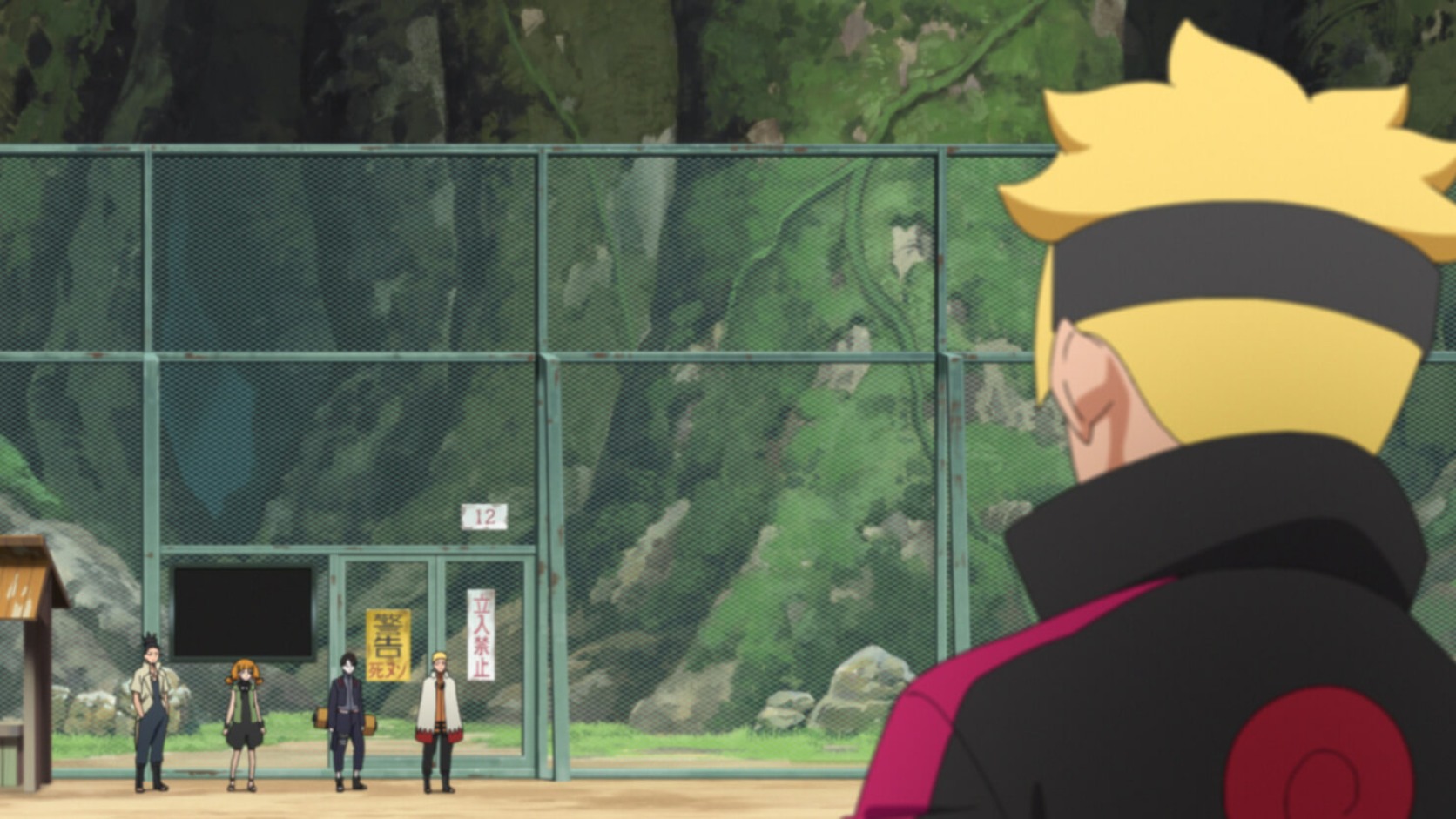
The Chunin Exams Resume
Konoha brings the Chunin Exams back to raise morale, but young shinobi deserve a fair promotion system rather than responsibility for proving the village healed.
Series: Boruto: Naruto Next Generations
Episode: 221 · The Chunin Exams Resume
Arc: Chunin Re-Examination
Release: October 24, 2021
Previous: Episode 220 · Remaining Time
Directory: All 293 Boruto episodes
Bottom line
Boruto Episode 221 brings the Chunin Exams back to raise Konoha’s morale after Isshiki’s attack. The genin are excited to show what missions taught them, and the village gets a public event that looks like movement instead of fear. That can help. Routine, ambition, and collective attention can give people something hopeful to hold after disaster.
The exam also asks children to turn recent danger into evidence that they deserve promotion. Teams complete a written stage, then enter a forest exercise where the stated task does not reveal the whole assessment. Boruto helps Denki when his confidence drops, and candidates learn that rank depends on judgment rather than speed alone. A fair promotion system should reward leadership, care, communication, and restraint. A hidden standard becomes unfair when students cannot tell whether compassion counts or merely happened to please observers.
The title treats recovery as resumption
“The Chunin Exams Resume” suggests Konoha can pick up interrupted life. Resumption may restore continuity.
Recovery rarely returns people to the same starting line.
Naruto wants to raise morale
A shared event can interrupt public fear and remind residents that the village still has a future. Hope has civic value.
Young shinobi should not become entertainment prescribed for adult anxiety.
Morale is not proof of healing
Crowds, banners, competition, and applause can create visible energy while private trauma remains.
The village should support the event and continue medical, housing, and mental-health care.
The genin want a real opportunity
Many candidates have completed missions and grown since the earlier exam. Promotion offers recognition, responsibility, and a route forward.
Their excitement belongs to them, not only Naruto’s public plan.
Participation should remain voluntary
After an invasion, some students may need rest or treatment. Declining one exam should not mark them as weak or disloyal.
A second chance requires another future date.
Boruto carries medical risk into the arena
Medication may slow Otsutsukification, but Momoshiki remains a threat. Competition adds stress, chakra use, and possible exhaustion.
Entry needs individualized medical clearance, not a blanket assumption that Boruto looks fine.
Medical clearance should protect privacy
Proctors need practical safety information without receiving every detail about Boruto’s body. Other candidates need even less.
Accommodation should not become public disclosure.
Boruto should help set his limits
He knows how the pills affect him, whether sleep improved, and which sensations feel dangerous. That experience belongs in planning.
Athletic ambition does not cancel patient voice.
A written exam tests one narrow skill
Reading, analysis, memory, and information gathering matter for chunin work. Paper results can reveal preparation.
Leadership cannot be reduced to a score.
Team averages can hide unequal burdens
A shared threshold encourages cooperation, but one strong writer may carry teammates while another student’s disability goes unsupported.
Fair assessment needs both team and individual evidence.
Cheating rules should be explicit
Shinobi examinations often test covert information gathering while pretending to test only answers. Hidden expectations reward students who recognize the trick.
Ambiguity can measure familiarity with institutional games more than leadership.
Students deserve accessible conditions
Reading disabilities, vision changes, anxiety, language differences, or injuries can affect a written test without predicting field judgment.
Accommodation preserves the skill being assessed.
The forest tests decision-making
Teams enter an environment where speed, danger, injured subordinates, and incomplete instructions compete for attention.
That complexity resembles leadership more than a clean obstacle course.
Hidden criteria create moral luck
Candidates may help someone because compassion feels right and later learn that rescue was the real test. The same action would remain ethical without observer approval.
Institutions should not teach that care matters only when secretly scored.
Chunin rank means responsibility for others
Promotion can place a young shinobi in charge of missions and teammates. Tactical power alone cannot qualify someone.
Judgment under pressure belongs at the center.
Rescue should outrank the finish line
A candidate who abandons an injured person to arrive first demonstrates the wrong priorities for command.
Speed serves a mission. People define the mission’s purpose.
The exam needs safe simulated casualties
Testing rescue judgment should not require real uncontrolled injury. Proctors need medical teams, intervention thresholds, and reliable tracking.
Training loses legitimacy when danger becomes negligence.
Forest wildlife is not a joke
Candidates rush before hearing full instructions and encounter hazards. Impatience deserves assessment.
Disqualification should not depend on whether a teenager survives an avoidable attack.
Instructions are part of safety
Proctors should state essential hazards, boundaries, emergency signals, and prohibited conduct clearly. Surprise can test judgment without hiding basic survival information.
Institutional cleverness does not excuse preventable harm.
Denki worries he will hold his team back
His insecurity reflects a system that often defines shinobi worth through combat speed and physical power.
Technical intelligence, observation, and communication also protect teams.
Boruto builds Denki’s confidence
He does not solve the test for Denki. He reminds a friend that contribution can take more than one form.
That support already resembles chunin leadership.
Confidence should rest on evidence
Empty praise can collapse under pressure. Boruto can point toward missions where Denki’s analysis made a difference.
Specific memory turns encouragement into trust.
Friends can become rivals without becoming enemies
The exam creates competition among people who still care about one another. Rank scarcity can strain those bonds.
Healthy systems do not require cruelty as proof of ambition.
Promotion should not manufacture humiliation
Public brackets and visible failure may motivate some students and shame others. Feedback needs privacy and substance.
Losing one stage should produce a development plan, not a label.
The exam follows unequal mission exposure
Some teams faced Kara, war-level threats, or unusual responsibilities. Others received safer or less visible assignments.
Experience differences may reflect opportunity, not merit.
Trauma experience is not an advantage to celebrate
Boruto and Team 7 learned under extreme danger. That growth came with injury, possession, and fear.
Nobody should envy the cost behind the skill.
Ordinary missions teach real leadership
Escort work, community support, investigation, and routine patrols build patience and judgment. Spectacle does not own professional growth.
The exam should recognize quiet competence.
Sarada enters with command experience
She has led Team 7 through dangerous missions and made decisions under pressure. Formal rank could align authority with demonstrated work.
The exam should evaluate that record rather than pretend everyone arrives blank.
Mitsuki brings complicated autonomy
His abilities and origins may cause adults to view him through power or risk. Promotion should examine choices, teamwork, and judgment.
Biology cannot become a shortcut to suspicion.
Cho-Cho deserves evaluation beyond jokes
Her confidence, loyalty, power control, and social awareness can contribute to leadership. Body jokes should not define assessment.
Respect requires taking her ambition seriously.
Inojin balances inherited techniques
Sensory communication and artistic jutsu support teams in ways a duel may understate. Command depends on information flow.
The exam should value coordination as much as finishing strikes.
Shikadai already carries rank
His promotion from the earlier exam creates another comparison point. Peers may measure themselves against his progress.
One person’s timeline should not become everybody’s deadline.
Team 5 brings engineering and force
Denki, Iwabe, and Metal Lee contribute different strengths. A team thrives when nobody must imitate the strongest fighter.
Leadership can translate between technical and physical knowledge.
Tsubaki brings another cultural frame
Her samurai background may shape discipline, combat, and ideas about duty differently from Konoha training.
Fair assessment should recognize competence without demanding cultural sameness.
Houki’s team brings intelligence training
Anbu-style discipline and observation can look mature. Secrecy and obedience alone do not prove ethical command.
Rank should test when a leader questions an order.
The exam should evaluate communication
Teams need clear plans, updates, listening, and repair after disagreement. Silent competence can fail when subordinates do not know the goal.
Proctors should observe process, not only outcomes.
The exam should evaluate restraint
A chunin may hold more power than a civilian, suspect, or junior teammate. Knowing when not to attack matters.
Control is a leadership skill.
The exam should evaluate consent
Commanders assign risk, but teammates remain people. Good leaders explain plans, hear objections, and avoid spending others for personal glory.
Shinobi tradition needs that lesson badly.
The exam should evaluate public safety
Mission success can still harm residents, property, or bystanders. Candidates should consider the wider environment.
The recent Isshiki attack makes that responsibility impossible to ignore.
The exam should evaluate evacuation judgment
Konoha just experienced a village emergency. Future chunin may need to guide civilians rather than chase an enemy.
Rescue logistics belong in training.
The exam should evaluate medical response
Leaders need basic triage, safe movement, and knowledge of when to call specialists. Bravery can worsen injuries without skill.
No team should depend on luck until a medic arrives.
The exam should evaluate information ethics
Shinobi gather secrets. Leaders decide what to collect, share, and protect.
Privacy and security both belong in professional judgment.
Scientific tools need clear rules
Boruto’s earlier disqualification centered on prohibited technology and deception. Future exams must state what tools are allowed and why.
Rules should evolve openly rather than punish students for guessing wrong.
Technology is not cheating by nature
A device can support disability, communication, safety, or tactical creativity. Misrepresentation caused the earlier ethical breach.
The system should distinguish tools from dishonesty.
Boruto’s history changes his return
He enters another exam after public failure, reconciliation with Naruto, and missions far beyond genin scale.
The opportunity carries shame, hope, and a chance to compete honestly.
Redemption does not require perfection
Boruto can demonstrate growth without winning every stage or hiding medical fear.
Accountability should open a future rather than demand flawless performance forever.
Naruto’s presence changes the pressure
Boruto once entered the exam desperate for his father’s attention. Their relationship has improved.
Public evaluation by the Hokage can still feel like evaluation by Dad.
Naruto should separate roles clearly
He can support Boruto privately while respecting independent proctors publicly. Transparent boundaries protect both.
Family pride should not influence promotion.
Proctors need conflict checks
Teachers, relatives, commanders, and former teammates may know candidates closely. Familiarity can create bias for or against them.
Multiple evaluators reduce one person’s influence.
Scoring should be documented
Candidates deserve to know which behaviors support promotion and how decisions get reviewed. Secret impressions can hide favoritism.
Transparency does not require revealing every test surprise beforehand.
Appeals should exist
Proctors can misread an action or miss context in a forest exercise. A limited review process supports fairness.
Authority gains legitimacy when correction remains possible.
Passing should not guarantee promotion automatically
Chunin rank reflects readiness for responsibility, not only completing obstacles. Broader mission history and conduct matter.
The standard should be clear before testing begins.
Failing should produce useful feedback
“Try harder next time” gives no direction. Candidates need specific strengths, gaps, and training options.
Assessment should help people grow.
Morale events need accessibility
Residents who lost homes, work, mobility, or loved ones may not experience celebration as relief. Attendance and enthusiasm should never become compulsory.
Public hope must leave room for grief.
The village should remember who rebuilt the venue
Workers, cleaners, medics, engineers, and administrators make the exam possible after attack. Their labor deserves visibility.
Shinobi competition does not rebuild Konoha alone.
Security must remain active
Code and Kara still exist. A crowded public event creates risk.
Protection should operate without turning every attendee into a suspect.
Emergency plans belong at the venue
Exits, shelters, medical stations, communication backups, and family reunification points should be ready before crowds arrive.
Morale should not outrank preparedness.
Boruto’s medication schedule continues
Competition does not pause treatment. Staff should plan private dosing, hydration, monitoring, and response to side effects.
Medical adherence should not become public spectacle.
Rest should count as preparation
Genin may believe nonstop training proves commitment. Recovery improves judgment and reduces injury.
Adults should model that lesson after surviving Isshiki through costly exhaustion.
Coaches should watch for trauma responses
Loud noises, confinement, forest danger, or sudden attacks may trigger recent memories. A reaction does not automatically mean a candidate lacks courage.
Support and evaluation can coexist.
Teams need permission to withdraw
Any participant should be able to signal danger or medical need without automatic shame. Proctors can review promotion separately.
An exam should never require silence about injury.
The hidden test rewards care
Candidates who protect an injured subordinate demonstrate priorities suitable for command. That value deserves praise.
The institution should teach care openly so students do not treat compassion as a trick.
Boruto helping Denki already matters
Leadership appears before the forest and outside formal scoring. Boruto notices a friend’s doubt and responds.
Rank can recognize character, but rank does not create character.
Denki’s anxiety reveals institutional messaging
He fears that physical limitations make him a burden because shinobi culture celebrates visible combat. The system helped create that belief.
Promotion standards should communicate that intelligence and support work count.
Team success needs varied roles
Scouts, analysts, defenders, communicators, medics, and fighters all contribute. A team of identical strengths becomes fragile.
Difference can be operational resilience.
Competition should not erase cooperation
All candidates ultimately serve the same village. Helping another team during real danger should not guarantee failure.
Rules should distinguish sports rivalry from professional duty.
Chunin authority needs ethics training
Promotion may give teenagers power over younger shinobi and civilians. Technique alone cannot prepare them.
Consent, discrimination, trauma, public safety, and accountability belong in the curriculum.
The village needs mentorship after promotion
A new vest and title do not create complete judgment. First assignments should include supervision and review.
Support protects new leaders and their teams.
No child should become Konoha’s morale project
The exam can inspire residents, but candidates should not be responsible for healing adult fear through performance.
Their development remains the primary purpose.
Routine can genuinely help
Training, friends, goals, and familiar rituals can restore rhythm after crisis. Joy does not disrespect loss.
Healing needs room for ordinary excitement.
Routine can hide unfinished harm
Adults may point to the exam as proof that Konoha recovered. A functioning venue does not mean every family has housing or support.
Public relations should not replace reconstruction.
The episode gives the wider class room
After an Otsutsuki battle centered on a few characters, the exam restores attention to many genin and their growth.
The ensemble reminds viewers that Konoha’s future cannot depend on one family.
The exam should publish its accommodations policy
Candidates should know how to request medical breaks, mobility support, adjusted written materials, or other access without revealing private diagnoses to classmates. Quiet exceptions made case by case can look like favoritism.
A written policy protects students and proctors. Fairness means assessing the intended skill, not rewarding whoever can hide an injury most convincingly.
Proctors need training against bias
Clan reputation, family status, body type, disability, gender, wealth, and previous discipline can shape adult expectations before a candidate moves. Good intentions do not remove that influence.
Multiple observers, structured notes, and review can reduce bias. Promotion should not depend on which student already looks like a leader to an adult raised on old stereotypes.
Parents need clear boundaries
Families may pressure candidates to compete, win, or protect clan reputation. Others may fear participation after Isshiki’s attack.
The village should explain risks, standards, and withdrawal rights while keeping the final choice centered on the young shinobi. Family support should not become ownership of a child’s career.
Candidates need mental-health support afterward
Passing can bring anxiety about final matches and future command. Failing can bring shame, anger, or fear of disappointing a team.
Counselors and instructors should offer private follow-up instead of waiting for distress to appear as misconduct. Assessment affects identity when rank carries this much cultural weight.
Forest observers need intervention thresholds
Proctors should know when to let candidates solve a problem and when a situation has become medically or ethically unsafe. Vague discretion can produce unequal protection.
Documented thresholds help distinguish a challenging simulation from adults watching preventable harm because rescue might spoil the test.
Evaluation should include repair after mistakes
Leadership is not never making a bad call. A strong candidate can recognize harm, change course, apologize, and rebuild trust.
An exam that scores only the first decision misses one of command’s most important skills. Konoha needs leaders capable of correction, especially after institutions repeatedly create damage through certainty.
Promotion should come with workload limits
New chunin may receive command authority while remaining adolescents with school, family, health, and development needs. Rank should not authorize unlimited missions.
Supervisors need workload caps, rest requirements, and review of dangerous assignments. Recognition becomes exploitation when promotion only increases how much risk the village can demand.
The village should evaluate the exam too
After results, organizers should review injuries, candidate feedback, scoring consistency, accommodations, security, and whether each stage measured the stated goal.
Institutions should pass tests as well. A tradition does not become fair merely because students survived another version.
What the episode gets right
Episode 221 connects promotion with judgment and care rather than raw speed. Boruto’s support for Denki reinforces the same value.
The return to a familiar institution also gives the cast a believable source of hope.
Where the episode needs care
Hidden scoring can make ethical behavior feel like a trick. Candidates deserve transparent standards even when scenarios remain surprising.
The morale goal also risks turning young shinobi into public reassurance before their own recovery receives enough attention.
RaeRae verdict
Boruto Episode 221 earns four bowls of ramen out of five. I like seeing the whole class hungry for something that belongs to their future instead of another Kara emergency. Denki’s fear and Boruto’s encouragement give the episode its best argument: leadership begins when somebody notices who feels left behind and refuses to define that person as dead weight.
Konoha still needs to be honest about why the exam returned. Morale matters, but children are not banners the village waves to prove recovery. Give them clear standards, safe conditions, medical accommodations, real feedback, and a chance to decline without shame. Then the Chunin Exams can support healing instead of asking genin to perform healing for everyone watching.
Before the next episode
Episode 222, “The Night Before the Final Round,” reveals the finalists, changed rules, and new pressure before individual matches. Watch how technology policy, rivalry, team loyalty, and private nerves shape the night.
Preparation should help candidates understand the test, not guess which institution they are entering.
Sources and lawful viewing
The official Naruto site provides the Episode 221 synopsis and gallery. Crunchyroll carries “The Chunin Exams Resume” where regional availability permits. Release and streaming details can vary by country.
Official episode reference: Naruto Official episode guide
Licensed episode route: Crunchyroll licensed series page
After watching, ask whether the exam identifies leaders or merely rewards people who understand hidden rules. A fair village should not make ethics a secret answer key.