
Empty Tears
Kurama gives Kawaki a witness, a truthful account of Naruto’s loneliness, and hope that does not demand he turn suffering into a perfect origin story.
Series: Boruto: Naruto Next Generations
Episode: 201 · Empty Tears
Arc: Vessel
Release: May 30, 2021
Previous: Episode 200 · Becoming a Student
Directory: All 293 Boruto episodes
Bottom line
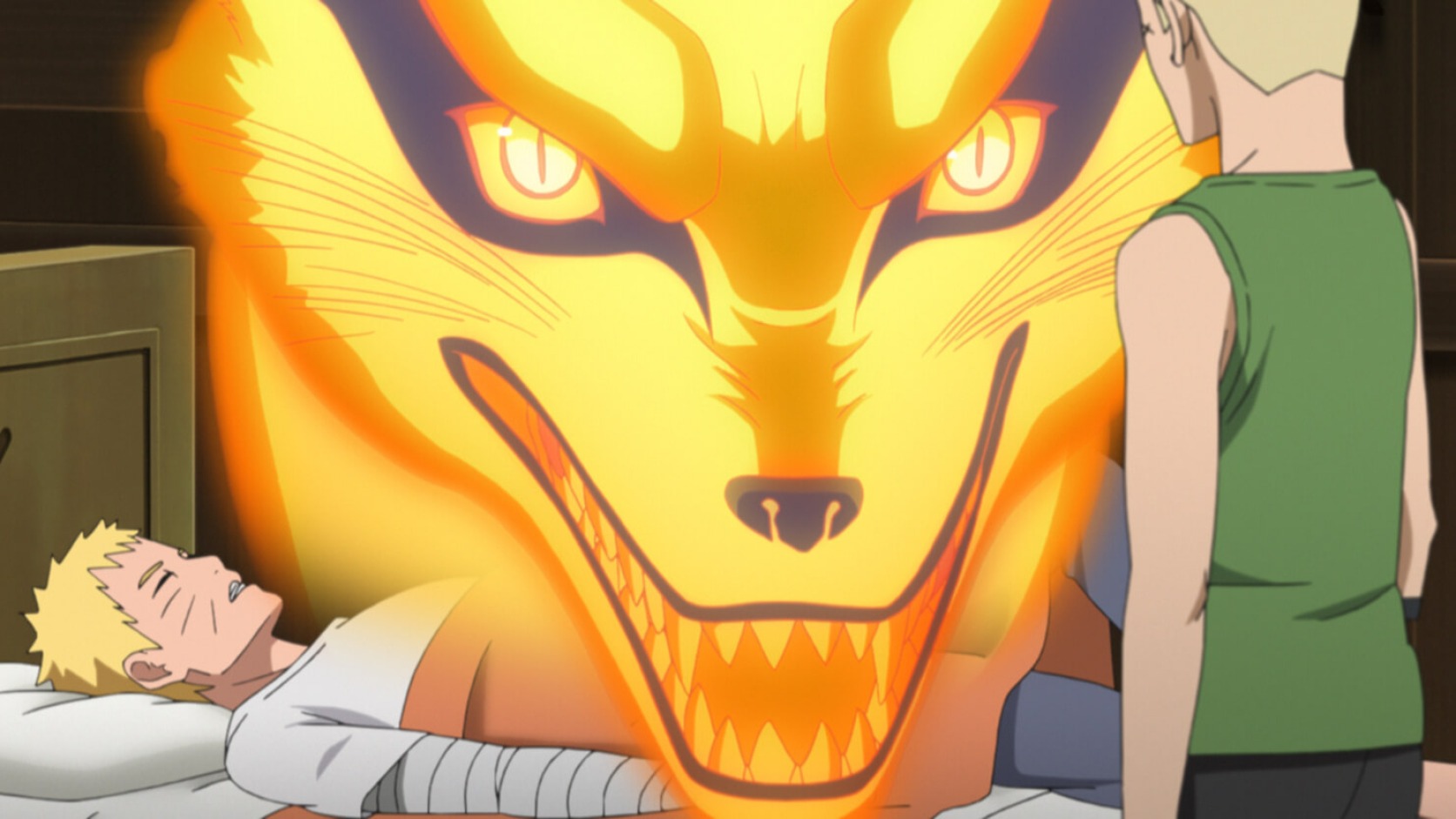
Boruto Episode 201 lets Kawaki hear Naruto’s history from the one witness who lived inside every lonely night. While Naruto sleeps, Kawaki works on Himawari’s broken vase and meets Kurama. The Nine Tails tells him that Naruto once carried isolation, rejection, and fear that looked painfully familiar. The comparison offers hope because Naruto’s life changed, but Kurama never needs to argue that their wounds are identical or that suffering automatically creates greatness. Kawaki cries after years of learning that tears invite punishment or accomplish nothing. Those tears are not empty. They mark grief finally reaching a place where somebody can witness pain without exploiting the opening. Kawaki leaves the conversation wanting Naruto’s path and choosing to work with Boruto against Jigen.
The title sounds like an accusation
“Empty Tears” could imply that crying has no value, changes nothing, or arrives too late. Kawaki has every reason to believe that lesson. Tears did not stop his father, Jigen, or Kara. Visible distress may have invited more contempt.
The episode quietly challenges the title. Tears cannot undo captivity, but expression inside safety can carry grief out of isolation. No emotion needs to solve the problem before the emotion becomes real.
Kawaki repairs the vase while everyone sleeps
He works when the household is quiet, away from praise and argument. The choice shows that repair has moved beyond a performance for Boruto.
Nobody is watching to grant forgiveness. Kawaki handles the pieces because Himawari’s gift matters and because Boruto’s glue gave him a route toward responsibility.
Night gives him privacy
Daytime in the Uzumaki home brings questions, supervision, meals, and noise. Night offers enough stillness for concentration and feeling.
Traumatized people often need control over when vulnerable work happens. Privacy can support agency as long as privacy does not become abandonment.
Repair requires the hand he lost
Kawaki’s body has changed since the vase broke. He now uses a prosthetic powered through Naruto’s chakra while trying to align fragile pieces.
The image binds physical and relational repair. Another person’s support helps his hand move, but Kawaki chooses what that hand does.
Glue refuses the fantasy of replacement
The new vase could have closed the transaction. The original asks him to face each fracture, locate each piece, and accept visible damage.
Repair is slower because meaning lived in Himawari’s labor. Kawaki is learning to honor value that cannot be priced.
Naruto sleeps nearby
The Hokage is vulnerable, exhausted, and human. Kawaki sees the man who defeated Delta resting inside an ordinary room.
Safety includes being able to sleep near someone without expecting attack. That trust runs both directions, even if neither names the milestone.
Kurama appears as a witness
Kurama knows Naruto’s childhood from inside the seal. He remembers the loneliness, rage, rejection, and stubborn bids for recognition with a closeness no public biography can match.
His testimony carries weight because he saw what Naruto hid. Kawaki receives history from someone who cannot confuse the Hokage title with an easy life.
The meeting should frighten Kawaki
A giant fox appearing without warning beside a sleeping adult is not an ordinary introduction. Kawaki has been taught to treat unexpected power as threat.
Kurama controls the encounter enough to speak rather than overwhelm. Restraint makes conversation possible.
Kurama does not speak like a therapist
He is blunt, observant, and personally invested in Naruto. The conversation works because his voice belongs to a character, not a perfect clinical script.
Support can be imperfect and still meaningful when the speaker listens, tells the truth, and does not seize control.
Naruto’s childhood becomes relevant evidence
Kawaki sees the Seventh Hokage as powerful, loved, and secure. Kurama gives him access to the distance between that present and Naruto’s childhood.
Hope becomes credible when someone explains the route rather than displaying only the result. A survivor needs to know that the admired adult did not begin on the other side of pain.
Similarity opens the door
Naruto and Kawaki both grew up isolated around dangerous power placed inside their bodies. Adults feared, used, or rejected them for conditions they did not choose.
Those parallels help Kawaki imagine being understood. Shared experience can reduce the shame that says nobody else could survive contact with his story.
Similarity must not erase difference
Naruto was orphaned and ostracized by a village. Kawaki suffered direct abuse, sale, experimentation, and captivity under Kara. Their histories overlap without becoming interchangeable.
Trauma is not a contest. Kurama’s point is possibility, not equivalence. Naruto’s path can offer evidence without becoming a standard Kawaki must copy exactly.
Naruto’s success is not proof suffering was useful
The Hokage grew despite what happened, not because children need misery to develop character. Pain did not grant him moral superiority automatically.
People, teachers, friendships, choices, and repeated chances helped him build another life. The abuse remains wrong even when the survivor later becomes extraordinary.
Kurama remembers Naruto’s desperate performances
Young Naruto chased attention through pranks, noise, challenges, and declarations. Adults often responded to the disruption without recognizing the unmet need beneath.
Kawaki’s hostility can serve a related purpose. Distance protects him while also testing whether anyone will stay.
Being difficult did not make Naruto disposable
Naruto was loud, impulsive, and sometimes exhausting. Those traits did not cancel his right to guidance.
Kawaki needs the same distinction. Behavior can require boundaries while personhood remains nonnegotiable.
Tears once felt useless to Kawaki
Crying could not bargain with his father or stop Jigen’s procedures. Emotion without a responsive adult became another private pain.
Children learn to suppress tears when nobody brings comfort or when visible vulnerability attracts harm. Numbness can be survival, not absence of feeling.
Safe witnessing changes what tears can do
Kurama does not demand that Kawaki stop crying, explain perfectly, or apologize for emotion. He remains present.
Witnessing gives tears a social meaning: another being recognizes the pain and does not use the opening. The past stays unchanged, but isolation changes in the present.
The tears are full of delayed grief
Kawaki is not reacting only to one story about Naruto. He is grieving the childhood he lost, the care he never received, the body altered without consent, and the possibility that life could have been different.
Delayed grief often arrives after safety, when survival no longer requires every feeling to stay locked away.
Hope can hurt before hope comforts
Learning that Naruto escaped isolation may inspire Kawaki and expose how much was stolen from him. Possibility creates contrast.
That ache does not mean hope failed. Hope can open rooms of grief that numbness kept closed.
Kurama gives context without exposing everything
Naruto’s life contains private experiences, yet Kurama shares enough to answer Kawaki’s fear that change is impossible. The conversation raises a question about consent because Naruto is asleep.
Supporters should balance useful solidarity with respect for another survivor’s story. Not every detail belongs to the lesson.
Naruto’s history should not become motivational property
People often turn survivors into examples for others, polishing away anger and contradiction. Kawaki deserves the real shape, not a slogan about perseverance.
Kurama’s long relationship with Naruto helps preserve complexity. He knows the difficult child and the adult, not only the public monument.
Kawaki wants to become like Naruto
His aspiration concerns more than power. Naruto protects, teaches, shares chakra, and refuses to return him to Kara.
Wanting that kind of strength means wanting a moral practice: power used to widen another person’s freedom.
Aspiration should not become imitation
Kawaki does not need Naruto’s personality, techniques, family structure, or public title to heal. He needs permission to build a future with similar agency.
A mentor offers possibilities rather than a mold. The student remains responsible for choosing what fits.
Naruto is not a cure
One caring adult cannot erase years of abuse. Idealizing Naruto too completely could set Kawaki up for devastation when Naruto makes ordinary mistakes.
Recovery needs a network: family, peers, clinicians, teachers, and institutions that do not depend on one flawless hero.
Kurama knows Naruto is imperfect
Their bond developed through anger, manipulation, fear, and eventual cooperation. Kurama can admire Naruto without pretending the relationship began cleanly.
That history makes his hope more believable. Connection can improve through accountability and repeated choice.
The prosthetic link keeps humming beneath the scene
Naruto’s chakra powers Kawaki’s arm even while Naruto sleeps. Support continues without an audience.
The link makes care bodily real and also reminds us that Kawaki needs a plan for independent function. Tenderness and dependency coexist.
The vase becomes proof of attention
Every aligned piece tells Himawari that Kawaki understood the original mattered. The repaired object will never look untouched.
Visible cracks can hold two histories at once: the harm and the decision to take responsibility afterward.
Repair does not compel Himawari’s response
Kawaki can complete the work sincerely and still cannot dictate forgiveness. The vase belongs to her emotional world.
Accountability offers effort without purchasing a verdict. Himawari remains free to feel glad, sad, cautious, or all three.
Boruto’s glue becomes a partnership
Boruto supplied the tool, and Kawaki supplies patient labor. Neither could produce this repair alone.
Their cooperation begins around Himawari rather than around a dramatic promise of brotherhood. Shared care creates a stronger foundation than matching marks by themselves.
Kawaki reaffirms the plan to defeat Jigen
After hearing Naruto’s history, he chooses action. He will work with Boruto and develop enough control to oppose Kara.
The plan turns fear toward a future without pretending fear vanished. Courage appears as continued choice under threat.
Defeating Jigen means reclaiming the body
Jigen’s power over Kawaki is intimate. Kāma threatens to make the child’s body the route for someone else’s survival.
Resistance therefore concerns more than combat victory. Kawaki is defending ownership of his own future.
Boruto shares the bodily threat
Boruto also carries Kāma, and Delta has reported that fact to Jigen. The boys face related danger even though their histories differ.
Solidarity grows from sharing information and strategy without competing over whose fear counts more.
Their partnership needs boundaries
Common enemies can create urgency that overwhelms consent. Boruto and Kawaki still need rules around training, activation, privacy, and risk.
Unity should strengthen each person’s agency. A partnership that demands self-erasure would repeat the structure they are fighting.
Kurama represents transformed captivity
He once lived sealed inside Naruto without freedom, and Naruto once carried him without consent. Their eventual partnership did not make the original system just.
That distinction matters for Kawaki. A harmful origin does not determine every future relationship, but reconciliation requires both beings to gain voice.
Kurama can recognize a vessel’s loneliness
He understands being treated as power rather than person. Kawaki knows the same reduction from the other side of a seal-like system.
Recognition crosses species and generations because both know what ownership language does to identity.
The conversation expands Kawaki’s community
His support network now includes someone hidden inside Naruto, a being the village once feared. Community arrives from an unexpected direction.
Belonging becomes less fragile when more than one relationship can hold truth.
No one demands a cheerful breakthrough
Kawaki’s tears, silence, and resolve can coexist. The episode does not require a smiling declaration to prove Kurama helped.
Real emotional movement often looks messy. A person can feel devastated and more hopeful in the same minute.
The household remains asleep around transformation
The quiet scene changes Kawaki’s understanding without waking everyone for applause. Growth happens privately.
Not every breakthrough belongs to the family as content. Kawaki can decide later what he wants to share.
Privacy protects sincerity
If Boruto or Himawari had watched, Kawaki might have hidden tears or turned the conversation into defensiveness. Solitude gives him room to receive the story.
Support does not always require a crowd. The right witness can be enough.
The episode gives Kurama emotional labor with history
Kurama is not assigned random comfort work. He speaks because Naruto’s life and his own life are intertwined.
The exchange grows from character history, which keeps the scene from sounding manufactured. Advice carries texture because the speaker has argued with, harmed, protected, and loved the person being discussed.
The title can also describe tears without a captor’s meaning
Kawaki may once have believed tears were empty because abusers refused to respond. That emptiness belonged to the environment, not the emotion.
In the Uzumaki home, tears can exist without consequence or reward. Freedom includes emotional expression that does not need to perform usefulness.
Healing should not be measured by crying
Some survivors cry easily, some rarely, and some never. Tears are not the universal proof that care reached someone.
Kawaki’s moment matters because the response is authentic to him, not because crying is required for everyone.
Naruto’s example includes community support
He did not become Hokage through willpower alone. Iruka, Team 7, Jiraiya, Tsunade, Killer B, Kurama, and many others helped create routes forward.
Kawaki should not hear a message that individual effort solves structural abuse. People and institutions must show up.
Konoha must earn the hopeful comparison
Naruto’s life changed partly because relationships improved around him. Kawaki needs similar opportunities without repeating the village’s failures.
Protection, education, medical care, privacy, and accountability must continue after the emotional scene. Hope needs infrastructure.
Jigen remains a present threat
Resolve does not weaken Kāma or remove Kara’s reach. Kawaki’s decision increases the need for careful planning.
Adults should support his agency without sending him toward an enemy as proof of courage. Preparation and protection remain their responsibility.
Episode 202 belongs elsewhere
The investigation into Boro’s cult and Sasuke’s Otsutsuki discovery begin next. Episode 201 stays inside the household, the vase, Kurama’s story, and Kawaki’s resolve.
That intimate boundary gives the emotional work enough space before the plot widens again.
The repaired vase can remain imperfect
Kawaki may never recover every fragment, and some seams may stay uneven. The household does not need a museum-quality restoration before his effort counts. Perfection would create another performance test around an apology.
The meaningful standard is care: he pays attention, handles the pieces gently, keeps trying after frustration, and respects whatever Himawari decides about the result. Repair becomes honest when visible limits do not trigger disposal.
Kurama does not promise a painless future
Naruto’s life improved, but loss, war, responsibility, and grief continued. Hope based on a fantasy of permanent happiness would collapse under the next hard day.
Kurama offers a sturdier truth. A painful beginning does not control every later relationship. Kawaki can build purpose and community without receiving a guarantee that nobody will hurt him again.
Aspiring to Naruto includes learning restraint
Kawaki has already seen Naruto’s power defeat Delta. The more important lesson is how Naruto kept that power between an attacker and the children.
Becoming like Naruto should mean more than acquiring techniques. Kawaki must learn proportional force, public responsibility, and the courage to stop when anger wants another strike.
Boruto and Kawaki need a shared plan for Kāma
Resolve alone will not defeat Jigen. The boys need controlled practice, symptom records, activation boundaries, medical monitoring, and adult backup. Their marks carry unknown processes that determination cannot safely outrun.
Planning turns solidarity into protection. Each boy should know what the other wants adults to do if consciousness, movement, or judgment begins slipping away.
Kawaki deserves a life beyond defeating Jigen
Survival goals can consume every day because the threat feels immediate. Still, freedom needs content after the enemy falls. Kawaki deserves education, interests, friendships, privacy, rest, and choices unrelated to Kara.
Naruto’s example matters most when becoming Hokage is understood as one life among many possible lives, not another required destiny.
The household needs room for ordinary mornings
Emotional breakthroughs cannot become the only proof that Kawaki belongs. Breakfast, chores, bathroom schedules, jokes, and quiet boredom will do more long-term work than one extraordinary conversation.
Ordinary repetition teaches that safety survives when nobody performs gratitude, heroism, or visible progress. A home should hold stagnant days too.
Kurama’s witness does not replace Kawaki’s own account
Recognizing Naruto’s history may help Kawaki name his pain, but Naruto’s story cannot speak for him. Adults still need to ask what Kawaki experienced, what he remembers, and which details he wants private.
Comparison opens a door. Listening to the specific person must follow. Otherwise empathy can become another way of assuming the answer before he speaks.
Tears need an aftermath
After a vulnerable night, Kawaki may feel exposed, embarrassed, lighter, exhausted, or defensive. Kurama should not expect the next morning to display obvious gratitude.
Support can remain quiet. Food, rest, normal conversation, and no public announcement may protect the trust created here better than forcing a family discussion before Kawaki is ready.
The goal is not a perfect morning. The goal is a morning where vulnerability does not cost him dignity, privacy, or belonging.
RaeRae’s verdict
“Empty Tears” takes Kawaki’s pain seriously without turning Naruto’s suffering into a contest he must win. Kurama offers a truthful comparison: the admired Hokage once knew rejection, dangerous power, and desperate loneliness. That history proves change is possible because people, choices, and relationships changed around Naruto. Pain alone did not manufacture a hero.
Kawaki’s tears are full. They carry grief for what happened, grief for what never happened, relief that somebody recognizes the pattern, and fear that hope may be taken away. His repair of Himawari’s vase turns that feeling into accountable labor. His decision to work with Boruto turns hope into strategy. The episode does not cure him. The episode gives him a witness, a model, and another reason to believe his body and future do not belong to Jigen.
Sources and lawful viewing
Official episode reference: Naruto Official episode guide
Licensed episode route: Crunchyroll licensed series page
The official guide identifies Episode 201 as “Empty Tears” and summarizes Kurama telling Kawaki about Naruto’s past, Kawaki recognizing their similar experiences, and his strengthened resolve to train and defeat Jigen. Crunchyroll lists the licensed episode with a May 30, 2021 release date. Availability and language options can vary by region.