
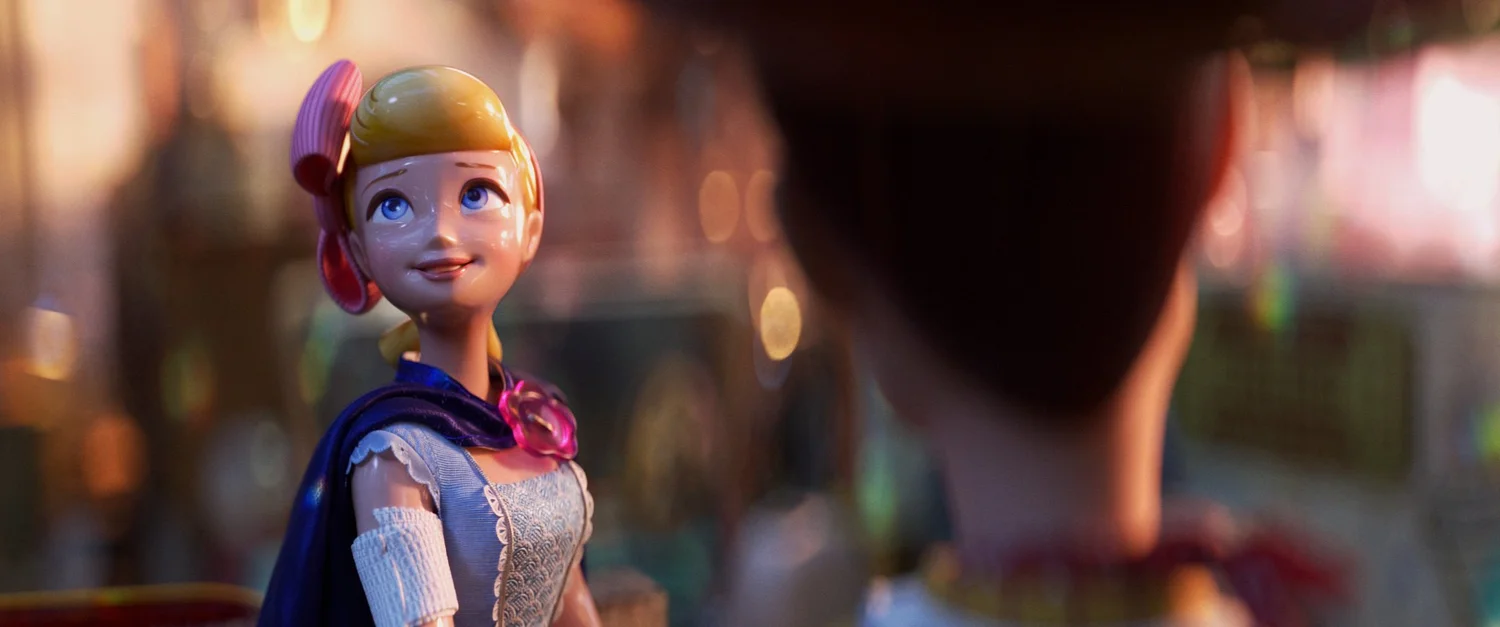
Character File · Toy Story · Full Franchise
Bo Peep
She did not become strong because the dress came off. She survived being given away, built a mobile community, and learned exactly what porcelain can risk.
Quick file
Identity: Bo Peep, a porcelain shepherdess figure attached to a lamp base with three sheep commonly called Billy, Goat, and Gruff. Primary voice: Annie Potts. Early household: Molly and Andy Davis’s shared family space. Later life: given away, separated from the sheep for a time, reunited with them, and established as a mobile lost toy.
Closest relationships: Woody, Giggle McDimples, the sheep, Duke Caboom, and the broader lost-toy rescue network. Core conflict: Bo wants agency inside a body built to be decorative, breakable, and physically attached to household furniture.
The first films write her as emotionally smarter than the room
Bo notices Woody’s jealousy, challenges his defensiveness, and offers affection without pretending his behavior is fine. She sees the panic under the sheriff performance before he can name it.
That emotional intelligence makes her limited screen time more frustrating. The story uses her to interpret a man while withholding the interior life that would explain what she wants beyond him.
She begins as part of a lamp, not a free-standing toy
Bo, the sheep, and the base form a nursery object designed to provide light and decoration. Her physical world is domestic furniture rather than the independent action-toy fantasy surrounding Buzz or Woody.
The attachment changes every risk. Moving rooms, being packed, breaking, or being discarded can involve electrical hardware, human adults, and an object too large to hide casually.
Porcelain makes vulnerability visible without making her passive
A fall that leaves Woody or Buzz scuffed can shatter Bo. The material demands route planning, careful landings, and an awareness that one bad impact may be permanent.
Her later competence is meaningful because it works with that danger. Strength is not pretending every body has equal margins for error. It is building methods that let a vulnerable body act.
Her crook starts as iconography and becomes engineering
The shepherd’s crook visually identifies Bo before she speaks. In early appearances, it supports flirtation and shepherdess imagery. In the fourth film, she uses it to swing, hook, pull, brace, and coordinate rescues.
The transformation is not magic. It is a person discovering more applications for a feature manufacturers treated as decorative. Bo turns branding into equipment.
Annie Potts gives softness a spine
Potts performs warmth, teasing, concern, command, and sarcasm without forcing Bo into a lower register or action-hero growl to signal authority. The voice keeps continuity between the early lamp figure and later field leader.
That continuity matters because visual redesign can imply the old feminine version was fake. Potts makes both eras recognizably one person whose options changed.
Her relationship with Woody begins before the audience arrives
Their flirtation carries familiarity, physical ease, and knowledge of each other’s habits. The films imply shared history rather than staging a first attraction.
That history explains why Bo can tease Woody without worshiping the badge. She knew the sheriff before Buzz threatened his status and does not confuse leadership performance with the whole person.
She does not excuse the window incident
When the other toys believe Woody deliberately knocked Buzz outside, Bo listens, questions, and reacts to the available evidence. Affection does not require automatic defense.
The choice gives their romance moral weight. She can love Woody and still expect behavior that makes trust possible.
Molly complicates the claim that Bo belongs to Andy’s room
Bo appears in spaces associated with Andy, but the lamp is connected to Molly and the family nursery. She is part of a household ecosystem crossing sibling boundaries.
That detail helps explain why Andy does not control her fate. A toy can have several child relationships and still be transferred through adult decisions nobody in the bedroom gets to vote on.
Toy Story 2 mostly reduces her to goodbye support
Bo kisses Woody, worries about the yard sale, and remains behind while the rescue travels. Jessie then enters as a major cowgirl character, and Bo’s narrative space becomes even smaller.
The franchise does not need to pit the women against each other. The limitation comes from a screenplay that expands male adventure while treating Bo as the person waiting safely at home.
Her absence from Toy Story 3 is a loss disguised as inventory history
Woody briefly lists friends who disappeared between films, including Bo. The room accepts attrition because years have passed and toys leave households.
For viewers, the absence registers as realism. For Woody, it should be a major grief. The third film uses her name to establish stakes without giving the loss enough emotional consequence.
The rain sequence finally shows what the earlier films skipped
The fourth film opens with Bo and Woody rescuing RC during a storm. She helps plan, directs the sheep, trusts Woody’s improvisation, and acts with speed despite porcelain risk.
This is not a brand-new capacity delivered by trousers. The scene establishes that Bo already possessed leadership and rescue skill while still wearing the dress and living on the lamp.
Being given away is not framed as a child’s moral failure
An adult woman transfers the lamp to another household. Molly is young, the family no longer needs the fixture, and practical domestic decisions proceed without the toys’ consent.
Bo understands enough to say goodbye without claiming the Davis family never cared. Her composure does not make the separation painless. It shows a different response to impermanence than Woody’s.
Woody almost leaves with her and cannot release his assigned role
He considers climbing into the donation box, then hears Andy and returns. Bo sees the decision clearly. Woody’s loyalty is genuine, but it keeps every possible future subordinate to being needed by one child.
Their separation begins with incompatible purpose, not lack of love. That makes the later reunion more difficult than a simple romance resumed after bad timing.
The missing years should remain a story, not a makeover gap
Bo says she spent years moving through homes and the wider world, eventually living without a permanent child. Those years contain loss, adaptation, broken companions, practical knowledge, and community formation.
The film offers flashes instead of a full account. A complete profile refuses to treat the gap as merely the explanation for a new costume.
The chip in her arm is history without shame
Bo’s porcelain has visible damage repaired with tape. She does not hide the chip or treat repair as proof that she is less beautiful, capable, or desirable.
The detail is one of the franchise’s clearest bodily statements. Survival may alter the surface permanently, and the altered body can remain fully itself.
Her new clothing solves movement problems and creates a false binary
The dress becomes a cape and the outfit underneath allows climbing, running, and gear storage. The design is smart, readable, and connected to materials already on her body.
Marketing often describes the change as liberation from femininity. That is too easy. Bo rescued RC in the dress. Mobility improved because she adapted clothing, not because femininity was the enemy.
Giggle McDimples is a partner, not a tiny conscience
Giggle rides on Bo’s shoulder, advises her, challenges decisions, and shares a life built outside permanent ownership. Their intimacy reveals Bo’s everyday emotional world away from Woody.
The friendship matters because a woman’s independence should include relationships, not isolation packaged as empowerment.
The sheep are three people constantly flattened into one prop
Billy, Goat, and Gruff have separate heads, reactions, and physical needs while sharing a body and base history. Other characters often refer to them collectively.
Bo understands their coordination without erasing difference. The arrangement offers a quiet disability and plurality reading that deserves more care than a recurring visual gag.
Her skunk vehicle turns disguise into infrastructure
Bo and the lost toys operate a toy vehicle disguised as a skunk to move through public spaces without alarming humans. The tool combines salvage, local knowledge, teamwork, and an understanding of how humans interpret animal movement.
It represents her leadership model: use the world as it exists, build mobility from discarded parts, and keep rescue capacity distributed rather than waiting for one sheriff plan.
She does not need permanent ownership to value children
Bo helps toys find moments of play at parks and carnivals. Her community brings children and toys together without requiring an exclusive lifelong bond.
That system rejects the idea that a lost toy must be waiting for the correct owner to become complete. Service can be temporary, shared, and chosen.
The carnival exposes the lowest tier of toy value
Prizes hang on walls, are won through games, and may be ignored minutes later. Ducky and Bunny understand disposability from a different market position than an expensive lamp or branded action figure.
Bo works inside that economy without romanticizing it. Rescue must account for how toys are produced, priced, displayed, and discarded.
She recognizes Woody’s purpose crisis before he does
Woody treats protecting Forky as proof that Bonnie still needs him. Bo sees the rescue compulsion and understands that his old role has stopped providing a stable identity.
She offers another life, but she cannot perform the internal decision for him. Freedom handed down as an instruction would reproduce the purpose problem in a new form.
Their reunion includes attraction and a clash of operating systems
Woody plans around returning to Bonnie. Bo plans around rescuing whoever is present. He expects old intimacy to restore coordination, while she expects him to respect expertise built during their separation.
The conflict works when it admits love does not erase years of different survival training.
Bo sometimes treats detachment as the only mature answer
Her lost-toy life protects against abandonment by refusing permanent ownership. She can sound dismissive of toys who still choose a child relationship, including Woody’s sincere commitments.
Independence becomes dogma when it cannot tolerate other forms of belonging. Her growth includes making room for attachment without returning to dependency.
Woody sometimes treats commitment as permission to ignore her expertise
He pushes rescue plans, changes priorities, and assumes moral urgency will make Bo follow. The behavior repeats his old leadership flaw in a relationship where he lacks current knowledge.
Bo’s anger is not a rejection of compassion. It is a demand that rescue stop using friends as equipment without consent.
The sheep rescue makes bodily risk collective
When one of the sheep is endangered, Bo’s composure cracks and the team reorganizes. The moment shows that her leadership is not emotional distance.
She has simply learned to act while afraid. Competence does not cancel attachment; it prevents attachment from becoming paralysis.
Gabby Gabby tests the boundary between rescue and surrender
Woody risks his voice box and the group’s safety because he believes Gabby deserves a child. Bo initially sees a dangerous fixation shaped by his need to be useful.
Both readings contain truth. Gabby deserves empathy, and Woody can convert empathy into unilateral sacrifice. Bo asks who else pays for his moral certainty.
The rain and antique-store rescues mirror each other
Young Bo coordinates a storm rescue from inside a household. Older Bo coordinates movement through shelves, lights, cats, and crowds.
The environments change while the core ability remains. The film’s best character continuity lives in repeated action, not dialogue insisting she has always been strong.
The cat makes porcelain risk brutally specific
The antique-store cat treats toys as prey and can destroy a body faster than most franchise hazards. For Bo, teeth and impact threaten shattering rather than repairable fabric damage.
Her plans reflect that asymmetry. Courage is not equal exposure to danger; it is informed participation with appropriate protection.
Duke Caboom reveals how she leads wounded performers
Duke hides failure under poses and commercial language. Bo understands that shame can make a capable toy avoid the exact task needed.
She uses directness, community knowledge, and practical confidence rather than humiliating him. Leadership means finding the person behind the broken advertisement.
The goodbye gives her a relationship without ownership
Woody chooses to stay, and Bo accepts him as a partner in mobile rescue rather than a toy transferred into her custody.
That distinction matters. He is not her new purpose, and she is not his reward for leaving Bonnie. They choose the same work while remaining responsible for their own identities.
Toy Story 5 places her off with the rescue squad
Official Pixar material begins with Woody and Bo away on another rescue mission before a call brings Woody back to Bonnie’s room. Bo’s network therefore remains active rather than disappearing after the romantic ending.
The story must avoid turning her into the girlfriend who waits while the legacy men reunite. Her work, choices, and response to Woody’s return deserve narrative weight.
Jessie and Bo represent two valid futures the franchise should connect
Jessie becomes sheriff inside a child-centered room. Bo leads a mobile network outside permanent ownership. Both women survived being transferred and built community through different structures.
A serious conversation between them could replace false rivalry with an examination of safety, attachment, leadership, and freedom.
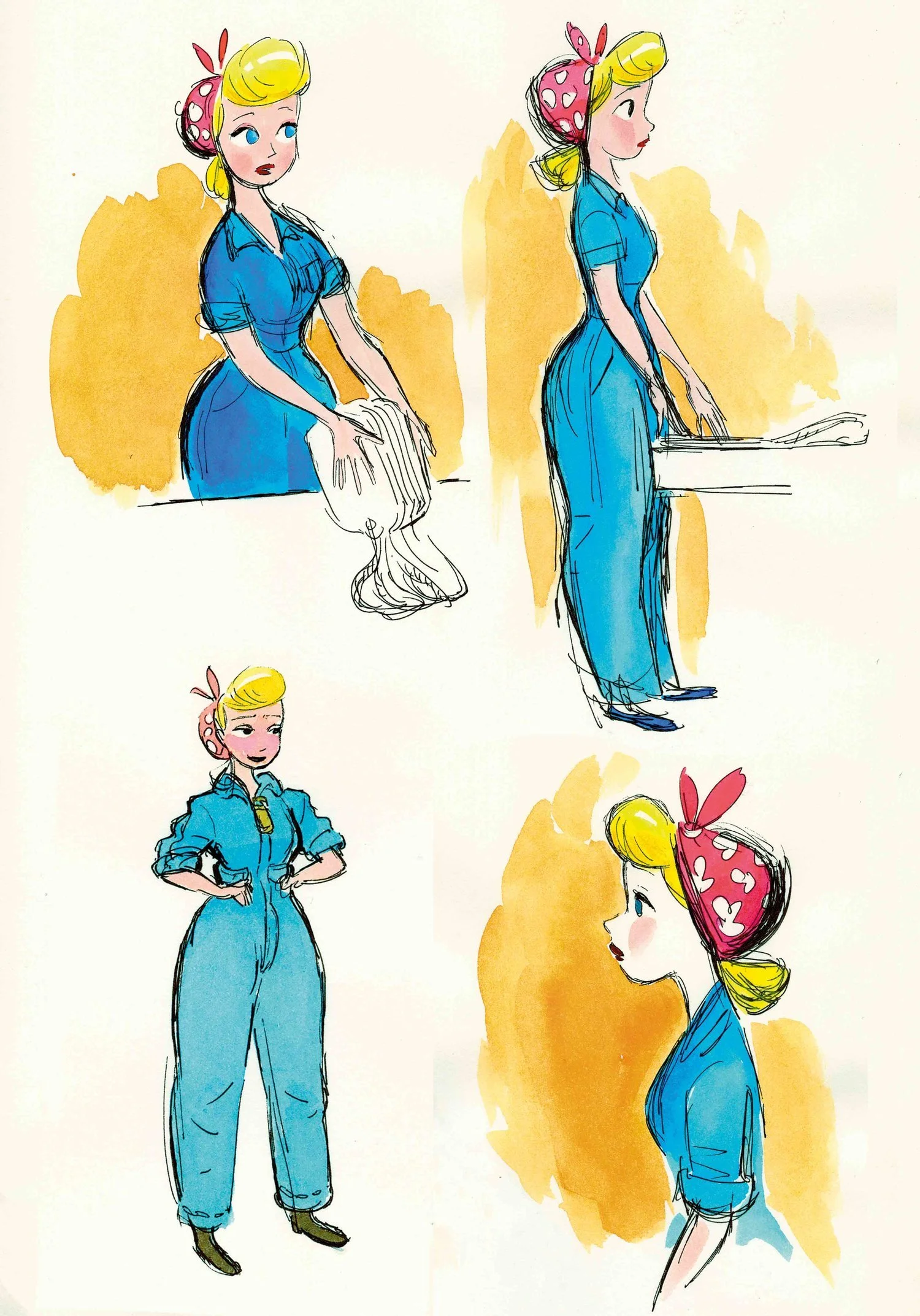
Her design history shows how artists code acceptable strength
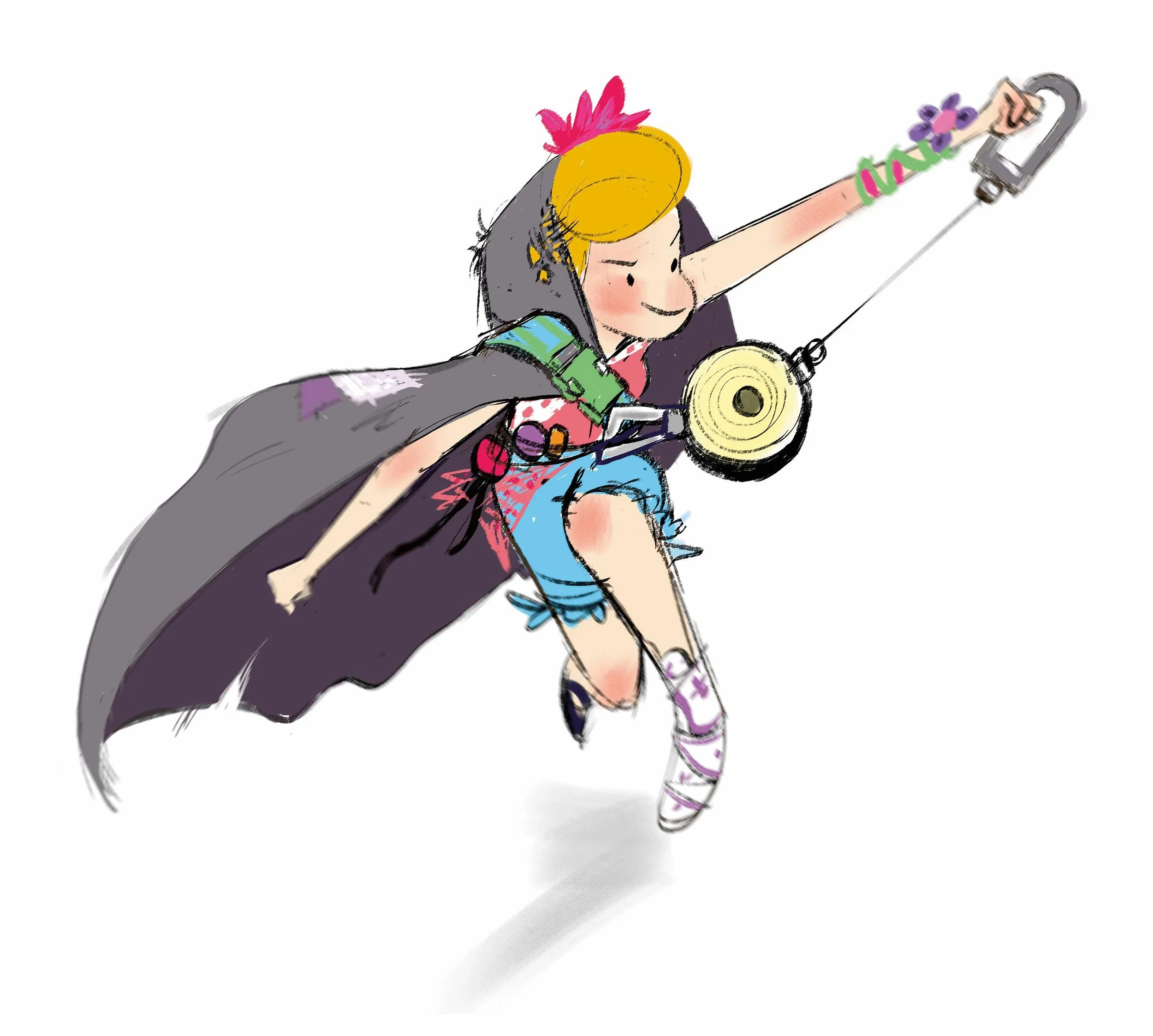
Early lost-toy concepts test jumpsuits, capes, bandages, tools, and more visibly athletic poses. Every line negotiates how far Bo can move from a nursery shepherdess while staying recognizable.
Design is not neutral. Clothing and silhouette tell audiences whether to read feminine delicacy as weakness, disguise, resource, or one part of a more complicated body.
The cape keeps the dress in motion instead of throwing it away
Transforming fabric into a cape lets the redesign preserve material history while changing function. The old garment travels with her as equipment.
That choice is stronger than a makeover scene where empowerment requires discarding everything associated with the earlier self. Adaptation can reuse rather than reject.
Her greatest flaw is confusing self-sufficiency with safety
Bo has learned not to wait for one child, one home, or one partner. The skill can harden into a rule that needing anyone is dangerous.
She becomes freer when interdependence is allowed to exist without ownership. Giggle, the sheep, Woody, and the rescue network prove autonomy can be collective.
Her greatest strength is practical imagination
Bo sees routes, leverage, disguise, timing, and uses for discarded objects. She builds solutions from material reality instead of demanding the world match an assigned story.
The imagination is ethical as well as mechanical. She keeps asking how more toys can gain agency inside systems that treat them as prizes, decor, or trash.
What a healthier Bo looks like
She explains risk without dismissing attachment, delegates without hiding vulnerability, protects her porcelain body, and lets Woody share work without making either partner the other’s purpose.
She keeps the sarcasm, crook, cape, competence, and romance. Health expands the number of futures she can respect.
The fourth film’s empowerment campaign oversold a correction the franchise caused
Promotional language presented Bo as newly capable, modern, and active after years away. That framing quietly blamed the earlier dress and lamp role for limitations created by screenwriters who chose not to send her on adventures.
A studio should not receive full credit for rescuing a woman from the corner where its own stories placed her. The redesign succeeds artistically while the marketing still deserves scrutiny.
A shepherdess is already a labor figure, not a decorative princess
The pastoral costume comes from work: guiding vulnerable animals, monitoring terrain, keeping a flock together, and responding to danger. Nursery design softened that history into pretty porcelain, but the crook always carried a job inside it.
Bo’s rescue leadership therefore develops the shepherd role rather than abandoning it. Her community changes from ceramic sheep to displaced toys, while the central responsibility remains guidance without possession.
The shared body of Billy, Goat, and Gruff requires access planning
Three consciousnesses appear to coordinate one connected body. Movement, direction, rest, risk, and communication cannot belong to only one head without negotiation. Bo’s plans rely on that coordination and should recognize the labor involved.
The franchise rarely pauses long enough to ask how consent functions among them. Treating the trio as a cute unit avoids a fascinating question about plurality, mobility, and whose decision moves a shared body.
Her breakability changes romance as well as action
Woody’s fabric body can absorb contact that would crack Bo. Affection, rescue grabs, falls, and hurried travel all require awareness of material difference. A loving partner cannot assume the same force is safe because it would be safe for him.
The films show tenderness and occasional catching but rarely discuss this asymmetry. Bo’s autonomy includes defining how her body may be handled, even during emergencies.
Lost-toy freedom still depends on public spaces controlled by humans
Parks, carnivals, antique stores, playgrounds, and roadside areas provide children and movement. They also close, relocate, police access, remove trash, change attractions, and expose toys to weather, animals, and machinery.
Bo’s community is free from one owner, not free from infrastructure. Her leadership involves reading systems that do not know her people exist and building continuity across constant external change.
The rescue network is mutual aid, not a heroic charity project
Lost toys help other toys reach children, escape danger, repair movement, and find temporary or permanent community. No sheriff owns the operation, and value does not depend on collector price.
Bo participates because she is part of the same vulnerable population, not a superior savior visiting it. That distinction keeps rescue from becoming another hierarchy where gratitude replaces agency.
Her refusal to return to a child is not bitterness
Bo has experienced households and chosen another arrangement. The decision does not mean she hates children, denies the joy of play, or secretly waits for Woody to cure cynicism.
She continues connecting toys with children because she values those relationships. She simply rejects permanent placement as the only structure through which that value can exist.
Woody’s choice should not be mistaken for adopting Bo’s personality
He leaves Bonnie and joins mobile rescue, but he remains a person shaped by long ownership, command habits, and the need to be useful. One goodbye does not produce Bo’s years of field judgment.
A credible partnership allows him to be inexperienced. Bo should not have to surrender leadership so the franchise’s original protagonist can feel competent immediately.
Bo’s confidence can hide the exhaustion of always being ready
Mobile life demands constant route awareness, threat assessment, repair knowledge, and responsibility for fragile companions. Competence often makes other people assume the leader needs less care.
Giggle and the sheep offer a glimpse of reciprocal support. The next story should show who notices when Bo is tired, frightened, chipped, or unable to hold the plan together.
She needs conflict that is not secretly about Woody
Most of Bo’s largest scenes in the fourth film respond to his purpose crisis, rescue choices, or romantic return. Even the world she built becomes the alternative future he must evaluate.
A complete character deserves dilemmas generated by her own community: resource scarcity, a rescue disagreement, bodily risk, competing definitions of freedom, or responsibility to toys who want homes she would not choose.
Her sheep cannot remain emotional luggage in future stories
The sheep vanish and reappear around Bo’s lost years, but the narrative rarely grants their separation comparable grief. Reuniting them should change the group, because all four experienced years the others did not witness.
If the trio exists only to complete Bo’s visual silhouette, the story repeats the objectification it claims she escaped. They need preferences, memories, and influence over the rescue network.
Her humor protects intimacy without eliminating it
Bo uses teasing and sarcasm to puncture Woody’s performance, relieve danger, and maintain control over emotionally charged reunions. Humor lets her approach vulnerability sideways.
The method works until every difficult feeling becomes a joke. Real intimacy requires moments where the clever line ends and another person gets to see the cost underneath.
She understands disposability across class levels of toys
As a porcelain lamp figure, Bo once had household permanence and material value. The carnival introduces cheap prizes, while the antique store converts age and rarity into market price. Lost toys fall across all those categories.
Her network can reject the rankings precisely because she has moved through more than one tier. A cracked collectible and a mass-produced prize both need safety, even when humans assign wildly different prices.
A complete feminist reading keeps the contradictions
Bo gains mobility, authority, friendships, tools, and a future not organized around a man or child. She also returns largely to resolve a male protagonist’s arc, receives limited account of her missing years, and is marketed through a simplified before-and-after narrative.
Loving the character does not require pretending the franchise solved gender. The redesign opens better possibilities while exposing how much earlier writing withheld.
Her reunion with Woody changes the rescue network too
A famous sheriff with strong habits, emotional history, and an instinct to take charge joins a functioning community. His arrival affects Giggle, the sheep, Duke, and every toy accustomed to Bo’s methods.
Romance cannot make that organizational change private. Healthy integration requires explicit roles, accountability, and room for network members to question him without being treated as obstacles to the couple.
She offers the franchise a purpose beyond ownership without rejecting love
Bo’s life proves toys can organize around mutual rescue, public play, friendship, romance, and chosen service. Purpose emerges from repeated decisions rather than a child’s permanent claim.
That answer does not make Andy, Bonnie, or Emily meaningless. It places those relationships inside a larger life instead of making any one of them the license that allows a toy to exist.
Final character read
Bo Peep is most interesting when the profile refuses the marketing line that a passive princess became a strong woman. The early Bo already had judgment, courage, wit, and moral boundaries. The later world gave those qualities room, tools, and a community beyond the lamp.
Her real transformation is structural. She moves from household object to person who designs how toys connect, travel, and survive. Character verdict: not strong because she stopped looking feminine, but formidable because she learned to make fragility compatible with freedom.