
Naruto character dossier
Black Zetsu
The shadow that edits a sacred tablet, impersonates another man’s will and spends centuries turning human history into a rescue mission for one mother. Black Zetsu wins by making other people mistake inherited instructions for their own deepest convictions.
Who Black Zetsu is after the final lie breaks
Black Zetsu is Kaguya Ōtsutsuki’s manifested will, created as Hagoromo and Hamura seal their mother. He survives outside that seal and spends centuries arranging the conditions for her return. His plan reaches across the descendants of Indra and Asura, the Uchiha stone tablet, Madara Uchiha, Obito Uchiha, Nagato, Akatsuki, the tailed beasts and the Fourth Shinobi World War.
For most of his visible life, he presents himself as part of Zetsu. Black Zetsu and White Zetsu share a plant-framed body, trade commentary and perform intelligence work for Akatsuki. The combined presentation makes Black Zetsu look like one strange operative with two personalities. The reveal separates their origins and priorities. White Zetsu material grows from people changed by the God Tree and later Hashirama-linked experimentation. Black Zetsu is the ancient will using that biology as cover and transport.
He also claims to be Madara’s will. Madara accepts that story because the black substance appears to confirm that his intention can outlive his body. Black Zetsu is actually older than the hidden villages, older than Madara’s plan and loyal to Kaguya alone.
That distinction changes the whole war without erasing anybody else’s choices. Black Zetsu rigs information and conditions. Madara still chooses domination. Obito still chooses years of murder. Kabuto still weaponizes corpses. Manipulation expands accountability. The reveal does not vacuum accountability away from everyone except the final schemer.
Born from a sealed mother’s refusal to disappear
Kaguya’s sons, Hagoromo and Hamura, fight and seal her after her power threatens the world. Black Zetsu emerges from Kaguya during that defeat. He describes himself as her will and treats restoring her as the only purpose worth recognizing.
He is not a child in the ordinary biological sense, even when Naruto mocks his inability to leave his mother. The insult targets the emotional structure of his mission. Black Zetsu does not develop a life beyond Kaguya’s desire. Every village, family, war and reincarnation becomes material inside one endless act of filial service.
There is something grimly impressive about the duration. Human empires rise and fall while Black Zetsu keeps working. Patience becomes his substitute for overwhelming force. He does not need each generation to understand the whole plan. He only needs the right person to inherit the right lie at the right wound.
That longevity also creates his central blindness. He mistakes surviving history for owning history. Watching generations pass convinces him that their lives are small compared with his design. Naruto rejects that math. Duration does not grant moral authorship over other people’s existence.
The Uchiha stone tablet is the most dangerous edit in the franchise
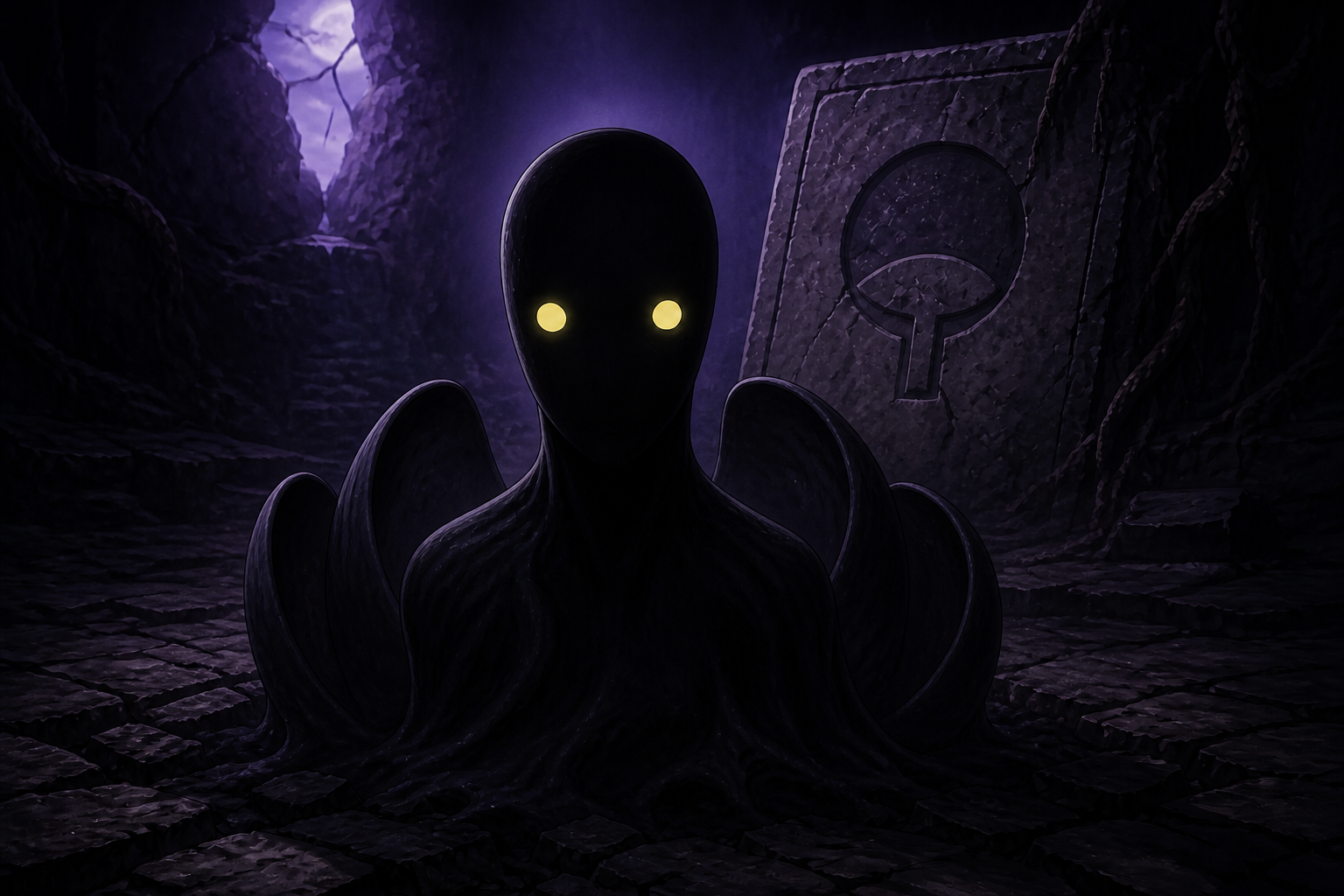
Hagoromo leaves a stone tablet for his descendants. The Sharingan allows increasing portions of its text to be read, with deeper ocular power revealing more. The tablet should function as inherited guidance. Black Zetsu alters the record so that Uchiha readers can be led toward Infinite Tsukuyomi.
This is quieter than summoning a meteor and more consequential. Black Zetsu does not have to win a debate with Madara in the present. He changes the source Madara believes comes from a sacred ancestor. The lie arrives wearing age, bloodline access and spiritual authority.
Madara then reads the tablet after years of war, Izuna’s death, political isolation and his split from Konoha. The text meets a reader already hungry for proof that ordinary peace cannot work. Black Zetsu supplies the proof in a format Madara is culturally and emotionally prepared to trust.
The edit also weaponizes Uchiha inheritance against the clan. A document meant for descendants becomes a funnel toward Kaguya. Black Zetsu turns family memory into compromised infrastructure, and every later reader inherits a source whose authority hides the fact that somebody already changed the destination.
Centuries of reincarnations become a laboratory
Black Zetsu works through the conflict between Indra and Asura’s reincarnations. He approaches people across generations and tries to produce the conditions needed to awaken the Rinnegan. Most attempts fail. The failure count matters because his plan is not prophecy unfolding automatically. He experiments.
Indra’s descendants carry the Sharingan and the possibility of inherited conflict. Asura’s line carries the chakra needed to complete the combination associated with Hagoromo. Black Zetsu needs one reincarnate from Indra’s side to obtain the other side’s power and survive long enough for the Rinnegan to emerge.
Madara finally becomes the successful subject. He takes Hashirama’s flesh, grafts it into himself and awakens the Rinnegan near the end of his natural life. Black Zetsu does not physically perform every step. His altered tablet and long cultivation of the idea make the step intelligible to Madara.
The difference between influence and puppetry matters. Black Zetsu cannot simply order any Uchiha to produce a Rinnegan. He waits for history, personality, grief and opportunity to align. His genius is parasitic. He recognizes openings created by real injustice and private pain, then installs Kaguya’s goal inside them.
Madara believes he created a will that was already using him
Madara thinks Black Zetsu is a manifestation of his own will, formed so the Moon’s Eye Plan can continue after his death. Black Zetsu plays the role. The deception flatters Madara’s deepest weakness: the belief that a sufficiently powerful man can remain history’s author even from the grave.
Black Zetsu helps Madara cultivate the machinery around the Demonic Statue and the White Zetsu bodies. Madara places his Rinnegan in Nagato, recruits Obito and passes down his name. Black Zetsu waits inside that network while Madara believes each branch belongs to him.
When Madara is revived and eventually casts Infinite Tsukuyomi, he thinks the plan has reached its intended conclusion. Black Zetsu pierces him from behind and declares that his will is Kaguya’s. Madara’s body swells and becomes the vessel for Kaguya’s restoration.
The betrayal is not random villain replacement. Madara has spent decades turning bodies into containers for his desire. Nagato’s eyes, Obito’s damaged body, Hashirama’s flesh, tailed beasts and the sleeping population all become equipment. Black Zetsu applies the same logic to Madara. The controller discovers that somebody else listed him under materials.
That thematic fit does not erase structural criticism. Kaguya arrives late, and some fans experience the switch as losing a more developed final antagonist. Both reactions can be true. The reveal can frustrate the drama while still completing Madara’s moral irony.
Akatsuki’s quiet half does the work flashy villains ignore
Inside Akatsuki, the combined Zetsu functions as scout, messenger, observer, recorder, disposer of bodies and battlefield intelligence. Other members announce ideology through art, religion, money, pain or spectacle. Zetsu often watches.
Black Zetsu’s public usefulness keeps him close to operations without demanding leadership theater. He observes fights, relays outcomes and moves through terrain. The ability to emerge from the ground and merge with surfaces makes surveillance feel natural to his body.
The organization’s history also exposes layers of stolen purpose. Yahiko, Nagato and Konan build the original Akatsuki around Amegakure’s peace and political survival. Obito redirects the later organization toward the tailed-beast plan. Madara believes that plan will serve Infinite Tsukuyomi. Black Zetsu knows the final destination is Kaguya.
Each layer uses the language and wounds of the layer below. That is why calling Black Zetsu the sole author is too easy. The machine works because existing grievances are real. Rain really is crushed by great nations. Jinchūriki really are exploited. Hidden villages really do hide crimes. Black Zetsu does not invent every injustice. He converts injustice into fuel for a goal that will not repair any of it.
Black Zetsu and White Zetsu are partners, cover and false symmetry
The combined Zetsu design splits one face into black and white halves. Their conversation creates an impression of balanced duality. White Zetsu is talkative, curious and frequently comic. Black Zetsu is sharper, more severe and better informed.
The symmetry is a disguise. Black Zetsu carries the ancient mission. White Zetsu bodies become tools inside a plan they did not originate. During the war, the White Zetsu army supplies mass infiltration, copied chakra signatures and disposable bodies. Black Zetsu provides the hidden strategic line that connects those bodies to Kaguya.
Fans often merge every action under the single label Zetsu. A complete profile has to separate who speaks, who knows what and whose origin is being discussed. The plant shell does not make the two halves one moral person.
Black Zetsu can detach, attach to hosts and operate without the familiar half-white face. The war gradually strips away the comedy of the partnership and reveals the black half as a possession specialist.
Possessing Obito turns a dying man’s body into contested territory
After Obito begins resisting Madara, Black Zetsu attaches to him. Obito’s body already carries synthetic Hashirama-linked material and has survived injuries that should have killed him. Black Zetsu uses that damaged body as a vessel while Obito fights internally for control.
The possession lets Black Zetsu steal the Yin half of Kurama during the attempt to save Naruto. He also tries to deliver the left Rinnegan to Madara. Gaara, Kakashi and Minato attempt to stop the transfer. Obito pushes back and reasserts himself long enough to oppose Madara.
This is not a clean case of one consciousness switching off another. The body becomes a battlefield. Black Zetsu controls movement and access at points, while Obito forces openings through will, Kamui and the support around him.
Black Zetsu’s contempt for Obito also exposes his method. He treats successors as temporary containers. The grand language of inherited will becomes ugly when the inheritor stops obeying. Obito spent years using other people’s bodies and grief. His final resistance includes experiencing that violation from inside.
Restoring Kaguya is victory, confession and tactical overconfidence
Once Madara activates Infinite Tsukuyomi, Black Zetsu strikes. He uses Madara’s body and the chakra gathered through the Divine Tree to restore Kaguya Ōtsutsuki. His mission has taken centuries, but the final transformation happens through a single betrayal at the moment Madara feels untouchable.
Black Zetsu remains attached to Kaguya and speaks for much of their shared history. He tells Naruto and Sasuke that the shinobi world’s development was arranged for this return. The speech is partly revelation and partly propaganda. He did manipulate key lines of history. He did not author every friendship, sacrifice, discovery or refusal created by the people living through those centuries.
Naruto’s anger answers the theft. History consists of many lives and deaths. Black Zetsu cannot reduce all of them to a production schedule for his mother. That claim repeats Madara’s mistake at a different scale. Both villains confuse influence with ownership.
Team 7, aided by Obito and later Hagoromo’s summoning, seals Kaguya again. Black Zetsu attempts to escape. Naruto catches him, rejects his historical bragging and throws him into the forming seal. Black Zetsu ends where his mission began, trapped with Kaguya.
Black Zetsu’s abilities reward access, not fair fights
Black Zetsu is dangerous because he avoids the kind of battle fans use for clean rankings. His powers are designed for surfaces, bodies, information and timing. A strength chart misses the real threat because access decides more of his victories than raw force.
Surface merging and travel
He can merge with earth and surrounding material, conceal his presence and move through terrain. That makes him suited to surveillance, escape and sudden contact. The technique turns ordinary geography into cover, which helps explain how an ancient observer survives around stronger combatants.
Attachment and possession
Black Zetsu can coat or attach to another body and influence movement. Strong resistance matters. Obito contests control rather than disappearing completely, so possession should be read as a struggle over agency rather than an automatic switch that erases every host.
Chakra and memory access
Through physical contact and merger, Zetsu’s intelligence function includes gathering information. Exact applications depend on the host and scene, so the power should not be treated as unlimited mind reading.
Longevity
His ancient existence allows a strategy measured in generations. Longevity does not mean invulnerability. He survives mainly by concealment and attaching himself to stronger structures, which makes patience an operational advantage without turning him into an unbeatable fighter.
Transformation and infiltration support
The broader Zetsu system enables disguise and intelligence work. White Zetsu’s body-copying feats should not automatically be credited to Black Zetsu as a solo biological power. Shared scenes and a combined silhouette do not make every ability interchangeable.
Strategic manipulation
His greatest weapon is altered information. The stone tablet, false identity and selective disclosure let other people perform the power-heavy steps. Manipulation keeps his own hands comparatively hidden while ambition, grief and clan authority supply the visible machinery.
His limits are visible once concealment ends. Black Zetsu depends on vessels, hosts and the power accumulated by others. Naruto can physically seize and throw him. Team 7 can seal the restored Kaguya despite his planning. Centuries of preparation do not make him unbeatable after the world sees the hand behind the curtain.
Relationship atlas: devotion without mutuality
Kaguya Ōtsutsuki
Kaguya is mother, origin and total purpose. Black Zetsu’s loyalty is absolute, but the relationship is not developed through ordinary dialogue, disagreement or care. He exists to continue her will. Filial devotion becomes identity erasure.
Madara Uchiha
Madara is the successful reincarnate, false creator and final vessel. Black Zetsu feeds his authorship fantasy until the body and collected chakra are ready. Their relationship is the franchise’s nastiest lesson about confirmation bias.
Obito Uchiha
Obito is successor, transport and contested host. Black Zetsu helps maintain Madara’s plan through him, then tries to control his body when he defects. Both men understand what manipulation looks like because both have practiced it.
Nagato
Nagato carries Madara’s Rinnegan and becomes central to the resurrection route. Black Zetsu treats his life as infrastructure. Nagato’s own politics, grief and late change exceed the function assigned to him.
White Zetsu
White Zetsu provides public partnership, biology and cover. The black and white halves share scenes, but they do not share origin, knowledge or final purpose equally. Treating the pair as one personality erases the imbalance that makes their alliance useful to Black Zetsu.
Naruto Uzumaki
Naruto is the person who rejects Black Zetsu’s historical thesis. He does not refute the manipulation by pretending history is pure. He insists that manipulated people still create meanings the manipulator cannot own.
Nobuo Tobita has to separate two halves without turning the scene into a skit
Nobuo Tobita performs Zetsu in the original Japanese anime, including the black and white personalities. That casting gives one performer the job of making a shared body read as two voices with different knowledge, rhythm and intent.
Black Zetsu’s late reveal changes how earlier lines sound in retrospect. What appears to be Akatsuki commentary becomes surveillance from a being whose investment predates the organization. The performance must preserve the ordinary working partnership long enough for the ancient agenda to remain hidden.
I am not inventing detailed claims about pitch, breaths or timing without a scene-based Japanese-audio comparison open beside the writing. The verified credit and the dual-role requirement belong here. English-dub casting does not.
What Black Zetsu says about history, archives and inherited duty
Macro: whoever controls the archive can redirect power
Black Zetsu cannot command every clan. He changes the record read by the clan most likely to produce the eyes he needs. Political power begins before the battlefield, inside the document that defines what the battlefield means.
Micro: a person with no self beyond one mission
Black Zetsu’s loyalty looks focused because no competing desire survives. He has no friendship, ordinary home, public craft or future beyond Kaguya. Purpose without a self becomes a tunnel long enough to swallow centuries.
Confucian lens: filial duty without moral correction
Filial devotion is not a blank check to harm the world for a parent. Ethical relationship includes remonstrance, responsibility and care for the larger human order. Black Zetsu offers obedience without correction. He preserves Kaguya’s will by sacrificing every other family.
Buddhist lens: attachment pretending to be timeless truth
His entire existence clings to reversing one loss. Rather than accept change, he turns impermanence into an enemy and generations into tools. The mission survives because he refuses to let the sealed past remain past.
Industry and adaptation lens: a reveal powerful enough to divide the room
Black Zetsu’s reveal expands the cosmology and connects the ending to Kaguya. The reveal also displaces Madara at the moment many viewers expect the long-developed antagonist to finish the story. The criticism is not fan stupidity. Pacing, foreshadowing and villain attachment shape whether a thematic twist feels earned.
Fandom misreadings worth clearing up
“Black Zetsu created every event in shinobi history.”
No. Black Zetsu alters crucial information and manipulates important actors. People still make independent decisions, form bonds, resist and create consequences he did not author. A hidden influence can redirect history without becoming the sole author of everybody else’s choices.
“Madara did nothing wrong because Black Zetsu tricked him.”
Black Zetsu deceives Madara about the tablet and final purpose. Madara knowingly attacks Konoha, controls Kurama, grooms Obito, uses Nagato and casts Infinite Tsukuyomi. Deception changes the context of his plan, but does not transform years of chosen harm into innocence.
“Black Zetsu and White Zetsu are the same person.”
Black Zetsu and White Zetsu share a combined form and public identity. Their origins, knowledge, personalities and ultimate loyalties differ. The distinction matters whenever a profile assigns motive, memory or biological ability to one half of the partnership.
“He defeated Madara in a normal fight.”
Black Zetsu betrays Madara after Infinite Tsukuyomi and uses him as the vessel for Kaguya. The scene is about access and deception, not a fair power contest. Calling the strike a normal duel confuses tactical position with a complete measure of combat strength.
“The twist has no thematic purpose.”
The controller becoming a vessel has clear thematic purpose. Viewers can still criticize how late Kaguya enters and how the switch affects the climax. Theme and execution can be judged separately without pretending the reversal contains no deliberate idea.
“He is loyal, so he is morally simple.”
Loyalty describes direction. Loyalty does not judge the acts performed. Centuries of manipulation and mass captivity do not become clean because the motive is filial. Devotion to one person can remain morally catastrophic for everyone treated as expendable material.
Canon boundaries across anime, games and merchandise
The main factual spine follows Masashi Kishimoto’s Naruto manga and the core Naruto Shippuden adaptation. The anime expands Kaguya-era history and presents additional connective scenes. Those additions should be labeled as adaptation material rather than silently inserted into the manga record.
Games make Zetsu difficult because intelligence, concealment and possession are less convenient than direct combat. Playable or assist interpretations can exaggerate visible attacks to fit mechanics. A game move is not automatically a manga technique.
Official franchise merchandise often presents the combined black-and-white Zetsu because that Akatsuki silhouette is more recognizable. The combined design is valid for Zetsu’s public era. A Black Zetsu-specific profile still has to separate the ancient Kaguya will from White Zetsu’s origin.
The Naruto Official Site’s finale retrospective supplies the clean public receipt for the late-war sequence: Black Zetsu attached to Obito, the Kurama and Rinnegan struggle, the strike through Madara, the declaration of Kaguya’s will, the alternate history speech and the final sealing.
Legacy: the villain who weaponizes the footnote
Black Zetsu will never dominate popularity polls the way Madara, Itachi or Pain do. He arrives as an explanation machine at the end of a war already overflowing with explanations. That makes him easy to reduce to plot device.
Yet the device points at something sharp. Naruto spends hundreds of chapters on inherited wills. Teachers, parents, clans and villages pass meaning forward. Black Zetsu is inherited will stripped of love and reciprocity. He does not inspire successors. He enters them, edits them and waits for their usefulness.
He also makes the archive political. The stone tablet reveal warns that even sacred inheritance requires interpretation and accountability. If only the most powerful eyes can read the deepest layer, the weaker members of the community cannot audit the source guiding their leaders.
That concern belongs far beyond ninja fantasy. Families, fandoms, institutions and nations all preserve stories about why they act. Somebody decided which sentence survived, whose testimony sounded official and which contradiction became inconvenient enough to bury.
Final verdict: Black Zetsu watches history and still misunderstands people
Black Zetsu succeeds because he understands wounds, ambition, secrecy and the authority of inherited text. He fails because he thinks those pressures exhaust what a person is. Human beings keep producing loyalties, doubts and reversals that his long plan treats as temporary noise.
Madara exceeds the role of vessel long enough to build a village. Obito exceeds the role of successor and turns against the plan. Nagato exceeds the role of stored eyes and entrusts hope to Naruto. Team 7 exceeds every attempt to split, use or replace them.
Black Zetsu can edit a tablet. He cannot write all the lives that follow. That is why Naruto’s answer lands. History is crowded. Nobody gets to crawl out of the margin and claim the whole book.
Sources and canon boundary
Manga chronology controls this profile. Anime expansions, databook material, novels, games, films, and adaptation staging are labeled instead of being blended into one false continuity.
Primary franchise references: Naruto Official and VIZ Media Naruto. CVM Sekai’s conclusions about Black Zetsu’s authorship, the Uchiha tablet, possession, Akatsuki intelligence, Kaguya’s restoration, historical manipulation, and accountability are editorial analysis, not invented creator quotations.