
RaeRae Reacts
Backseat: Somin Took the Wheel After Four Debuts and Fourteen Years of Waiting
Puretty. KARA Project. APRIL. KARD. Then 350 demos, three months of barely sleeping, and a title track whose entire point is that nobody else gets to drive. Subtle? No. Earned? Absolutely.
| Lyrics | Josefin Glenmark, Rebbi James, Maia Wright, Jeon Somin, BM |
|---|---|
| Composition | PXPILLON, Josefin Glenmark, Rebbi James, Maia Wright |
| Choreography | Root |
| Label | DSP Media / Kakao Entertainment |
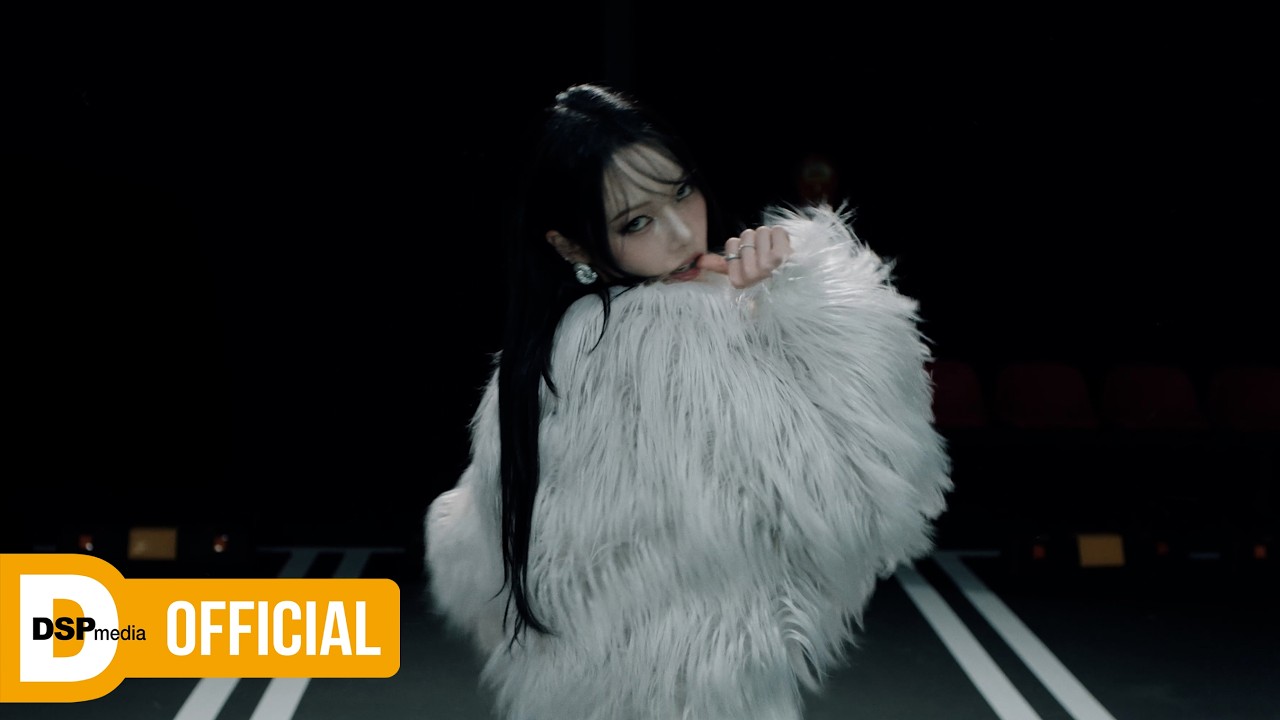
The official music video
My actual first reaction
First thought: White fur, black leather, rain, and not one molecule of “please support my cute little solo debut” energy. Good. She has debuted too many times to act grateful for permission.
Sound check: Minimal beat, low bass, cold synths, and a vocal that sits close enough to your ear to make the threat feel personal.
The moment I leaned in: “You want to ride with me, but you stay in the backseat.” That is a breakup line, a gossip line, an industry line, and a career thesis all at once.
The side-eye: We waited this long and the song is under three minutes. Apparently taking the wheel does not include driving around the block twice.
Current status: Added. Windows fogged. Somebody’s pride abandoned at a rest stop.
What “Backseat” actually means
The song tells someone who talks, lies, watches, and wants access that they are not qualified to control the trip. They can gossip about the relationship. They can keep Somin on their radar. They can want the status of riding beside her. None of that earns the front seat.
Somin explained the theme even more directly: she decides the direction of her life and holds the steering wheel. That is why the metaphor lands harder than an ordinary kiss-off. This is the title track of an album called UNVEIL, created to remove all the labels placed before “Jeon Somin” and show the artist herself. A woman whose career has repeatedly been redirected by group formation, disbandment, survival television, redebut, departure, and another redebut chooses a song about driving herself.
The target can be an ex, a jealous observer, an industry voice, or every person who decided they understood her career from one old headline. The lyrics leave the passenger unnamed because the power is in the seating chart: Somin drives. Everybody else behaves or watches the taillights.
This is a solo debut, but she did not begin yesterday
Calling UNVEIL Somin’s “debut” is technically correct and emotionally ridiculous. She first debuted in 2012 with Puretty, a Korean group promoted in Japan through the Pretty Rhythm franchise. The planned Korean debut never happened; the group disbanded in 2014.
She then competed on KARA Project for a place in KARA and reached the final stretch without joining the group. In 2015 she debuted again as APRIL’s leader, then left after a few months. In 2016 she became part of KARD’s pre-debut rollout and officially debuted with the co-ed group in 2017.
So when she said using the word “debut” again felt strange, that was not cute modesty. UNVEIL is another beginning inside a career full of beginnings that did not always belong to her. “Backseat” works because it knows the difference.
Easter eggs & surprises: the 2019 “Backseat” is part of the story
Longtime Hidden KARD already knew the title. In 2019, Somin and BM released a version of “Backseat” as a special collaboration, with BM’s production and rap shaping a hazier, late-night track. Fans spent years wishing for an official release.
The 2026 solo title is not simply that file uploaded to streaming. It is a new official version with a different credited composition team, Somin and BM participating in the lyrics, a sharper self-directed message, and no featured rapper taking over the passenger seat. The reused title feels intentional even where the musical construction changes. A song that once arrived as “Somin featuring beside BM” returns as Somin’s own front door.
The song: restraint with teeth
“Backseat” does not use a maximal K-pop arrangement to prove Somin can stand alone. That would be the obvious mistake: six beat switches, a whistle note, a dance-break siren, and one random chant telling us she is a queen. Instead, the production stays minimal enough that her vocal decisions become the plot.
The bass sits low and heavy. Synth details flash rather than sparkle. The percussion gives her space to drag a phrase, clip a consonant, or let breath become part of the rhythm. Her tone can move from cool chest voice into airier edges without the track forcing every register into one glossy blend.
That matters because Somin said KARD’s shared line structure did not always let her explore the full range of her voice. On this album, she spent six or seven hours directing each song and treated the studio like a place to find sounds, not merely deliver assigned lines. “Backseat” introduces that freedom through control rather than vocal gymnastics.
The music video: luxury, rain, and control
The visual language is simple: Somin occupies expensive-looking spaces, wears black and white with deliberate contrast, dances alone and with a crew, and eventually performs in rain. Light and darkness switch around her, but she remains the axis.
White fur gives old-star glamour. Black styling hardens the silhouette. Rain turns the final performance into release without making her look broken. This is not “woman cries beautifully after a man leaves.” She is moving through the storm as if production ordered weather because ordinary air was no longer dramatic enough.
The video avoids a literal car narrative, which is the correct decision. We do not need Somin gripping a steering wheel while backup dancers mime changing lanes. The backseat is social position, not transportation. The choreography and framing make the hierarchy visible instead: she stays centered while other bodies support the direction she chooses.
Choreography: lethal, not busy
Choreographer Root built movement that matches the production’s restraint. The goal is not to fill every count. It is to make Somin’s control readable: hips, shoulders, slow directional changes, sharp stops, and formations that close around her without swallowing her.
The rain sequence raises the difficulty because wet surfaces change traction, weight, hair, clothing, and timing. Somin still looks like the fixed point. That is the real solo test. In KARD, attention can travel between four contrasting performers. Here there is nowhere to hide and no need to. The camera keeps returning because the entire design expects her to hold it.
The album she chose from 350 demos
Somin reportedly listened to roughly 350 songs while building UNVEIL. She chose “Backseat” because its intro grabbed her and its confidence matched the first statement she wanted to make. The final EP contains “Love Me Like A Fan,” “Backseat,” “Keep It Cute,” “Got It Like That,” “Como Yo A Ti,” “Closure,” and the “Backseat” instrumental.
The range moves through R&B, trap, bright dance-pop, reggaeton, and ballad territory. Somin co-wrote “Backseat,” “Got It Like That,” and “Closure.” BM contributed across the album’s writing and production: not as the man secretly driving the solo, but as a groupmate helping build the road.
The title UNVEIL matters because she has collected an absurd number of descriptors: former Puretty, former APRIL leader, KARA hopeful, KARD’s Black Joker, co-ed-group vocalist, visual, survivor. The album asks what remains when the résumé stops speaking first.
The gossip line is not decorative
Official descriptions emphasize moving calmly through gossip and noise. Somin has spent years inside fandom narratives that rarely stay simple. Her brief APRIL history is constantly dragged into later controversy discussions. KARD’s unconventional co-ed structure generates relationship speculation. Styling, friendships, line distribution, and every version of her body have been treated as public debate material.
“I hear how you talk about us” does not pretend the talk stopped. It removes the talker’s authority. Noise can follow the car. It does not touch the wheel.
Final take
First: another chorus or a longer outro. The track establishes a delicious atmosphere and then behaves like it has airport security to clear. Second: I would let one section strip down even further: voice, bass, almost nothing: before the rain performance hits. Somin has the control to survive that much exposure.
But I would not add a giant climax merely to make the solo look expensive. The coolness is the point. She is not proving she can shout over everybody who talked. She is showing that their volume never changed her route.
RaeRae’s take
“Backseat” is the right title track because it compresses Somin’s whole career into one clean boundary. She has been introduced, evaluated, placed, removed, redebuted, and described for fourteen years. UNVEIL finally asks her to introduce herself.
The song is sleek, slightly cold, and confident enough not to clutter the room. The video gives her luxury and rain without turning either into a costume. The choreography treats her as the center of gravity. The lyrics make gossip a passenger problem. And the old 2019 “Backseat” history gives the title a second life: what once existed as a collaboration returns as the name above her own solo door.
Could it be longer? Always. But this is not a woman asking if the seat is available. She already took the car.

Credits I actually wanted to know + sources and receipts
RaeRae Reacts
Backseat: Somin Took the Wheel After Four Debuts and Fourteen Years of Waiting
Puretty. KARA Project. APRIL. KARD. Then 350 demos, three months of barely sleeping, and a title track whose entire point is that nobody else gets to drive. Subtle? No. Earned? Absolutely.
| Lyrics | Josefin Glenmark, Rebbi James, Maia Wright, Jeon Somin, BM |
|---|---|
| Composition | PXPILLON, Josefin Glenmark, Rebbi James, Maia Wright |
| Choreography | Root |
| Label | DSP Media / Kakao Entertainment |
The official music video
My actual first reaction
First thought: White fur, black leather, rain, and not one molecule of “please support my cute little solo debut” energy. Good. She has debuted too many times to act grateful for permission.
Sound check: Minimal beat, low bass, cold synths, and a vocal that sits close enough to your ear to make the threat feel personal.
The moment I leaned in: “You want to ride with me, but you stay in the backseat.” That is a breakup line, a gossip line, an industry line, and a career thesis all at once.
The side-eye: We waited this long and the song is under three minutes. Apparently taking the wheel does not include driving around the block twice.
Current status: Added. Windows fogged. Somebody’s pride abandoned at a rest stop.
What “Backseat” actually means
The song tells someone who talks, lies, watches, and wants access that they are not qualified to control the trip. They can gossip about the relationship. They can keep Somin on their radar. They can want the status of riding beside her. None of that earns the front seat.
Somin explained the theme even more directly: she decides the direction of her life and holds the steering wheel. That is why the metaphor lands harder than an ordinary kiss-off. This is the title track of an album called UNVEIL, created to remove all the labels placed before “Jeon Somin” and show the artist herself. A woman whose career has repeatedly been redirected by group formation, disbandment, survival television, redebut, departure, and another redebut chooses a song about driving herself.
The target can be an ex, a jealous observer, an industry voice, or every person who decided they understood her career from one old headline. The lyrics leave the passenger unnamed because the power is in the seating chart: Somin drives. Everybody else behaves or watches the taillights.
This is a solo debut, but she did not begin yesterday
Calling UNVEIL Somin’s “debut” is technically correct and emotionally ridiculous. She first debuted in 2012 with Puretty, a Korean group promoted in Japan through the Pretty Rhythm franchise. The planned Korean debut never happened; the group disbanded in 2014.
She then competed on KARA Project for a place in KARA and reached the final stretch without joining the group. In 2015 she debuted again as APRIL’s leader, then left after a few months. In 2016 she became part of KARD’s pre-debut rollout and officially debuted with the co-ed group in 2017.
So when she said using the word “debut” again felt strange, that was not cute modesty. UNVEIL is another beginning inside a career full of beginnings that did not always belong to her. “Backseat” works because it knows the difference.
The 2019 “Backseat” is part of the story
Longtime Hidden KARD already knew the title. In 2019, Somin and BM released a version of “Backseat” as a special collaboration, with BM’s production and rap shaping a hazier, late-night track. Fans spent years wishing for an official release.
The 2026 solo title is not simply that file uploaded to streaming. It is a new official version with a different credited composition team, Somin and BM participating in the lyrics, a sharper self-directed message, and no featured rapper taking over the passenger seat. The reused title feels intentional even where the musical construction changes. A song that once arrived as “Somin featuring beside BM” returns as Somin’s own front door.
The song: restraint with teeth
“Backseat” does not use a maximal K-pop arrangement to prove Somin can stand alone. That would be the obvious mistake: six beat switches, a whistle note, a dance-break siren, and one random chant telling us she is a queen. Instead, the production stays minimal enough that her vocal decisions become the plot.
The bass sits low and heavy. Synth details flash rather than sparkle. The percussion gives her space to drag a phrase, clip a consonant, or let breath become part of the rhythm. Her tone can move from cool chest voice into airier edges without the track forcing every register into one glossy blend.
That matters because Somin said KARD’s shared line structure did not always let her explore the full range of her voice. On this album, she spent six or seven hours directing each song and treated the studio like a place to find sounds, not merely deliver assigned lines. “Backseat” introduces that freedom through control rather than vocal gymnastics.
The music video: luxury, rain, and control
The visual language is simple: Somin occupies expensive-looking spaces, wears black and white with deliberate contrast, dances alone and with a crew, and eventually performs in rain. Light and darkness switch around her, but she remains the axis.
White fur gives old-star glamour. Black styling hardens the silhouette. Rain turns the final performance into release without making her look broken. This is not “woman cries beautifully after a man leaves.” She is moving through the storm as if production ordered weather because ordinary air was no longer dramatic enough.
The video avoids a literal car narrative, which is the correct decision. We do not need Somin gripping a steering wheel while backup dancers mime changing lanes. The backseat is social position, not transportation. The choreography and framing make the hierarchy visible instead: she stays centered while other bodies support the direction she chooses.
Choreography: lethal, not busy
Choreographer Root built movement that matches the production’s restraint. The goal is not to fill every count. It is to make Somin’s control readable: hips, shoulders, slow directional changes, sharp stops, and formations that close around her without swallowing her.
The rain sequence raises the difficulty because wet surfaces change traction, weight, hair, clothing, and timing. Somin still looks like the fixed point. That is the real solo test. In KARD, attention can travel between four contrasting performers. Here there is nowhere to hide and no need to. The camera keeps returning because the entire design expects her to hold it.
The album she chose from 350 demos
Somin reportedly listened to roughly 350 songs while building UNVEIL. She chose “Backseat” because its intro grabbed her and its confidence matched the first statement she wanted to make. The final EP contains “Love Me Like A Fan,” “Backseat,” “Keep It Cute,” “Got It Like That,” “Como Yo A Ti,” “Closure,” and the “Backseat” instrumental.
The range moves through R&B, trap, bright dance-pop, reggaeton, and ballad territory. Somin co-wrote “Backseat,” “Got It Like That,” and “Closure.” BM contributed across the album’s writing and production: not as the man secretly driving the solo, but as a groupmate helping build the road.
The title UNVEIL matters because she has collected an absurd number of descriptors: former Puretty, former APRIL leader, KARA hopeful, KARD’s Black Joker, co-ed-group vocalist, visual, survivor. The album asks what remains when the résumé stops speaking first.
The gossip line is not decorative
Official descriptions emphasize moving calmly through gossip and noise. Somin has spent years inside fandom narratives that rarely stay simple. Her brief APRIL history is constantly dragged into later controversy discussions. KARD’s unconventional co-ed structure generates relationship speculation. Styling, friendships, line distribution, and every version of her body have been treated as public debate material.
“I hear how you talk about us” does not pretend the talk stopped. It removes the talker’s authority. Noise can follow the car. It does not touch the wheel.
What I would change
First: another chorus or a longer outro. The track establishes a delicious atmosphere and then behaves like it has airport security to clear. Second: I would let one section strip down even further: voice, bass, almost nothing: before the rain performance hits. Somin has the control to survive that much exposure.
But I would not add a giant climax merely to make the solo look expensive. The coolness is the point. She is not proving she can shout over everybody who talked. She is showing that their volume never changed her route.
RaeRae’s take
“Backseat” is the right title track because it compresses Somin’s whole career into one clean boundary. She has been introduced, evaluated, placed, removed, redebuted, and described for fourteen years. UNVEIL finally asks her to introduce herself.
The song is sleek, slightly cold, and confident enough not to clutter the room. The video gives her luxury and rain without turning either into a costume. The choreography treats her as the center of gravity. The lyrics make gossip a passenger problem. And the old 2019 “Backseat” history gives the title a second life: what once existed as a collaboration returns as the name above her own solo door.
Could it be longer? Always. But this is not a woman asking if the seat is available. She already took the car.
Sources and receipts
RaeRae Reacts
Backseat: Somin Took the Wheel After Four Debuts and Fourteen Years of Waiting
Puretty. KARA Project. APRIL. KARD. Then 350 demos, three months of barely sleeping, and a title track whose entire point is that nobody else gets to drive. Subtle? No. Earned? Absolutely.
| Lyrics | Josefin Glenmark, Rebbi James, Maia Wright, Jeon Somin, BM |
|---|---|
| Composition | PXPILLON, Josefin Glenmark, Rebbi James, Maia Wright |
| Choreography | Root |
| Label | DSP Media / Kakao Entertainment |
The official music video
My actual first reaction
First thought: White fur, black leather, rain, and not one molecule of “please support my cute little solo debut” energy. Good. She has debuted too many times to act grateful for permission.
Sound check: Minimal beat, low bass, cold synths, and a vocal that sits close enough to your ear to make the threat feel personal.
The moment I leaned in: “You want to ride with me, but you stay in the backseat.” That is a breakup line, a gossip line, an industry line, and a career thesis all at once.
The side-eye: We waited this long and the song is under three minutes. Apparently taking the wheel does not include driving around the block twice.
Current status: Added. Windows fogged. Somebody’s pride abandoned at a rest stop.
What “Backseat” actually means
The song tells someone who talks, lies, watches, and wants access that they are not qualified to control the trip. They can gossip about the relationship. They can keep Somin on their radar. They can want the status of riding beside her. None of that earns the front seat.
Somin explained the theme even more directly: she decides the direction of her life and holds the steering wheel. That is why the metaphor lands harder than an ordinary kiss-off. This is the title track of an album called UNVEIL, created to remove all the labels placed before “Jeon Somin” and show the artist herself. A woman whose career has repeatedly been redirected by group formation, disbandment, survival television, redebut, departure, and another redebut chooses a song about driving herself.
The target can be an ex, a jealous observer, an industry voice, or every person who decided they understood her career from one old headline. The lyrics leave the passenger unnamed because the power is in the seating chart: Somin drives. Everybody else behaves or watches the taillights.
This is a solo debut, but she did not begin yesterday
Calling UNVEIL Somin’s “debut” is technically correct and emotionally ridiculous. She first debuted in 2012 with Puretty, a Korean group promoted in Japan through the Pretty Rhythm franchise. The planned Korean debut never happened; the group disbanded in 2014.
She then competed on KARA Project for a place in KARA and reached the final stretch without joining the group. In 2015 she debuted again as APRIL’s leader, then left after a few months. In 2016 she became part of KARD’s pre-debut rollout and officially debuted with the co-ed group in 2017.
So when she said using the word “debut” again felt strange, that was not cute modesty. UNVEIL is another beginning inside a career full of beginnings that did not always belong to her. “Backseat” works because it knows the difference.
The 2019 “Backseat” is part of the story
Longtime Hidden KARD already knew the title. In 2019, Somin and BM released a version of “Backseat” as a special collaboration, with BM’s production and rap shaping a hazier, late-night track. Fans spent years wishing for an official release.
The 2026 solo title is not simply that file uploaded to streaming. It is a new official version with a different credited composition team, Somin and BM participating in the lyrics, a sharper self-directed message, and no featured rapper taking over the passenger seat. The reused title feels intentional even where the musical construction changes. A song that once arrived as “Somin featuring beside BM” returns as Somin’s own front door.
The song: restraint with teeth
“Backseat” does not use a maximal K-pop arrangement to prove Somin can stand alone. That would be the obvious mistake: six beat switches, a whistle note, a dance-break siren, and one random chant telling us she is a queen. Instead, the production stays minimal enough that her vocal decisions become the plot.
The bass sits low and heavy. Synth details flash rather than sparkle. The percussion gives her space to drag a phrase, clip a consonant, or let breath become part of the rhythm. Her tone can move from cool chest voice into airier edges without the track forcing every register into one glossy blend.
That matters because Somin said KARD’s shared line structure did not always let her explore the full range of her voice. On this album, she spent six or seven hours directing each song and treated the studio like a place to find sounds, not merely deliver assigned lines. “Backseat” introduces that freedom through control rather than vocal gymnastics.
The music video: luxury, rain, and control
The visual language is simple: Somin occupies expensive-looking spaces, wears black and white with deliberate contrast, dances alone and with a crew, and eventually performs in rain. Light and darkness switch around her, but she remains the axis.
White fur gives old-star glamour. Black styling hardens the silhouette. Rain turns the final performance into release without making her look broken. This is not “woman cries beautifully after a man leaves.” She is moving through the storm as if production ordered weather because ordinary air was no longer dramatic enough.
The video avoids a literal car narrative, which is the correct decision. We do not need Somin gripping a steering wheel while backup dancers mime changing lanes. The backseat is social position, not transportation. The choreography and framing make the hierarchy visible instead: she stays centered while other bodies support the direction she chooses.
Choreography: lethal, not busy
Choreographer Root built movement that matches the production’s restraint. The goal is not to fill every count. It is to make Somin’s control readable: hips, shoulders, slow directional changes, sharp stops, and formations that close around her without swallowing her.
The rain sequence raises the difficulty because wet surfaces change traction, weight, hair, clothing, and timing. Somin still looks like the fixed point. That is the real solo test. In KARD, attention can travel between four contrasting performers. Here there is nowhere to hide and no need to. The camera keeps returning because the entire design expects her to hold it.
The album she chose from 350 demos
Somin reportedly listened to roughly 350 songs while building UNVEIL. She chose “Backseat” because its intro grabbed her and its confidence matched the first statement she wanted to make. The final EP contains “Love Me Like A Fan,” “Backseat,” “Keep It Cute,” “Got It Like That,” “Como Yo A Ti,” “Closure,” and the “Backseat” instrumental.
The range moves through R&B, trap, bright dance-pop, reggaeton, and ballad territory. Somin co-wrote “Backseat,” “Got It Like That,” and “Closure.” BM contributed across the album’s writing and production: not as the man secretly driving the solo, but as a groupmate helping build the road.
The title UNVEIL matters because she has collected an absurd number of descriptors: former Puretty, former APRIL leader, KARA hopeful, KARD’s Black Joker, co-ed-group vocalist, visual, survivor. The album asks what remains when the résumé stops speaking first.
The gossip line is not decorative
Official descriptions emphasize moving calmly through gossip and noise. Somin has spent years inside fandom narratives that rarely stay simple. Her brief APRIL history is constantly dragged into later controversy discussions. KARD’s unconventional co-ed structure generates relationship speculation. Styling, friendships, line distribution, and every version of her body have been treated as public debate material.
“I hear how you talk about us” does not pretend the talk stopped. It removes the talker’s authority. Noise can follow the car. It does not touch the wheel.
Final take
First: another chorus or a longer outro. The track establishes a delicious atmosphere and then behaves like it has airport security to clear. Second: I would let one section strip down even further: voice, bass, almost nothing: before the rain performance hits. Somin has the control to survive that much exposure.
But I would not add a giant climax merely to make the solo look expensive. The coolness is the point. She is not proving she can shout over everybody who talked. She is showing that their volume never changed her route.
RaeRae’s take
“Backseat” is the right title track because it compresses Somin’s whole career into one clean boundary. She has been introduced, evaluated, placed, removed, redebuted, and described for fourteen years. UNVEIL finally asks her to introduce herself.
The song is sleek, slightly cold, and confident enough not to clutter the room. The video gives her luxury and rain without turning either into a costume. The choreography treats her as the center of gravity. The lyrics make gossip a passenger problem. And the old 2019 “Backseat” history gives the title a second life: what once existed as a collaboration returns as the name above her own solo door.
Could it be longer? Always. But this is not a woman asking if the seat is available. She already took the car.
Credits I actually wanted to know + sources and receipts
RaeRae Reacts
Backseat: Somin Took the Wheel After Four Debuts and Fourteen Years of Waiting
Puretty. KARA Project. APRIL. KARD. Then 350 demos, three months of barely sleeping, and a title track whose entire point is that nobody else gets to drive. Subtle? No. Earned? Absolutely.
| Lyrics | Josefin Glenmark, Rebbi James, Maia Wright, Jeon Somin, BM |
|---|---|
| Composition | PXPILLON, Josefin Glenmark, Rebbi James, Maia Wright |
| Choreography | Root |
| Label | DSP Media / Kakao Entertainment |
The official music video
My actual first reaction
First thought: White fur, black leather, rain, and not one molecule of “please support my cute little solo debut” energy. Good. She has debuted too many times to act grateful for permission.
Sound check: Minimal beat, low bass, cold synths, and a vocal that sits close enough to your ear to make the threat feel personal.
The moment I leaned in: “You want to ride with me, but you stay in the backseat.” That is a breakup line, a gossip line, an industry line, and a career thesis all at once.
The side-eye: We waited this long and the song is under three minutes. Apparently taking the wheel does not include driving around the block twice.
Current status: Added. Windows fogged. Somebody’s pride abandoned at a rest stop.
What “Backseat” actually means
The song tells someone who talks, lies, watches, and wants access that they are not qualified to control the trip. They can gossip about the relationship. They can keep Somin on their radar. They can want the status of riding beside her. None of that earns the front seat.
Somin explained the theme even more directly: she decides the direction of her life and holds the steering wheel. That is why the metaphor lands harder than an ordinary kiss-off. This is the title track of an album called UNVEIL, created to remove all the labels placed before “Jeon Somin” and show the artist herself. A woman whose career has repeatedly been redirected by group formation, disbandment, survival television, redebut, departure, and another redebut chooses a song about driving herself.
The target can be an ex, a jealous observer, an industry voice, or every person who decided they understood her career from one old headline. The lyrics leave the passenger unnamed because the power is in the seating chart: Somin drives. Everybody else behaves or watches the taillights.
This is a solo debut, but she did not begin yesterday
Calling UNVEIL Somin’s “debut” is technically correct and emotionally ridiculous. She first debuted in 2012 with Puretty, a Korean group promoted in Japan through the Pretty Rhythm franchise. The planned Korean debut never happened; the group disbanded in 2014.
She then competed on KARA Project for a place in KARA and reached the final stretch without joining the group. In 2015 she debuted again as APRIL’s leader, then left after a few months. In 2016 she became part of KARD’s pre-debut rollout and officially debuted with the co-ed group in 2017.
So when she said using the word “debut” again felt strange, that was not cute modesty. UNVEIL is another beginning inside a career full of beginnings that did not always belong to her. “Backseat” works because it knows the difference.
The 2019 “Backseat” is part of the story
Longtime Hidden KARD already knew the title. In 2019, Somin and BM released a version of “Backseat” as a special collaboration, with BM’s production and rap shaping a hazier, late-night track. Fans spent years wishing for an official release.
The 2026 solo title is not simply that file uploaded to streaming. It is a new official version with a different credited composition team, Somin and BM participating in the lyrics, a sharper self-directed message, and no featured rapper taking over the passenger seat. The reused title feels intentional even where the musical construction changes. A song that once arrived as “Somin featuring beside BM” returns as Somin’s own front door.
The song: restraint with teeth
“Backseat” does not use a maximal K-pop arrangement to prove Somin can stand alone. That would be the obvious mistake: six beat switches, a whistle note, a dance-break siren, and one random chant telling us she is a queen. Instead, the production stays minimal enough that her vocal decisions become the plot.
The bass sits low and heavy. Synth details flash rather than sparkle. The percussion gives her space to drag a phrase, clip a consonant, or let breath become part of the rhythm. Her tone can move from cool chest voice into airier edges without the track forcing every register into one glossy blend.
That matters because Somin said KARD’s shared line structure did not always let her explore the full range of her voice. On this album, she spent six or seven hours directing each song and treated the studio like a place to find sounds, not merely deliver assigned lines. “Backseat” introduces that freedom through control rather than vocal gymnastics.
The music video: luxury, rain, and control
The visual language is simple: Somin occupies expensive-looking spaces, wears black and white with deliberate contrast, dances alone and with a crew, and eventually performs in rain. Light and darkness switch around her, but she remains the axis.
White fur gives old-star glamour. Black styling hardens the silhouette. Rain turns the final performance into release without making her look broken. This is not “woman cries beautifully after a man leaves.” She is moving through the storm as if production ordered weather because ordinary air was no longer dramatic enough.
The video avoids a literal car narrative, which is the correct decision. We do not need Somin gripping a steering wheel while backup dancers mime changing lanes. The backseat is social position, not transportation. The choreography and framing make the hierarchy visible instead: she stays centered while other bodies support the direction she chooses.
Choreography: lethal, not busy
Choreographer Root built movement that matches the production’s restraint. The goal is not to fill every count. It is to make Somin’s control readable: hips, shoulders, slow directional changes, sharp stops, and formations that close around her without swallowing her.
The rain sequence raises the difficulty because wet surfaces change traction, weight, hair, clothing, and timing. Somin still looks like the fixed point. That is the real solo test. In KARD, attention can travel between four contrasting performers. Here there is nowhere to hide and no need to. The camera keeps returning because the entire design expects her to hold it.
The album she chose from 350 demos
Somin reportedly listened to roughly 350 songs while building UNVEIL. She chose “Backseat” because its intro grabbed her and its confidence matched the first statement she wanted to make. The final EP contains “Love Me Like A Fan,” “Backseat,” “Keep It Cute,” “Got It Like That,” “Como Yo A Ti,” “Closure,” and the “Backseat” instrumental.
The range moves through R&B, trap, bright dance-pop, reggaeton, and ballad territory. Somin co-wrote “Backseat,” “Got It Like That,” and “Closure.” BM contributed across the album’s writing and production: not as the man secretly driving the solo, but as a groupmate helping build the road.
The title UNVEIL matters because she has collected an absurd number of descriptors: former Puretty, former APRIL leader, KARA hopeful, KARD’s Black Joker, co-ed-group vocalist, visual, survivor. The album asks what remains when the résumé stops speaking first.
The gossip line is not decorative
Official descriptions emphasize moving calmly through gossip and noise. Somin has spent years inside fandom narratives that rarely stay simple. Her brief APRIL history is constantly dragged into later controversy discussions. KARD’s unconventional co-ed structure generates relationship speculation. Styling, friendships, line distribution, and every version of her body have been treated as public debate material.
“I hear how you talk about us” does not pretend the talk stopped. It removes the talker’s authority. Noise can follow the car. It does not touch the wheel.
What I would change
First: another chorus or a longer outro. The track establishes a delicious atmosphere and then behaves like it has airport security to clear. Second: I would let one section strip down even further: voice, bass, almost nothing: before the rain performance hits. Somin has the control to survive that much exposure.
But I would not add a giant climax merely to make the solo look expensive. The coolness is the point. She is not proving she can shout over everybody who talked. She is showing that their volume never changed her route.
RaeRae’s take
“Backseat” is the right title track because it compresses Somin’s whole career into one clean boundary. She has been introduced, evaluated, placed, removed, redebuted, and described for fourteen years. UNVEIL finally asks her to introduce herself.
The song is sleek, slightly cold, and confident enough not to clutter the room. The video gives her luxury and rain without turning either into a costume. The choreography treats her as the center of gravity. The lyrics make gossip a passenger problem. And the old 2019 “Backseat” history gives the title a second life: what once existed as a collaboration returns as the name above her own solo door.
Could it be longer? Always. But this is not a woman asking if the seat is available. She already took the car.