
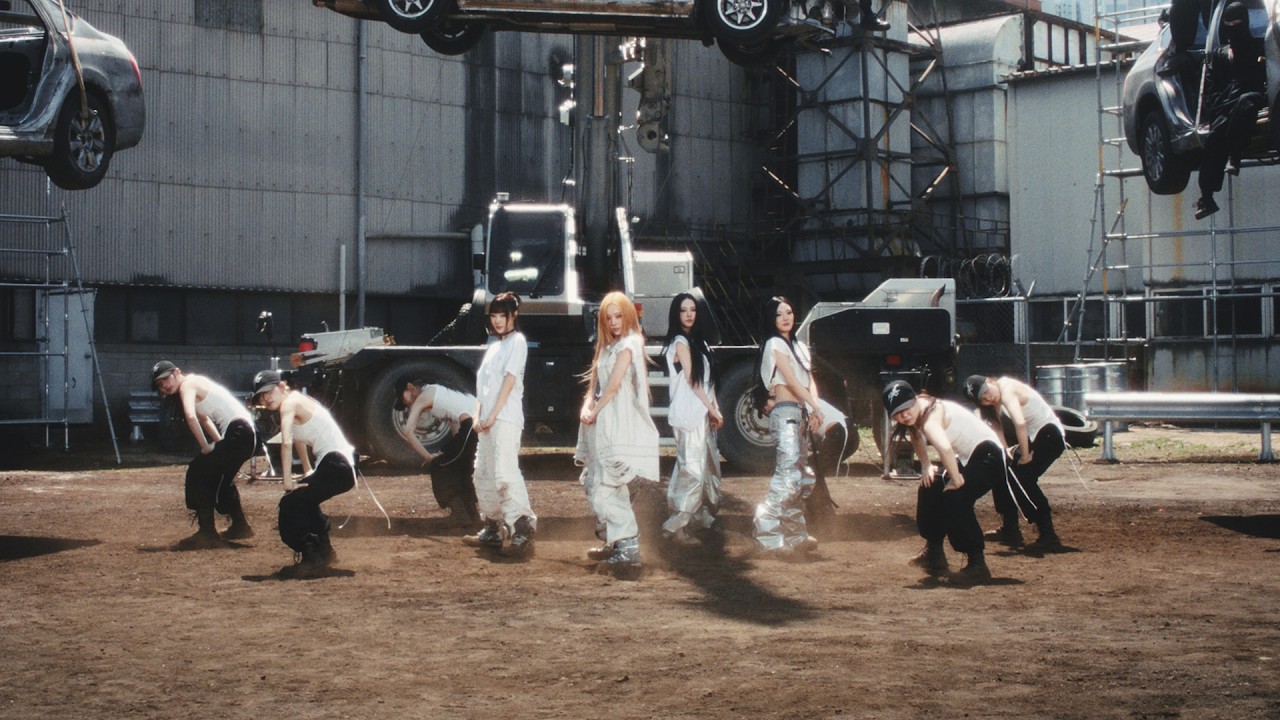
WDA: aespa and G-DRAGON Made Friction the Feature
WDA puts aespa and G-DRAGON in the same machine and refuses to oil the gears. The friction is the feature: four women with a precise group language meet an artist who has spent years making instability look like authorship.
Release file
Released: May 23, 2026
Runtime: 02:38
Artist / channel: aespa and G-DRAGON / aespa
Exact-file focus: Official WDA performance video featuring G-DRAGON.
Bottom line
WDA is aespa and G-DRAGON treating a collaboration like a collision test. The production is intentionally abrasive, the performance camera keeps refusing comfort, and the guest verse does not arrive to smooth anything out. It drops another sharp object into a room already full of them.
What changed on replay
Replay one belongs to the metallic negative space around the beat. Replay two follows aespa’s formation control while the camera destabilizes scale. Replay three isolates G-DRAGON’s entrance: his clipped phrasing changes the track’s center of gravity without pretending he has joined the group. Replay four catches how the members recover the song after the feature instead of becoming spectators in their own performance video.
The feature question
A famous feature can become a publicity trap, especially when the guest carries two decades of cultural weight. The useful question is not who “owned” the song. It is whether the collaboration produces a relationship neither side could create alone. aespa supply engineered precision and icy attack; G-DRAGON supplies instability. The friction is the product.
The counterargument
The track may feel overdesigned, and listeners who want melody to lead will not be wrong to resist it. My defense stops short of calling every unpleasant sound experimental genius. The song earns its harshness when choreography and phrasing reveal internal logic. Where that logic disappears, noise remains noise.
What I would change
Hold the wide formation shots longer after the guest section. aespa do the difficult work of reclaiming focus, but the edit keeps proving it with closeups instead of letting the group geometry testify.
Profiles
Official video
aespa — WDA feat. G-DRAGON Performance VideoDaily+12.5KTotal views3.9M
Receipts
Official aespa performance videoDaily+12.5KTotal views3.9M is the exact tracked release.
The opening refuses a polite introduction
The track begins with the attitude of a machine already running. There is no long melodic hallway into the concept; percussion, processed texture and clipped delivery establish a hostile little ecosystem immediately. aespa are well suited to that demand because their catalog has trained them to make synthetic density feel like character rather than background. The performance does not apologize for the sound with smiles or a narrative explanation. It expects viewers to learn the room while the room is moving.
Four members, four ways to survive the texture
Karina projects command through stillness and direct attack. Winter’s brighter tone cuts a clean route through the industrial surface. Giselle treats consonants rhythmically, making the language switches feel like additional percussion. Ningning supplies vocal weight and elasticity, proof that a harsh arrangement still benefits from a singer who can lengthen the line. The most successful group moments do not erase these differences; they stack them like compatible materials.
That distinction matters because performance videos are often praised with the empty word “synchronized.” Synchronization is only the floor. aespa create interest by agreeing on timing while disagreeing slightly on texture. One gesture can feel angular through Karina, conversational through Giselle, cleanly projected through Winter and elastic through Ningning. The choreography reads as one sentence spoken in four accents.
G-DRAGON enters as disruption, not validation
The collaboration does not need him to certify aespa’s relevance. By 2026, the group has its own scale, vocabulary and audience. His useful function is disruption. The eccentric phrasing and deliberately roughened vocal surface introduce a human instability against aespa’s engineered precision. When the feature works, the contrast makes both identities clearer. When it tips too far toward spectacle, the song briefly feels like it is waiting for viewers to recognize the guest.
His verse also connects two generations without pretending influence moves in a straight line. aespa did not emerge from one predecessor, and G-DRAGON’s career did not invent futuristic idol pop. The collaboration is interesting because two established brands negotiate attention in the same file. Cultural history becomes a live production choice: how much space does the guest receive, how does the group reclaim the center, and what sound can plausibly belong to both?
Camera language
The camera alternates between inspection and destabilization. Close framing captures facial control; wider shots establish formation; tilted or moving angles make the space feel less dependable. The best passages let those functions alternate with musical logic. The weaker passages cut because the production feels busy, duplicating energy the performers already supplied. A performance this detailed benefits from occasional visual stubbornness: plant the camera and let the bodies win the argument.
The abrasive-production question
There is a lazy critical habit of calling any dense or unpleasant mix “experimental,” as if discomfort exempts a song from coherence. WDA should not receive that exemption. Its best noises create pressure around the vocal entrances and choreographic accents. Other layers feel included because intensity is part of the brand. The song is most convincing when subtraction makes one strange texture legible. It is least convincing when every surface demands the same amount of attention.
Why the replay improves it
On first contact, the collaboration can register as event more than composition. Replays separate the labor. The bass pattern becomes easier to locate, member handoffs stop disappearing inside the edit, and G-DRAGON’s placement feels less like an interruption once the song’s route is familiar. That does not mean resistance is a listener failure. It means the track is built for parsing rather than immediate comfort, and the reward depends on whether parsing is what you wanted from pop that day.
Final verdict
WDA is not elegant, and sanding it smooth would destroy the point. It succeeds because aespa retain group identity when a historically enormous guest enters, while G-DRAGON contributes actual friction instead of a prestige cameo. The performance video should trust its wide shots more, and the mix occasionally confuses density with momentum. Still, the collision produces a third language neither act would make alone. That is the standard a collaboration should meet.
The choreography organizes overload
When a track contains competing textures, choreography can either add more information or become the filing system. Here it is most useful as the latter. Repeated shapes and shared directional changes tell the eye where a musical phrase begins and ends. Small isolations make processed percussion readable. The dancers are not illustrating every noise; they are deciding which noises deserve bodies. That editorial function is why the performance video clarifies a song that can feel crowded in audio alone.
Ningning’s vocal presence is crucial in those moments because sustained tone resists the production’s tendency to fragment everything. Winter supplies clean projection through narrow openings, while Karina and Giselle can lean harder into rhythmic speech. The distribution works when those roles circulate rather than becoming permanent job descriptions. aespa sound most alive when a member briefly leaves her expected lane and the arrangement makes room for the surprise.
Fashion is doing narrative work
The styling combines hard surfaces, exaggerated proportions and controlled exposure, reinforcing the idea that bodies in this world are both performers and designed objects. That is familiar aespa territory, but the G-DRAGON feature adds another fashion language: less seamless, more deliberately crooked. The visual contrast helps explain the musical one before any verse arrives. Clothes are not proof of artistic depth, yet here they function as readable production cues rather than a separate luxury-brand advertisement.
The video’s challenge is to preserve human presence inside all that design. Closeups succeed when they catch breath, eye movement or a tiny delay after an accent. They fail when the edit treats every face as another surface to flash. The members repeatedly restore personhood through specificity. A look belongs to one performer rather than to the generic concept, which is the difference between inhabiting a visual world and being displayed inside it.
What changed every time I replayed it
The first replay belonged to the collision of vocal textures. The second watched G-DRAGON enter without swallowing the frame. The third made the collaboration’s strength clear: nobody smooths the mismatch, so the track keeps producing sparks instead of polite compatibility.
Lyrics and meaning
Whole Different Animal is a claim of category refusal. The lyric treats difference as instinct and survival, not branding copy, and the collaboration works when every performer sounds unwilling to be domesticated by the same definition.
RaeRae verdict
Karina, Giselle, Winter, and Ningning do not become G-DRAGON’s futuristic backup plan. aespa keep their own center, while he brings enough disruption to make the group respond instead of repeat. That is what a collaboration is supposed to do.
Credits and receipts
Use the exact official performance upload, the aespa hub, and the G-DRAGON profile for connected work.
Verdict
aespa WDA React examining G-DRAGON’s feature, abrasive production, performance structure, replay changes and verdict.