
KISS N TELL
A b-side escaped containment, found a glittery helmet, and became the correct Japanese title track.
Release file
Released: July 23, 2026
Runtime: 03:10
Label / channel trail: SMTOWN
Sound: This is 1990s dance-pop bounce wearing magical-girl accessories and expensive lip gloss. It is smaller and cuter than aespa's Korean title tracks, but small is not the same as empty. The rhythm keeps nudging the vocals forward, and the chorus behaves like…
Sources: Exact official playlist uploadDaily+158KTotal views20.8M.
Artist: aespa
Song: KISS N TELL
Project: first Japanese mini album, KISS N TELL
Official video: July 24, 2026
Lyrics: Mahiro
Music: David Wilson, Alna Hofmeyr, and Rollo; arranged by dwilly and Hanael
Watch the official KISS N TELL video on YouTubeDaily+158KTotal views20.8M
Overall vibe
This is 1990s dance-pop bounce wearing magical-girl accessories and expensive lip gloss. It is smaller and cuter than aespa’s Korean title tracks, but small is not the same as empty. The rhythm keeps nudging the vocals forward, and the chorus behaves like a playground chant that somehow booked a professional studio.
The hook vibe
Dee da da dee. Serious analysis has briefly left the building. The phrase communicates nothing literal and every necessary emotional instruction. It is flirtation before commitment becomes paperwork: obvious attraction, unclear promises, and everybody enjoying the delay.
What changed every time I replayed it
First listen: Winter accepted a magical-girl contract without reading the emotional-damage clause. The “dee da da dee” hook communicates no dictionary meaning and every necessary instruction.
Second listen: The rhythm wins. The track borrows the bounce and uncluttered confidence of 1990s dance-pop, then lets four very different voices decorate it. Giselle sounds relaxed enough to prove she knew this was the single before the paperwork did.
Third listen: The title starts behaving like a power game. “Kiss and tell” usually warns against betrayal after intimacy. aespa turns the phrase into controlled suspense. They decide what becomes public, what stays secret, and how long the other person has to wait.
Fourth listen: Ningning’s missing vocal explosion becomes harder to forgive. A bridge could have interrupted the cute loop, allowed one huge melodic rise, then dropped back into the nonsense hook with new harmonies. The song leaves sparkle on the table.
Lyrics and meaning
The title flips the warning not to kiss and tell into a game. Secrecy is not shame here. It is suspense. The verses circle attraction while the hook refuses to overexplain itself. That simplicity is refreshing after years of songs that could require a glossary, a map, and a digital snake.
Giselle said the song began as a b-side and that she pushed the members to consider it for a comeback. It did not fit the main Korean concept cleanly, so the Japanese project became its opening. That is the useful backstory: artistic judgment can be recognizing that nonsense syllables have already won.
Performance and video presentation
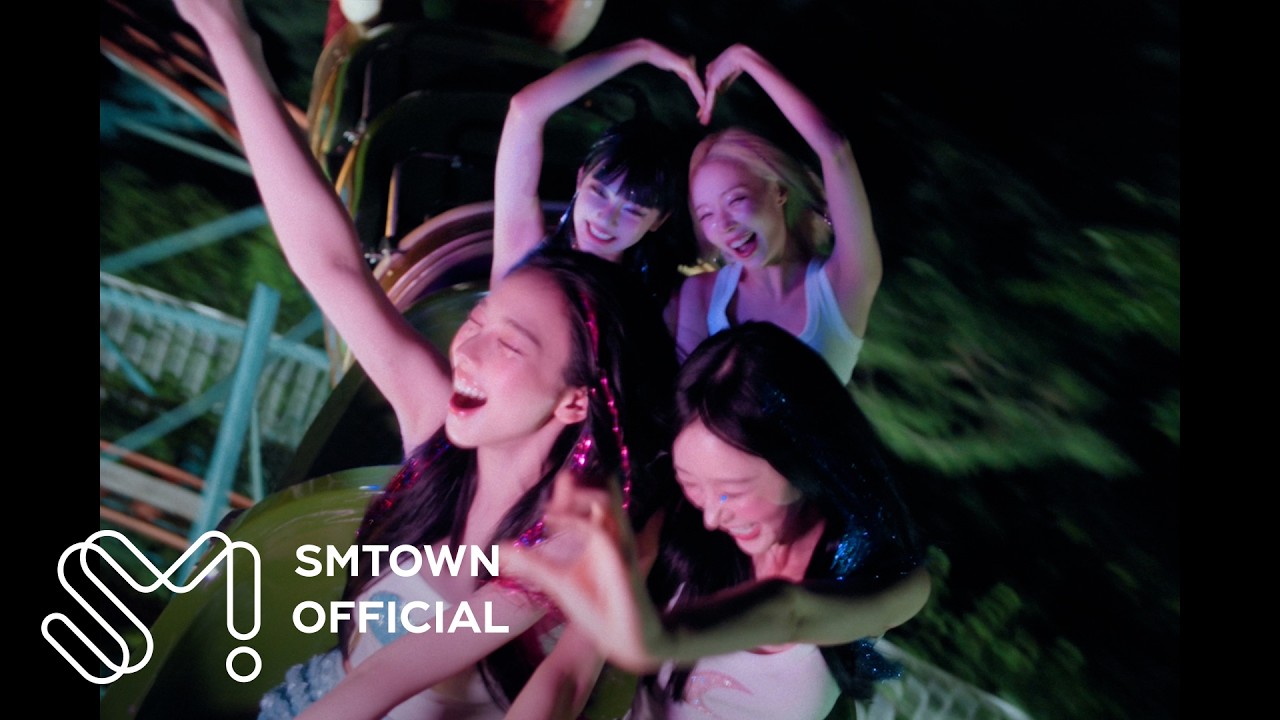
The sets are glossy, toy-like, saturated, and mildly suspicious. Helmets, charms, coordinated poses, and bright rooms build a compact magical-girl language without turning every prop into canon. aespa have always looked comfortable inside deliberate unreality; this changes the flavor from cyberpunk threat to sparkly mischief.
Karina gives the camera cool control. Giselle supplies the wink. Winter is the visual surprise because she looks completely at home inside the playful fantasy. Ningning makes cute styling feel like she knows something the set designer does not.
Easter eggs and hidden meanings
- The magical-girl team: transformation remains an aespa idea, only the armor changed.
- Helmets and charms: protection and secrecy become accessories rather than plot burdens.
- The brighter world: leaving KWANGYA at home is itself a statement that aespa can keep multiple visual identities.
The sound: small does not mean disposable
The production succeeds because it protects space. The drums push without flattening the vocals. Bright synth details appear, do their job, and leave. The hook behaves like a playground chant, but the arrangement around it remains precise enough that repetition feels playful rather than cheap.
Karina gives the lower lines control. Giselle treats rhythm like conversation. Winter supplies the clear pop edge, and Ningning adds warmth even when the song refuses to give her the full bridge-sized runway she deserves. The voices make the track aespa. Without them, this could slip into anonymous cute-pop licensing music.
The b-side backstory matters because pop artists need judgment, not only execution. Giselle recognized that the song’s simplicity was an asset and helped keep it alive until the Japanese project offered the right frame. Creative authorship sometimes looks like writing a verse. Sometimes it looks like refusing to let the correct song die in a folder.
The video deep dive: transformation without homework
The visual language borrows magical-girl grammar: coordinated teams, charms, protective gear, transformation energy, saturated rooms, and the sense that ordinary objects might activate a second identity. The video understands that viewers can recognize the genre without receiving a lecture.
The helmets are especially useful. A helmet protects the head, hides part of the face, and prepares the wearer for speed or impact. That makes it a neat accessory for a song about intimacy under controlled disclosure. The women can flirt, transform, and move fast while deciding what information the audience earns.
The bright sets also reverse aespa’s usual relationship with unreality. KWANGYA used digital worlds as danger, fracture, and conflict. Here, artificial space becomes a toy box. The group does not abandon transformation as a theme. It changes the emotional weather around it.
From a Buddhist perspective, the many aespa identities are a useful joke about the unstable self. Human, avatar, warrior, school delinquent, magical girl: none is the single permanent truth. The members keep changing forms while remaining recognizable through voice, chemistry, and choice.
The title adds another useful tension. “Kiss and tell” usually describes intimacy turned into public currency. Idols live inside an industry where a glance, friendship, rumor, or private message can become content before the people involved decide what it means. The video answers by making secrecy playful. Information is not withheld because the women are ashamed. It is withheld because access is theirs to grant.
That boundary matters at both the personal and fandom level. Fans can enjoy the transformed identities without claiming ownership of the ordinary selves underneath. A magical-girl costume is an invitation into a story, not a key to somebody’s private life. The song keeps the flirtation bright because consent and mystery are allowed to coexist.
At the industry level, the Japanese project gives aespa room to be smaller and cuter without making that mode feel like a demotion. Global pop strategy works best when a market release expands an artist’s vocabulary instead of issuing a translated imitation of the main comeback.
Credits and the director's smartest choice
Mahiro handles lyrics; David Wilson, Alna Hofmeyr, and Rollo are credited for music, with dwilly and Hanael on arrangement. The production protects the bounce instead of stuffing the track with proof of difficulty. The visual direction follows the same rule: one clear fantasy, committed all the way through.
What I love and what I would change
- Love: the hook takes residence before your brain can review the lease.
- Love: Giselle’s instinct was right; this was not background-track material.
- Love: a cute aespa song that still sounds like these four voices.
- Change: give Ningning one bridge-sized reason to reopen the heavens.
Keep digging
Receipts: Official aespa Japanese release materials, official music video, and credited song information. Opinions about escaped b-sides are RaeRae’s.
RaeRae verdict
“KISS N TELL” wins because aespa treat cute as a performance choice, not a reduction in difficulty. Karina controls the frame, Giselle knows exactly when to wink at the nonsense, Winter fits the magical-girl bounce without sanding down her cool edge, and Ningning keeps the vocal finish from turning into decorative sugar. I wanted one larger bridge moment, but the smaller scale is the reason the song keeps moving.
Bottom line:
KISS N TELL works because aespa treat the candy-colored bounce like a real song instead of a costume change. The hook stays light, the members keep passing tiny vocal details between one another, and the magical-girl video earns the glitter by matching the track’s playful nerve. I came back for the chorus and stayed for how confidently the group lets cute sound grown.