
RAERAE REACTS · AESPA · EXACT OFFICIAL MV
Better Things æ-aespa MV React: The Avatars Got the Breakup and None of the Labor Rights
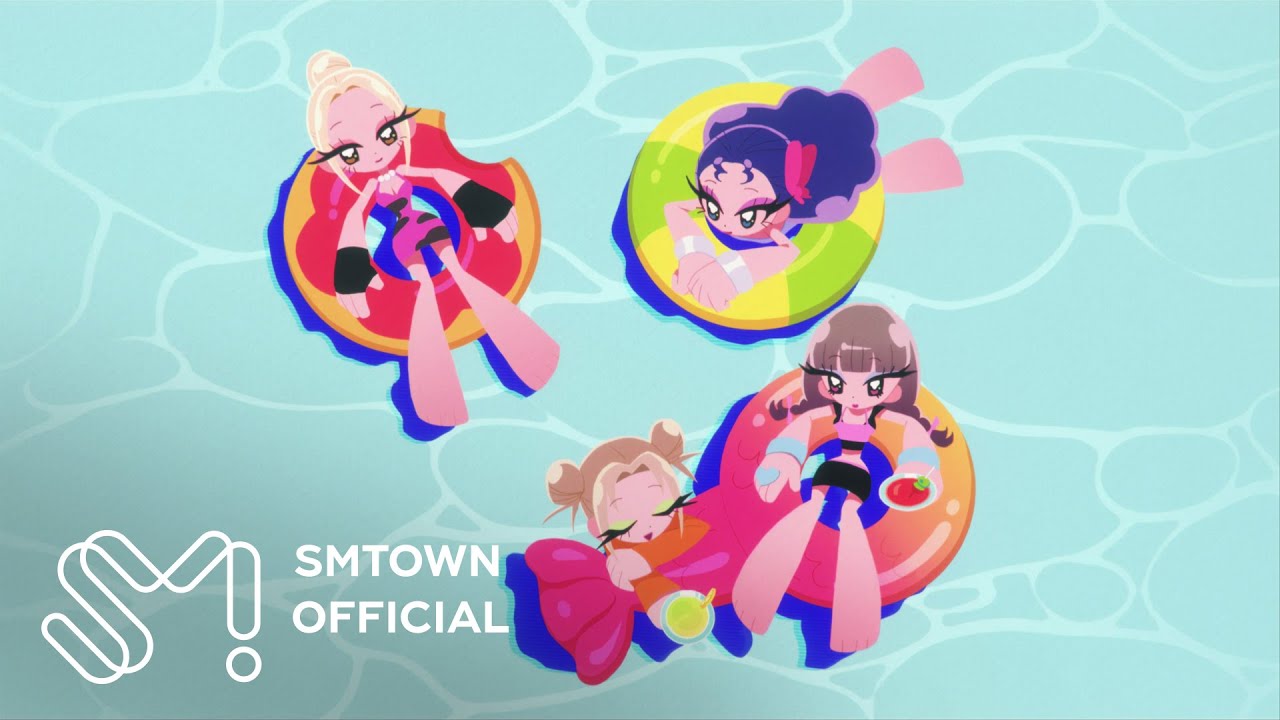
The æ-aespa version of “Better Things” hands the breakup to four avatars and immediately changes the question. The original video let Karina, Giselle, Winter and Ningning protect their time inside a lush aquatic world. This alternate master asks digital counterparts to carry the same boundary while being characters, brand assets and animated performances assembled by workers who remain mostly outside the frame. The avatars look free. Ownership is more complicated.
Release file
Released: October 6, 2023
Runtime: 03:33
Artist: aespa — Karina, Giselle, Winter and Ningning
Exact-video distinction: Official SMTOWN alternate master MV qwieCy-T4zw starring the æ-aespa avatars, separate from the human-member Better Things MV, performance video and other versions
Sound: The same minimal English-language pop and R&B master, recontextualized by an all-digital visual performance centered on the four æ-aespa counterparts
Source trail: SMTOWN official master ·  exact MVDaily+181Total views1.8M
First reaction: the same song now means something stranger
A lyric about reclaiming time sounds different when sung through characters that do not control schedules, contracts or rendering pipelines.
The visual freedom belongs to a fiction built through tightly managed labor.
An alternate MV deserves an exact React
The audio may be familiar, but image, performer ontology and authorship questions have changed.
Collapsing both masters into one card would erase what the second video actually contributes.
The avatars are not the members in another outfit
æ-Karina, æ-Giselle, æ-Winter and æ-Ningning are designed counterparts tied to aespa lore.
They borrow identity cues while remaining corporate characters produced through animation and performance systems.
Digital beauty removes some risks and creates others
An avatar never has a bad hair day, visible exhaustion or unsafe water shoot in the ordinary sense.
That perfection can intensify impossible standards while hiding the artists who model, animate, light and composite it.
Meaning: the breakup boundary becomes a programming joke
“I have better things to do with my time” sounds autonomous, yet a character performs only what a pipeline has authored.
The contradiction makes the video more interesting than a simple avatar novelty.
Four identities still need differentiation
Color, movement, facial design and framing must preserve recognizable counterpart traits without relying on live vocal bodies.
The animation team translates group contrast into another medium.
Lip sync is only the visible edge
Mouth timing attracts scrutiny because errors are easy to spot, but posture, gaze, weight and reaction create most of the perceived performance.
A convincing digital figure requires coordination across departments, not one automatic filter.
The aquatic world becomes less physically dangerous
No human member must repeat movement in water for this specific file.
The trade is enormous computational and artistic labor whose strain is easier for audiences to ignore because it does not appear on camera.
Virtual performers complicate consent
A human artist can theoretically object to styling, movement or future reuse, though power may limit that choice.
A company-owned counterpart can persist and be repurposed according to rights the public rarely sees.
Fandom attachment can cross the human-digital line
Viewers may care about counterparts as characters without believing they are biological people.
Emotional response is real even when the object is fictional; exploitation questions remain real too.
The video preserves the members through voice
Karina, Giselle, Winter and Ningning remain audible, so the avatars do not replace human performance completely.
The result is layered authorship: human voices, designed bodies and a corporate narrative joined inside one file.
Technology is not a neutral co-star
Tools arrive through budgets, licensing, labor conditions and decisions about whose skill becomes visible.
Praising innovation without naming those structures turns marketing language into criticism.
The alternate master changes replay behavior
The first video invites attention to member expression and aquatic craft.
This one sends the eye toward animation seams, counterpart design and the strange relationship between freedom lyrics and owned bodies.
The ending cannot fully resolve the ownership problem
The avatars may look like they have exited a bad relationship, but they cannot exit the system that defines them.
That unresolved gap is the most honest tension in the file.
Four performers, four kinds of pressure
Karina gives the frame architecture and command without making leadership a permanent monopoly on attention. Giselle can make a line conversational, sly or abrasive enough to puncture immaculate world-building. Winter places a bright, controlled vocal edge through dense production and makes small expressions read at speed. Ningning brings range, warmth and a willingness to let power sound emotionally inhabited rather than merely impressive.
Those tendencies are tools, not cages. Every full-group master routes the same canonical card to all four profiles because participation is factual and should not be decided by thumbnail placement, line-count arguments or whichever member a short-form edit made trend.
What changed every time I replayed it
The first replay compared scenes with the human-member master. The second stopped treating animation as a copy and followed how digital posture, gaze and timing created a separate performance grammar.
By the third watch, the lyric’s time boundary had become the sharpest contradiction. A character can declare autonomy while every second of her existence has been commissioned, rendered and approved.
What I kept replaying
- Digital expressions translating four counterpart identities.
- The gap between vocal humanity and designed bodies.
- Aquatic movement without a human water shoot.
- Moments where perfection begins to look restrictive.
- The boundary lyric colliding with corporate character ownership.
The larger industry question
Virtual idols are frequently sold through two dishonest extremes: a future without human limitation or a fake gimmick with no meaningful labor. Both stories erase the actual mixture of voice, writing, animation, code, direction and intellectual-property control.
The æ-aespa file should be credited as a constructed performance with human workers throughout it. Innovation is a production method, not an excuse to make artists, animators or rights questions disappear.
Where it could hit harder
The video could expose more of its own making. Credits or behind-the-scenes process would turn invisible animation labor into part of the public object.
Counterpart personalities sometimes remain too close to visual shorthand. More idiosyncratic behavior would help each avatar become more than a polished extension of member branding.
A counterpart can expand identity without becoming biography
The avatars let aespa stage impossible movement, environments and continuity, but they should not be used as evidence about the members’ private personalities. A designed reaction belongs to character writing and direction, not an x-ray of the human performer it references.
Keeping that boundary clear protects criticism from turning corporate lore into personal fact. The counterpart may echo a member’s public performance language while remaining a separate authored object.
Archive questions begin before the technology gets old
Digital assets depend on file formats, software, storage, licenses and the company’s willingness to maintain them. A physical costume can survive in a box; an avatar scene may become difficult to reopen when tools or contracts change.
Preservation therefore belongs in the artistic conversation. If æ-aespa is part of the group’s official history, the underlying work deserves records sturdy enough to outlive one promotional cycle and one rendering stack.
RaeRae verdict
The æ-aespa “Better Things” master earns a separate React because it changes who appears to perform freedom and how that freedom is owned.
Its prettiest contradiction is also its most useful one: digital women protect their time inside a system that controls every rendered second.
Bottom line
The avatars got the breakup and none of the labor rights. The æ-aespa “Better Things” MV works when its digital beauty exposes the gap between performed autonomy, invisible human craft and corporate ownership of the bodies onscreen.