
YUQI M.O. React
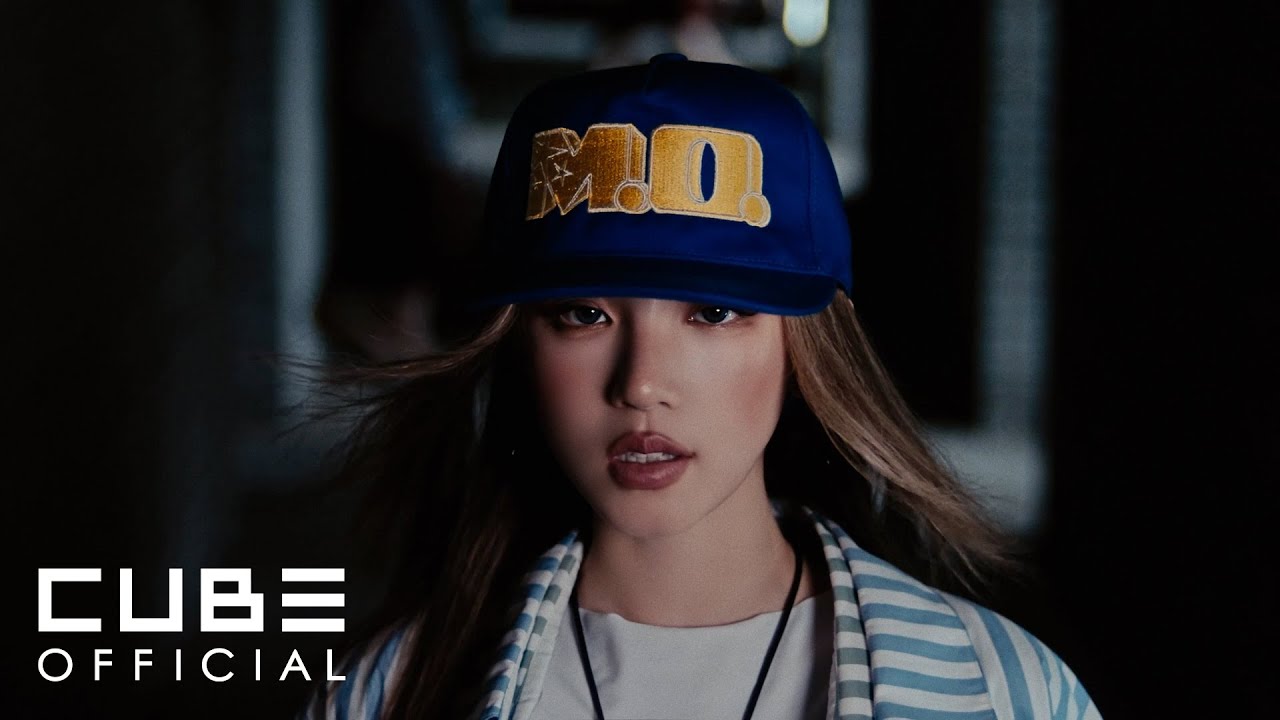
Release file
Released: September 16, 2025
Runtime: 03:10
Label / channel trail: i-dle (아이들)
Sound: “M.O.” gives YUQI a boom-bap trap track shaped around her low register, clear English diction, comic timing, and complete lack of interest in negotiating with somebody who already failed the background check. She co-wrote and co-composed a song that sounds personal because…
Sources: Exact official playlist uploadDaily+5KTotal views24.5M.
RAERAE REACTS · K-POP · YUQI
She asked for the motive after she had already found the receipts and packed the liar’s exit bag.
Artist
YUQI
Song
M.O.
Single
Motivation
Verdict
The receipts already answered
Bottom line:
“M.O.” gives YUQI a boom-bap trap track shaped around her low register, clear English diction, comic timing, and complete lack of interest in negotiating with somebody who already failed the background check. She co-wrote and co-composed a song that sounds personal because its details behave like evidence, not empowerment wallpaper. The central question repeats more often than the case requires, and the production stays safer than her performance. Still, she never sounds desperate for the answer. She wants the liar to say the quiet part aloud before she closes the door.
Release file
- Artist: YUQI of i-dle
- Song: “M.O.”
- Release: September 16, 2025
- Single: Motivation
- Runtime: 3:02
- Composition: YUQI, Siixk Jun, Charlotte Wilson, Taneisha Jackson
- Lyrics: YUQI, Taneisha Jackson, Charlotte Wilson
- Arrangement: Siixk Jun
- Official video: nZFH-gZa9R4Daily+5KTotal views24.5M
- Company: CUBE Entertainment
Lyrics and meaning: the exit interview already has exhibits
YUQI wrote “M.O.” like an exit interview for somebody who thought charm could hide an agenda. The drums move with vintage texture, the bass stays heavy without swallowing her, and every question sounds less like confusion than a final opportunity to confess.
M.O. means modus operandi, the pattern that reveals what somebody is really trying to do. YUQI asks for that pattern while listing it herself: control, lies, returning drama, suspicious kindness, and somebody demanding access to her time without offering anything trustworthy in return. The detective has solved the case. She is letting the suspect hear the report.
Billboard Korea described the song as her first boom-bap trap release, pairing vintage drums and bass with her weighty vocal tone and precise diction. That context explains why the track feels more grounded than a glossy pop dismissal. It walks rather than flies, and her voice puts boots on the floor.
What changed every time I replayed it
Second play: I followed the drums. The vintage loop gives the track attitude without forcing YUQI to imitate somebody else’s rap history. Her phrasing sits inside the pocket, then leans slightly behind it when a dismissal needs extra weight.
Third play: The checklist in the chorus stopped sounding materialistic. Rejecting a ring, cheque, or borrowed loyalty is not a price list. It is a refusal to accept symbols as substitutes for honest motive. She is not asking what he can buy. She is asking why he thinks buying something changes the evidence.
Fourth play: The video’s comedy became sharper. YUQI performs investigator, judge, and person already leaving the crime scene. Her looks toward the camera make the viewer feel like an accomplice who also failed to submit a believable explanation.
Where I landed: The song works because YUQI sounds amused before she sounds angry. The weak spot is structural. The final chorus asks a question whose answer has been obvious for two minutes. One new receipt or arrangement switch could have delivered a stronger conviction.
Boom-bap texture under a very modern boundary
The production gives “M.O.” a rougher rhythmic surface than much of YUQI’s solo pop material. Drum texture and bass provide authority, while sparse accents keep her diction at the front. The track does not require a giant chorus because the performance is already confrontational.
That restraint helps her low register. Producers often treat a deep female voice as a novelty, either burying it under dark synths or forcing every phrase to announce how low it is. “M.O.” lets her tone behave normally. The weight appears when the lyric needs it, not as a circus trick.
The conversational English matters too. YUQI told Forbes that she began the lyric in English because it was the title track. The finished lines sound spoken rather than assembled from slogans. Her diction turns short phrases into decisions, and the pauses leave room for side-eye.
YUQI as writer, producer, and unreliable-narrator detector
YUQI shares composition and lyric credits and is also listed as a producer. That matters because the attitude fits her established solo voice. The song does not borrow generic empowerment language and place it over her tone. It uses suspicion, humor, and blunt delivery as structural tools.
Her best choice is refusing to perform heartbreak as dependence. The relationship can matter and still fail inspection. She can feel betrayed without wanting the betrayer back. That distinction gives the song more adult confidence than the standard “I never cared anyway” routine.
She also understands that a boundary becomes funnier when nobody raises the volume. The threat is not a scream. It is the back door already open. He can keep explaining on the sidewalk.
The music video has already processed the evidence
The video gives YUQI room to play detective, judge, and person who has stopped confusing explanation with accountability. Its styling is polished, but her performance remains pointed. She looks into the lens as if the viewer has also failed to provide an acceptable motive.
The edit follows repeated questions without turning every beat into a cut. That lets her face and physical timing carry jokes the lyric only implies. A tiny pause before a look can do more than another prop labeled EVIDENCE.
The best visual decision is trusting personality. The concept could become a literal detective skit with files, magnifying glasses, and five minutes of plot. Instead, the camera treats YUQI as the organizing force. Rooms and styling change; her judgment does not.
The three-song Motivation argument
Motivation contains three tracks: “M.O.,” “Gone” in Korean, and “Gone” in Chinese. The official i-dle Japan discography and Apple Music confirm that compact structure. The contrast is useful. “M.O.” asks what drives another person. The two versions of “Gone” turn the attention toward hurt and memory across YUQI’s languages.
That makes the single less like three unrelated uploads and more like a small emotional investigation. One track establishes the boundary. The others examine what the boundary cost. “M.O.” is the door closing with confidence; “Gone” is what the room sounds like afterward.
What works
- The title gives the chorus a precise question and concept.
- Boom-bap texture supports her low tone without turning it into a gimmick.
- The English diction sounds conversational.
- Writing, composition, and production credits align with her performance identity.
- The video trusts facial timing more than literal detective props.
- YUQI and i-dle profile links give the React a canonical home.
Where the interrogation repeats itself
The central question returns so often that the last chorus adds less than it should. The song needed one final lyrical receipt that answers the M.O. instead of asking again after the case is obvious.
The production is effective but cautious. YUQI sounds capable of carrying a stranger, rougher final section. Let the drums fracture, remove the bass, or force the liar to answer in silence.
RaeRae verdict
The song: 8.6/10. Specific, heavy, funny, and one final receipt short of a perfect conviction.
The music video: 8.7/10. Polished without burying the personality that makes the premise work.
Final ruling: He can keep the ring, cheque, excuse, and sequel. Her time is not free, and the back door is not a negotiation.