SWITCHBLADE
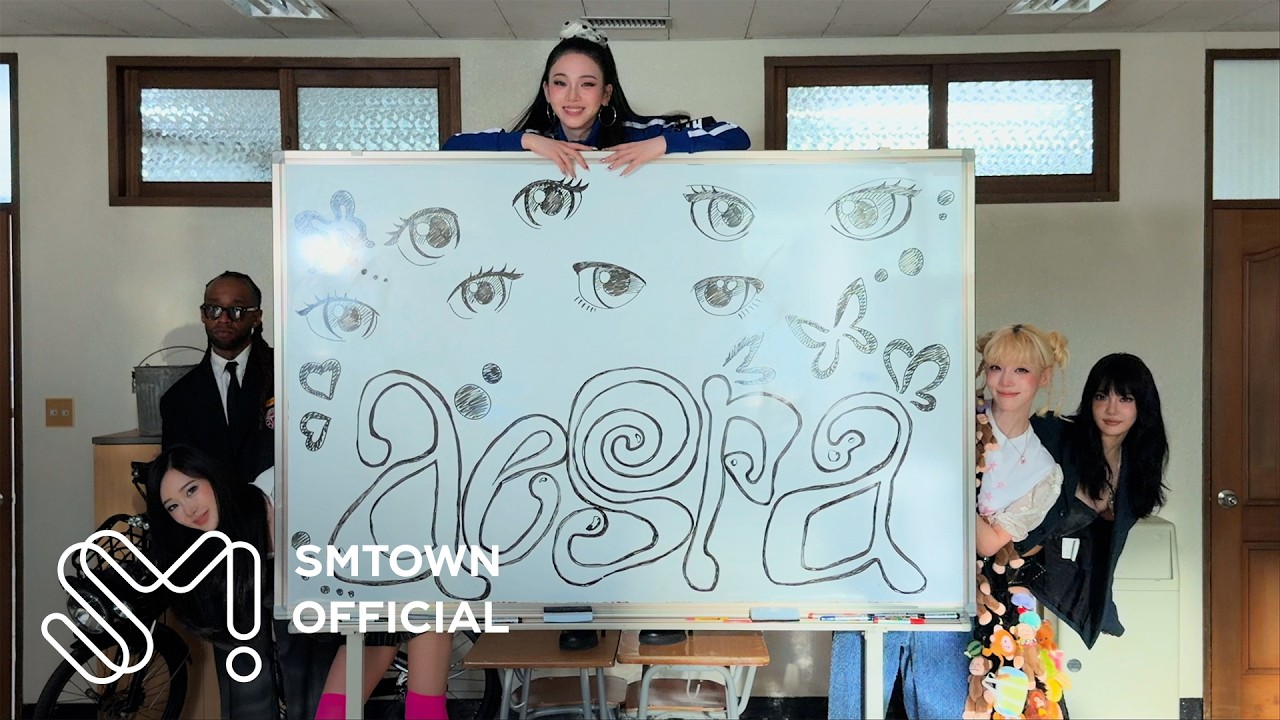
I expected chrome knives and a budget apocalypse. aespa gave me a school bus, hallway warfare, and Ty Dolla $ign dressed like Kwangya High accepted transfer students by threat assessment.
Release file
Released: August 4, 2026
Runtime: 03:21
Label / channel trail: SMTOWN
Sound: I expected chrome knives and a budget apocalypse. aespa gave me a school bus, hallway warfare, and Ty Dolla $ign dressed like Kwangya High accepted transfer students by threat assessment.
Sources: Exact official playlist uploadDaily+49.5KTotal views18.5M.
Artist: aespa featuring Ty Dolla $ign
Song: Switchblade
Album: The Lemonade
Official video: August 4, 2026
Members: Karina, Giselle, Winter, Ningning
Watch the official Switchblade video on YouTubeDaily+49.5KTotal views18.5M
Overall vibe
The audio walks in wearing black: clipped percussion, a low electronic pulse, vocals held tight enough to feel dangerous, and a guest verse that drops the floor by several inches. The video wears a school uniform and immediately gets detention. That split is the point. aespa supply the controlled edge; the visual team lets the control break into adolescent chaos.
The hook vibe
The hook does not explode. It folds out. A switchblade hides, opens, changes shape, and becomes useful in a second; the arrangement behaves the same way. The repeated phrase is sleek rather than huge, and the production leaves enough negative space for every vocal texture to register.
What changed every time I replayed it
First listen: This is not the chrome-knife apocalypse the title ordered in my imagination. The song arrives dark and controlled, then the video puts everybody on a school bus. I laughed, reset my expectations, and listened again.
Second listen: The negative space becomes the star. The production does not stack ten alarms on top of the hook. It lets the low pulse, clipped percussion, and vocal textures take turns. Ty Dolla $ign does not interrupt the track. His lower phrasing changes its center of gravity.
Third listen: The hook starts making structural sense. A switchblade stays concealed, snaps open, and changes function fast. The chorus behaves the same way. It does not detonate; it reveals itself. That restraint makes the track sleek, but it also creates the song’s biggest risk: listeners waiting for a giant aespa explosion may think the blade never fully opens.
Fourth listen: The ending becomes the missed opportunity. The song needed one last mutation: a dirtier synth, a swapped vocal line, a dance break that changed the rhythm, anything that proved the title’s idea in sound. The record stops cleanly when it could have turned once more.
Lyrics and meaning
The blade is less about violence than adaptation. It can be concealed, released, and redirected. aespa turn that mechanism into a brag about changing form without surrendering identity. The group has spent its entire career moving between human, avatar, pop star, warrior, and internet projection. Switchblade trims that lore into one clean idea: predictability is the trap, and flexibility has teeth.
Ty’s lower, looser phrasing matters because aespa’s delivery stays restrained and sharp. He is not pasted on for a passport-stamp feature. The beat makes room for him and then carries that new weight back into the group sections.
Performance and video presentation
Kwangya High looks like a delinquent manga collided with a glossy teen comedy and somebody refused to return the yellow bus. Paper walls lose fights. Bicycles become hallway hazards. Sports penalties become character development. Karina receives a red card with the wounded dignity of somebody who believes the evidence is circumstantial despite several cameras.
Giselle’s timing is especially good because she never performs fun too hard. Winter keeps a cool face while the environment becomes ridiculous. Ningning and Giselle turn a mock feud into an entire unauthorized subplot. The audio supplies menace; the video supplies personality. They do not spend four minutes repeating the same sentence in two media.
Easter eggs and hidden meanings
- Kwangya High: old virtual-world vocabulary is dragged into a physical school-comedy space.
- The switchblade structure: alliances, roles, poses, and power keep changing quickly.
- The bus: ordinary transport becomes a visual refusal to obey the expected route.
- The red card: Karina’s control image becomes funnier when authority officially declares her a problem.
The bigger joke hiding inside Kwangya High
The video turns aespa’s old digital mythology into a physical school comedy. That is not random silliness. School stories are machines for sorting people: model student, troublemaker, athlete, outsider, authority figure. aespa built a career around unstable identities, avatars, doubles, and public projections. Dropping them into a place obsessed with labels lets the group make those labels look temporary.
The red card is the cleanest gag. Karina often carries the group’s controlled, high-status image. Here, authority reduces her to “problem.” The joke lands because the audience knows the distance between the polished idol and the character being disciplined. That is an Easter egg made from reputation, not lore homework.
The global lens matters too. Ty Dolla $ign enters this very Korean pop-school fantasy without being treated like a visiting lecturer. The uniform and framing pull him into the same world. Good collaboration design does not paste two markets together. It builds one room where both artists can act like they belong.
And yes, the bus is funny because it represents a route chosen for you. A school bus moves on schedule, follows a fixed path, and delivers a group to the same institution. The video keeps turning that ordinary system into disorder. I read that as visual support for the song’s core boast: predictability is the trap. I do not need to claim the director hid a manifesto under the driver’s seat to see the pattern.
The satire also points back at idol labor. School uniforms make adults look young, manageable, and easy to rank. K-pop companies use the same language of evaluation: training grades, monthly checks, positions, center time, fan votes, chart placements. The video turns that machinery into a playground without pretending the machinery disappeared. That matters because rebellion is funnier when the rules are recognizable.
On the micro level, each member gets to weaponize a familiar public image. Karina’s composure becomes something authority wants to discipline. Giselle’s conversational cool fits the hallway mischief. Winter’s sharpness and Ningning’s ease keep the group from becoming four interchangeable students in one concept uniform. The casting works because personality survives the styling.
On the macro level, the collaboration tests whether global pop can share a room without making one artist a decorative passport stamp. Ty Dolla $ign changes the track’s weight, not its nationality. aespa does not abandon its sonic identity to accommodate him, and he does not arrive with a disconnected eight-bar advertisement. That is what cross-market collaboration should do: create friction, then make the friction musical.
Credits and the backstory worth keeping
The credited writing team includes Evan Blair, bülow, David Charles Fischer, Sasha Alex Sloan, Ty Dolla $ign, Ant Clemons, and additional collaborators. That many hands can produce a committee song. Here, the lean arrangement keeps the record from sounding overcrowded. The juicy decision was visual: a literal dark knife concept would have been easy and expensive. School chaos gave the song replay value.
What I love and what I would change
- Love: a Western feature that belongs inside the song’s architecture.
- Love: comedy that reveals member personality instead of mocking the track.
- Love: restraint; the chorus does not confuse noise with impact.
- Change: give the ending one more turn of the blade.
Bottom line:
aespa and Ty Dolla $ign make “Switchblade” work because the danger lives inside vocal restraint, social friction and a school-day visual joke instead of another literal blade. The ending could cut deeper, but the collaboration belongs to the song rather than sitting beside it for export value.
Keep digging
Receipts: Official SMTOWN music video and the official The Lemonade album credits. Commentary and extremely necessary school-bus judgment are mine.
RaeRae verdict
“Switchblade” works because aespa and Ty Dolla $ign let restraint carry the threat while the video turns danger into school-day chaos. The feature changes the song’s weight without hijacking it, all four members get personality beyond the concept board, and the joke keeps revealing performance detail on replay. I still want one final cut after the last chorus. The blade opens cleanly; it simply closes a little early.