
STITCH! · PRODUCTION SEASON 2 · EPISODE 4 · REACT
Stitch! Season 2 Episode 4: Stylish Transfer Student Sae
Sae transferred schools. Piko entered her in a contest. The boys supplied the scoreboard, and somehow the girls were expected to fix all of it.
The episode record before a transfer student becomes public property
Episode: Production Season 2, Episode 4
Japanese title: オシャレ転校生、サエちゃん
English card title: Stylish Transfer Student Sae
Original Japanese release: November 10, 2009
Production branch: Stitch! Itazura Alien no Daibōken
Japanese voices central here: Kōichi Yamadera as Stitch and Motoko Kumai as Yuna Kamihara
Where to watch: Apple TV Japan and VideoMarket carry official Japanese episode listings. Availability changes by region.
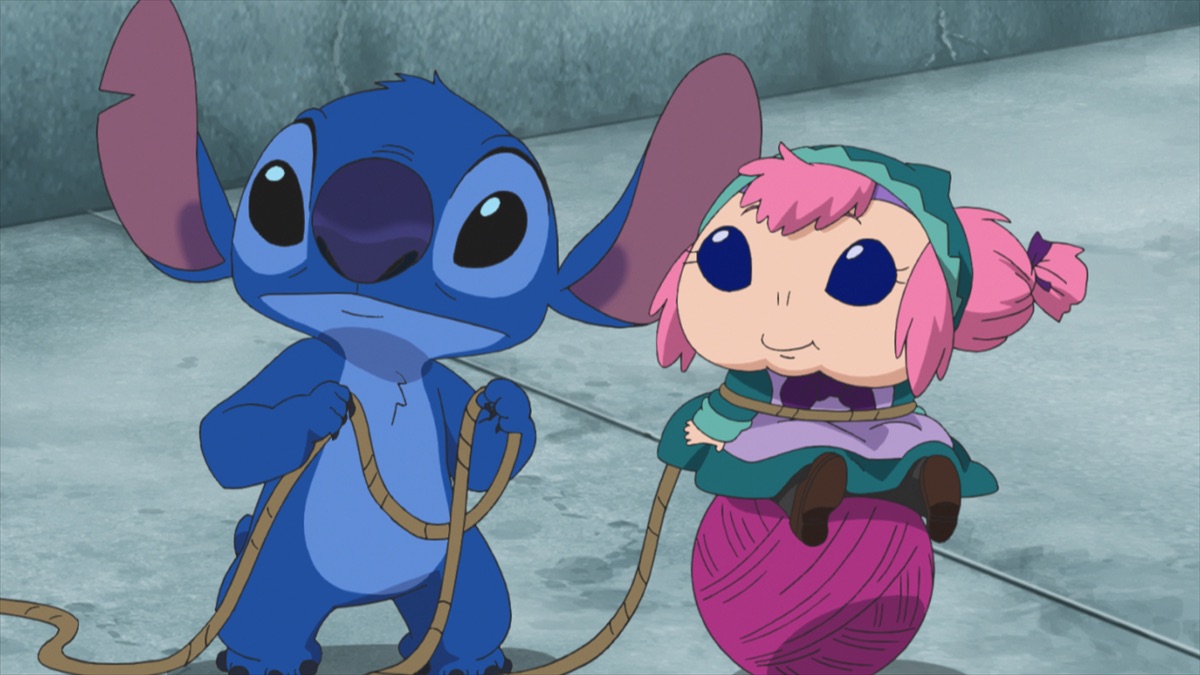
Sae transfers from Kobe to Izayoi Island. Her clothes and appearance immediately attract Koji and the other boys, while Stitch tries enthusiastically to become her friend. Piko, convinced she should remain the school’s fashion authority, challenges the frightened new student to a fashion contest. Yuna takes Sae’s place despite having no confidence in her own fashion sense. Help arrives, but somebody else is watching the spectacle and waiting to use it.
My first reaction: Sae enrolled in school and got entered into a pageant
Sae barely arrives before everybody decides what her appearance means. The boys turn attention toward her. Stitch treats friendship like a goal he can rush. Piko interprets the same attention as a threat to her position. Nobody gives the new girl time to learn names, find a seat, or decide how visible she wants to be.
The fashion contest sounds harmless because clothes can be playful. In this setup, it becomes a forced public evaluation of two girls’ worth. Sae does not volunteer. Piko appoints herself judge and rival. The school treats discomfort as entertainment. That is not welcome. That is social hazing with accessories.
Being stylish is Sae’s expression, not the school’s invitation
Sae’s clothes communicate taste, background, experimentation, and perhaps the confidence she wants to project during a difficult move. They do not grant classmates permission to inspect her body, rank her against other girls, or demand performance. Presentation is not consent.
A transfer from Kobe to a small island can already create intense visibility. Sae may speak differently, know different trends, and carry habits classmates read as sophisticated. Admiration can feel like surveillance when every detail becomes evidence that she belongs somewhere else.
The kind response is curiosity with room for refusal. Ask about a bag or color if the relationship allows it. Compliment without demanding explanation. Let Sae decide whether fashion becomes part of her public identity or remains one part of a much larger person.
Piko protects status by manufacturing a competition
Piko believes she is the most fashionable girl, but that title exists only if everyone agrees fashion is a ladder. Sae’s arrival destabilizes the ranking without Sae doing anything. Piko restores control by creating a contest whose rules she can shape and whose publicity keeps attention centered on her.
This is how insecurity becomes aggression. Piko could welcome somebody with shared interests and gain a friend who understands clothes. Instead, she treats similarity as replacement. The problem is not that Piko cares about fashion. The problem is believing another girl’s beauty reduces the amount available to her.
A contest can be consensual fun when participants choose it, rules are transparent, judges are appropriate, and losing does not become social exile. None of those conditions appears before the challenge. Piko uses the language of play to stage a hierarchy.
The boys’ attention is the currency, and nobody asks why
Koji and the boys become instantly captivated by Sae. The episode uses their reaction to prove she is pretty and to explain Piko’s jealousy. That makes male approval the scoreboard for girls’ social value. Sae receives attention she did not request. Piko wants to reclaim it. Yuna enters a contest shaped around it.
The boys are responsible for how they behave. Attraction does not require staring, crowding, ranking, or treating a classmate like a new attraction. They can notice Sae and still make room for her to be ordinary. A welcoming school teaches that courtesy matters more than whether somebody thinks the new girl is cute.
Piko’s insecurity deserves context, but the girls should not fight over boys who created the spectacle. The sharper lesson would have Koji and his friends recognize their role and stop feeding the contest.
Yuna steps in out of loyalty, but substitution does not solve coercion
Yuna sees Sae afraid and offers to take her place. The gesture is generous. She moves the immediate pressure away from somebody with less social support. It also accepts Piko’s premise that somebody must compete. Yuna protects Sae by placing herself inside the same machinery.
The strongest defense would be collective refusal. Yuna can say Sae does not owe anybody a contest, and neither does she. Koji can withdraw his attention from the spectacle. A teacher can stop organized humiliation. Stitch can stand beside Sae without trying to win friendship through theatrics.
Sometimes stepping in is necessary when a bully will not stop. The intervention should buy time to challenge the system, not turn the substitute into the next target everyone feels permitted to judge.
Yuna’s lack of fashion knowledge is not a character defect
The synopsis jokes that Yuna has no fashion sense. She dresses for her life, movement, climate, and personal comfort. Not knowing trends from Kobe does not make her less feminine, less mature, or less worthy of attention. Fashion is a skill and language, not an entrance exam for being a girl.
Yuna can enjoy learning without becoming a makeover problem. The difference matters. A friend who explains silhouette, color, or styling gives her tools. A helper who erases Yuna’s preferences and unveils a more acceptable version teaches that support means correction.
I want the final look to contain Yuna. She should be able to move, recognize herself, and explain at least one choice. Winning by becoming somebody else would defend Sae while humiliating the person who defended her.
The helper needs to ask before touching hair, clothes, or body
The official synopsis hides who helps Yuna, which turns the makeover into a reveal. Whoever steps in needs consent at every stage. Clothes, makeup, hair, and accessories involve touch and exposure. A rushed competition does not suspend Yuna’s right to say no.
Good help asks what she likes, what feels comfortable, and what she refuses to wear. It explains options instead of issuing orders. If Yuna dislikes the result, she can change it without being accused of wasting somebody’s effort. Fashion collaboration should increase agency.
Sae needs a voice after Yuna takes the stage
Once Yuna substitutes, the plot can forget the person the contest targeted. Sae should not disappear into the audience while a new girl fights on her behalf. She can explain why the challenge frightened her, what fashion means to her, and what kind of welcome she wanted instead.
She may also have expertise that helps Yuna, but helping should be her choice. Sae does not owe styling labor because classmates defined her as fashionable. Sometimes the brave action is watching a friend defend the boundary while refusing to turn the original pressure into a performance.
A meaningful friendship begins when Yuna listens to Sae beyond the clothes. The episode introduces a recurring character, so the first connection should leave room for interests, fears, family, and the experience of moving from Kobe.
Stitch cannot collect friendship by trying harder than everybody else
Stitch becomes determined to be Sae’s friend because she is new and interesting. His enthusiasm can overwhelm her at the exact moment the class already demands attention. Friendship is not a contest where the loudest welcome wins.
He can offer help, include her in an activity, and accept a delayed answer. Sae may need quiet, familiarity, or time with Yuna before she knows how she feels about an alien charging toward her. Respecting distance would show more growth than another grand gesture.
Stitch also has useful outsider knowledge. He knows what it feels like to enter a community while everybody defines him through appearance and rumor. Remembering that experience should make him the person who protects Sae’s pace.
A fashion contest needs criteria or it is merely popularity wearing sequins
If the contest proceeds, the episode should state what gets evaluated. Creativity, construction, styling for a theme, cultural knowledge, comfort, sustainability, and storytelling produce different winners. “Most fashionable” often means whichever person already holds social power.
Judges matter too. Classmates dazzled by Sae’s arrival cannot pretend neutrality. Piko cannot define the challenge and control the evaluation. A transparent process will not make coercion acceptable, but it exposes how little the original demand resembles a fair competition.
Yuna can disrupt the contest by asking who made the rules and why everybody accepted them. That question would be more stylish than any outfit.
The watcher turns school insecurity into an operational weakness
The synopsis ends by revealing somebody observing the contest. In this franchise, watching usually means Hämsterviel or an agent identifying leverage. Public rivalry gathers people, distracts adults, and gives an enemy a clear map of who can be manipulated through pride.
Piko’s need to win and Stitch’s need to impress Sae become predictable behaviors. An antagonist does not need to create insecurity when classmates volunteer it in public. The episode can connect social cruelty to physical risk without suggesting Piko caused whatever villain arrives. Responsibility remains with the person who exploits it.
Teachers should stop a coerced contest before children solve it alone
A transfer student is challenged publicly, shows fear, and relies on another child to intervene. An adult at school should notice. Calling the event harmless fun ignores the power imbalance and teaches Piko that pressure becomes legitimate when decorated as extracurricular activity.
A teacher can welcome Sae, clarify that participation is voluntary, and provide a private route for reporting harassment. They can still host a fashion activity later with consent and inclusive categories. Structure protects creativity from becoming another tool for exclusion.
Repair requires more than declaring Yuna the moral winner
If Yuna wins, Piko may receive a quick humiliation and Sae may feel protected. The school still needs to address why the contest happened. Piko should apologize directly to Sae, not only to Yuna. The boys should acknowledge how their behavior turned a new classmate into a prize. Adults should establish expectations for future events.
If Piko loses social status without understanding the harm, she will seek another contest. Repair asks her to recognize Sae as a person rather than a replacement threat. It also allows Piko to remain interested in fashion without owning the category.
Sae should decide whether she wants continued friendship with everyone involved. An apology creates an opening. It does not purchase immediate trust. Giving her control over the pace of reconciliation would return some of the agency the contest tried to take. She gets to choose.
What the episode gets right
“Stylish Transfer Student Sae” gives Yuna a friendship choice grounded in everyday school life. She cannot solve Sae’s fear with strength. She has to decide whether loyalty means performing, refusing, or both. Her lack of fashion expertise keeps the intervention vulnerable instead of turning her into an effortless savior.
Sae’s arrival also expands Izayoi Island beyond a closed childhood circle. A transfer from Kobe brings another rhythm and another definition of normal. The episode recognizes that newness attracts attention and that attention can become hostile even when classmates call it admiration.
What I wanted pushed further
I wanted Sae to refuse the contest in her own words. Yuna can support her, but the narrative should not transfer the entire conflict to a braver friend. Sae deserves the moment where fear and agency coexist.
I also wanted the boys held accountable. Their reaction supplies the status Piko fights to protect. Let them learn that attraction is not a public vote girls must compete to win. Without that correction, the episode asks girls to repair a hierarchy everybody helped build.
The receipt I am keeping
The receipt is Yuna entering a fashion contest she is spectacularly unprepared to win because Sae looks frightened. Her instinct is not elegant, but it is clear. She values the person more than the category everyone assigned her.
I am also keeping the limit of that gesture. Taking Sae’s place stops one immediate harm and preserves the contest. Real friendship has to return the choice to Sae, challenge Piko’s rules, and make the school safer after the crowd leaves.
Final verdict
“Stylish Transfer Student Sae” works when it treats fashion as expression and the contest as coercion. Sae should be allowed to enjoy clothes without becoming a ranking. Yuna should learn styling without being framed as defective. Piko should confront the insecurity beneath her demand instead of receiving a simple loser edit.
The episode gives Yuna a loyal impulse and asks whether loyalty can outgrow performance. My answer is yes, once she helps Sae say no, makes the boys examine their attention, and refuses to let Piko define friendship through a runway nobody volunteered to walk.
Keep watching
Return to Season 2 Episode 3 or open the complete Stitch! episode directory.