
STITCH & AI CHARACTER PROFILE · JABOODIE AGENT · FALSE BROTHER
Yong Character Profile: The Fake Brother Who Started Feeling Guilty
Yong enters through Ai’s wish, helps violate Stitch’s body, and discovers too late that pretending to care can still teach a person what caring costs.
Profile record
Name: Yong
Species: Jaboodie
Forms: Human disguise, hybrid form, and Jaboodie form
Affiliation: Jaboodie operation under Commander Wombat
Ability: Disguise and shapeshifting
Mission: Help Scratch activate Stitch’s metamorphosis program
English voice: Jacob Craner
Episodes: “Brothers” and “Monstrosity”
Who Yong appears to be
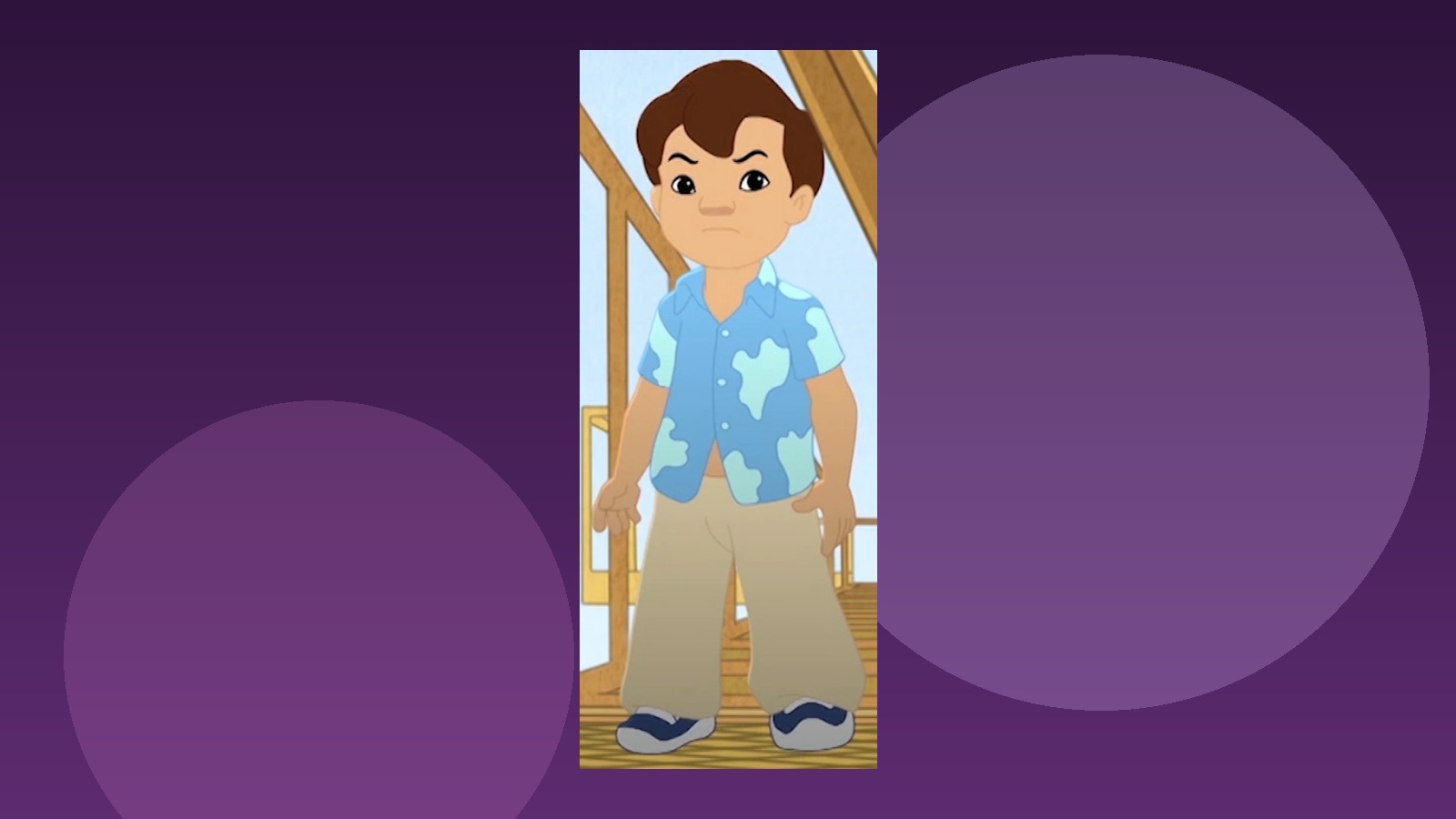
Yong enters “Brothers” as the human brother Ai wished for when she and Stitch activate the Tetra-Tab. He looks like a boy close enough to Ai’s age to join games, explore, and move through the human community without causing the immediate alarm Scratch’s alien body might create. The disguise answers a need the household never had time to examine.
Ai welcomes him quickly because the wish has already supplied a relationship. Yong does not need documents, relatives, or a history. The device and the matching arrival of Scratch make the two newcomers feel like a complete magical answer. That emotional shortcut gives the Jaboodie agent access before anyone investigates who he is.
His true identity is a Jaboodie operative sent alongside Scratch to help activate Stitch’s metamorphosis program. Unlike Scratch, Yong begins showing visible guilt after spending time with Ai. The deception remains harmful. The guilt proves the performance did not leave him untouched.
A human disguise changes the kind of trust he receives
Scratch enters through resemblance to Stitch. Yong enters through resemblance to the brother Ai imagines. A human child can attend group play, approach Meiying, and stand beside Ai without becoming a scientific emergency. His body lets the operation travel through social space instead of breaking into it.
The disguise is not simple invisibility. Yong performs age, friendliness, curiosity, and belonging. Ai reads those cues as evidence that the relationship is safe. Every successful interaction deepens the fraud and creates the possibility that some of the feeling inside the interaction is real.
When Yong eventually reveals Jaboodie features, the visual change makes the betrayal physical. Ai has to understand that the face she trusted was selected for the mission. The reveal does not prove every shared laugh was false. The uncertainty is the wound.
Playing with Ai creates the conflict the mission did not plan for
Yong and Ai swing on ropes, fall into water, splash each other, high-five, and join the larger group. The montage gives him experience beyond surveillance. Ai is not an abstract target attached to Stitch. She is a child who laughs, competes, welcomes him, and assumes his safety matters.
The mission depends on treating relationships as tools. Yong’s time with Ai interrupts that logic because tools are not supposed to recognize the people using them. His guilt in “Monstrosity” suggests that the disguise created proximity the commanders could not fully control. Performance became exposure in both directions.
The series does not show a complete moral conversion. Yong still helps the operation, interferes with Ai’s attempt to reach Stitch, and works inside machinery that extends the danger. Feeling bad does not neutralize those choices. The character becomes interesting because awareness arrives before courage.
Meiying and double Dutch make the lie socially real
Yong greets Meiying, encourages her to join double Dutch, and participates in a group where the new brothers are accepted as ordinary playmates. Meiying’s response gives the disguise social confirmation. Ai is no longer the only person treating Yong as real. The peer group closes around the fiction.
The scene matters because deception is strongest when supported by community cues. If everybody laughs and plays, suspicion feels like breaking the mood. Scratch and Yong benefit from the desire to include. The Jaboodie plan turns hospitality into a route toward Stitch’s body.
Yong also experiences Ai outside their paired wish. He sees how she competes with Meiying, shares attention, and invites others into the activity. She is not clinging to him as a private possession. That ordinary generosity makes later interference harder to excuse.
Operating the crane is the point where guilt becomes a choice
During “Monstrosity,” Yong operates a construction crane and moves the jib to prevent Ai from reaching transformed Stitch. The action converts deception into direct obstruction. He understands that Ai is trying to reach her friend and uses machinery to keep her away. Whatever affection developed during play, the mission still controls his behavior.
The crane imagery places a disguised child in the seat of industrial power. Yong can reshape physical access while Ai remains small beneath the transformed alien and the Jaboodie operation. The scene strips away the harmless brother role. He is an agent capable of making the crisis worse through deliberate action.
His visible guilt afterward matters because the episode refuses to make obedience emotionally clean. He looks at Ai, understands the betrayal, and can no longer treat the outcome as a technical success. The series ends before guilt becomes restitution. Recognition is the beginning of responsibility, not the completion of it.
Commander pressure and Jaboodie belonging
Yong works for the Jaboodies and responds to Commander Wombat within the operation. The exact structure of his recruitment, training, and freedom remains underexplained. He may be loyal, coerced, socialized into the mission, or combining all three. The episodes provide authority and obedience without a full political history.
That missing context matters because family language surrounds his arrival. Ai wished for a brother, while Yong already belongs to an alien group demanding service. The story could have asked whether Jaboodie belonging functions through care, rank, fear, or usefulness. His guilt suggests the existing structure leaves room for judgment even when action remains controlled.
A continuation should make him answer for what happened and reveal what disobedience would cost. Redemption without consequence would be shallow. Punishment without examining the command structure would be equally thin. Yong’s potential lies in the distance between feeling and defection.
Shapeshifting and the ethics of a borrowed body
Yong can disguise or shapeshift, presenting a human form, a hybrid state, and his Jaboodie body. The ability lets him cross boundaries Scratch approaches through manufactured experiment resemblance. Both villains build trust through bodies selected for the target.
A borrowed form raises questions the finale barely reaches. Did Yong design the boy, sample an image, or receive the appearance from the Tetra-Tab? Does the form influence sensation or emotion? Can he keep the identity after returning to the Jaboodies? The production gives viewers images and withholds biology.
His profile uses the official human-form episode artwork because that is the face Ai meets and the face under which guilt develops. Metadata identifies the image as the disguise rather than the whole character. A profile should never let the card image settle a question the story leaves open.
Voice performance record
Jacob Craner is credited as Yong in the documented English production. The role requires a believable childlike entrance, enough warmth to sell the brother performance, and a shift toward hesitation once the mission harms Ai directly. The guilt has limited dialogue, so pauses and visual timing carry part of the turn.
A convincing performance cannot telegraph the betrayal too early. Yong has to sound comfortable enough inside play that Ai’s trust makes sense. After the reveal, the same voice must hold the discomfort of somebody who remembers the games and continues obeying anyway.
A verified Mandarin performer credit has not been established from the sources available for this profile. The page records Craner’s confirmed English role and leaves the Mandarin field open for original broadcast evidence rather than filling it from an unsourced cast list.
What Yong changes in the finale
Scratch demonstrates how a wish can manufacture access to Stitch’s code. Yong demonstrates that the person performing the deception can be altered by the relationship created for the mission. His guilt does not erase the betrayal. His guilt proves the encounter produced a moral fact the commanders did not control.
Ai’s friendship with Stitch has always argued that purpose is not destiny. Yong offers a smaller unfinished version of the same argument. He was sent to deceive and obstruct. He begins recognizing the person harmed by that purpose. The series stops before he chooses whether recognition will become resistance.
The unresolved ending leaves him between villain and possible defector. A deep profile should resist assigning the redemption the episodes never deliver. Yong lied, helped trigger a bodily violation, blocked Ai, felt guilt, and revealed his true form. Those actions are enough to make him more than Scratch’s human-looking partner and unfinished enough to demand another chapter.
What repair would require
Yong cannot repair the betrayal by announcing that the games felt real. Ai already carried the real emotional risk. He would need to provide information about the Jaboodies, accept consequences for blocking her, and help protect Stitch without expecting the family to trust him immediately. Guilt becomes morally useful only when guilt changes what the person is willing to risk.
A continuation should also let Ai remain angry. Her openness was exploited, and forgiveness should not become another task assigned to the harmed child. Yong can choose defection because the choice is right even if Ai never restores the brother relationship. That separation between repair and reward would make his unfinished turn worth preserving.
Keep exploring
Return to the Stitch & Ai hub, read Scratch’s profile, or continue to the finale React.
Yong is an accomplice before he becomes sympathetic
Yong participates in a plan that uses false kinship, secrecy, and Scratch’s programmed body to manipulate Stitch. His later guilt matters because the earlier choice caused real harm. A profile should not begin redemption so quickly that the operation becomes a misunderstanding. He knew enough to perform a role and keep information from people whose safety depended on it.
The exact level of knowledge needs to remain tied to released evidence. What orders did he receive? What consequence did he fear? What did he believe would happen to Stitch, Ai, or Scratch? Sympathy grows from accuracy, not from inventing a threat large enough to make every action unavoidable.
The fake-brother role asks him to counterfeit intimacy
Yong does not merely deliver a device or open a door. He helps create a relationship designed to reach Stitch through unmet family need. That requires watching trust form while knowing the premise is false. The longer the performance continues, the more opportunities he has to notice the people inside the plan.
Counterfeit intimacy can affect the performer too. Yong may begin with strategic language and discover that repeated care, shared danger, or Scratch’s dependence no longer feels purely operational. Real feeling does not retroactively make the deception honest. It raises the cost of continuing and makes silence a new choice each time.
Fear explains hesitation without making hesitation harmless
Yong may fear the people directing him, the consequences of failure, exposure, punishment, or the loss of whatever place the operation promised. Fear narrows choices and changes what courage costs. It also leaves victims living inside the delay. Every moment he waits gives the plan more time to work.
A responsible reading holds both facts. Yong should receive protection if coercion is credible. He should also explain why he waited, what evidence he preserved, and which warning he could have given sooner. Courage does not have to look fearless. It looks like action taken while the fear remains.
Guilt becomes useful only when it changes the next task
Feeling bad can be emotionally sincere and operationally useless. Yong’s guilt matters when it produces information, refusal, rescue, testimony, or repair. Otherwise the story asks the harmed people to comfort him for understanding their pain after helping create it.
The next task should be specific. Identify the controller, protect Scratch’s records, warn Ai, disable one part of the plan, or accept a boundary without arguing that remorse has earned trust. Guilt points toward responsibility. It does not complete it.
Scratch is not his redemption project
Yong may want to help Scratch after recognizing the created person’s fear and coercion. That help should center Scratch’s needs rather than Yong’s desire to prove he is good. He can offer information and protection without demanding closeness, gratitude, or the title of brother.
Scratch may refuse him. That refusal is not evidence repair failed. It is evidence the relationship has finally moved out of coercion. Yong can continue doing the right thing when the emotional reward disappears. That is a stronger measure of change than a reunion staged before the consequences settle.
Ai has the right to know how he used her trust
If Yong entered Ai’s circle, withheld danger, or let her act on false information, he owes her a direct account. Children are often given vague apologies because adults believe operational details will upset them. Missing details make future safety harder. Ai needs enough truth to recognize the pattern if it returns.
The account should avoid burdening her with Yong’s emotional recovery. He can answer questions, acknowledge what he cannot disclose safely, and provide evidence to trusted adults. Ai decides the boundary afterward. A truthful explanation is owed even if forgiveness is not.
A human participant has choices an experiment may not have
Scratch may face installed commands, bodily transformation, or technical controls Yong does not share. Yong may face social coercion, threats, or dependency. Treating both participants as equally controlled can hide the greater freedom available to the human accomplice. Treating Yong as completely free can hide the structure recruiting him.
Responsibility should follow capacity. Which exit routes existed? Which information could he access? Who could he contact? What punishment was credible? Those questions produce a better moral record than a simple trait label. They also identify where future safeguards should interrupt recruitment before another child becomes useful to the same system.
The operation needs a full debrief
Yong should provide names, timelines, locations, communications, promised rewards, threats, and technical procedures. A debrief protects future targets and prevents senior operators from treating his change of heart as the entire problem. The goal is not forcing a dramatic confession. It is turning private knowledge into usable protection.
Independent verification matters. Scratch’s memory, device logs, Ai’s observations, Jumba’s analysis, and physical evidence may confirm or challenge Yong’s account. Disagreement does not automatically prove another betrayal. Trauma, incomplete access, and manipulated records can produce different honest memories.
Consequences should not copy the coercion that recruited him
Punishment based only on obedience and shame may teach Yong to hide better, not judge better. Consequences should connect to harm, restrict unsafe access, require repair, and include protection from the people who directed him. Accountability and safeguarding belong in the same plan.
He may lose trust, privileges, or contact. He may need supervision and structured work restoring damage. Those limits can be clear without declaring him permanently contaminated. A child or young person recruited into harm needs a route back that does not depend on pretending the harm was small.
An ordinary future is part of rehabilitation
Yong should eventually have concerns unrelated to the operation: school, family, friendship, work, embarrassment, interests, and decisions where no villain defines the available roles. Ordinary life gives him reasons to value honesty beyond avoiding punishment.
It also tests whether the community can see him as more than a former accomplice. Trust can remain cautious while identity expands. Rehabilitation fails if every later appearance drags him back only when somebody needs inside information or a reminder of betrayal.
Official character art is required for this branch
Because Stitch & Ai has uneven international availability, many readers cannot instantly distinguish official character design from fan reconstruction. Yong’s featured image, hero, and landing card need the same locally stored official still with source provenance.
The image should show his face clearly enough for recognition and avoid crops that reduce him to background scenery. Metadata should name the source episode or official promotional material, credit the rights holder, and state editorial use. Visual receipts matter most where documentation is scarce.
Profile verdict
Yong becomes interesting when the story refuses two easy versions: innocent child who was forced to do everything, or calculating traitor whose guilt arrives too late to matter. He is a participant with incomplete power, real choices, fear, and a growing understanding of the people the plan turned into instruments.
His complete arc needs a debrief, protection from recruiters, direct apologies, boundaries he cannot negotiate away, and ordinary life beyond redemption work. Let Scratch choose whether any relationship survives. Let Ai keep the information needed for safety. Then Yong’s change of heart becomes the beginning of accountable action instead of the finale’s shortcut to forgiveness.
The receipt for the next appearance
The next time Yong receives an order that depends on secrecy, the story should remember this operation. He knows how slowly a false role becomes real harm and how guilt expands while he waits.
The decisive change is not that he feels worse sooner. It is that he acts sooner, preserves evidence, warns the target, and accepts the cost before another person has to become the proof that the order was wrong.
Recruitment usually begins before the obvious crime
The operation may have reached Yong through praise, belonging, money, fear, obligation, or the promise that he would finally matter to somebody powerful. Recruitment works by making the first request look smaller than the final plan. Carry a message, keep a confidence, prove loyalty, and accept one more task because refusing now would expose everything already done.
A complete profile should identify that progression where the episodes provide evidence and mark inference where they do not. Prevention depends on recognizing early steps. Children need adults who can hear a partial confession without immediate humiliation, because recruiters rely on the belief that asking for help will destroy the target’s remaining relationships.
Evidence preservation is a form of repair
Yong may have access to messages, locations, device instructions, names, or routines that no other witness knows. Preserving those records can protect Scratch, Stitch, Ai, and future targets. He should not be told to delete everything simply because the material is frightening or embarrassing.
Evidence also needs safe handling. Copies, trusted adults, timestamps, and limits on public exposure reduce the chance that one frightened participant can be forced to retract the whole account. The branch does not need to become a procedural drama. It needs to show that truth survives better when responsibility is shared.
Family response can either interrupt or deepen the coercion
If Yong’s family learns what happened, anger and fear are reasonable. Public shame, expulsion, or refusal to hear how recruitment worked may push him back toward the people who already know how to use isolation. Protection does not mean avoiding consequences. It means consequences happen inside a relationship that remains reachable.
The family also deserves support. They may face danger, community judgment, financial cost, or uncertainty about which parts of his account are complete. Counseling, legal help, school coordination, and clear safety rules keep one household from carrying an organized operation alone.
Relapse risk should be discussed without declaring him untrustworthy forever
Yong may miss the attention, certainty, status, or belonging the operation provided even after rejecting its purpose. That does not prove the remorse was fake. People can understand harm and still feel the pull of the structure that gave them a role. Pretending the pull disappeared makes future manipulation easier.
A relapse plan should identify contacts, phrases, situations, and emotional states that increase risk. Yong needs somebody he can contact before accepting another task. The community needs boundaries if warning signs appear. Trust becomes informed rather than naive when everybody knows what to watch and what response follows.
Cooperation must not become another coerced performance
Authorities or adults may demand that Yong prove remorse by answering every question immediately, confronting dangerous operators, or taking risks no protected witness should carry. Forced cooperation repeats the logic that his value depends on usefulness. He owes truth and repair, but the process still requires safety and proportionality.
A responsible debrief allows breaks, representation, uncertainty, and correction. Yong can say that he does not remember or did not know. Investigators can verify rather than treating confidence as honesty. The goal is an accurate record, not a dramatic scene where fear is mistaken for guilt and composure is mistaken for innocence.
The branch should let him be angry too
Remorse does not eliminate anger at the people who recruited him, the adults who missed warning signs, or the friends who may never trust him again. Anger can coexist with responsibility. The danger is using it to demand that victims repair his pain.
A future episode could let Yong direct anger toward testimony, prevention, or protection while learning where it does not belong. Emotional complexity keeps redemption from becoming a performance of permanent sadness. Accountability should produce a fuller person, not a quieter one.
Evidence note
The released episodes do not answer every question about Yong’s recruitment, family pressure, or precise knowledge. The profile should identify those gaps instead of presenting a psychologically satisfying theory as canon. Strong criticism can explain several plausible readings and still admit what the screen never confirms.
That honesty matters for a series with uneven international release and incomplete secondary documentation. Readers should be able to separate broadcast evidence, official production information, translation choices, and RaeRae’s interpretation without losing the emotional argument.
Future boundary
Yong should never again be asked to perform a family role as proof of loyalty. Any future bond with Scratch, Ai, or Stitch must begin with accurate identity, informed choice, and the freedom to leave without punishment.