
STITCH & AI CHARACTER PROFILE · RIVAL · DRUMMER
Meiying Character Profile: A Rival Is Not Automatically an Enemy
Meiying competes with Ai, cooperates when the moment requires it, and keeps proving that “rival” describes a relationship rather than an entire girl.
Profile record
Name: Meiying (美莹; Měiyīng)
Species: Human
Role: Student, drummer, and Ai Ling’s rival
Family: Unnamed mother, aunt, and grandmother
English voices: Cherami Leigh; Xanthe Huynh in “Dragon Parade”
Documented episodes: “Hello – Goodbye,” “Teacher’s Pet,” “Dragon Parade,” “Tell the World,” “The Phoenix,” “Dream On,” “Nuo Opera,” and “Brothers”
Who Meiying is
Meiying is Ai Ling’s school and drumming rival in Stitch & Ai. She appears across the season often enough to become part of Ai’s ordinary social world, yet most summaries reduce her to the franchise slot previously occupied by Mertle, Penny, or Jessica. The comparison identifies a function and hides a character. Meiying competes, teases, watches, joins group activities, and sometimes cooperates without requiring a sudden friendship speech.
Her rivalry with Ai is real. Drumming, school visibility, physical games, and attention create repeated opportunities to measure one girl against the other. The relationship is less hostile than Lilo and Mertle’s conflict. Meiying does not organize her identity around hating Ai. She can enjoy a shared activity, become curious about Stitch, or participate in the same danger when the episode gives them a reason.
That variability makes her socially believable. Children who compete are not required to remain enemies between competitions. A friend can become irritating when an audience appears. A rival can be the first person who understands why a public failure hurts. Meiying’s thin screen time contains enough shifts to reject the bully label as a complete biography.
Drumming gives the rivalry a real field
Ai and Meiying train under Qian Dahu with other girls. Drumming creates a shared discipline rather than a vague popularity contest. Timing, control, endurance, coordination, and public confidence can be observed. When one girl outperforms another, the comparison has a skill behind it. That matters because rivalry becomes more interesting when both people care about the work.
The activity also connects Meiying to Huangshan’s community life. She is not an outsider placed in Ai’s path to manufacture conflict. She belongs to the same practice network and attends public events. Their disagreement happens inside shared membership. Neither girl can solve the tension by claiming the other does not belong.
The series leaves her private relationship to drumming mostly unexplored. Does she love the sound, enjoy winning, respond to family expectation, or want Dahu’s approval? A profile should mark that missing motive rather than turning every competitive expression into vanity. The episodes show commitment and social investment. They do not give us a complete origin story.
The Mertle comparison only goes so far
Mertle repeatedly humiliates Lilo and uses a peer group to police normality. Meiying can be smug and competitive, but her relationship with Ai contains more permeability. She joins activities, reacts to new people, and can stand beside Ai without treating cooperation as defeat. The franchise resemblance is strongest at the level of a confident girl who challenges the protagonist socially.
The difference becomes important because Ai does not need a copied enemy to prove she is a new lead. A Chinese setting deserves relationships shaped by its own school, family, and performance structures. Meiying’s rivalry is strongest when a plot uses those local structures. The character becomes weakest when a script relies on familiar mean-girl shorthand and assumes viewers will fill the rest from earlier series.
Calling her friendlier than Mertle is still comparative rather than descriptive. Meiying deserves verbs. She notices, competes, performs, doubts, joins, laughs, and occasionally chooses the group over status. Those choices create the person available on screen.
Dragon Parade turns competition into shared performance
“Dragon Parade” places Ai and Meiying side by side under Dahu’s direction and inside a public community event. Parade performance makes rivalry visible to adults, peers, and neighbors. The girls are not practicing in a private room where a mistake can disappear. They have to coordinate within something larger than either individual reputation.
The episode allows Meiying to notice Ai from an alley, participate in the unfolding creature crisis, and remain present through the group photo. That final image matters. A photograph can flatten conflict into smiling unity, but the route to the photograph contains actual cooperation. They do not become inseparable. They prove that rivalry does not prevent shared responsibility.
Public performance also creates pressure to appear composed. Meiying’s confidence may be partly performance itself. The series rarely shows what happens after she loses or embarrasses herself. A fuller season could have followed her home and asked whether the polished rival is managing expectations Ai never sees.
Bao, Stitch, and the danger of attention
In “The Phoenix,” Meiying notices Bao and reacts to Stitch’s physical familiarity with visible discomfort when he tries to lick her. The moment is comic and also establishes a boundary. Stitch is beloved by Ai, but other children do not automatically accept every gesture because the protagonist calls him family. Meiying’s reaction is allowed to belong to her.
Bao’s city background briefly shifts the social field. Daiyu brought him to promote city life, while the children treat him as a new person whose attention can alter status. Meiying’s response adds another layer to Ai’s family argument without making the girls representatives of mountain and city purity.
Stitch also makes Ai socially interesting in a way Meiying cannot control. The alien can become a friend, spectacle, secret, or threat depending on who sees him. “Tell the World” demonstrates how quickly attention distorts Ai’s judgment. Meiying’s presence helps explain why recognition feels tempting. Peer status is part of the emotional economy even when the alien villains are the official danger.
Brothers gives Meiying the season’s clearest cooperation
“Brothers” introduces Scratch and Yong as wished-for companions before revealing the mission underneath their human-friendly forms. Meiying joins Ai, the newcomers, and Stitch for double Dutch. She starts jumping, accepts Yong’s invitation, and shares a moment where group play matters more than rivalry.
The sequence becomes unsettling after the deception is known. Scratch and Yong use pleasure, belonging, and imitation to get close enough to trigger Stitch’s metamorphosis program. Meiying is not the target, but her participation helps make the group feel legitimate. Ordinary trust becomes scenery for an operation.
Her role proves why side characters matter in a serial story. A fake brother pair can fool Ai and Stitch more easily when the surrounding peer accepts them. Meiying’s social response validates the performance without intending to. The episode uses her as part of the mechanism and still gives her a genuine experience of cooperation with Ai.
Voice performance and the episode-level change
Cherami Leigh is credited for Meiying in the documented English production, with Xanthe Huynh credited for “Dragon Parade.” The role change should remain visible because character records become inaccurate when multiple performers are blended into one name. The production history is already complicated by language and regional release. Episode-level credit is part of preserving what actually aired.
Meiying’s English performance needs confidence without turning every line into cruelty. The character works when superiority can soften into curiosity or shared excitement within the same episode. A rigid mean-girl voice would erase the flexibility written into the relationship. The best delivery lets listeners hear that Meiying enjoys winning and can still enjoy the people she competes against.
A verified Mandarin performer credit has not been established from the available original-broadcast records for this profile. The absence is noted instead of patched with an unsourced list. Accurate incompleteness is more useful than confident error.
What the series owed Meiying
The series owed Meiying a home scene, a family argument, or a private reason for taking drumming seriously. Her mother, aunt, and grandmother are referenced in available character records, but the episodes do not give those relationships the depth granted to the Wang household. A rival without a private world risks becoming a mirror that only reflects the protagonist.
She also deserved a conflict where Ai was clearly unfair to her and the repair did not depend on an alien emergency. Rival characters gain dimension when the lead has to acknowledge their claim without being rewarded for heroism first. The show hints at mutual respect and runs out of episodes before respect becomes a relationship with history.
Her family references could also explain the polished behavior she carries into public spaces. A mother, aunt, and grandmother create three generations of expectations, advice, and comparison. The series names the network and leaves every pressure off screen. One ordinary dinner scene could reveal whether Meiying performs confidence because home rewards achievement, because Ai unsettles her, or because competition is genuinely fun.
What survives is enough for a clear judgment. Meiying is competitive, socially confident, invested in drumming, sensitive to attention, capable of cooperation, and less hostile than the franchise archetype assigned to her. She does not need to become Ai’s best friend. She needs the audience to stop treating “rival” as a complete sentence.
Keep exploring
Return to the Stitch & Ai hub, read Ai Ling’s profile, or browse all thirteen episode Reacts.
Their arc becomes clearer when we track who receives patience, who gets corrected, and whether friendship changes behavior after the apology scene ends.
A rival is somebody with a goal, not a permanent moral category
Meiying enters Ai’s world through friction, comparison, and the possibility that one girl’s success will make the other girl smaller. That is familiar school logic, not proof of evil. A rival can expose insecurity, sharpen skill, and force somebody to define what she actually wants. The problem begins when the social group treats competition as permission to humiliate the person who loses.
A full profile should track what Meiying is competing for in each scene. Attention, status, adult approval, control of the group, access to an opportunity, or the satisfaction of being right are different motives. Calling all of them jealousy saves words and erases character. Her choices become legible when the reward and the audience are named.
Popularity is a system she helps maintain
Meiying’s influence depends on other children watching, repeating, laughing, withholding support, or deciding which version of an argument becomes public truth. That means her power is relational. She cannot create a social hierarchy alone, but she can learn how to benefit from it and how to punish anybody who refuses the assigned role.
The group also gives her a place to hide responsibility. A cruel joke becomes something everybody said. Exclusion becomes a general mood. Repair requires Meiying to name her own action instead of pointing at the crowd. It also requires the bystanders to admit that silence and amusement helped the pattern survive.
Ai’s arrival threatens a story Meiying already believed about herself
A new or newly assertive girl can disrupt an identity built around being the most capable, admired, informed, or culturally fluent person in the room. Ai does not have to attack Meiying directly. Existing loudly may be enough. Stitch increases the disruption because extraordinary attention begins following Ai through spaces where Meiying expected the social order to remain predictable.
That insecurity deserves interpretation and boundaries. Feeling displaced is not a crime. Turning another child into the target of public correction is a choice. Meiying can ask for recognition, build new strengths, and tolerate being second without requiring Ai to become smaller. Growth begins when she separates loss of monopoly from actual mistreatment.
Competence should survive after the rivalry plot ends
The branch needs to show what Meiying can do when the episode is not arranging a contest. Academic knowledge, local familiarity, organization, performance, sports, art, social reading, or practical skill can give her value that does not depend on defeating Ai. Without that evidence, the character exists only as pressure applied to the lead.
Competence also makes reconciliation more interesting. Ai may need information or access Meiying genuinely has. Meiying may recognize a danger Ai overlooked. Cooperation should not instantly turn them into identical friends. It can begin with negotiated trust, clear tasks, and the discovery that another person’s strength does not erase her own.
The alien secret changes the ethics of ordinary school conflict
Once Meiying encounters Stitch, Scratch, or the larger experiment crisis, gossip can create consequences far beyond embarrassment. Revealing the wrong detail may attract authorities or villains. Hiding evidence may endanger the community. Children who used secrets as social currency suddenly hold information that requires judgment, consent, and safety planning.
The series should let Meiying understand that change. She can still be curious and angry while recognizing that public exposure is not a harmless way to win. A meaningful turn would show her protecting information before anybody rewards her, then explaining the choice afterward without demanding immediate friendship as payment.
An apology needs the audience that witnessed the harm
If Meiying embarrassed Ai in front of peers, a private apology repairs only part of the damage. The group still carries the original story. Public repair does not mean staging humiliation in reverse. It means correcting false claims, refusing the next cruel joke, and accepting that other children may need time to change how they behave.
She should also avoid the apology that asks Ai to perform comfort. “I am the worst person ever” makes the harmed child responsible for reassurance. A useful apology names behavior, consequence, and changed practice. Meiying can feel shame without turning shame into another demand for attention.
Friendship is possible without erasing rivalry
The easiest children’s-television ending turns rivals into best friends after one shared danger. Real repair may produce a more interesting relationship. Meiying and Ai can respect each other, compete under fair rules, cooperate when necessary, and keep boundaries around trust. Friendship can grow later if both want it.
Preserving some rivalry also protects personality. Meiying does not need to agree with Ai to prove she changed. She needs to stop using social power as a weapon and accept the legitimacy of Ai’s place in the group. Ethical competition has consent, clear rules, proportionate stakes, and room for the loser to remain fully human.
Adults shape the incentives children follow
Teachers and relatives may praise achievement without noticing the social punishment built around it. They may label one child promising and another difficult, then act surprised when the children reproduce that hierarchy. Meiying learns which performances earn approval by watching adults as closely as she watches peers.
Adult intervention should do more than order everybody to be nice. Clarify rules, separate assessment from popularity, interrupt public ridicule, and create ways to report retaliation. Meiying remains responsible for her conduct. The institution remains responsible for the environment that made cruelty efficient.
Cultural confidence should not become cultural gatekeeping
Meiying may know local expectations, stories, language, or social codes that Stitch and the audience do not. That knowledge can make her valuable. It can also become a tool for deciding who is authentic enough to belong. Ai should not have to perform an approved version of local identity to avoid exclusion.
The profile should distinguish correction from gatekeeping. Correcting a factual error or protecting a practice from disrespect can be necessary. Using cultural knowledge to embarrass somebody, close debate, or monopolize authority is different. Meiying becomes a stronger guide when she can share knowledge, cite elders or sources, and admit where her own understanding is partial.
The rivalry should include class and family pressure when the evidence supports it
Competition rarely begins in a vacuum. Access to lessons, time, money, transportation, adult attention, or social connections affects who appears naturally talented. If Meiying has advantages, the story should name them without declaring her achievement fake. If she faces pressure or scarcity, the story should show why losing feels dangerous.
Context explains stakes and prevents moral shortcuts. It does not excuse targeted harm. The useful question is what system taught Meiying that another girl’s success threatens her future. Once that lesson is visible, repair can include changing the incentives rather than asking two children to solve an adult structure through personal kindness alone.
Her bravest choice may be disagreeing with her own group
A popular child risks status when she interrupts the behavior that created popularity. Meiying may lose laughter, invitations, or control if she defends Ai or admits the group was wrong. That cost makes the action meaningful. It proves she is choosing a standard rather than following the new winning side.
The moment should not be framed as instant sainthood. She may hesitate, protect herself first, or speak only after damage occurs. Courage often arrives late. The receipt is whether she acts differently the next time the group offers the same easy cruelty.
Profile verdict
Meiying has the material for a substantial rival: social intelligence, insecurity, competence, an audience, cultural knowledge, and a lead character who disrupts the position she expected to keep. She becomes shallow only when the branch compresses all of that into jealousy and waits for one rescue scene to make her nice.
Her best arc preserves competition while removing dehumanization. Give her skills outside the rivalry, adults who examine the incentives, peers who own their complicity, and an apology that repairs the public record. Then Meiying can become a difficult, valuable member of Ai’s world without pretending the earlier harm never happened.
Trust should return in smaller pieces than the apology
Ai does not owe Meiying immediate access after an apology. Trust can return through limited cooperation, accurate information, kept confidences, and repeated moments when Meiying refuses the old social reward. That scale protects Ai from being asked to risk everything so the episode can announce reconciliation before the credits.
Meiying also needs protection from the idea that one mistake defines her forever. Boundaries are not permanent exile. She can accept reduced access while building a different record. The relationship becomes believable when both girls know what is currently safe and what evidence would justify another step.
Consequences should teach instead of merely embarrass
Public humiliation would reproduce the method Meiying used against Ai. A useful consequence connects to the harm: correct the rumor, restore access, repair a damaged project, step back from a leadership role, or complete work that benefits the group without controlling it. The goal is responsibility, not entertainment.
Adults should explain the connection rather than delivering punishment as mysterious authority. Meiying is more likely to change when she understands which choice caused which consequence and what future behavior looks like. Fear can suppress conduct in front of teachers. Understanding changes what happens when no teacher is watching.
A future crisis should test the change without erasing it
The next alien emergency should tempt Meiying with the same tools that once worked. She may know a secret that could restore status, see Ai make a mistake in public, or receive praise for taking control. Growth becomes visible when she recognizes the temptation and chooses a different route before the plot forces her.
That does not require perfect behavior. She can hesitate, speak sharply, or protect herself first. The important receipt is whether she notices the old pattern and repairs earlier. Development is the distance between harm and recognition becoming shorter, not a character losing every difficult trait that made her recognizable.
Meiying needs scenes where Ai is not present
An independent scene could show her with family, preparing for school, practicing a skill, managing group expectations, or sitting alone after a public success feels less satisfying than expected. Perspective outside Ai’s gaze would confirm that she has motives and pressure even when the protagonist is not available as an audience.
Those scenes would also prevent redemption from becoming another service performed for Ai. Meiying can change because she dislikes who the system asks her to be, because a sibling challenges her, or because she recognizes the cost to the group. Moral growth belongs to the person making it, even when repair is owed to somebody else.
The character card should not freeze her at her worst moment
Landing-page summaries often reduce rivals to the cruelty that introduced them. That makes navigation clear and character understanding poor. Meiying’s card should name the rivalry, social harm, competence, and possibility of accountable change in the same brief space.
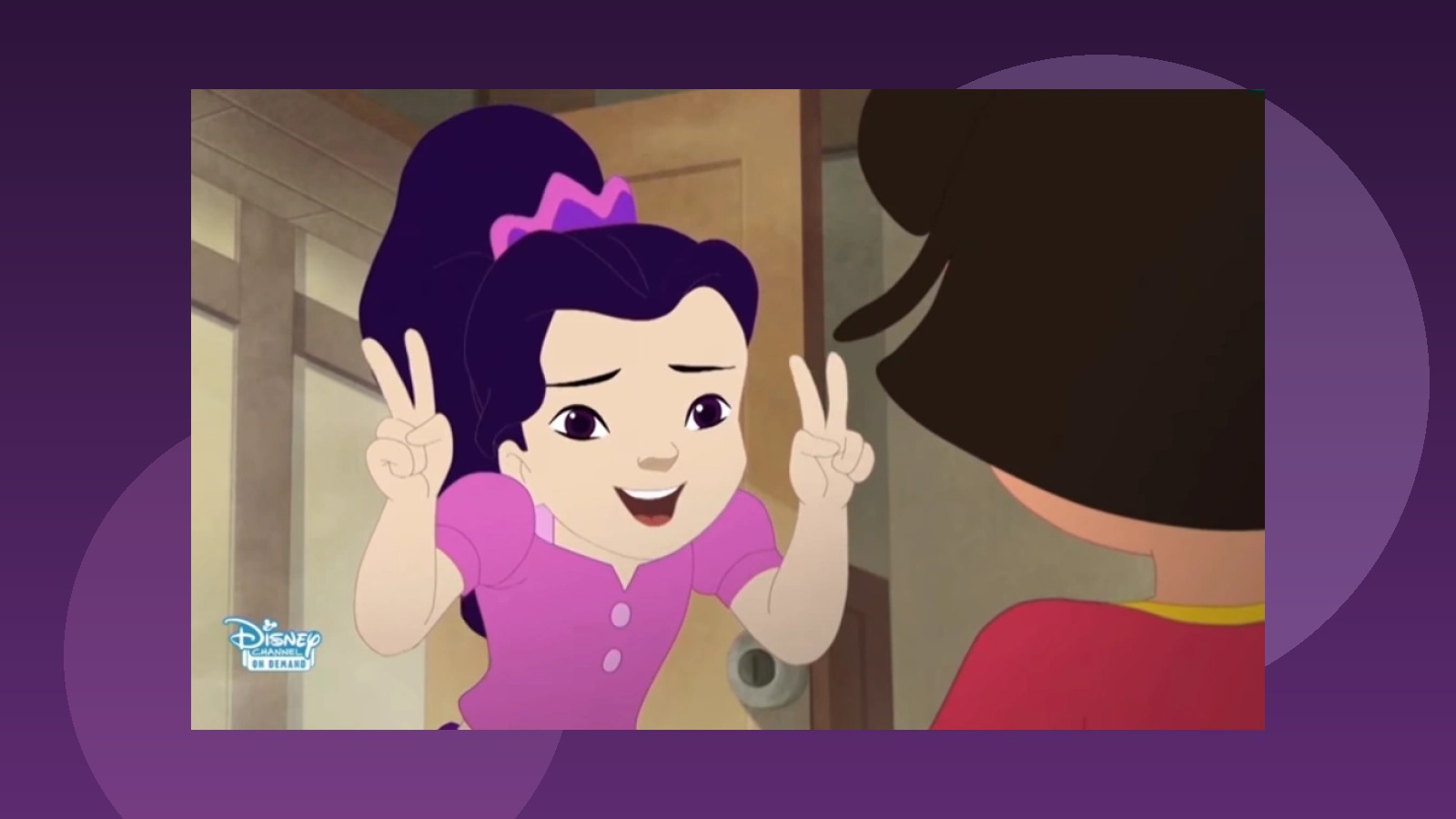
Images matter too. An official still should show the person rather than using generic scenery or generated approximation. Readers deserve to recognize the exact animated character whose choices the profile analyzes. Visual accuracy is part of the receipt, especially for a less documented branch.
What she should learn from Stitch
Stitch is living evidence that origin and behavior do not have to become destiny. He was introduced through destruction, judged through fear, and changed through boundaries, belonging, and choices nobody could make for him. Meiying does not share his history, but she can recognize the principle.
A reputation can describe what happened without dictating every future action. That lesson helps her accept accountability without deciding she is permanently bad. It also helps her stop freezing Ai inside the role of rival. Both girls need room to produce new evidence.
Final receipt
Meiying’s final receipt is not a dramatic rescue performed while everybody watches. It is the next ordinary moment when cruelty would earn an easy laugh and she chooses not to spend another person’s dignity for social safety.
That quiet refusal would show the profile’s whole argument in one action. Rivalry can remain. Disagreement can remain. What ends is the assumption that winning requires somebody else to become publicly smaller.
Evidence note
Where the released episodes leave her family pressure, private motives, or future choices unstated, the profile should label interpretation clearly instead of turning a plausible reading into invented canon.