
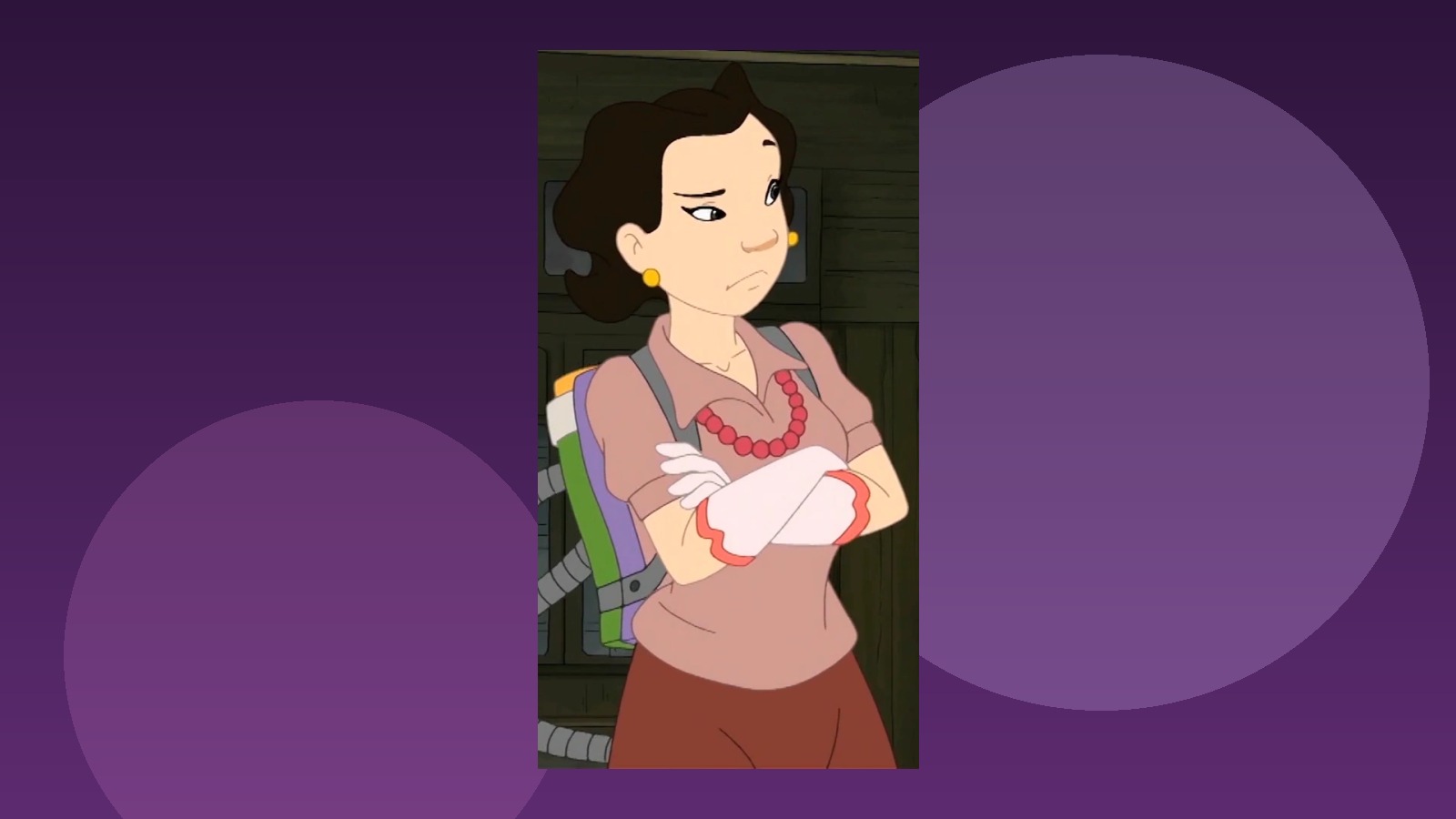
STITCH & AI CHARACTER PROFILE · AUNT · CITY AUTHORITY
Wang Daiyu Character Profile: An Opportunity Becomes a Threat When the Child Gets No Vote
Daiyu could have expanded Ai’s world. The problem begins when help becomes custody and the child’s existing life is treated as something to erase.
Profile record
Full name: Wang Daiyu
Common address: Aunt Daiyu
Species: Human
Family: Ai Ling and Jiejie, nieces; Bao, nephew or younger relative
Primary conflict: Attempts to relocate Ai from Huangshan to the city
Known interests: City culture, cleanliness, the arts, foundation philanthropy
English voice: Laura Post
Documented episodes: “Hello – Goodbye,” “Teacher’s Pet,” “The Scroll,” “The Phoenix,” and “Nuo Opera”
Who Daiyu is and what she wants
Wang Daiyu is Ai Ling and Jiejie’s aunt, Bao’s aunt or close elder relative within the same family network, and the adult who arrives in Huangshan convinced that Ai’s life should be moved to the city. She presents the plan as improvement. The city offers culture, education, cleanliness, and the social refinement she believes the mountain household cannot provide. Ai hears the same plan as removal from her sister, home, routines, friends, and the landscape holding memories of her parents.
Daiyu’s central flaw is not that she values urban opportunity. Her flaw is the belief that adult authority and financial capacity give her the right to decide what opportunity must look like. She speaks about remaking Ai into a proper lady rather than asking what kind of person Ai wants to become. The vocabulary reveals the project. Daiyu is not offering access while preserving the child’s identity. She intends to replace the identity she considers inadequate.
The threat becomes explicit when she says Jiejie will not be allowed to visit after the move. At that point, concern cannot explain the whole plan. Separating bereaved sisters is a use of power. The series plays several attempts at departure as comedy, but the emotional premise remains severe.
Family authority without listening
Daiyu enters the household as if the decision has already been made. Jiejie is distressed and initially unable to stop her. Ai objects loudly and receives the familiar response that children resist what is good for them. That structure protects the adult plan from evidence. Agreement proves the plan is wise. Resistance proves the child needs stricter guidance.
The show never explains the exact legal authority Daiyu holds, which makes the conflict feel both urgent and vague. A richer script would identify whether she has guardianship power, financial leverage, or simply enough family status that Jiejie believes refusal is impossible. The missing detail matters because control works differently when backed by law, money, custom, or intimidation.
Whatever the formal arrangement, Daiyu behaves as if care can be imposed. She does not recognize Ai’s expertise in her own life. The child knows the school, community, mountain routes, drum practice, and household relationships that would be disrupted. Daiyu counts resources. Ai counts belonging. Neither list is imaginary, and only one person will be forced to live with the decision.
Cleanliness becomes class judgment
Daiyu’s fear of germs is one of her loudest comic traits. She wears layered gloves, carries disinfectant spray, worries about mountain air, invests in fumigation, and treats the family home as a contamination problem. The behavior is exaggerated enough to function as slapstick. The class judgment underneath the joke should remain visible. Dirt, rural life, and social inadequacy are bundled together.
Her high-tech fumigation equipment enters a home without meaningful permission. Cleaning becomes another form of control over space. Daiyu is not helping Jiejie complete a task Jiejie requested. She is demonstrating that the household fails her standards and that only city resources can correct it. The machine makes a social hierarchy physical.
The series mocks her when fresh mountain air is treated as dangerous and when the double gloves become absurd. The mockery is satisfying and incomplete. Germ anxiety can be genuine distress, and the show rarely asks where the fear came from. Understanding the fear would not excuse humiliating the family. It would give Daiyu an interior life beyond being punished for snobbery.
Stitch turns every relocation attempt into farce
Daiyu dislikes Stitch immediately and describes him through appearance, cleanliness, and threat. Stitch recognizes that she intends to take Ai away and responds with disguise rather than negotiation. In “Teacher’s Pet,” he impersonates Ai under layers of clothing during the car trip. The trick returns the real child to the mountains and turns Daiyu’s confidence into spectacle.
Later, Ai and Stitch stage an impossible transformation while Daiyu is preparing to take Ai by train. Jiejie helps sell the deception, and a doctor escorts Daiyu away while the family remains home. The scene works as rebellion fantasy because the powerful adult loses control of the reality she was imposing on everybody else.
The tactic is also gaslighting. Daiyu’s perception is deliberately manipulated until other people treat her as delusional. Her coercive plan explains why the family reaches for deception. The plan does not make the method harmless. A continuation should have dealt with the loss of trust rather than ending each escape on a comic beat.
Teacher’s Pet gives her the evidence she expected to find
Jiejie tries to show Daiyu that Ai receives a good education in the mountains. They arrive immediately after Stitch’s confrontation with a possessed teacher has left the classroom in chaos. Daiyu sees the mess and treats the worst possible moment as a complete evaluation of the school. The scene mirrors how inspections can punish families for a crisis without examining the conditions that produced it.
Daiyu’s conclusion feels reasonable if the frame begins at the doorway. The audience knows more. That gap makes the episode effective and frustrating. Jiejie has finally attempted advocacy, and random alien timing destroys the case. Ai’s life is again judged by adults who do not wait for context.
The moment also reveals confirmation bias. Daiyu expects mountain schooling to be inferior, so disaster becomes proof rather than a reason to ask questions. Her position is protected from revision. A clean classroom might have been dismissed as one staged day. The wrecked classroom becomes the truth she already carried into the building.
Bao accidentally defeats the city sales pitch
In “The Phoenix,” Daiyu brings Bao to persuade Ai that city life is better. She expects a child from the city to function as testimony for her plan. Bao instead spends time with Ai and Stitch, joins the mountain adventure, and decides that the place Daiyu disparages is exciting. The witness changes sides after encountering the life rather than hearing a description.
The reversal is funny because Daiyu has arranged her own defeat. It also reveals that her argument depends on controlling the comparison. Ai is told what the city contains. Bao is allowed to experience Huangshan. Direct experience produces a more complicated answer than the adult campaign wanted.
Bao’s enthusiasm does not prove rural life is universally superior. The episode is not a policy study. It proves that Daiyu’s certainty was manufactured by excluding Ai’s evidence. The child she recruits to validate the city becomes another person whose preference she failed to predict.
Nuo Opera reveals the person behind the disinfectant spray
“Nuo Opera” gives Daiyu her most sympathetic action. After Jumba’s Chinese experiments destroy sets and costumes, she pledges foundation money to support reconstruction. She then attends the performance with the community. The woman who treats mountain life as dirty recognizes that the local art deserves preservation.
The donation does not erase the relocation campaign. Money for costumes cannot repay Ai for the threat of separation. The action matters because contradiction is more useful than redemption by checkbook. Daiyu’s appreciation for the arts is real. Her ability to help is real. The same cultural confidence that makes her condescending can also direct resources toward repair.
A longer series could have built a path from that act toward genuine respect for the mountain community. She might have learned that culture is not limited to city institutions and polished social spaces. The episode hints at growth and ends before the hint can become a changed relationship.
Daiyu and Jiejie represent two incomplete forms of care
Jiejie offers emotional closeness, daily labor, and a home Ai recognizes. She initially lacks the public authority or confidence to defend the arrangement. Daiyu offers money, urban access, and certainty. She lacks respect for the child’s voice and the sister bond. The family conflict becomes sharper because each woman possesses something the other does not.
The series often treats Jiejie as correct and Daiyu as obstacle, which reflects the immediate stakes. The deeper version would ask how the family could combine resources without surrendering Ai’s home. Could Daiyu fund education, travel, or cultural access while keeping the sisters together? Could Jiejie accept help without giving up decision-making power? The refusal to imagine compromise belongs largely to Daiyu, who frames assistance as custody.
Ai deserves protection from both failures. Affection without advocacy left her exposed. Opportunity without consent threatened to remove everything familiar. The child should not have to choose which incomplete adult model will control her future.
Voice performance and role contrast
Laura Post is credited as Daiyu in the documented English production and also voices Jiejie. The pairing creates a deliberate contrast inside one performer’s work. Jiejie begins soft, hesitant, and emotionally compressed. Daiyu arrives clipped, confident, judgmental, and certain that every room should adjust to her. Their conflict depends on authority being audible before anyone explains the family hierarchy.
Daiyu’s comic scenes require precision because broad disgust can become noise. The funniest lines arrive when she treats an ordinary mountain detail as a personal assault and assumes everybody understands the emergency. Her more sympathetic moment during the Nuo opera repair needs less armor. The donation should sound like a choice rather than another demonstration of status.
A verified Mandarin performer credit has not been established from the sources available for this profile. The page records the confirmed English role and leaves the missing credit open for evidence from an original broadcast or licensed release. Accuracy remains more important than making the cast field look full.
What Daiyu contributes to the series
The alien villains threaten Stitch’s body through capture and programming. Daiyu threatens Ai’s life through a respectable family plan. The scales differ, and the shared moral question is clear. When does authority become ownership? The series answers through two characters who refuse to be moved for somebody else’s idea of usefulness.
Daiyu is effective because her plan is plausible enough to create argument. A city can provide opportunities. An aunt can worry about a child after bereavement. Cleanliness can reflect fear rather than vanity. None of those facts authorize isolation from Jiejie or the redesign of Ai into a proper lady. The profile becomes deeper when it identifies the reasonable material inside an unreasonable exercise of control.
Her arc ends incomplete. She appears to stop pursuing the move by “Nuo Opera,” but the story never stages a clear apology, relinquishment of authority, or negotiated future. Viewers are left to infer change from absence. Daiyu deserves neither automatic forgiveness nor permanent caricature. She deserves the harder judgment: a capable relative who could have expanded Ai’s world and instead tried to replace it.
What reconciliation would have to include
An earned reconciliation cannot begin with Ai thanking Daiyu for caring. The child has already understood that her aunt believes the plan is helpful. Daiyu needs to name what she did: threatened separation from Jiejie, dismissed the mountain home, treated resistance as proof of immaturity, and used resources to make her preference feel inevitable. An apology that avoids those actions would preserve the same power beneath softer language.
Repair would also require a new structure for decisions. Ai should have access to city opportunities without permanent relocation being the price of admission. Jiejie should receive material support without surrendering the household. Daiyu should remain family without retaining unilateral control. The series has already shown that her money can repair community art. A continuation could show whether she can offer resources without attaching ownership.
Ai would not owe immediate trust. Jiejie would need to stop mediating every conflict into politeness. Bao could become evidence that movement between city and mountains does not require ranking one life as superior. Reconciliation would be slower than a villain defeat and more useful to the franchise. The problem was always a family relationship organized around unequal authority.
Keep exploring
Return to the Stitch & Ai hub, read Ai Ling’s profile, or continue to Jiejie’s profile.
The character’s smallest choices matter because loyalty is not a personality label. It is repeated work performed when fear, embarrassment, or authority makes leaving easier.
Opportunity becomes coercion when refusal is never real
Daiyu may see relocation as access to schooling, safety, employment, family support, or a future unavailable under current conditions. Those concerns deserve serious treatment. The problem begins when opportunity is presented as a moral test: grateful children agree, sensible adults stop asking questions, and attachment to home becomes evidence of immaturity. A choice with only one respectable answer is not consultation.
Ai cannot control every family decision, but she can be given timelines, reasons, alternatives, and meaningful influence over how change happens. Daiyu’s responsibility is not to guarantee happiness. It is to avoid using economic or parental power to turn fear into obedience while calling the result consent.
The adult plan needs an adult receipt
If the move solves a real problem, the story should name that problem and show the evidence. What changes in housing, income, school access, caregiving, or safety? Who pays? Who benefits first? Which risk remains? Without those answers, Daiyu becomes either a cold obstacle or a vague symbol of practical adulthood. Neither version gives her enough substance.
A written plan would also reveal whether staying is possible with support. Could work change, could another caregiver help, could education be accessed differently, could travel preserve relationships, or could the move be delayed? Exploring alternatives does not promise Ai will get her preferred outcome. It proves the family treated her life as more than cargo attached to the winning spreadsheet.
Fear can hide inside certainty
Adults under pressure often sound most absolute when they feel least secure. Daiyu may be protecting Ai from instability she has not fully explained, or protecting herself from the terror of admitting there is no clean answer. Certainty keeps the household moving. It also makes questions feel like attacks because one honest doubt could reopen the entire plan.
The character gains depth when the story lets that fear surface without using it as absolution. Daiyu can be scared and still accountable for secrecy. She can make the best available choice and still owe grief. Good parenting is not proven by being correct in retrospect. It is shown through transparency, repair, and the willingness to revise a plan when new evidence changes the balance.
Stitch is not evidence for either side
Stitch’s arrival can make Huangshan look too dangerous to stay or prove that Ai has meaningful bonds worth protecting. Both arguments risk using a sentient person as a prop. He has his own history of displacement and cannot become the magical exhibit that settles an adult family dispute.
Daiyu should evaluate specific risks: who is pursuing Stitch, what protection exists, how Ai became involved, and what boundaries reduce harm. She should also recognize what the friendship reveals about Ai’s loneliness and need for agency. The alien crisis supplies evidence. It does not replace the conversation about home, education, caregiving, and consent.
Protection requires information children can use
Keeping Ai unaware may feel safer if the plan is uncertain or the threats are extraordinary. A child without information cannot recognize manipulation, prepare emotionally, or know which adult is safe to contact. Secrecy transfers risk rather than removing it. It leaves Ai improvising once the truth inevitably arrives through the worst possible route.
Daiyu needs an age-appropriate honesty standard. Tell Ai what is decided, what is still being discussed, what cannot yet be shared, and when the next conversation will happen. Predictable updates reduce the incentive to investigate alone. Trust grows when an adult can say “I do not know yet” without turning uncertainty into silence.
Authority should include the duty to be interruptible
Daiyu carries responsibility for outcomes Ai cannot yet manage, which gives her legitimate authority. That authority becomes dangerous when no new fact can interrupt it. A family process needs moments where the plan is reviewed, objections are recorded, and somebody besides the decision-maker can identify harm.
Being interruptible is not weakness. It is quality control for power. Teachers, relatives, community members, or counselors may see consequences the household has normalized. Ai may know something adults dismissed. Daiyu remains responsible for the final choice while accepting that responsibility includes building a process capable of correcting her.
Her own losses belong in the story
A move may cost Daiyu work, status, independence, family proximity, or the version of motherhood she imagined. Staying may cost an opportunity she fought to create. If those losses remain invisible, her intensity reads as arbitrary control. Naming them does not make Ai responsible for solving them. It makes the adult conflict legible.
Parents and guardians often hide sacrifice to protect children, then feel betrayed when children do not appreciate a cost they were never allowed to see. Daiyu can share context without demanding gratitude. The goal is not emotional debt. It is a family history where everybody understands that choices affect more than one person and no child is asked to carry the adult’s regret.
Profile verdict
Wang Daiyu should be read as more than the adult trying to move Ai away from the plot’s preferred home. She represents the pressure to convert uncertain family problems into decisive action. Her mistake is not caring about practical survival. It is letting practicality become a language that excludes the person most transformed by the plan.
A complete arc would show evidence, alternatives, honest fear, revised boundaries, and a durable household agreement after the adventure ends. Daiyu can remain the adult, make unpopular choices, and still treat Ai as a participant in her own life. Authority earns trust when it explains itself before demanding compliance.
Economic pressure needs a name and a timeline
If money drives Daiyu’s plan, the series should show the household budget, employment problem, education cost, or caregiving gap in terms viewers can understand. Vague hardship makes her look evasive and prevents Ai from knowing which part of the crisis can change. Specificity gives the family a problem they can work on together.
A timeline matters too. Is the move immediate, temporary, reversible, or tied to a deadline? Children experience uncertainty as endless when adults keep dates vague. Daiyu can protect Ai from details that are genuinely inappropriate while still providing enough structure for preparation and trust.
Safety cannot mean eliminating every unsupervised choice
Alien danger gives Daiyu strong reasons to restrict Ai’s movement, yet permanent surveillance would repeat the same loss of agency that started the conflict. Safety planning should identify locations, contacts, communication rules, and emergency thresholds rather than treating obedience as the entire strategy.
Ai will continue investigating because curiosity and loyalty are part of her character. Daiyu’s job is to reduce reckless isolation, not pretend a locked door will erase those traits. Teaching risk assessment creates a child who can act safely when the adult is absent. Control works only until it fails.
Community support changes what the family can choose
The relocation debate should include the people and institutions around the household. Relatives, neighbors, teachers, employers, and local services may create options Daiyu cannot provide alone. Asking for help can feel like failure when adults have been praised for carrying everything privately. It can also be the difference between coerced movement and a supported choice.
Community involvement needs boundaries. Ai’s life should not become public gossip, and Daiyu should not lose authority to whichever outsider speaks most confidently. The purpose is additional evidence and practical support. A stronger network expands the family’s choices while keeping responsibility visible.
The next family decision must preserve that receipt, because trust cannot survive another plan that becomes final before the person moving is heard.
The resolution needs measurable support, not another promise
If the family agrees that Ai can stay, the decision should identify what makes staying sustainable. An adult may need a changed work schedule, a school may need to provide transport or accommodation, relatives may share supervision, and emergency contacts may need to understand the alien danger. Without those supports, the ending depends on everybody continuing at the same impossible level of effort that created the crisis.
The same standard applies if a future move remains possible. Ai needs advance notice, visits, communication with people in Huangshan, authority over personal belongings, and a clear route back. Daiyu should review the plan after set intervals instead of treating relocation as irreversible proof of adult wisdom. A family decision is responsible when it can be evaluated and revised.
This is where Daiyu can become more than an obstacle. She can turn love into infrastructure, converting concern into schedules, money, transportation, honest updates, and adults who know their assignments. Children feel secure when promises have visible support underneath them. The work may look less dramatic than defeating a monster, but it is the work that determines whether home remains livable after the credits.
The next family decision must preserve that receipt, because trust cannot survive another plan that becomes final before the person moving is heard.
The last receipt
Daiyu’s final measure is simple: Ai should know what happens next, who made the decision, what support exists, and when she will be invited back into the conversation.