
RAERAE REACTS · AESPA · EXACT OFFICIAL MV
Drama MV React: aespa Made the Villain Speech Earn Its Stunt Budget
“Drama” arrives like somebody gave aespa a villain speech, a warehouse, several dangerous-looking vehicles and permission to stop pretending restraint was the assignment. The track is blunt, metallic and built to strut, but the video works because the members do not let production scale replace personality. Every stare, shoulder hit and camera approach says the same thing: if chaos has entered the room, they plan to direct it.
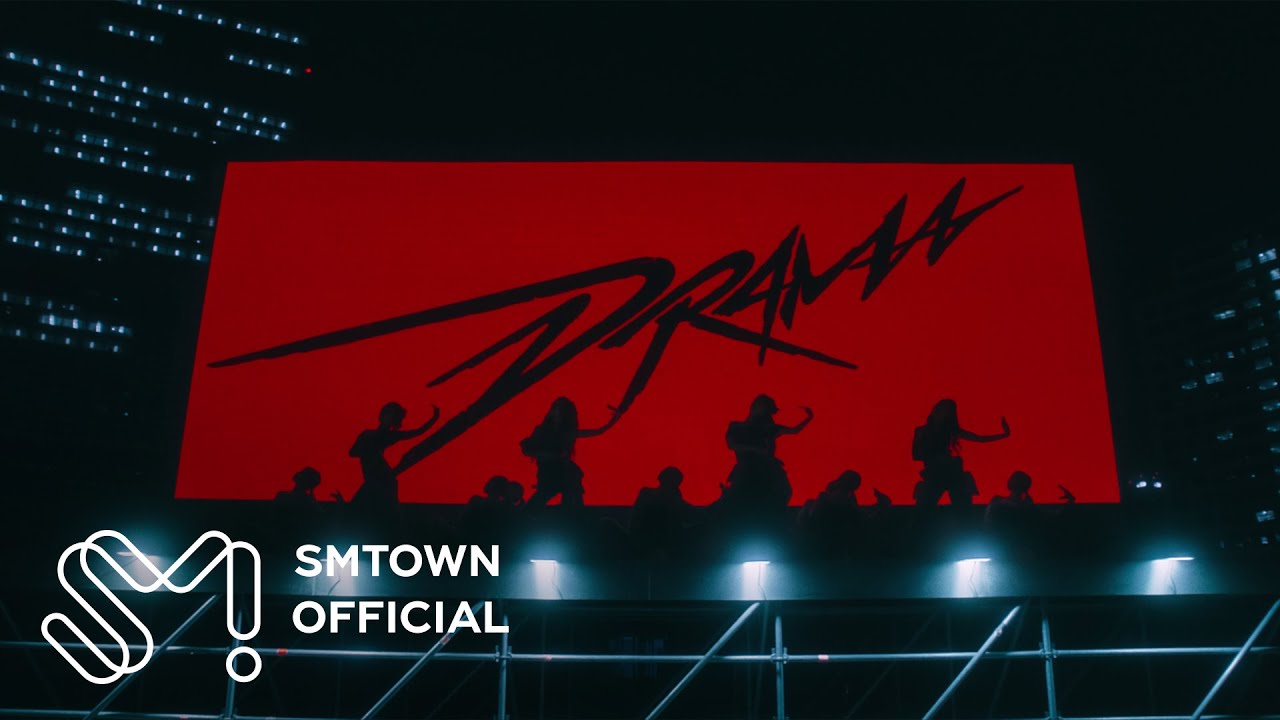
Release file
Released: November 10, 2023
Runtime: 03:48
Artist: aespa — Karina, Giselle, Winter and Ningning
Exact-video distinction: Official SMTOWN master MV D8VEhcPeSlc, separate from teasers, dance practices, performance stages and remixes
Sound: Aggressive hip-hop dance production with distorted synth bass, clipped percussion, chant-driven hooks and a bridge that opens space for the vocal line
Source trail: SMTOWN official master ·  exact MVDaily+139.4KTotal views314.8M
First reaction: this hook understands blunt force
The chorus does not spend time decorating its threat. Repetition, low-end pressure and hard consonants turn the title into an impact point.
That simplicity could become empty posing, but the verses and visual pacing keep feeding it new tension.
Lyrics: the villain framing works because nobody asks permission
Pop videos often borrow danger as wardrobe while the performers remain carefully pleasant underneath it.
aespa commit to abrasion. The expressions stay controlled, the movement attacks the lens and the editing lets confrontation feel intentional.
Karina gives the camera a target
She performs authority as direction: where the eye should land, when the frame should tighten and how long a stare should remain uncomfortable.
That precision makes the large set feel organized around a person instead of a production invoice.
Giselle supplies the human sneer
Her phrasing brings conversational bite to a song that could otherwise sound like four people reciting branded menace.
She knows when to loosen the rhythm, make a line sound tossed off and then snap back into choreography.
Winter cuts through the machinery
The bright edge in her voice provides contrast against the bass-heavy arrangement.
Her control matters most when the track briefly creates melodic room; she turns that opening into escalation rather than relief.
Ningning gives the bridge a pulse
Power alone would be predictable here, so she lets warmth and elasticity make the vocal section feel alive.
The result is not a mandatory high-note break pasted between choruses. It sounds like another weapon in the same confrontation.
The choreography uses weight, not just speed
Shoulder drops, grounded steps and deliberate pauses match a song whose threat comes from certainty.
The members look strongest when movement lands and stays landed instead of racing toward the next eight-count.
Editing keeps scale readable
Fast cuts can hide weak blocking and expensive sets can swallow performers whole.
Here the cuts generally follow musical impact, while repeated approaches toward camera preserve a clear center of gravity.
The stunt language needs crew credit in the conversation
Vehicles, sparks, suspended equipment and aggressive camera movement do not become safe because the finished frame looks effortless.
A serious React can enjoy the spectacle while remembering that coordinators, riggers, drivers and editors built the danger without surrendering control to it.
The track refuses to confuse loud with shapeless
Distortion occupies plenty of space, but rhythmic gaps let the members articulate inside it.
Those pockets are why the hook hits instead of becoming four minutes of undifferentiated pressure.
Lore is seasoning this time
The visual world still belongs to aespa, but nobody needs a glossary before the central attitude makes sense.
That accessibility is useful: continuity rewards existing fans without turning the music video into homework for everybody else.
Confidence becomes interesting when it has friction
The song does not claim universal invincibility in a vacuum. Its textures scrape, interrupt and challenge the performers.
aespa sound convincing because they push against the production rather than floating above it.
The final stretch earns its escalation
By the last chorus, the video has already established character, physical weight and visual stakes.
More noise feels like culmination instead of a desperate attempt to manufacture an ending.
Four performers, four kinds of pressure
Karina gives the frame architecture and command without making leadership a permanent monopoly on attention. Giselle can make a line conversational, sly or abrasive enough to puncture immaculate world-building. Winter places a bright, controlled vocal edge through dense production and makes small expressions read at speed. Ningning brings range, warmth and a willingness to let power sound emotionally inhabited rather than merely impressive.
Those tendencies are tools, not cages. Every full-group master routes the same canonical card to all four profiles because participation is factual and should not be decided by thumbnail placement, line-count arguments or whichever member a short-form edit made trend.
What changed every time I replayed it
The first replay was for Karina walking straight through the camera’s personal space. The second was for the bridge, where Winter and Ningning turn a blunt-force track into something with vocal contour.
On the third watch, Giselle’s small timing choices became the connective tissue. She keeps the verses socially sharp while the production operates at industrial scale.
What I kept replaying
- Karina making confrontation geometrically precise.
- Giselle giving menace an actual speaking voice.
- Winter slicing a melodic line through distorted low end.
- Ningning making the bridge feel emotionally present.
- The choreography landing its weight before the edit moves on.
The larger industry question
Fourth-generation spectacle often creates a strange critical shortcut: people either praise the budget as if money were authorship or dismiss the whole result because polish looks corporate.
“Drama” deserves a more useful question—did the performers convert resources into character? They did. Sets, styling and stunts provide scale; four distinct performance instincts make that scale memorable.
Where it could hit harder
Several action images arrive faster than the video can develop their relationship to one another. A little more spatial continuity would make the danger feel less like an excellent reel of separate ideas.
The repeated title hook is effective, but one additional lyrical turn in the final section could sharpen what kind of drama aespa are creating rather than merely declaring ownership of it.
Why the song needs that melodic bridge
A track this committed to attack can flatten its own stakes if every section arrives with identical pressure. The bridge changes the air without abandoning the argument. Vocals move forward, percussion loosens its grip and the members briefly prove that command is not limited to chanting over bass.
That contrast also makes the returning chorus heavier. Loudness has meaning again because the arrangement let our ears reset. The bridge is structural work, not a beauty break placed there because the vocalists were contractually owed one.
The camera is another dance partner
Several movements are designed around distance from the lens: an approach becomes a threat, a turn becomes a refusal and a held stare becomes a pause the viewer cannot skip emotionally. Choreography made only for a wide stage would lose those effects.
The members calibrate for both scales. Group formations remain readable, while individual moments exploit focal length and framing. That is why the video feels performed for its medium instead of merely documenting choreography on an expensive set.
RaeRae verdict
“Drama” is expensive, loud and fully aware of both facts. Its success is not subtlety; it is control.
aespa make the villain speech land because each member gives the threat a different texture, and the production knows when to clear a lane for them.
Bottom line
aespa made the villain speech earn its stunt budget. “Drama” hits because the members remain the event even when vehicles, sparks, steel and distorted bass are all competing for the same frame.