
Drive: MIYEON Left the Rearview Mirror in Frame Without Letting It Choose the Road
Release file
Released: April 27, 2022
Runtime: 03:20
Label / channel trail: i-dle (아이들)
Sound: Verdict first: the exact upload matters. This React follows the performance and visual choices in this video, not a neighboring stage, fan lyric upload or different song with the same English title.
Sources:  Exact official playlist uploadDaily+1.6KTotal views22.2M.
Verdict first: the exact upload matters. This React follows the performance and visual choices in this video, not a neighboring stage, fan lyric upload or different song with the same English title.
First reaction: what the hook is actually doing
“Drive” introduces Miyeon’s solo record through forward motion rather than a vocal obstacle course. Her clean tone rides a warm pop-rock arrangement, and the melody opens gradually enough for freedom to feel chosen. The voice remains technically polished without confusing polish for emotional neutrality.
Catchiness is the entrance, not the verdict. The useful question is how percussion, bass, vocal register and phrasing make the central idea feel repeatable—and whether the repetition reveals more feeling or merely occupies time.
Production under the topline
The arrangement creates a floor before the performers decorate it. Follow the kick and low end, then notice which sounds vanish before a line begins. Empty space can give a low voice more authority than another layer of volume, while a bright response can reset the ear without flattening the groove.
i-dle-related solo work is strongest when the production recognizes the featured voice instead of renting a generic trend. Yuqi’s grain and delayed pocket, Minnie’s atmosphere and Soyeon’s percussive diction require different rooms. The mix here succeeds where it lets identity change structure.
The video argument
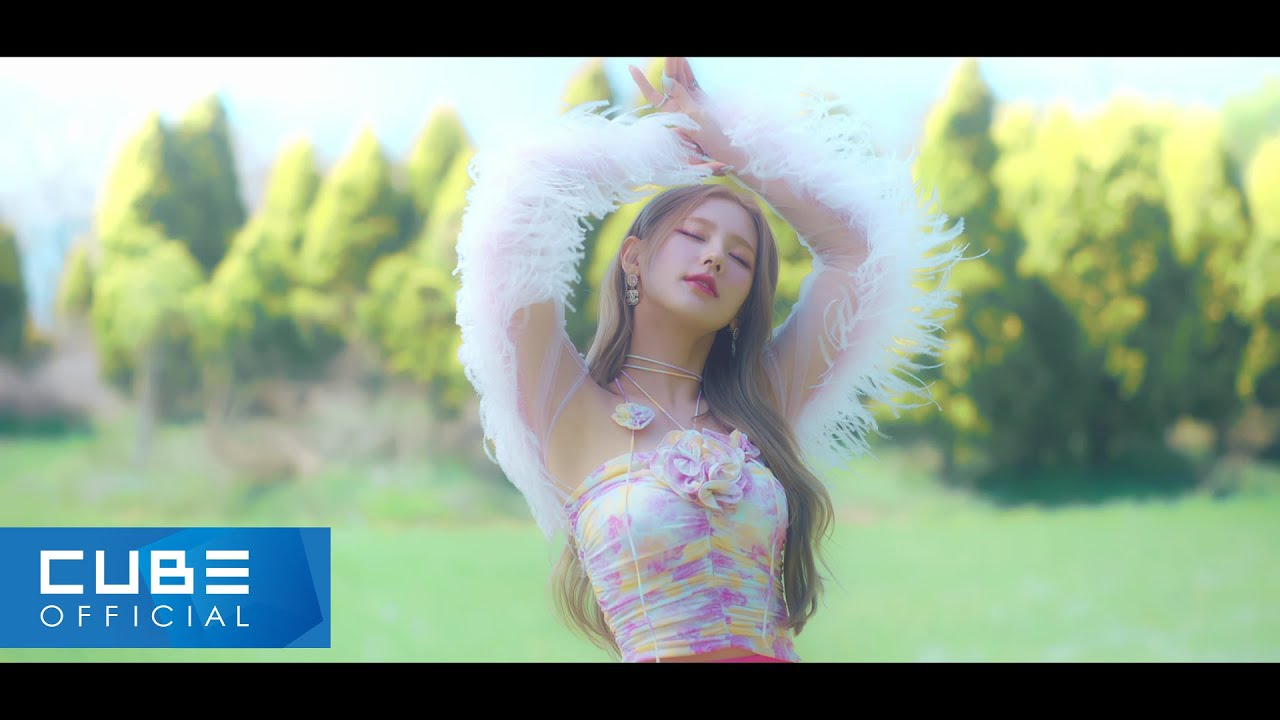
The MV uses roads, open landscape and solitary travel as familiar liberation grammar. What keeps it personal is Miyeon’s calm: she does not perform escape like a chase scene. The journey looks like somebody discovering she is allowed to set a pace.
The canonical still above comes from this exact upload. It remains the featured image, hero, Music Reviews card and social preview, so a reader does not click one visual promise and arrive inside another video’s page.
Performance details worth the replay
Small vocal textures matter more than a giant climax. Breath at phrase ends, restrained vibrato and the contrast between intimate verses and a wider chorus let confidence grow without arriving preassembled. Track the rearview and forward gaze. Freedom does not require pretending the past disappeared; it requires refusing to let the mirror become larger than the windshield.
Watch preparation rather than only impact: the breath before a phrase, the body loading weight before a directional change and the eye line that tells the editor where the next cut can land. Those decisions are the bridge between choreography and camera.
What works, and what I would change
Road imagery is one of pop’s most overused metaphors, and the MV rarely complicates it. A more specific object from the life being left behind could add narrative weight. Miyeon’s presence makes the familiar route worth taking.
That tradeoff matters. A harder bridge, longer ending or stranger cut might create complexity, but it can also break the release’s chosen scale. Criticism should identify the price of the existing choice without pretending every song wants to become a different genre.
Participation, not inheritance
The i-dle hub remains connected because the career grew from and continues beside the group. The profile trail follows actual participation, however. A Yuqi and Lexie Liu performance does not automatically belong to all five members; a Yuqi and Minnie duet belongs to both women; a solo choreography file links the solo artist and group history without fabricating group presence.
Bottom line
Drive: MIYEON Left the Rearview Mirror in Frame Without Letting It Choose the Road understands the mechanism beneath its hook and gives the camera enough performance evidence to make that mechanism visible. The release has limits, but none of them erase the reason to replay it.
What changed every time I replayed it
- First replay: watch only the performer outside the obvious focal point or the body between named moves.
- Second replay: isolate drums and bass; mark every place the groove removes sound instead of adding it.
- Third replay: follow vocal color and breath, not volume or line count.
- Fourth replay: test the criticism—imagine the proposed change, then decide what pleasure it would cost.
Canonical profile trail
Sources and receipts
Meaning: solo movement without escape cosplay
Miyeon’s voice is known for stability inside an unpredictable group catalog. “Drive” could easily turn that stability into a conservative solo identity—pretty scenery, clean notes and no argument. The record avoids complete safety by making motion itself the change and letting control sound newly personal.
The chorus widens rather than explodes. That choice trusts the listener to hear liberation in increased air, not only in a high-note checkpoint. Her technique serves proportion: vibrato remains controlled, consonants do not overdramatize departure and the tone warms as the route becomes hers.
Landscape can imply wealth and leisure, so freedom risks looking purchasable. The MV softens that by emphasizing solitude and pace over luxury. The vehicle is a tool for direction rather than the main object the viewer is asked to desire.
Still, the past remains abstract. We know she is moving forward because road grammar tells us so, not because the video has shown what kept her still. One idiosyncratic object in the passenger seat could give departure a personal before without requiring a melodramatic flashback.
Miyeon performs calm as activity. Watch how often she chooses where to look instead of receiving camera attention passively. The solo frame is not simply more screen time; it is responsibility for deciding when intimacy, distance and openness change.
The exact-video relationship belongs to Miyeon and the i-dle hub, not all current members as participants. That distinction lets a group ecosystem celebrate solo work while keeping credits honest. One career can branch without every branch becoming a group release.
RaeRae verdict: “Drive” does not reinvent the open road, but Miyeon makes the familiar route feel inhabited. I would pack one stranger piece of luggage. I would not replace the restrained vocal arc with a climax that mistakes destination volume for freedom.
The craft scorecard
The release scores highest on vocal proportion. Miyeon receives a solo frame without being forced into maximum belts or theatrical rupture, and the arrangement recognizes that controlled expansion can still document change.
It scores lower on visual specificity. Open roads communicate efficiently but belong to a large public archive of liberation imagery. One peculiar object or less picturesque stop could make the journey unmistakably hers.
The familiar frame also serves a debut purpose: it clears space for listeners to hear the person already known through group contrast. Reinvention would be less useful than a clean first statement of pace.
Final replay: listen to the verse at the same volume as the chorus and track breath, not power. The emotional distance traveled appears in how comfortably she occupies silence before the arrangement widens around her.
One final vocal note: Miyeon’s restraint lets technique disappear into direction. The page does not need to inventory high notes to prove she can sing; it documents how phrasing makes a familiar road feel less like borrowed scenery.
One final career note: a debut solo establishes permission to evolve, not a permanent genre assignment. “Drive” is the first clear route on a map that later releases can complicate without making this calmer beginning obsolete.
Verdict
Verdict first: the exact upload matters. This React follows the performance and visual choices in this video, not a neighboring stage, fan lyric upload or different song with the same English title.