
Could It Be: YUQI Let an Open Road Ask the Question Before She Did
The road metaphor has been driven half to death, but YUQI brings her own terrain: gravel at the bottom of the voice, sunlight when the phrase opens and uncertainty sturdy enough to survive either answer.
Release file
Released: April 5, 2024
Runtime: 3:57
Artist / channel: YUQI / i-dle
Exact-file focus: The exact official Could It Be music video, not an audio repost, stage, fancam, short, fan edit or another YUQI release.
Verdict first: the exact upload matters. This React follows the performance and visual choices in this video, not a neighboring stage, fan lyric upload or different song with the same English title.
First reaction: what the hook is actually doing
“Could It Be” uses classic-rock warmth and an open melodic line to make uncertainty feel mobile. Yuqi’s low voice gives the question weight, but the arrangement keeps moving so doubt never becomes paralysis. It sounds like hope testing its legs rather than demanding an answer.
Catchiness is the entrance, not the verdict. The useful question is how percussion, bass, vocal register and phrasing make the central idea feel repeatable—and whether the repetition reveals more feeling or merely occupies time.
Production under the topline
The arrangement creates a floor before the performers decorate it. Follow the kick and low end, then notice which sounds vanish before a line begins. Empty space can give a low voice more authority than another layer of volume, while a bright response can reset the ear without flattening the groove.
i-dle-related solo work is strongest when the production recognizes the featured voice instead of renting a generic trend. Yuqi’s grain and delayed pocket, Minnie’s atmosphere and Soyeon’s percussive diction require different rooms. The mix here succeeds where it lets identity change structure.
The video argument
The MV chooses landscape, travel and unforced daylight over a complicated plot. Distance becomes emotional possibility: roads continue past the frame, and the camera lets Yuqi occupy them without turning freedom into a luxury-car commercial.
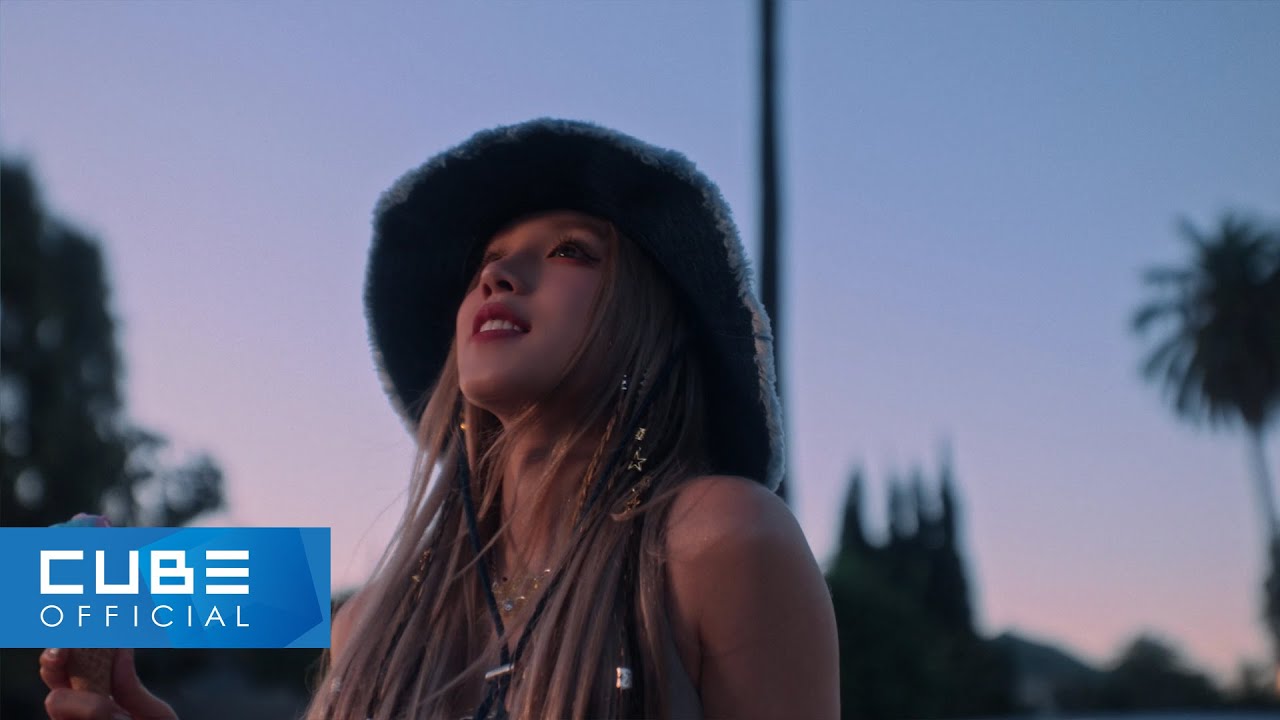
The canonical still above comes from this exact upload. It remains the featured image, hero, Music Reviews card and social preview, so a reader does not click one visual promise and arrive inside another video’s page.
Performance details worth the replay
Her best performance choice is ease. She does not oversell liberation with constant arms-wide imagery; a small smile or glance away from camera suggests the private calculation behind the public horizon. Listen for how she lightens the ends of phrases. The low register establishes identity, but the release in the upper color is what makes the title’s question feel possible instead of foreclosed.
Watch preparation rather than only impact: the breath before a phrase, the body loading weight before a directional change and the eye line that tells the editor where the next cut can land. Those decisions are the bridge between choreography and camera.
What works, and what I would change
The visual language is familiar and risks becoming generic wanderlust. A more specific relationship or destination could sharpen the stakes. The familiarity also leaves room for her voice to remain the reason the road matters.
That tradeoff matters. A harder bridge, longer ending or stranger cut might create complexity, but it can also break the release’s chosen scale. Criticism should identify the price of the existing choice without pretending every song wants to become a different genre.
Participation, not inheritance
The i-dle hub remains connected because the career grew from and continues beside the group. The profile trail follows actual participation, however. A Yuqi and Lexie Liu performance does not automatically belong to all five members; a Yuqi and Minnie duet belongs to both women; a solo choreography file links the solo artist and group history without fabricating group presence.
Bottom line
Could It Be: YUQI Let an Open Road Ask the Question Before She Did understands the mechanism beneath its hook and gives the camera enough performance evidence to make that mechanism visible. The release has limits, but none of them erase the reason to replay it.
Replay section
- First replay: watch only the performer outside the obvious focal point or the body between named moves.
- Second replay: isolate drums and bass; mark every place the groove removes sound instead of adding it.
- Third replay: follow vocal color and breath, not volume or line count.
- Fourth replay: test the criticism—imagine the proposed change, then decide what pleasure it would cost.
Canonical profile trail
Sources and receipts
Second pass: what the road permits
The arrangement’s warmth depends on restraint. Guitars and drums gesture toward classic road pop without performing museum-grade nostalgia, and Yuqi’s vocal remains contemporary enough that the landscape feels chosen rather than inherited from somebody else’s freedom commercial.
Her lower range creates a paradox: “Could it be” is grammatically uncertain, but the voice asking has substantial physical authority. Doubt therefore sounds like curiosity from someone capable of surviving either answer, not fragility begging the world to decide kindly.
Wide shots can reduce a performer to scenery, yet Yuqi keeps scale through posture and direction. She looks toward destinations instead of constantly returning to the lens, allowing the viewer to witness thought rather than receive a continuous sales pitch for independence.
Road narratives often imply that leaving is automatically ethical. The MV avoids most triumphalism but still gives little information about what remains behind. A specific unfinished relationship could complicate freedom; the song prefers an open door whose hinges do not accuse anyone.
Listen for the places where the vocal lifts out of its famous grain. Those brighter moments are not attempts to sound more conventional. They are the emotional horizon: the register itself widens when possibility stops being theoretical.
The replay changes the title from romantic question to career statement. Could a voice known through group contrast hold a gentler solo road? The answer is present in the pacing—yes, because Yuqi does not mistake solo focus for maximum force.
RaeRae verdict at the next exit
I expected the road imagery to make me roll my eyes before the first chorus. Pop has driven this highway until the metaphor needs resurfacing. Yuqi gets away with it because the voice provides terrain the landscape cannot: gravel at the bottom, sunlight when the phrase opens and an actual decision inside the calm.
The record is not asking whether she can overpower a solo track. That question was settled long ago. It asks whether she can let ease remain interesting, and the answer is yes whenever she trusts the lower dynamics instead of treating freedom like a vocal fireworks permit.
My edit would be one specific object carried from the old life into the car. Freedom becomes richer when departure does not erase attachment. A photograph would be too easy; give me a ridiculous receipt, an unfinished notebook or something only this traveler would refuse to discard.
Even without it, the song has a clean replay purpose. Use it after “FREAK” or “Giant” and hear how the same recognizable voice changes posture. A solo catalog becomes a career when one identity can occupy several rooms without redecorating all of them the same way.
Final replay instruction: compare the first verse with the last chorus while watching only her shoulders and breathing. The road stays open, but the body should look less like it is asking permission to travel. That small change is the emotional arrival the landscape cannot provide on its own.
One final distinction: peaceful pacing is not the same as emotional vagueness. The song knows the question it wants to protect, and Yuqi keeps uncertainty focused through breath and register. The road is broad, but the performance is not wandering.
RaeRae verdict
I expected the open-road imagery to make me roll my eyes before the first chorus. Pop has worn these tires bald. YUQI gets away with it because the voice provides a landscape of its own and the arrangement never orders freedom to become fireworks. My edit would add one oddly specific object carried from the old life. Even without it, Could It Be proves solo focus does not require maximum force. Ease can hold attention when the person inside it has actual weight.
What changed every time I replayed it
The second replay ignores the landscape and follows guitar, drums and the spaces where YUQI lets the line breathe. The third watches her shoulders and eye lines to decide whether freedom feels performed for the camera or privately considered. The fourth compares the grounded first verse with the brighter lift later, when possibility begins changing the vocal posture. The fifth asks what the traveler left behind, because road videos love pretending departure carries no attachments. By the sixth, the familiar scenery survives because her voice supplies the specificity the highway cannot: weight, ease and a question that does not beg permission.
Lyrics and meaning
Could It Be protects uncertainty without confusing it with helplessness. The low register gives the question physical authority; this narrator sounds capable of surviving yes, no or silence. Travel becomes possibility rather than automatic moral victory. Leaving can create room, but distance does not erase attachment or make every departure brave. The song’s gentleness works because YUQI treats ease as an active choice, not the absence of stakes.