
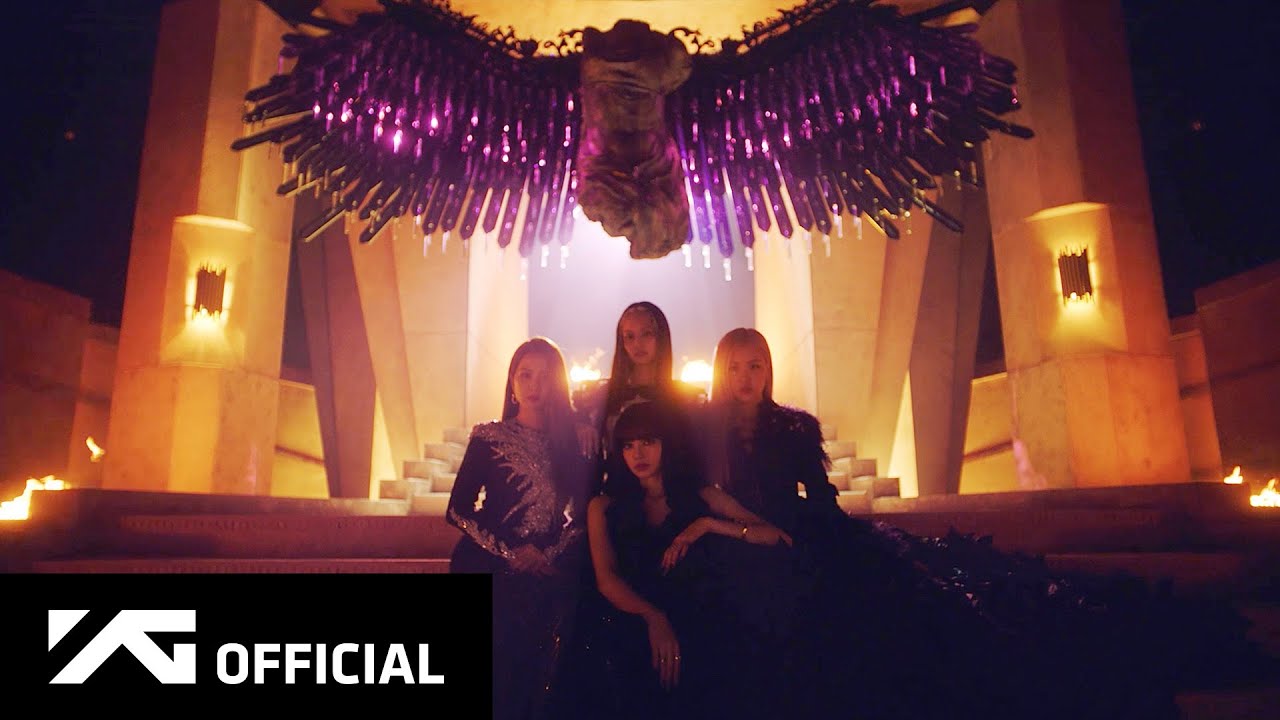
How You Like That: BLACKPINK Controlled the Comeback Reveal
A comeback built as controlled detonation: individual descents, collective rise and a final dance break that knows exactly when the camera owes the group its widest frame.
Release file
Released: June 26, 2020
Runtime: 3:03
Artist / channel: BLACKPINK / YG Entertainment
Exact-file focus: The exact official How You Like That music video, not a dance practice, stage, Japanese version, short or fan upload.
Bottom line
How You Like That is a comeback about surviving humiliation and controlling the reveal. The song moves from enclosed, wounded verses into a chorus designed like a public re-entry. Its triumph is not subtle, but the details matter: members who begin isolated gradually occupy larger shared space until the final dance break makes recovery collective.
What changed on replay
Replay one follows the low vocal and restrained percussion before the drop. Replay two tracks vertical movement—falling, rising, stairs, wings and elevated platforms. Replay three watches how individual rooms become a group arena. Replay four hears the central tension: survival is real, while proving it through an opponent’s reaction still leaves the opponent inside the story.
A title aimed at an audience
“How you like that?” requires someone to witness the reversal. The phrase is satisfying because it converts judgment into surprise, but it does not represent total freedom from judgment. The narrator wants the people who dismissed her to see the comeback. That dependence gives the swagger an exposed edge: victory is partly measured through the face of the former critic.
The verse begins below the spectacle
The opening leaves enough room for lower dynamics and emotional damage to register. JENNIE and JISOO establish a controlled darkness before ROSÉ’s lift expands the frame. That sequencing prevents the chorus from arriving as arbitrary noise. The drop becomes a change in social position: private hurt is reorganized into a public body.
LISA’s verse changes the temperature
Her rhythmic entrance introduces humor and taunt after the more solemn opening. The shift matters because a survival song performed at one emotional temperature becomes self-important. LISA makes the comeback enjoyable, not merely admirable. Her timing creates the sensation that the character has enough distance from pain to play with the people who expected defeat.
The drop is deliberately divisive
The chorus uses a sparse vocal phrase and production impact where some listeners expect a fully sung melodic payoff. That choice prioritizes choreography, bodily response and instant recognition. It can also make the song feel like infrastructure for a performance rather than a complete recording. The fairest review separates dislike of the structure from denial of how precisely the group executes it.
The video’s vertical grammar
Falling language is answered with upward images and increasingly expansive sets. Wings, stairs and elevated framing are obvious symbols, but their repetition creates coherence across otherwise extravagant scenes. The members do not simply appear in unrelated luxury boxes. Each room stages a different relationship to confinement, damage or regained height.
Cultural imagery needs more than aesthetic defense
The video draws from varied religious, architectural and regional signifiers inside a fast global-pop collage. Visual beauty does not erase questions about context, credit or whether sacred imagery becomes detachable decoration. Critique should be specific rather than using “problematic” as a substitute for thought. It should also be directed at the production system, not simplistically assigned to performers who may not control every set decision.
The dance break solves the group question
Earlier sections prioritize individual rooms and close-ups. The ending places the four members inside a larger ensemble where synchronized force becomes the final evidence of survival. The group does not disappear into the dancers; focal control moves through formation, level and timing. Recovery becomes something performed with others rather than a lone heroine’s flawless transformation.
The counterargument
The song’s lyrical thesis is familiar, its title hook is repetitive and the structure resembles earlier BLACKPINK impact singles. Those are real limitations. The release earns distinction through the specific movement from low enclosure to collective scale. It is most persuasive as an audiovisual comeback document, less complete when treated as audio isolated from choreography and image.
What I would change
Extend the melodic pre-chorus after the second verse and delay the drop by four bars. The vocal line has enough emotional momentum to make the eventual impact feel earned twice rather than merely repeated. A slightly longer build would also give JISOO and ROSÉ more room to complicate the victory pose.
Replay verdict
How You Like That is not liberation from the gaze; it is the pleasure of reversing that gaze on command. The song knows the value of a reveal, and BLACKPINK make the transition from private injury to public force physically legible. Its limits are part of the meaning: sometimes survival first appears as wanting the doubters to watch.
Canonical profiles
BLACKPINK · JISOO · JENNIE · ROSÉ · LISA
Official video
 BLACKPINK — How You Like That Official Music VideoDaily+73.1KTotal views1.4B
Receipts
The exact official BLACKPINK music video is the primary source for this audiovisual review; verified group and member profiles supply career context.
The replay ladder
First play follows the fall-and-rise narrative. Second, track which performer changes the emotional temperature at each transition. Third, watch the rooms as stages of confinement rather than unrelated luxury sets. Fourth, isolate the ensemble dance and identify how scale is built. Fifth, turn the screen off and confront the sparse chorus without visual assistance. The release remains effective, but its dependence on audiovisual completion becomes impossible to deny.
Recovery performed for an opponent
The imagined critic gives the comeback direction. Anger can be a temporary fuel even when long-term freedom requires indifference. The song captures that intermediate stage honestly: the narrator has survived but still wants the person who underestimated her to witness the evidence. Pop empowerment becomes more useful when it is allowed to be unfinished rather than sold as instant emotional enlightenment.
Member contrast is the real continuity
BLACKPINK’s impact structure repeats across releases, but the members prevent it from becoming mechanically identical. JISOO supplies controlled gravity, ROSÉ turns ascent into strain, JENNIE establishes cold focus and LISA injects mobility and wit. Those descriptions are not fixed personality assignments; they identify work performed inside this specific arrangement. Future songs can redistribute the functions without erasing anyone’s identity.
The snow-to-fire reading
Extreme environmental images make the comeback feel mythic: cold enclosure, burning color, falling material and elevated stages. The symbolism is obvious, but obvious does not mean useless. Music video language must register in seconds across many viewing conditions. The stronger question is whether repeated symbols form a coherent movement. Here they do, carrying the members from isolated endurance into shared command.
The audience’s role
Fans can borrow the chorus as catharsis without turning every disagreement into a humiliation narrative. Empowerment pop is powerful precisely because it simplifies; real relationships and criticism often require nuance the hook cannot provide. The song offers a temporary posture, not a complete conflict-resolution system. That distinction protects pleasure from becoming doctrine.
Editorial scorecard
Songwriting: familiar survival language with a revealing dependence on witness. Production: effective contrast, divisive drop. Vocals and rap: distinct structural functions. Choreography: decisive final synthesis. Video: visually coherent despite excessive scale. Cultural context: demands specific, production-aware critique. Replay value: strongest when vulnerability is heard beneath the comeback machinery.
The detail that survives spectacle
The opening restraint remains the song’s most important choice. Without the low starting point, the final arena would be merely expensive. The members make scale meaningful by preserving memory of confinement inside the triumphant sections. That is why replay should begin before the drop instead of skipping directly to it. A comeback is not only the public reveal; it is the distance between the room where injury was endured and the space later occupied together.
Verdict
BLACKPINK How You Like That React examining survival, the drop, vertical imagery, cultural context, group choreography and replay verdict.
What changed every time I replayed it
The second replay follows how the production withholds full rhythmic satisfaction until the members have narrated the fall. The third tracks wings, damaged monuments, seasonal shifts and doubled light as images of survival rather than random luxury. The fourth watches the members trade focal control without flattening into one attitude, and the fifth confirms that the final dance break works because the video finally stops teasing scale and lets the group occupy it together.
Lyrics and meaning
The lyric moves from darkness and collapse toward a taunt aimed at whoever expected the fall to become permanent. It is less a detailed revenge story than a survival posture: look again, because the person you counted out is controlling the reveal. That confidence is satisfying, but resilience should not become another demand that women perform recovery beautifully before anyone believes they were hurt.
RaeRae verdict
How You Like That is engineered for the comeback gasp, and the engineering is visible without becoming boring. The lyric is broad and the drop will never satisfy listeners wanting melodic expansion, but the members, images and final group scale make survival feel like authorship rather than a motivational caption pasted over damage.