Akira Characters
Neo-Tokyo keeps calling young people delinquents while adults use laboratories, police lines, schools, and political offices to make every bad decision bigger. These character files track who carries power, who gets crushed by power, and who mistakes control for care.
How to read this directory
Akira moves fast enough that several people can look like plot functions on a first viewing. A biker becomes a body on the road. A politician becomes a man shouting in a room. A resistance fighter becomes the hand passing a package. Otomo gives those people different amounts of screen time, but the city connects them. Kaneda’s need to look fearless, Tetsuo’s terror of being weak, Kei’s political commitment, the Colonel’s belief in command, and the espers’ exhausted caution all grow from one system that values usefulness before humanity.
Status is deliberately described by continuity and story position instead of a blunt alive-or-dead label. The 1988 film compresses a much larger manga, changes relationships, and removes whole routes. A useful profile tells readers which version they are reading before treating one ending as the only truth.
The Capsules and the people they leave behind

Shotaro Kaneda
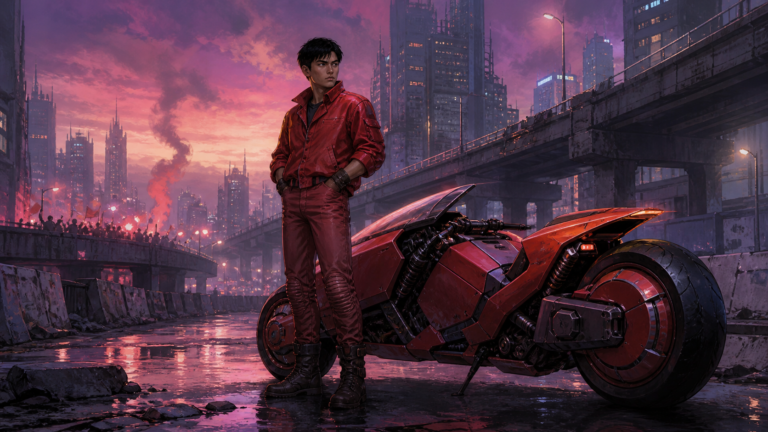
Character type: Capsule leader · protagonistKaneda performs confidence so loudly that his fear can hide in plain sight. He is reckless, funny, possessive, brave, and often cruel in the casual way teenage boys learn cruelty from one another. His red motorcycle makes him look independent, but most of his choices circle Tetsuo. Kaneda wants to protect his friend without admitting that protection has become another way to rank him.
Status: Central survivor of the film’s Neo-Tokyo catastrophe.

Tetsuo Shima
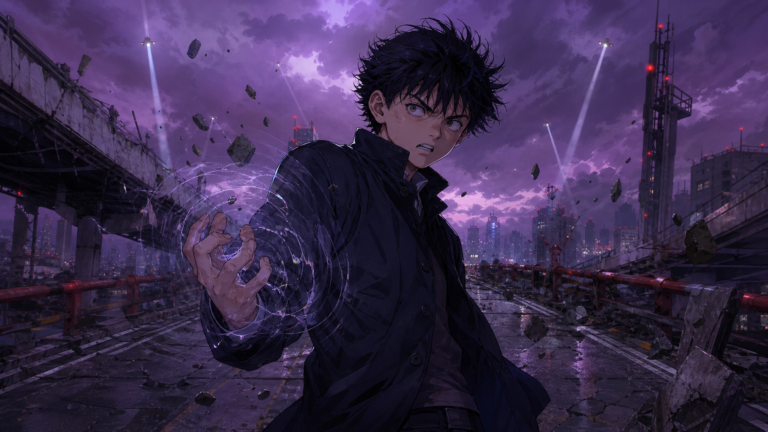
Character type: Capsule member · tragic antagonistTetsuo begins as the boy everybody rescues and ends with enough power to terrify the state that experimented on him. Psychic ability does not create his humiliation. Power removes the limits that once kept humiliation private. His body horror matters because the transformation makes emotional dependence visible: a child desperate to be untouchable becomes unable to control where his own body ends.
Status: Transformed beyond ordinary human classification.
Yamagata
Character type: Capsule member · emotional witnessYamagata is abrasive, loyal, and less protected by the story than Kaneda. His confrontation with Tetsuo proves that gang loyalty cannot survive unlimited power simply because the boys once shared roads and insults. Yamagata’s death gives Kaneda’s pursuit a sharper emotional purpose and turns the gang’s internal mess into grief.
Status: Killed during Tetsuo’s violent break from the Capsules.
Kaisuke
Character type: Capsule member · surviving friendKaisuke does not dominate the frame, which makes his ordinary panic useful. He is one of the people left to react after stronger personalities decide the direction of a crisis. His survival preserves a small piece of the Capsules after the fantasy of invincible youth falls apart.
Status: Survives the film’s final catastrophe.
Kaori
Character type: Tetsuo’s girlfriend · civilian casualtyKaori receives too little room, yet her presence exposes the difference between Tetsuo wanting devotion and knowing how to care for another person. She stays close when his power becomes frightening. The film then places her inside the body horror, making her one of the clearest victims of a disaster narrated through boys.
Status: Crushed during Tetsuo’s uncontrolled transformation.
Joker
Character type: Clown leader · rival bikerJoker leads the rival Clowns and supplies the opening chase with its threat. He matters less as a deep individual portrait than as proof that biker identity has its own wars, uniforms, and public territory. Neo-Tokyo’s teenagers fight over roads because adults have given them little else to own.
Status: Film role is concentrated in the opening conflict.
Resistance, politics, and people caught between plans

Kei
Character type: Resistance fighter · central heroineKei enters as a committed resistance member, not as Kaneda’s reward for showing courage. She understands state violence before he does and keeps moving when his politics begin and end with whoever stands in front of him. Psychic contact turns her into a conduit, but the film works best when Kei remains a person making choices inside danger rather than a mystical delivery system.
Status: Survives and escapes the final collapse with Kaneda.
Ryu
Character type: Resistance organizerRyu’s cell treats information as survival. His discipline gives the resistance weight, while his unraveling shows how quickly political purpose can become desperation when plans fail. He believes secrets can be moved, traded, and weaponized before the government closes the route.
Status: Dies during the chaos surrounding Neo-Tokyo’s collapse.
Nezu
Character type: Politician · resistance sponsorNezu proves that opposition to the state does not automatically create moral clarity. He uses the resistance while protecting his position and tries to flee once the crisis reaches his own door. His panic is darkly comic because Neo-Tokyo’s elites keep assuming systems will protect them after everybody else has been sacrificed.
Status: Dies while attempting to escape with money and documents.
The espers and the child called Akira
Kiyoko
Character type: Esper No. 25 · guideKiyoko speaks with the patience of someone who has already watched adults repeat the same mistake. Her small body and aged face make experimentation visible without another laboratory explanation. She understands the coming danger, reaches Kei, and helps the children act when military control fails.
Status: Joins the other espers in containing the final psychic event.
Takashi
Character type: Esper No. 26 · triggerTakashi’s collision with Tetsuo changes a biker fight into a state emergency. He looks frightened because he is frightened. Adults have turned escape into a threat assessment, and his presence on the road begins the chain that exposes the Akira project again.
Status: Returns with the other espers at the climax.
Masaru
Character type: Esper No. 27 · protectorMasaru’s wheelchair and controlled demeanor emphasize how thoroughly the project has shaped every part of the children’s lives. He is observant, cautious, and willing to confront Tetsuo once the threat becomes impossible to contain.
Status: Participates in the final attempt to stop the catastrophe.
Akira
Character type: Esper No. 28 · absent centerAkira is both a child and the story everybody else tells about a child. The government stores his remains as scientific material. Religious followers turn his name into revelation. The Colonel treats the project as a disaster that must remain buried. Tetsuo treats Akira as proof that greater power exists. The film withholds a conventional personality because Akira’s absence has already organized the whole city.
Status: Returns as the center of the final psychic event.
The state, the laboratory, and command
Colonel Shikishima
Character type: Military commanderThe Colonel is authoritarian without being simple. He distrusts politicians, understands more of Akira’s danger than most officials, and still believes command gives him the right to decide for every child in the project. His warnings are often correct. His methods helped create the crisis he warns about.
Status: Survives the final destruction of Neo-Tokyo.
Doctor Onishi
Character type: Lead scientistDoctor Onishi reads Tetsuo through charts, projections, and numerical comparisons because the laboratory has trained him to treat a person as an unstable result. His fascination is not cartoon madness. The danger comes from professional curiosity continuing after every warning says the subject is suffering.
Status: Dies during the laboratory’s collapse.
The relationship map hiding inside the spectacle
Why these character files matter
Akira is easy to reduce to motorcycles, explosions, psychic children, and one famous transformation. The movie survives that icon status because the catastrophe keeps returning to human relationships. A friend cannot admit that rescue can humiliate. A frightened boy cannot imagine respect without domination. A resistance cell cannot escape political compromise. A commander cannot separate protection from ownership. Children who survived experimentation have to save adults from the experiment again.
Each profile keeps those contradictions attached to the person carrying them. Major characters receive deeper files, while supporting characters stay proportional to the evidence on screen. Nobody needs a biography padded with guesses.
Return to the Akira hub