
Stray Kids · Member, Artist, and Producer Profile
HAN
Profile
| Stage name | Han |
|---|---|
| Birth name | Han Ji-sung |
| Born | September 14, 2000 |
| Roles | Rapper, producer, vocalist |
| Group | Stray Kids |
| Group debut | March 25, 2018 |
| Agency | JYP Entertainment |
The rapper who can outrun the beat, the vocalist who climbs into the chorus anyway, and the songwriter who keeps turning anxiety, loneliness, and questionable romantic decisions into Hanpop.

Profile
Han Ji-sung
Korean: 한지성
Born: September 14, 2000
From: Incheon, South Korea
Group: Stray Kids
Production unit: 3RACHA
3RACHA name: J.One
Core roles: rapper, vocalist, lyricist, composer, producer
SKZOO: Han Quokka
Malaysia, home study, and the audition he treated like a deadline
Han was born in Incheon and spent a substantial part of his childhood in Malaysia, where his family moved when he was young. He attended Fairview International School and later studied at home. Living abroad shaped his English, his sense of being between places, and the outsider language that later appeared throughout his songwriting.
He returned to South Korea to pursue music with a limited window agreed upon with his parents. The story is usually told with comic urgency: succeed within the allotted time or return to Malaysia and continue studying. He auditioned for JYP Entertainment with a friend, entered the company, and found Bang Chan and Changbin.
The three trainees formed 3RACHA before Stray Kids had debuted or earned a public audience. Han used the name J.One. They uploaded mixtapes to SoundCloud, wrote through the night, borrowed styles, failed loudly, improved, and built the language that later became Stray Kids. J.One was already quick, melodically restless, and far too interested in fitting several ideas into the space where another writer might use one.
3RACHA and the architecture of Stray Kids
Bang Chan, Changbin, and Han are not honorary producers. Their credits run through the group’s catalog. Han writes lyrics, toplines, melodies, rap structures, and complete songs. He can begin with a guitar mood, a phrase, a rhythmic pattern, or an emotional irritation that refuses to leave him alone.
Inside 3RACHA, his speed is not limited to rap. He generates musical ideas quickly. Bang Chan often handles arrangement and the larger production frame. Changbin brings force, argument, and rhythmic impact. Han can connect rap and melody so naturally that a song changes category while he is still inside the verse. The division is not rigid, but those tendencies help explain why the trio works.
His fingerprints appear across title tracks and B-sides, but his solo-written group songs reveal him most clearly. “Sunshine,” “Another Day,” “Secret Secret,” “Winter Falls,” “Collision,” “Get Lit,” and “Twilight” do not sound identical. They share an interest in private thought. He writes the moment after the room gets quiet and the mind becomes unhelpfully loud.
Han once reacted to praise for “Secret Secret” with a famously exaggerated line that became a fandom meme. Underneath the joke sits a serious song about emotional weather that does not clear simply because somebody says it will.
The rapper: agility before aggression
Han is one of K-pop’s most technically versatile idol rappers. He can move at high speed while preserving diction, change cadence inside a bar, pitch his voice upward for urgency, drop into a rougher tone, then connect the rap directly to a sung line. His breathing is efficient enough to support live delivery while moving, which separates performance technique from studio editing.
His style is more elastic than Changbin’s. Changbin often lands like a weighted object. Han ricochets. In “Maze of Memories,” “MIROH,” “God’s Menu,” “All In,” “DOMINO,” “CHEESE,” “3RACHA,” “HEYDAY,” “S-Class,” and “Chk Chk Boom,” he changes character according to the track rather than recycling one showcase flow.
Speed compilations miss his humor. Han uses rhythm to make lines sarcastic, bratty, panicked, or conversational. He understands that rap delivery is acting with meter. A technically dense verse can still sound like a person speaking instead of a man presenting his résumé at gunpoint.
The vocalist hiding inside the rap line
Han’s singing range is one of Stray Kids’ most useful surprises. He can support high notes, shift into falsetto, carry rock choruses, and use a lighter head voice without losing his recognizable tone. During live stages, he regularly covers difficult parts when arrangements or member absences require it.
His value is not that he is secretly “better than the vocalists.” That is fandom ranking bait. His value is flexibility. A producer who can rap and sing hears the entire track differently. He can write a transition because he understands both sides of it physically.
His solo material often favors pop-rock and melodic alternative pop, where the voice can crack, strain, plead, or brighten as part of the emotional design. “Wish You Back,” “Volcano,” “Miserable (You & Me),” “Human,” and “Hold My Hand” make more sense when treated as songs by a singer-songwriter, not side projects from the designated rapper.
Hanpop: a fandom genre that accidentally became useful
Fans use “Hanpop” for Han’s particular corner of music. It is not an official industry genre. It is shorthand for songs that combine melodic pop or rock, confessional lyrics, emotional escalation, and the sense that one man has been alone with his thoughts for too long.
Hanpop can sound bright while the lyrics are miserable. It can begin with loneliness and end with a chorus designed for thousands of people to shout back. It can also become oddly specific about failed communication. The songs feel connected because his emotional habits are connected, not because he copies one instrumental formula.
His writing repeatedly returns to alienation. “Alien” describes smiling while feeling separated from everyone around him. “Human” revisits identity from a later perspective. “Hold My Hand” reaches toward the self who survived those earlier songs. Fans read the three as an informal emotional line, and the interpretation holds because the lyrics genuinely talk to one another.
The solo-song map
“Close”: Inspired by the emotional distance and curiosity of the film Closer. It introduced the public SKZ-PLAYER side of Han as a melodic solo writer.
“I GOT IT”: A concentrated rap response to criticism and condescension. The title itself plays with a Korean phrase when spoken aloud, because of course he could not resist.
“Alien”: One of his defining songs. Upbeat motion carries lyrics about isolation, pretending to function, and feeling fundamentally misplaced.
“Wish You Back” and “HaPpY”: Two different shapes of loss. One circles a relationship that ended. The other asks whether the other person is happy while clearly not enjoying the answer.
“RUN”: Released on SKZ-Replay. Restless and forward-moving, with the freedom fantasy and momentum that suit his writing.
“Volcano”: Devotion presented as danger. It grows from intimacy into a huge chorus without losing the trembling quality underneath.
“Miserable (You & Me)”: A polished sad-pop song for people who would like their emotional collapse to have a catchy hook.
“13” and “Maybe”: Further proof that he can build small, diaristic songs without turning every thought into a stadium finale.
“Human”: A self-examining release that fans often place in conversation with “Alien.” It asks what it means to accept an imperfect, feeling self rather than trying to edit the person into something easier.
“Hold My Hand”: His 2024 solo on HOP, driven by band energy and a direct promise of support. It works onstage because the emotional resolution is physical. He is no longer singing from the corner of the room.
Units: “Want So BAD” with Lee Know, “Respirator” with Seungmin, and “1, 2, 3, 4, 5” with NMIXX’s BAE reveal how well he adapts his writing to another voice. He does not simply invite somebody into a Han solo and leave them there holding a spare microphone.
Anxiety, crowds, and public schedules
In late 2019, JYP announced that Han was experiencing symptoms of anxiety, especially around groups of people, and that his participation in schedules would be adjusted. He could interact normally with familiar members but had difficulty in crowded or unfamiliar settings. The company asked for understanding while he received treatment and rest.
This context belongs in the profile because Han has spoken through songs about isolation and mental strain, and because his public energy can mislead people. The loud, funny member can still be anxious. The performer who controls a stadium can still find ordinary social settings difficult. Personality is not a medical exemption form, and anxiety does not require someone to look sad twenty-four hours a day.
He returned to activities while continuing to manage his health. Fans should resist turning illness into proof of artistic depth. The songs matter because they are well written, not because suffering makes a person more interesting.
The human behind the quokka
Han earned the quokka comparison through round cheeks, expressive eyes, and a face that looks prepared to steal food. His SKZOO character is Han Quokka. The resemblance is now fandom infrastructure.
He is quick-witted, competitive when interested, easily startled, and capable of moving from total chaos to silent withdrawal. He watches anime, loves music broadly, eats enthusiastically, and can improvise a joke or verse before other people finish understanding the premise.
His relationship with Lee Know is especially beloved because the pair communicate through teasing, music, and a level of odd mutual understanding that produced “Want So BAD.” With 3RACHA, Han’s speed meets two people who can catch and shape it. With the full group, he often becomes the member who fills whatever musical hole appears.
Fandom file
Group fandom: STAY
Search terms: HAN, Han Jisung, J.One, Han Quokka, 3RACHA, Hanpop.
Start listening: “Alien,” “Volcano,” “Miserable,” “Human,” “Hold My Hand,” “Close,” “I GOT IT,” “Want So BAD,” “Secret Secret,” “Sunshine,” “Another Day,” “Collision,” and “Twilight.” Then watch live rap compilations so nobody claims the studio did all the cardio.
What shallow profiles miss: Calling Han an ace is convenient but vague. The real story is that he connects jobs normally separated inside an idol group. He can write the song, build the melody, rap its most difficult verse, sing the high section, and still understand why the bridge feels emotionally wrong.
Official Han video tracking
This tracker follows official Han solo and member-focused releases and refreshes daily and total YouTube views.
2026: back to life, festival stages, and THIS & THAT
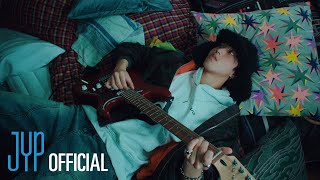
HAN opened Stray Kids’ 2026 individual SKZ-PLAYER series with “back to life.” The video arrived in May, and JYP distributed the song as a solo digital single on June 11. HAN wrote the lyrics and participated in the music, continuing the Hanpop pattern of placing emotional instability inside a track energetic enough to move before the listener processes the damage.
The release was not a departure from Stray Kids. It was an official in-house solo project within the group’s SKZ-PLAYER system, and JYP announced that the other members would receive individual releases through the same 2026 plan. That distinction matters: HAN now has a separately distributed artist page and solo single, while remaining an active Stray Kids member and 3RACHA producer.
Stray Kids headlined Governors Ball in New York on June 6 and continued preparing for Rock in Rio. The group also released the mini album THIS & THAT on August 7, with official teaser material identifying HAN in the active eight-member lineup. Large festival sets emphasize exactly why he is the emergency toolbox: rapid rap, live vocal support, crowd communication, and enough catalog knowledge to adjust when a performance does not behave like rehearsal.
2026 sources: Yonhap on “back to life” and festival activity · JYP THIS & THAT HAN teaser · HAN official distributed catalog
Official links and source trail
Official group profile: JYP Entertainment
Official music and videos: Stray Kids YouTube
Instagram: @_doolsetnet
Group Instagram: @realstraykids
Official Japanese profile: Sony Music Japan
Selected writing credits: Songwriting list
HOP release: Apple Music
Checked against official profiles, album credits, 3RACHA archives, JYP statements, published interviews, and official song releases. “Hanpop” is labeled as fandom language because useful fandom language does not need a fake corporate certificate.
Official solo-video rabbit hole
HAN qualifies for both the Member and Artist shelves: these are official solo releases credited to him inside the Stray Kids catalog, not fancams pretending to be a discography.
Hold my hand
The official SKZ-PLAYER version makes the Hanpop case in four minutes: guitar-driven urgency, a melodic chorus, and HAN writing the kind of emotional sprint that sounds brighter than the panic underneath it.