
Release file
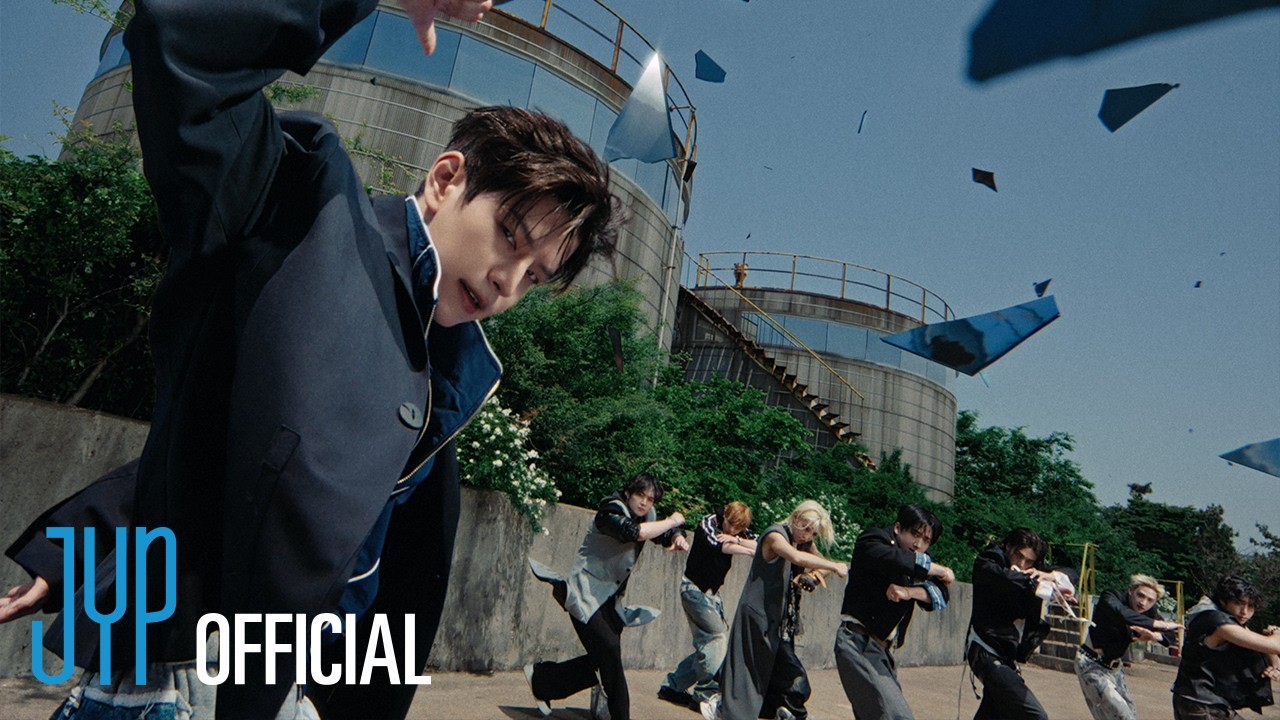
Official upload: Stray Kids "This & That" M/V.
Released: August 6, 2026 · Runtime: 03:13.
Label / channel trail: JYP Entertainment.
Sound: The beat, arrangement, vocal color and production choices are reviewed below alongside the exact visual or performance file.
Video: Exact YouTube ID BZ4UzthYTss. This page uses one official player and one local canonical image for that upload.
Sources: official exact YouTube uploadDaily+524.1KTotal views113.7M; artist and participant links route to the site’s current profiles and video trackers.
RAERAE REACTS · STRAY KIDS
THIS & THAT
Stray Kids cleaned out the sonic garage, found every dangerous object, and apparently decided the chorus needed all of them.
Artist
Stray Kids
Released
August 6, 2026
Runtime
3:13
Verdict
Beautifully over-equipped
RaeRae Reacts · Stray Kids
Verdict: “THIS & THAT” sounds like Stray Kids cleaned the garage, found every sound they have ever loved, and drove away before anybody could ask them to choose one. The chaos works because the song knows exactly who made it.
Stray Kids
August 7, 2026
Changbin (3RACHA)
Changbin, RESTART, Chae Gang-hae
YouTube
What changed every time I replayed it
First play: somebody opened every cabinet
The first listen is mostly survival. The beat keeps changing its shoes, the members keep throwing new textures into the room, and the hook refuses to sit still long enough for polite analysis. My first reaction was not “What does this mean?” It was “Why are there so many things happening, and why am I smiling?”
Stray Kids have always understood that noise can be organized. Their best loud songs do not sound tidy. They sound controlled. “THIS & THAT” uses that old trick with a newer confidence. The group no longer needs to prove that strange choices belong in its music. The members make the choice, point at it, and keep moving.
Second play: the joke has engineering
Once the surprise wears off, the structure becomes clearer. The title is not filler. The song keeps pairing options, opposites, and ordinary choices: this or that, coupe or truck, cappuccino or americano, show or studio. Changbin turns indecision into rhythm. The list sounds casual, but every pair gives the next voice somewhere to land.
The contrasts also fit Stray Kids. The group can be abrasive and playful, grand and deeply unserious, polished and proudly homemade. This song does not solve those contradictions. It treats them as inventory.
Third play: an archive with a steering wheel
On the third pass, the video feels less like random fan service and more like a drive through the group’s own visual memory. A kitchen calls back to “God’s Menu.” Red staging carries the heat of “Chk Chk Boom.” Mirrors, birds, theater spaces, and frozen moments echo older Stray Kids worlds without turning the video into a museum tour.
I am calling those echoes, not confirmed director explanations. Fans can recognize a visual rhyme without pretending a press release explained every bird.
The part where I stopped reviewing politely
This song is ridiculous. Good. Stray Kids did not become Stray Kids by filing the sharp edges off their music so everybody could call it tasteful.
The hook is built to annoy anyone who needs a chorus to behave. It repeats, swerves, and stacks verbal choices until the whole thing feels like eight people arguing over the aux cord. That is also why it sticks. The song makes its clutter part of the melody.
The beat keeps changing lanes
The production uses impact more than glide. Low-end punches create the floor, clipped percussion keeps the verses from sagging, and small gaps let the members snap phrases into place. The arrangement does not give every transition a polite bridge. It cuts. That makes the song feel edited like a fast comedy rather than unfolded like a ballad.
The risk is fatigue. A listener who wants one groove may hear interruptions. I hear a song that earns most of its switches because the vocal handoffs stay readable. The arrangement is crowded, but it rarely loses the person speaking.
Eight voices, eight ways to make a list personal
Changbin’s writing suits the group because the words leave room for attitude. A plain contrast can become a threat, a joke, or a shrug depending on who delivers it. The rappers bite into the consonants. The singers stretch the cleaner phrases just enough to keep the record from becoming one long chant.
Bang Chan grounds the swagger. Lee Know’s dry precision makes a playful line sound like an order. Hyunjin brings theatrical shape. Han can make a quick phrase feel like it escaped the bar line. Felix supplies weight before the production can float away. Seungmin and I.N keep melody inside the machinery. Changbin sounds most at home when wording becomes percussion.
The lyrics and meaning are not deep, but they are not empty
“THIS & THAT” is not pretending to be a philosophical thesis. Its idea is appetite. The members can choose the car and the truck, coffee and more coffee, public performance and private studio work. Success did not make their world smaller. It multiplied the options.
That can read as flexing, but the humor keeps it from becoming a luxury brochure. Cappuccino versus americano is not a moral crisis. That is the point. The song treats preference like play instead of identity homework.
The video deep dive
The video moves like a vault that refuses to stay locked. Sets appear as usable memories, not sacred artifacts. The kitchen can be entered again. The red stage can be repurposed. The mirrors do not need to trap anyone forever. Stray Kids keep revisiting older visual language because their history is now large enough to function as its own prop department.
The best choice is motion. Even when a scene resembles an older era, the camera and edit push forward. Nostalgia becomes fuel. The weakest moments are the busiest composite shots, where one more object or cut does not add another idea. A few images needed one less ingredient.
Easter eggs without the conspiracy board
The kitchen: a visual rhyme with “God’s Menu” and the group’s cooking metaphor.
The red stage: it recalls the heat and scale of “Chk Chk Boom” without recreating the video.
Mirrors and doubles: familiar Stray Kids tools for identity, choice, and the versions of a person that fame keeps producing.
Birds and release: a recurring image fans may connect to “MANIAC” and other eras. That is a reading, not confirmed intent.
The theater: the group watches, performs, and archives itself at once. Fame turns yesterday’s rebellion into today’s catalog.
What worked
The hook remembers its job. The vocal colors remain distinct. The video rewards old fans without requiring a graduate degree in SKZ lore. Most important, the song sounds amused by its own excess. That humor stops the flexing from becoming stiff.
What did not
The track can feel like it is trying to win every argument at the same time. A transition or two lands because it is surprising, not because it improves the section. The final stretch could have used one longer melodic release before the last hit.
The title is a filing system disguised as nonsense
“This and that” usually means the speaker does not want to inventory every object. Stray Kids use the phrase as permission to keep the inventory open. A drum pattern can change, a vocal can interrupt, a visual reference can flash past, and another member can grab the next section without asking the previous idea to leave. The title lowers the pressure to make one neat argument.
That sounds like an excuse for randomness, but randomness alone does not create identity. The song works because Stray Kids have spent years teaching listeners how their chaos is organized. Changbin can cut through a busy mix with attack. Han can turn speed into comedy or anxiety. Felix can make one low phrase feel like a structural beam. Bang Chan hears the whole room. Lee Know, Hyunjin, Seungmin, and I.N. change the emotional temperature rather than competing for the same texture.
First listen energy versus replay value
On the first play, the song sells velocity. The fun comes from keeping up. On later plays, the arrangement becomes easier to map. Tiny transitions announce who is about to take control, repeated rhythmic shapes keep unfamiliar sections related, and visual callbacks reward fans who know older Stray Kids eras.
This is why the song can feel messy without being careless. The production team understands that a listener needs both surprise and recognition. Too much surprise becomes noise. Too much recognition becomes another song that expires after the teaser. “THIS & THAT” keeps moving between both poles.
The performance question: can the chaos survive a stage?
A music video can hide weak construction behind editing. A stage cannot. Stray Kids built this track around handoffs, changes in center, and member-specific delivery, which gives a live performance somewhere to go. The performers do not need to reproduce every camera joke. They need to preserve the feeling that control keeps passing through eight different hands.
The danger is breath. Dense lines and constant movement can turn personality into survival mode if the choreography never allows recovery. The strongest stage arrangement would protect the important live phrases, let backing tracks carry decorative layers, and give the vocalists enough space to sound like people rather than exhausted evidence of difficulty.
The masculine performance is allowed to be silly
Boy groups often receive a narrow menu of acceptable power: aggression, seduction, suffering, or expensive seriousness. Stray Kids have always made room for awkward humor, exaggerated reactions, and the energy of friends making each other laugh when the camera should probably have cut.
That silliness is not the opposite of masculinity. It is a version of confidence that does not require permanent coolness. The members can look sharp, perform hard choreography, and still behave like somebody handed eight cousins a camera and no adult supervision. The freedom to look ridiculous keeps the group human.
The fandom layer: callbacks are a relationship
An Easter egg only matters when it creates recognition. Fans are not impressed because a prop technically appeared before. They care because remembering together turns a large audience into people with shared history. A callback says the creators remember what the audience remembers.
That relationship can become lazy if every new idea depends on old material. “THIS & THAT” mostly avoids the trap because the references behave like seasoning. A new listener can follow the song without completing homework. A longtime STAY receives an extra layer instead of the only layer.
The industry layer: maximalism is expensive in a different way
Minimal pop can sound effortless while hiding intense decision-making. Maximal pop exposes the decisions. Every added rhythm, vocal texture, visual gag, and transition creates another opportunity for the structure to fail. Stray Kids make abundance look natural because their production identity developed alongside the members rather than arriving as a company concept pasted onto them.
The problem comes when the market expects every comeback to become louder, faster, and more self-referential than the last. Growth cannot mean adding another cabinet forever. Sometimes the brave choice is removing a sound and trusting the member in the space. “THIS & THAT” wins the maximalist game, but the back half still proves why the group needs contrast.
The cultural layer: the group succeeds through difference
Collective performance does not require identical personalities. Confucian social thinking often emphasizes role, duty, and harmony, but harmony is not sameness. A functioning group needs members who understand both their own responsibility and the timing of when to support somebody else.
Stray Kids show that principle through handoffs. One voice does not dominate every section. Leadership sounds like creating room, not occupying all of it. Individuality remains visible because the group structure catches it. The song becomes a small lesson in why a team can be louder than eight people competing alone.
The editing earns the speed
Fast cutting only works when the viewer can still understand the joke, the member, and the direction of movement. The video uses color, framing, and repeated group shapes to stop the velocity from becoming visual soup. A cut may arrive quickly, but the eye usually knows where to land.
I would still hold a few shots longer. Stray Kids have enough performance detail to survive without constant editorial assistance. Letting one formation finish or one reaction breathe would give the next burst more impact. Speed feels faster when the audience has experienced stillness.
RaeRae verdict
“THIS & THAT” is Stray Kids choosing abundance over restraint. It is noisy, funny, self-referential, and built by people who know their audience can hear a callback without a flashing label. I wanted one cleaner breath in the back half. I also replayed it while writing that complaint. The song wins.
Receipts
JYP official music-video notice
JYP release and credits
Apple Music
Bottom line:
Stray Kids turn choice, noise, callbacks, and eight distinct voices into a playful THIS & THAT comeback. RaeRae breaks down the beat, lyrics, video, Easter eggs, and what worked.