
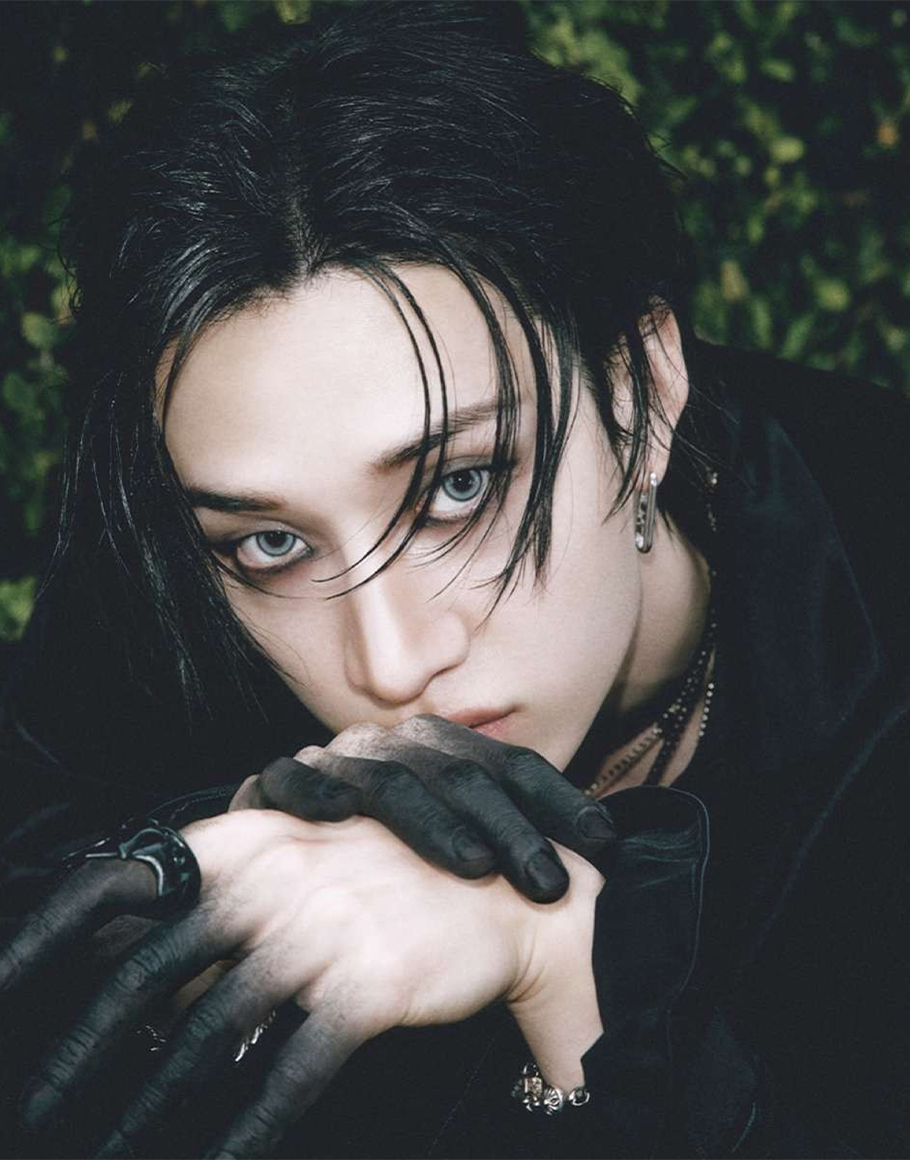
STRAY KIDS · MEMBER + SOLO ARTIST PROFILE
Bang Chan
Leader, producer, translator, professional problem-solver, and the man who somehow turned seven trainee years into the foundation of Stray Kids.
Profile Info
Basic details and verified career markers
ACTIVE
| Stage name | Bang Chan |
|---|---|
| English name | Christopher Chahn Bahng |
| Korean name | Bang Chan (방찬) |
| Birthday | October 3, 1997 |
| Born | Seoul, South Korea |
| Raised | Sydney, Australia |
| Nationality | Australian |
| Group | Stray Kids |
| Production unit | 3RACHA (CB97) |
| Company | JYP Entertainment |
| Group debut | March 25, 2018 |
| Solo debut | 2024 · “Railway” |
| Western zodiac | Libra |
| Chinese zodiac | Fire Ox |
Why Bang Chan Matters
Bang Chan is often introduced with a pile of job titles: leader, vocalist, rapper, dancer, songwriter, composer, arranger, producer, and translator. All of them are true, but the list can hide the more interesting point. He is one of the people most responsible for Stray Kids sounding like Stray Kids.
The group’s self-producing reputation is not decorative branding pasted onto a finished product. Bang Chan, Changbin, and Han built 3RACHA before the group debuted, and their fingerprints remain across the catalog. Bang Chan frequently acts as the person connecting the track, arrangement, members’ voices, performance demands, and whatever idea sounded slightly unhinged at three in the morning. Stray Kids can jump from industrial noise to sentimental pop without losing their identity because somebody is paying attention to the connective tissue.
He is also a useful correction to the lazy claim that idols are manufactured blanks. Bang Chan absolutely developed inside a major entertainment system, but he did not emerge without authorship. His story is about learning how to use the system’s tools without letting those tools erase the person operating them.
Australia to Seoul
Bang Chan was born in Seoul and raised in Sydney. He grew up speaking English and Korean, trained in music and dance, attended Newtown High School of the Performing Arts, and participated in activities including swimming, ballet, modern dance, and choir. Those details matter because his later idol skill set did not appear from nowhere. Rhythm, breath control, stage focus, physical stamina, and the ability to move between cultures were already being built before JYP entered the picture.
At thirteen, he passed a JYP Entertainment global audition in Australia and moved to South Korea. Teen profiles sometimes package that sentence like an airport montage: suitcase, dream, dramatic music, done. In reality, it meant leaving the daily familiarity of Australia and entering a training system where debut was never guaranteed. Bang Chan has spoken about adapting to Korea and the emotional distance between the life he knew and the career he wanted.
His Australian identity never became a footnote. It is audible in his accent, visible when he translates or steadies an English-language interview, and central to the way international fans first connected with him. It also gives him an unusual role inside the group: he can bridge languages without pretending the cultures on either side are identical.
Seven Trainee Years
Bang Chan trained for roughly seven years. During that time, people around him debuted while he remained a trainee. That kind of delay is usually flattened into inspirational mythology after success arrives, but there was no guarantee at year three, five, or six that the ending would justify the wait.
The long training period gave him technical experience and access to other JYP artists, but it also taught him how unstable idol plans can be. He appeared briefly in music videos, trained beside future members of GOT7, TWICE, and DAY6, and kept developing production skills. The important part is not that suffering magically made him worthy. It is that he continued building something useful while the official door stayed closed.
By the time the Stray Kids survival program began, Bang Chan was not merely another contestant hoping a company would assemble a group around him. He had a hand in choosing the trainee team. That responsibility shaped the group’s story from the start and explains why fans treat his leadership as more than the ceremonial title given to the oldest member.
3RACHA: The Production Core
Bang Chan, Changbin, and Han formed 3RACHA during their trainee years. Under the names CB97, SPEARB, and J.ONE, they uploaded mixtapes and worked through ideas before Stray Kids had an official discography. The material was rougher and less controlled than later releases, which is exactly why it matters. It documents young producers learning in public instead of waiting until every edge had been sanded down.
In an Arena Homme Plus Korea interview, Bang Chan described 3RACHA’s process as flexible: one member’s melody might meet another member’s lyrics, while he often helped organize the whole and handled much of the track work. That does not make him the lone genius dragging everybody else behind him. The unit works because their tastes and standards are not identical.
Bang Chan’s production bag became a small fandom legend because he described carrying a laptop, hubs, licenses, a mini keyboard, chargers, and USB drives so he could work while traveling. The image is almost too perfect: the leader lugging a portable studio through airports because apparently resting like a normal person would be suspicious.
Building Stray Kids
Stray Kids officially debuted on March 25, 2018. Their catalog grew around themes of identity, pressure, alienation, ambition, chosen direction, and the refusal to move quietly just because someone else finds the noise inconvenient. The group page covers the full lineup and discography; Bang Chan’s profile is where the production and leadership threads meet.
His leadership is visible in obvious places, such as interviews and award speeches, and in less glamorous work: translating, monitoring, distributing attention, explaining intent, absorbing mistakes, and keeping the group moving through brutal schedules. Fans sometimes turn that labor into a superhero costume. Bang Chan is dependable, but he is still a person who gets tired, makes questionable calls, and cannot personally carry every emotional need projected onto him.
That tension is part of why he is compelling. He can be commanding onstage and openly uncertain elsewhere. He can make a track feel enormous, then immediately redirect praise toward the members. The contradiction is not evidence that one version is fake. It is what happens when a real person performs several demanding roles at once.
For the connected lineup, releases, reviews, and member profiles, visit the Stray Kids group profile.
Solo Artist: “Railway”
CVM Sekai routes a member to the Artists shelf only after a verified solo track exists. Bang Chan clears that rule with “Railway,” officially unveiled as his solo song for Stray Kids’ 2024 project 合 (HOP). JYP’s official notice names it “Railway (방찬),” and the later music video gave the song its own visual identity.
“Railway” leans into control, danger, propulsion, and the idea that once this trip begins the emergency brake is mostly decorative. It is recognizably connected to Stray Kids’ world but focused through Bang Chan’s individual performance instincts. That makes him a verified solo artist on this site without pretending he has left the group or launched a completely separate label-era career.
Read the full “Railway” RaeRae React for the song and video breakdown.
2025 to 2026: stadium scale, RUN IT and THIS & THAT
Stray Kids carried the dominATE era into a stadium-scale touring cycle and continued releasing group and unit material through 2025. For Bang Chan, growth at that scale means more than adding dates. He has to help preserve the group’s identity while songs are adapted for longer stages, larger venues and audiences that may need context in different languages.
In 2026, JYP’s official notices placed him in the RUN IT SEOUL concert rollout and the full eight-member teaser campaign for THIS & THAT. The album was released on August 7, 2026, with Bang Chan again part of the active lineup and production-centered group narrative. JYP also announced SKZ-REPLAY 2026 Pt. 1 during STAYweeK, extending the archive where member and unit work can live beside major group albums.
Current-era accuracy matters because Bang Chan profiles often stop at the survival show or the first 3RACHA mixtapes. Those years explain the foundation, but they are not his present tense. He remains an active Stray Kids member, leader and working producer in 2026, with stadium performance responsibilities and new album credits that should be checked release by release.
Leadership Without the Halo
Fandom loves a clean archetype, and Bang Chan is often assigned “perfect leader.” The compliment becomes a problem when it removes his right to be imperfect. Leadership should not mean permanent emotional availability, faultless wording in every language, or responsibility for every choice made by eight adults and a multinational company.
What can be evaluated is the pattern of his work. He helps shape the music, advocates for the team, shares linguistic labor, and has stayed publicly invested in the group’s identity. Those receipts are strong enough without turning him into a saint who runs entirely on protein shakes and concern for other people.
The better fan reading is not “Bang Chan never fails.” It is that he has repeatedly accepted difficult responsibility, learned in public, and kept creating. That leaves room to admire him without demanding he become fictional.
Fan Side Quests
Follow the Producer
Pick three Stray Kids songs from different eras and compare the credits, arrangement, vocal layering, and transitions. Listen for the decisions that survive even when the genre changes.
Find CB97
Explore 3RACHA’s pre-debut material as a development archive. Do not expect polished current Stray Kids; the point is hearing the workshop before it became a stadium.
Watch Him Translate
In English interviews, notice how Bang Chan translates more than words. He often adjusts context, timing, and who gets space to answer.
Solo vs. Group
Compare “Railway” with a Bang Chan-led Stray Kids track. Ask what changes when he no longer has to design space for seven other voices.
Zodiac Side Quest: Libra + Fire Ox
October 3 makes Bang Chan a Libra. The fan-version Libra traits are diplomacy, balance, social awareness, and the inability to stop weighing everybody’s needs. That maps a little too neatly onto a bilingual group leader who spends half his public life making sure the room stays connected.
1997 is the Fire Ox year. Ox signs are associated with persistence, responsibility, and the stamina to keep going long after everybody else has asked whether the task was actually necessary. Fire adds intensity and initiative. Combined with Libra, the astrology side quest gives us a diplomatic workhorse with a studio bag: patient until the track needs finishing, then suddenly unstoppable.
This is fandom play, not evidence. His documented seven-year training period and production catalog tell us more than a horoscope. The zodiac simply gives the rabbit hole another decorated tunnel.
Official solo music tracking
Official Bang Chan solo releases. Daily gains and total views update through CVM Sekai’s YouTube tracking history.

YouTube tracking history
<
Credits and career claims are tied to official profiles, published interviews, and company notices. Fan-made credit lists are not treated as primary documentation.Sources
Last audited August 10, 2026.