
ASTRO ARCHIVE · LEAD VOCALIST · MAKNAE · SOLO ARTIST
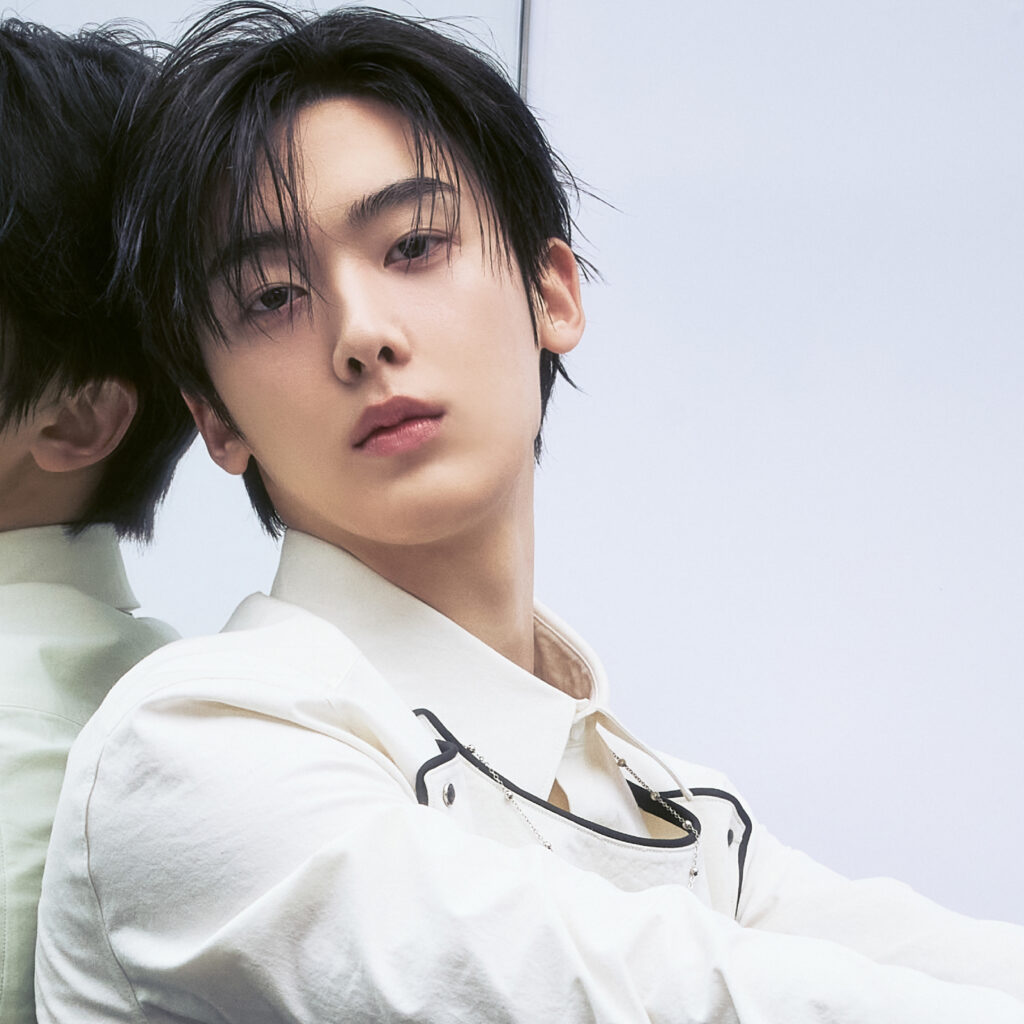
Yoon San-ha
Official Socials
ASTRO’s maknae debuted at fifteen, grew into the taller vocal line, built Moonbin & Sanha beside one of his closest collaborators and now makes solo music weird enough to include premium olive-oil lore.
Back to the ASTRO group archive

Profile
| Stage name | Yoon San-ha |
|---|---|
| Born | March 21, 2000 |
| Group | ASTRO |
| Unit history | Moonbin & Sanha |
| Work | Lead vocalist, actor and solo artist |
| Current status | Active ASTRO member and solo artist |
Before ASTRO
Yoon San-ha learned guitar from his father and trained under Fantagio before attending Hanlim Arts School. He was the youngest ASTRO member at debut and was initially recognizable by braces, height changes and the group’s determination to treat him like a baby even while he was performing full choreography. That public growing-up process matters: the voice, confidence and boundaries changed on camera rather than between invisible eras.
Music, performance and work
San-ha is a lead vocalist whose tone moved from bright and youthful into a fuller, more flexible instrument. With Moonbin, he formed Moonbin & Sanha and explored darker material through “Bad Idea,” “Who” and “Madness.” Acting and musical theater expanded the performance file. His solo work, including DUSK and “EXTRA VIRGIN,” refuses to sound like leftover ASTRO or a copy of the unit. Country and hip-hop textures were a risk, and the odd title became part of the point.
The panda side quest
The current panda side quest is the complete “EXTRA VIRGIN” file: watch the official video, read the title-choice Tea, then read the RaeRae React. Add guitar clips and early ASTRO acoustic performances to hear how long the singer-songwriter lane was waiting under the maknae label.
Fandom notes and things the fact box misses
- Maknae: youngest ASTRO member, not permanently a child.
- Unit: Moonbin & Sanha, 2020–2023.
- Solo identity: willing to choose a strange title over safer company advice.
- Acting: dramas and musical theater sit beside the music.
Official Resources
YouTube tracking history
Current total checked against the official upload on August 12, 2026. Daily changes begin from this baseline.
Sources
The maknae grew into a solo center
San-ha debuted as the youngest member, a label K-pop profiles tend to preserve long after it stops explaining the work. His career now includes ASTRO, the Moonbin & Sanha unit, acting, musical theater, solo releases and theater-concert projects. “Maknae” describes his place in the original age order. It does not describe the amount of responsibility he carries in the current four.
The Moonbin & Sanha catalog is essential to that growth. The unit moved into darker performance territory and required San-ha to stand as one half of the concept instead of the younger voice inside six members. After Moonbin’s death, that body of work became emotionally difficult for many listeners, but it remains music the two artists made together. A respectful profile neither erases it nor turns every later solo note into a coded memorial.
Solo work after the unit
“Dive” and San-ha’s later concert work establish a solo lane that belongs to him. The voice can carry vulnerability without the group’s bright framing or the unit’s darker symmetry. “Twilight” then returns him to ASTRO’s current chapter, where the youngest original member is no longer being introduced. He is one of the four people responsible for keeping the group’s present tense real.
Connected official videos
ASTRO · Twilight — 2025 Anniversary MVDaily+472Total views1.4M
ASTRO · ONE — 2021 Official MVDaily+4.8KTotal views47.7M
A vocalist people had to learn to hear again
San-ha’s early image emphasized height, youth and an acoustic-guitar introduction. The risk of a durable maknae label is that listeners keep hearing the debut role even after the voice changes. His lower register gained body, his phrasing became less cautious and his stage presence learned when stillness could do more than an extra gesture. Those developments are audible across the unit work and his solo material.
That matters in the current ASTRO arrangement. With fewer voices in the formal lineup, every member occupies more sonic space. San-ha is not filling a vacancy or copying an absent color. He is using the instrument he has now, and the group has to arrange around the four people who are actually recording together. “Twilight” succeeds because it accepts that reality instead of trying to rebuild 2016 through studio tricks.
How to listen without turning grief into a genre
Moonbin & Sanha songs remain part of San-ha’s career, but they should not become a demand that he perform mourning forever. “Madness” captures a specific unit language: controlled tension, mirrored movement and two voices sharing the same dark frame. Later solo work can be sad, bright, theatrical or playful without every choice being decoded as a message about loss.
The fairest way to follow him is to let each release identify its own emotional center. Keep the unit credits intact. Keep Moonbin’s name attached to the work they made together. Then give San-ha room to be a present-tense artist whose next idea does not require permission from the past.
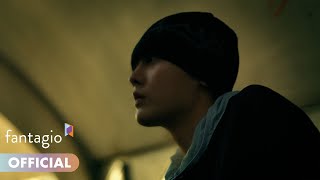 Yoon San-ha · Dive — Official MVDaily+161Total views9.8M
Moonbin & Sanha · Madness — Official MVDaily+317Total views14.6M
RaeRae Reacts
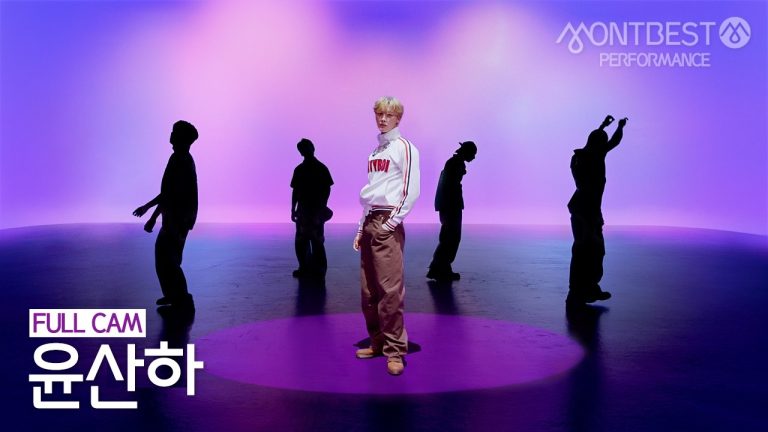
“EXTRA VIRGIN” Montbest Performance full-cam React — choreography, continuous-stage timing and dancer-formation analysis for exact upload MkzIP9ilQbE.
Official video tracker
React image cards
Static cards route each exact official upload to its own in-depth React. Every card repeats that React’s featured and hero image so the archive stays visually traceable.

San-ha’s low register changed the center of gravity
Yoon San-ha debuted with a youthful image and a lighter instrument, but voices do not remain frozen at debut. His lower register gained body and his phrasing became less tentative, giving later work a center of gravity the original “maknae with a guitar” shorthand cannot explain.
A current profile has to listen to the voice he has now. Nostalgia can recognize the younger tone without demanding that an adult performer keep reproducing it for proof of identity.
Maknae is an age order, not a genre
San-ha remains the youngest member in ASTRO’s original lineup. That fact explains a relationship pattern; it does not explain solo repertoire, acting choices or the responsibility of performing inside the current four. The label becomes misleading when it substitutes for analysis decades after debut.
Growth does not require rejecting affection around the old role. It requires updating the language. He can be the youngest and still carry a scene, a chorus or a group schedule without being treated as an apprentice.
Moonbin and Sanha built a real unit language
The Moonbin & Sanha unit used darker tension, mirrored movement and vocal contrast to create a lane distinct from ASTRO’s brighter group identity. “Bad Idea,” “WHO” and “Madness” should be heard as work by two artists making deliberate choices, not as an omen retroactively rewritten by tragedy.
The unit belongs to both canonical profiles and the ASTRO hub. San-ha’s later solo work does not erase it, and the unit’s end does not trap him inside permanent reenactment. Accurate archiving can preserve collaboration without demanding repetition.
Grief is not a genre requirement
After Moonbin’s death, audiences may hear later San-ha performances through loss. That response is human. It does not authorize outsiders to assign every lyric, expression or concept to private mourning. A singer can make bright, sensual, strange or ordinary work without disrespecting history.
The profile uses direct language for the chronology, preserves Moonbin’s credits and then allows San-ha’s present-tense art to identify its own emotional center. Respect is not the same as interpretive captivity.
Dive had to hold a solo frame
“Dive” gives San-ha a solo center where vocal color and emotional pacing cannot depend on a partner’s contrast. The song tests whether his quieter control can sustain an entire structure and whether the visual builds character rather than simply arranging handsome shots.
A first solo statement does not have to reject the group or unit. It needs to make preferences audible. Melody, register, pacing and the amount of visual restraint provide more useful evidence than promotional claims about a “new side.”
EXTRA VIRGIN risks letting the concept eat the song
“EXTRA VIRGIN” arrives with a title and olive-oil concept strong enough to dominate first reactions. San-ha keeps the novelty human through conversational phrasing and a tone that sounds amused without collapsing into parody. The exact React has to judge whether the record remains persuasive after the joke is understood.
Country and hip-hop references need musical description, not costume shorthand. Guitar color, percussion, cadence and structure tell us what the track actually borrows. A hat cannot do that work by itself.
Acting and theatre widen the timing file
Acting asks San-ha to carry emotion through continuity and scene partnership; musical theatre asks him to repeat characterization and vocal decisions live. Both can strengthen stage presence, but neither should be listed as automatic proof that every role succeeded.
The profile names productions and dates from official sources, then analyzes what those forms demand. Credits are the foundation, not the verdict.
Twilight places him in the current four
On “Twilight,” San-ha is no longer the younger color waiting for an older member to frame the phrase. The four-member arrangement gives each surviving current member more space and responsibility. His fuller tone helps the song acknowledge history without attempting to recreate an old distribution.
The release belongs to MJ, Jinjin, Cha Eun-woo and San-ha as participants. Moonbin and Rocky remain essential to ASTRO’s history but are not falsely added to a 2025 recording. Precision is a form of respect.
Performance analysis begins with transition
San-ha’s improvement shows most clearly between obvious moments: how he enters a lower phrase, changes posture before a camera move and carries energy out of a chorus. Difficult notes and center counts are easy to clip; transitions reveal whether the performer controls the whole sequence.
Complete footage also clarifies the backing track and choreography load. Praise becomes more credible when it accounts for conditions instead of pretending a perfect isolated second describes the entire stage.
The archive test for San-ha
A useful page connects ASTRO, Moonbin & Sanha, solo music, acting and theatre while keeping participants exact. Unit cards attach to two people, group cards to the credited lineup and solo cards to San-ha plus the hub. Shared history does not make every release everybody’s property.
The canonical image identifies the person; each React keeps its own exact local image and source. That visual discipline prevents a memorial frame or familiar group photo from swallowing the identity of a new song.
Bottom line
Yoon San-ha’s career moved from a durable youngest-member image into a fuller vocal, unit partnership, solo center and current-group responsibility. The development is audible in register, timing and the willingness to let stillness carry a performance.
Listen to an early ASTRO stage, Moonbin & Sanha, “Dive,” “EXTRA VIRGIN” and “Twilight” in order. The path honors what came before without asking the present artist to live there forever.
A guitar is part of the history, not the whole identity
San-ha’s pre-debut and early-debut guitar image helped audiences understand him quickly: tall youngest member, gentle voice, acoustic instrument. Useful introductions become cages when they survive longer than the evidence. The guitar remains a real skill and piece of history; it does not need to appear in every new arrangement to prove continuity.
A profile should update its center as the work changes. Solo stages, unit choreography and theatre now provide as much information about him as the original introduction did.
Duet chemistry cannot be recreated by vacancy
Moonbin and San-ha developed timing that belonged to two specific bodies and voices. After Moonbin’s death, no new partner can “fill” that place without the language becoming cruel and musically inaccurate. Future collaboration would be a new relationship, not a repair of an old equation.
This matters for arrangement criticism too. A solo performance can preserve lessons from the unit while changing shape. Absence may be audible, but it is not the only thing the song is allowed to contain.
Fan protection can become another demand
Fans often want to protect San-ha from speculation, difficult schedules or painful questions. Care is understandable, but protection can slide into treating an adult artist as fragile public property. Official boundaries and his own statements should guide what coverage claims.
A thoughtful profile refuses invasive certainty without narrating every professional decision as damage. Agency, grief and ordinary ambition can coexist.
What the next React should ask
For a San-ha release, ask what register carries the hook, whether the arrangement gives his quieter phrasing enough pressure and how the visual uses stillness. If the concept is loud, test whether the song survives after the headline idea. If the concept is restrained, test whether restraint develops.
Then verify participants, exact official upload, release date and canonical image. The emotional history deserves care, but care begins with getting the file right.
Voice change is not a before-and-after stunt
A maturing male voice does not travel in a clean promotional arc from “weak” to “strong.” Range, tessitura, resonance and habits change at different speeds, while songs continue arriving on schedule. San-ha’s catalog lets listeners hear adaptation: lower material gains authority, upper phrases require different preparation and the performer chooses where not to force the old color.
That process deserves more than reaction clips comparing one note years apart. Full songs reveal how arrangements evolved around the instrument and how San-ha learned to use the newer weight without abandoning flexibility.
Solo confidence is not isolation
Carrying a solo stage means accepting that no partner or group formation will redirect attention when a transition feels empty. It does not mean doing everything alone. Writers, dancers, musicians, directors and staff remain part of the result, and naming them does not weaken San-ha’s center.
The best solo identity shows preferences while letting collaboration remain visible. That is a healthier measure of confidence than pretending independence requires a one-person universe.
The final listening check
Replay one recent performance and ignore the center count. Follow San-ha through the moments when somebody else sings: his posture, timing, reaction and preparation for the next entrance. Ensemble discipline remains visible even inside a solo-era profile because ASTRO taught him to stay inside the song when the camera looks elsewhere. Then watch a solo stage and notice what changes when there is nowhere else for attention to go.
That comparison is the payoff. It shows that independence did not replace ensemble intelligence. San-ha carries both, and the strongest new work will keep letting those skills argue productively.
The record keeps moving forward.