

BABYMONSTER WE GO UP MV React: Six Action Movies, One Brass Fight
BABYMONSTER say this is not a game, then prove it with swords, rifles, wire stunts, explosions, and a brass line that kicks the door before anybody checks whether it was locked.
Release file
Released: October 9, 2025
Runtime: 03:19
Artist / channel: BABYMONSTER / YG Entertainment
Exact-file focus: Main official music video. The exclusive performance video remains on its own React.
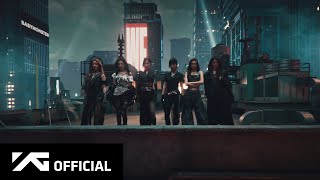
BABYMONSTER says this is not a game, then proves it with swords, rifles, wire stunts, explosions and a brass line that kicks the door before anybody checks whether it was locked.
Video presentation
What changed every time I replayed it
First thought: Oh, this is not a music video. This is six separate action-movie auditions stitched together by a brass section with anger issues.
Sound check: Big hip-hop drums, alarm-bright brass, hard rap verses, a blunt chant for a hook, then vocals climbing the walls because BABYMONSTER refuses to leave a final chorus indoors.
The moment I leaned in: RUKA drops from the second floor like gravity personally offended her. That is the exact second the video stops decorating the song and starts making its own argument.
The side-eye: The hook is not secretly complicated. It is basically the title wearing combat boots. The production and performances have to do the heavy lifting, and luckily everybody came to work.
Current status: I have assigned every member a sequel, a villain and an unreasonable special-effects budget.
Lyrics and meaning
WE GO UP is an ambition song. Not romance. Not revenge. Not a diary entry with a beat under it. BABYMONSTER is saying they are moving higher, they expect resistance, and they are not waiting for anybody to decide whether they have earned the climb. The repeated “up” is less a destination than a direction. Every obstacle becomes proof that the group is still moving.
The opening tells us the attitude immediately: this is not a game, they do not play, and the audience has not seen the kind of show they are about to deliver. That could be empty rookie swagger. What gives it weight is the timing. By October 2025, BABYMONSTER had already completed the HELLO MONSTERS world-tour run, built an enormous YouTube audience and spent more than a year being measured against the entire YG family tree. The song is them refusing to sound grateful for merely being allowed in the room.
The verses turn doubt into fuel. They are not asking critics to disappear; they need the friction. The chorus keeps the language simple because the point is physical. Rise, repeat, go harder. It works like a crowd command. You are not supposed to sit there translating a metaphor with a pencil. You are supposed to yell the title before the brass comes back.
Does the song earn all that noise?
The brass is the first weapon. It does not glide into the song; it announces an emergency. Underneath it, the beat stays heavy and spacious enough for the rappers to land. RUKA and ASA sound comfortable inside that space because neither one rushes to prove she can rap. They use the pauses. The result feels cockier than squeezing twice as many syllables into the bar would have.
Then the vocal line keeps changing the temperature. PHARITA brings polish, RORA adds the warmer lower color, CHIQUITA cuts through with a bright attack, and AHYEON treats the upper register like a ledge she intends to stand on. RAMI is heard on the recorded track even though her health hiatus keeps her out of this visual era. That distinction matters: the song is seven voices; the video is six performers.
My complaint is the same reason the track works. The hook is ridiculously plain. “We go up” arrives again and again until resistance becomes embarrassing. If the surrounding sections were weaker, the chorus would feel like a slogan waiting for a song. Here, the rap texture, vocal lift and brass make the slogan feel inevitable. I still wanted one melodic surprise inside the hook itself. BABYMONSTER gives me the surprise everywhere around it.
The video: six warriors, six different movies
YG’s own making-film report gives the concept a clean name: female warriors confronting different villains. The production does not force the members into matching uniforms and call that characterization. Each one gets a different action language, which is why the constant cutting remains readable.
- RUKA — the Assassin: black tactical styling, height, speed and the two-story fall. She looks like the person sent in after diplomacy has already failed.
- ASA — the Cyborg Swordmaster: metal, blade work and wire-assisted movement. Her precision fits the machine imagery without making her performance cold.
- CHIQUITA — the Fighter: direct hand-to-hand combat. The youngest member gets the least decorative weapon because her body is the weapon.
- RORA — the Sniper: calm long-rifle handling and distance. Her softer vocal color makes the quiet control more interesting.
- PHARITA — the Psychic: elevated in a mountain landscape, moving bodies without touching them. Elegant styling becomes power instead of prettiness.
- AHYEON — the Bomber: fire, detonation and a grin that says the insurance claim will be somebody else’s problem.
The choices are not random little member introductions. They turn the song’s upward motion into six kinds of control: above the enemy, beyond the enemy, faster than the enemy, or simply strong enough to go through them. Even the locations keep opening vertically—mountains, upper floors, suspended bodies, falling bodies, smoke moving into the sky.
Easter eggs, surprises and things worth rewinding
- The choreography is deliberately missing. The main MV is an action film, not the full dance showcase. YG announced a separate exclusive performance video because this cut gives its time to character and combat.
- The six-versus-seven question has a real answer. RAMI remains part of BABYMONSTER and part of the recording. The promotional films show six because she has been on a health hiatus. Do not turn an absence into a secret lineup announcement.
- The villains barely matter as people. They are obstacles with costumes. That keeps the emotional focus where the lyric puts it: not on who doubts BABYMONSTER, but on what BABYMONSTER does next.
- Every weapon matches the performer’s screen energy. RORA gets patience, CHIQUITA gets impact, ASA gets technique, RUKA gets risk, PHARITA gets control, and AHYEON gets spectacle.
- The action was not all editing. The members trained at an action school. RUKA worked through a fear of heights for the fall; ASA handled a heavy sword during wire work; PHARITA filmed demanding wire scenes in rough outdoor conditions.
- The title is also the album thesis. The four-track mini moves from public ambition in “WE GO UP” to the unruly self-label of PSYCHO, the crush haze of SUPA DUPA LUV, and “WILD.” The title track kicks the gate open for all of it.
Credits
What I love, what I side-eye, and the verdict
WE GO UP is not BABYMONSTER’s most delicate song, and thank God it knows that. It is a mission statement built from brass, nerve and six action heroines who refuse to share one costume rack. The chorus is basic enough to print on a gym wall. The verses, voices and visual world stop it from staying there.
I came for the ridiculous action budget. I stayed because the video understands something many expensive K-pop films miss: scale is not personality. Giving every member her own weapon, movement style and mini-story makes the scale personal. Now I need the sequel where all six realize they have been fighting different departments of the same terrible company.
Bottom line
WE GO UP wins when the brass feels like a challenge rather than decoration. Six performers enter with different action-movie energy, but the song works because they eventually fight in the same rhythmic world.
What changed on replay
Replay one catches the low-end answer beneath the horns. Replay two follows formation leadership instead of center time. Replay three exposes the edit’s favorite trick: a member finishes a gesture and the next shot lets somebody else complete the thought.
The six-member era is part of the analysis, not a euphemism. Rami remains a member on hiatus and is correctly absent from this release relationship.
Canonical profiles
Ruka · Pharita · Asa · Ahyeon · Rami · Rora · Chiquita
Canonical BABYMONSTER profiles
Ruka · Pharita · Asa · Ahyeon · Rami · Rora · Chiquita
Six action movies, one ensemble problem
The video introduces members like separate heroes because that is efficient spectacle, but the final test is whether the chorus feels shared. It does. Individual props establish character; repeated brass and matched directional movement bring the six back into one fight. The edit understands that a group MV cannot remain seven solo trailers stitched together.
Ruka and Asa give the rhythmic spine different textures. Pharita and Rora stop the melody from becoming only impact. Ahyeon supplies acceleration. Chiquita turns quick expressions into connective tissue. Naming those functions is more useful than ranking screen time because the song depends on contrast.
What I would change
The brass loop could evolve more aggressively in the last third. One counterline or a dirtier low-end answer would make the final return feel earned rather than scheduled. The members create escalation with performance; the instrumental could meet them halfway.
RaeRae verdict
WE GO UP wins because six performers receive six action languages without losing the shared song. The hook is blunt, the brass is shameless, and the members give all that scale a personality the budget cannot manufacture by itself.