
TOMBOY: i-dle Used a Doll Murder to Blow Up the Good-Girl Contract
Release file
Released: March 14, 2022
Runtime: 03:17
Label / channel trail: i-dle (아이들)
Sound: Verdict first: the exact upload matters. This React follows the performance and visual choices in this video, not a neighboring stage, fan lyric upload or different song with the same English title.
Sources:  Exact official playlist uploadDaily+69.8KTotal views405M.
Verdict first: the exact upload matters. This React follows the performance and visual choices in this video, not a neighboring stage, fan lyric upload or different song with the same English title.
First reaction: what the hook is actually doing
“TOMBOY” returns from hiatus with guitar abrasion, blunt language and a hook built to reject the role before anyone can renegotiate its terms. The English is intentionally rough-edged, the drums favor stomp over finesse and the five voices make refusal sound like a group decision with different motives.
Catchiness is the entrance, not the verdict. The useful question is how percussion, bass, vocal register and phrasing make the central idea feel repeatable—and whether the repetition reveals more feeling or merely occupies time.
Production under the topline
The arrangement creates a floor before the performers decorate it. Follow the kick and low end, then notice which sounds vanish before a line begins. Empty space can give a low voice more authority than another layer of volume, while a bright response can reset the ear without flattening the groove.
i-dle-related solo work is strongest when the production recognizes the featured voice instead of renting a generic trend. Yuqi’s grain and delayed pocket, Minnie’s atmosphere and Soyeon’s percussive diction require different rooms. The mix here succeeds where it lets identity change structure.
The video argument
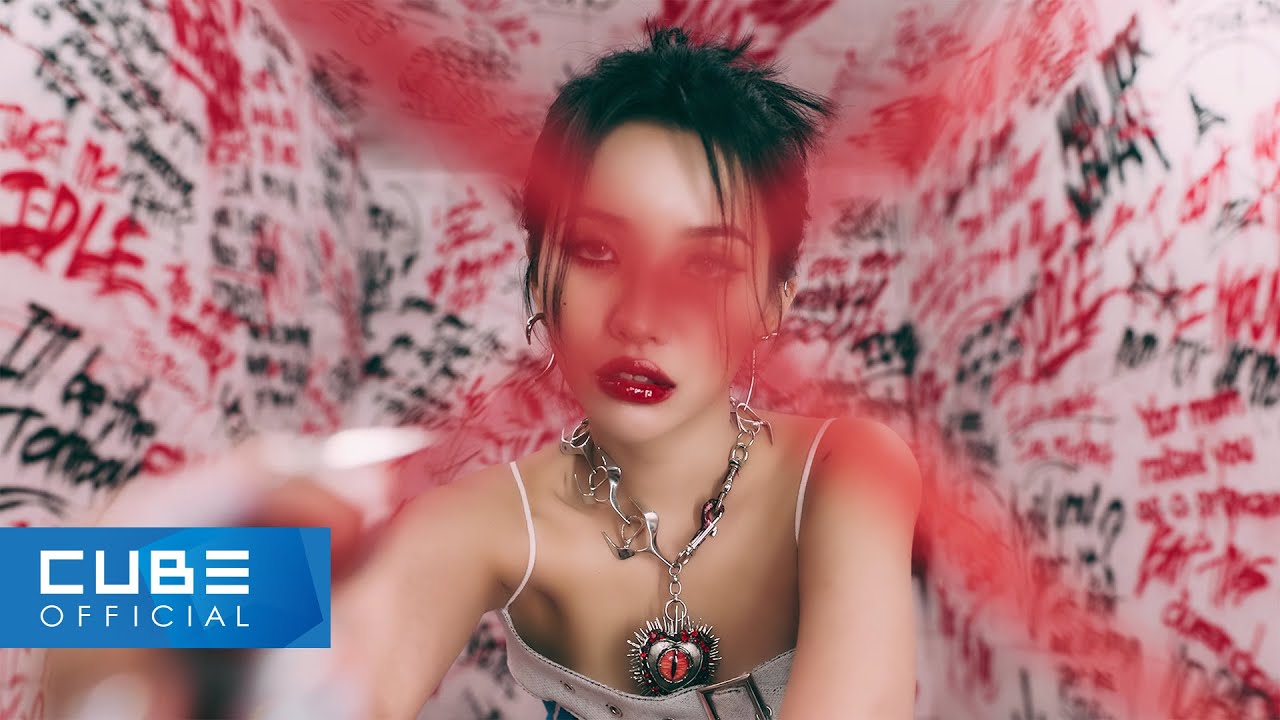
The MV moves from high-fashion confrontation to miniature doll violence, using camp to turn a destructive relationship into evidence the women can literally dispose of. The plastic sequence is funny because polite realism would give the man too much dignity.
The canonical still above comes from this exact upload. It remains the featured image, hero, Music Reviews card and social preview, so a reader does not click one visual promise and arrive inside another video’s page.
Performance details worth the replay
The five-member lineup is part of the text. Empty-space speculation surrounded the comeback, but the video refuses to perform absence as apology. It builds new geometry and lets each current member occupy it without pretending the group’s history began that day. Watch the doll-scale sequence as editorial argument. Miniature bodies let the video stage rage beyond realistic consequence, then return the members to full size after the fantasy has broken the contract.
Watch preparation rather than only impact: the breath before a phrase, the body loading weight before a directional change and the eye line that tells the editor where the next cut can land. Those decisions are the bridge between choreography and camera.
What works, and what I would change
The manifesto is broader than its gender politics sometimes allow; rejecting one feminine script can accidentally make masculinity the shorthand for freedom. The song’s stronger claim is not “be a tomboy.” It is “you do not get to write my category.”
That tradeoff matters. A harder bridge, longer ending or stranger cut might create complexity, but it can also break the release’s chosen scale. Criticism should identify the price of the existing choice without pretending every song wants to become a different genre.
Participation, not inheritance
The i-dle hub remains connected because the career grew from and continues beside the group. The profile trail follows actual participation, however. A Yuqi and Lexie Liu performance does not automatically belong to all five members; a Yuqi and Minnie duet belongs to both women; a solo choreography file links the solo artist and group history without fabricating group presence.
Bottom line: RaeRae verdict
TOMBOY: i-dle Used a Doll Murder to Blow Up the Good-Girl Contract understands the mechanism beneath its hook and gives the camera enough performance evidence to make that mechanism visible. The release has limits, but none of them erase the reason to replay it.
What changed every time I replayed it
- First replay: watch only the performer outside the obvious focal point or the body between named moves.
- Second replay: isolate drums and bass; mark every place the groove removes sound instead of adding it.
- Third replay: follow vocal color and breath, not volume or line count.
- Fourth replay: test the criticism—imagine the proposed change, then decide what pleasure it would cost.
Canonical profile trail
Sources and receipts
The doll sequence is not random shock decoration. By shrinking the members into objects associated with controlled femininity, the MV makes the “good girl” contract visible, then stages its destruction in terms too ridiculous to mistake for realism. The violence is comic, theatrical and pointed: if womanhood is a toy role somebody else can script, the toys are allowed to burn the set.
Musically, the rough guitar frame matters less as genre proof than as permission for abrasive edges. Soyeon’s clipped attack, Minnie’s smoky tension, Miyeon’s melodic steadiness, Yuqi’s weight and Shuhua’s cool presence do not merge into one tomboy voice. The title is challenged from inside the arrangement. Refusing one gender expectation does not require adopting a replacement uniform.
Replay the transitions between live bodies and dolls. The video keeps asking who is acting, who is handled and who gets to decide when the performance ends. Its most durable rebellion is not the explosion but the members’ control of tone: they can be funny, furious, stylish and deliberately excessive without offering a neat, respectable alternative for approval.
The censorship language is equally deliberate. Bleeps and interrupted phrases draw attention to the policing of acceptable speech while turning that policing into part of the rhythm. The song does not need to reveal one forbidden word to make control audible. Every gap asks who established the boundary and why a woman naming herself should trigger it. Pop cleanliness becomes another rule available for theatrical sabotage.
The cultural afterlife of the chorus can make the original construction seem simpler than it is. Beneath the instantly repeatable slogan sits a careful sequence of withheld resolution, switch-ups and character entrances. Replay the full track without skipping to the hook and notice how often tension is rebuilt. “TOMBOY” became an anthem because the slogan rests on arrangement and performance, not because provocation alone can sustain three minutes.
Shuhua’s increased presence after the lineup change also gives the era another layer. The group is rebuilding its public shape while the song rejects externally assigned shapes altogether. That context need not dominate the React, but it sharpens the performance: confidence is not an abstract costume. It is labor carried out during transition. The members make rupture sound collective without pretending every member expresses defiance in the same register.
The final image is freedom rendered as deliberate artificiality, not a documentary claim about how real women must behave. That distinction protects the song from replacing one command with another. A listener can love pink, dresses, loud guitars, dolls or none of them; the target is compulsory meaning assigned to those choices. Replay the styling with that in mind. Femininity is not removed from the frame. It is multiplied until no single costume can function as evidence for obedience, weakness or the kind of person somebody else expects to meet.
That freedom is the real explosion: choice survives the spectacle.
The good-girl contract finally burns because nobody inside the frame agrees to renew it.
Verdict
Verdict first: the exact upload matters. This React follows the performance and visual choices in this video, not a neighboring stage, fan lyric upload or different song with the same English title.